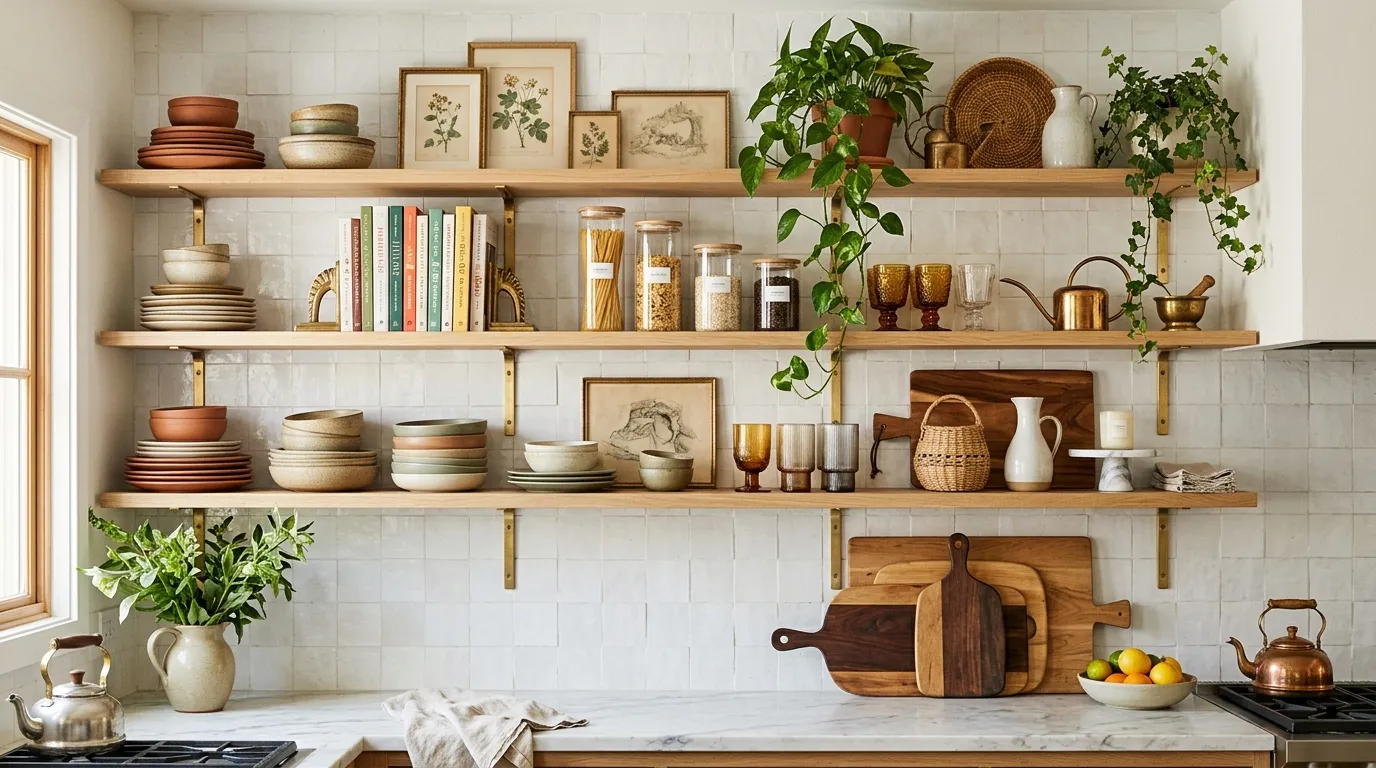
26 Magazine-Worthy Kitchen Shelf Decor Ideas to Pin
Your kitchen shelves can be more than a place to store plates, jars and everyday essentials. With a few thoughtful details, they can become one of the most beautiful features in your home.
These Kitchen Shelf Decor Ideas will help you create a warm, magazine-worthy look without needing a complete kitchen makeover. Whether you love modern minimalism, cozy farmhouse charm, rustic wood accents or elegant neutral styling, there is an idea here to suit your taste.
Open shelving can sometimes feel difficult to decorate. Too many accessories make it look cluttered, while too few can leave it feeling unfinished. The secret is finding the right balance between practical storage, beautiful textures and personal touches.
From floating wood shelves and neutral ceramics to vintage cookbooks, fresh greenery, and seasonal displays, these ideas offer simple ways to make your kitchen feel more organized and inviting. You can use pieces you already own, make small budget-friendly updates and build a display that works for your everyday routine.
Floating Wood Shelves
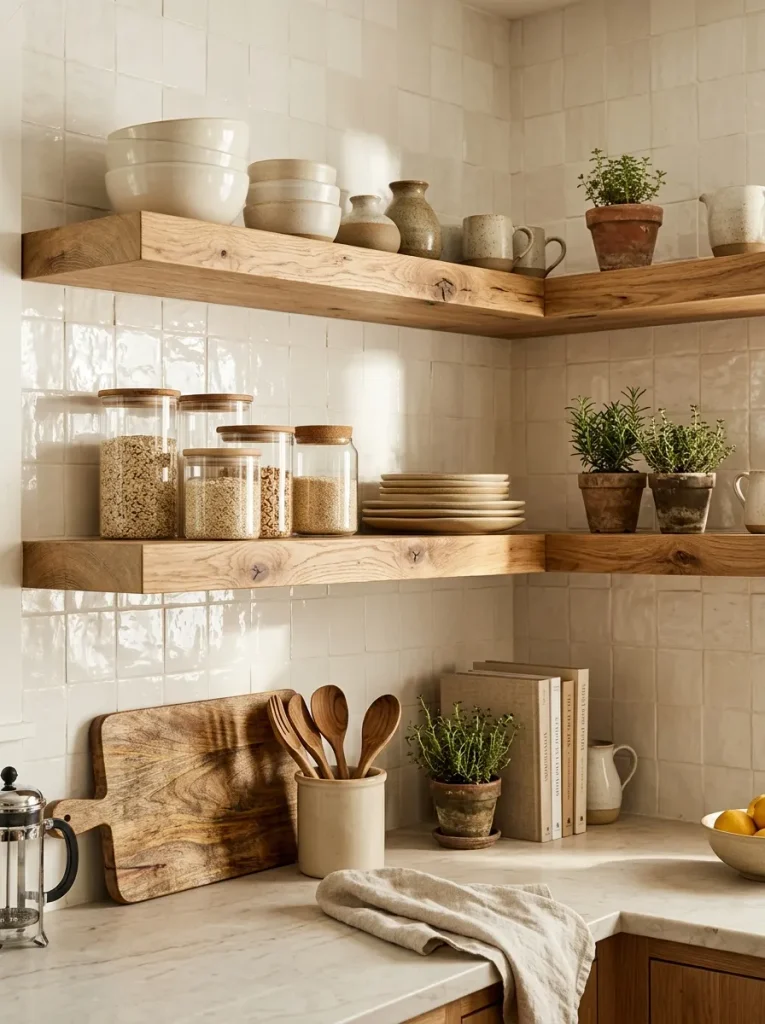
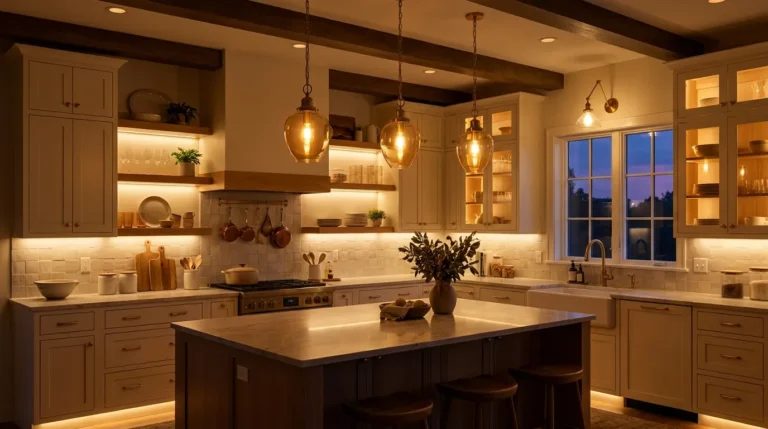
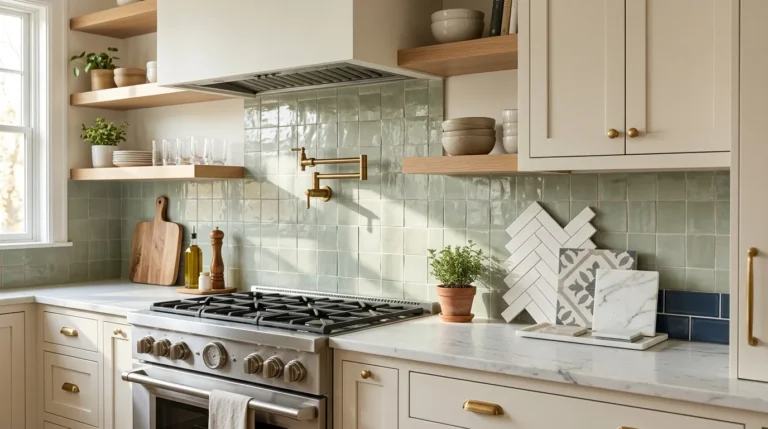
Floating wood shelves bring warmth and character to a kitchen without making the walls feel crowded. Their clean lines work beautifully in modern farmhouse, rustic and minimalist interiors. Choose natural oak or walnut finishes to complement your cabinets, countertops or dining furniture.
For a balanced display, arrange everyday dishes beside a few decorative pieces. Stack white plates, add two or three glass storage jars, and finish with a small plant. I’ve noticed that mixing useful kitchen essentials with simple decorative accents creates a more natural look than filling every inch with accessories.
Neutral Ceramic Displays

- Choose a consistent palette. Combine cream, beige, warm white, and soft taupe for a calm, coordinated display.
- Mix ceramic shapes. Pair rounded mugs with tall pitchers and shallow bowls to create visual variety.
- Vary the heights. Place taller vases at the back and shorter dishes near the front.
- Showcase handmade textures. Speckled glazes and imperfect edges add character without introducing bold colors.
- Leave breathing room. Empty spaces between groups help each piece stand out.
Neutral ceramics work especially well in kitchens with busy countertops or patterned backsplashes. Instead of adding more colors, focus on differences in shape, finish, and height. A small collection of carefully chosen pieces can make ordinary shelving feel thoughtful and polished while keeping your everyday dishes easy to reach.
Greenery and Herb Pots
Quick Tip:
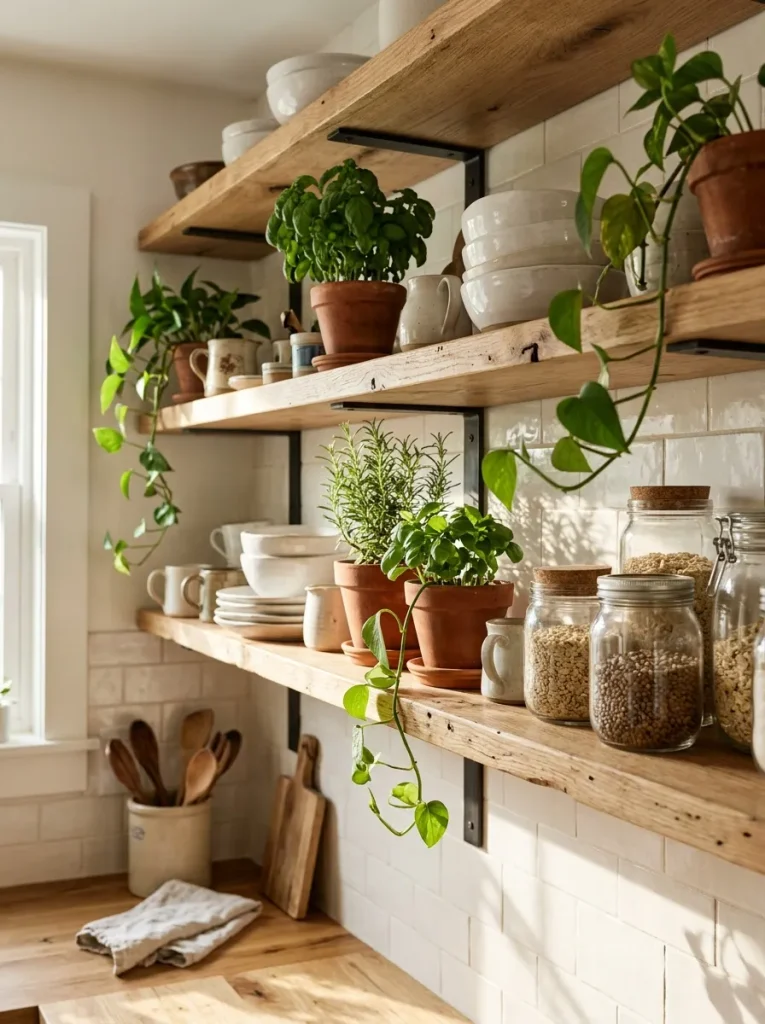
Choose compact herbs such as basil, thyme, or rosemary if your shelves receive enough light for healthy growth. Keep plant saucers underneath pots to protect the wood, and avoid placing greenery directly above food preparation areas where water or loose soil could fall.
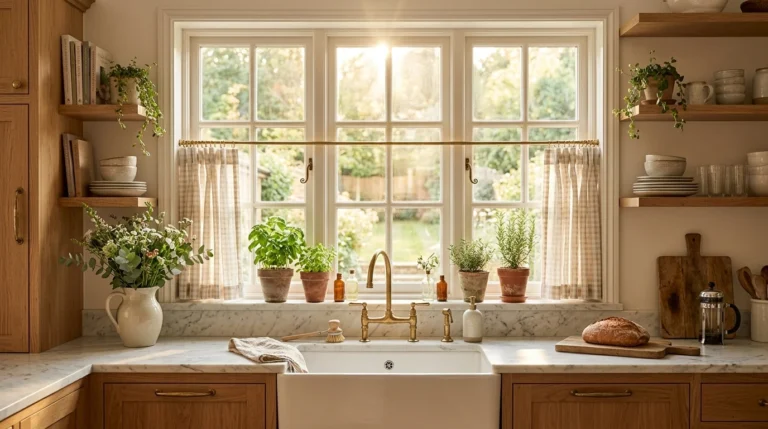
Fresh greenery adds life to kitchen shelving, especially when surrounded by neutral ceramics and natural wood. For darker kitchens, use a realistic faux plant or display fresh herbs on a nearby sunny windowsill instead. A little green goes a long way, so start with one or two plants before adding more.
Read More: Kitchen Backsplash Ideas: 28 Eye-Catching Looks to Try
Vintage Cookbook Stacks
BEFORE
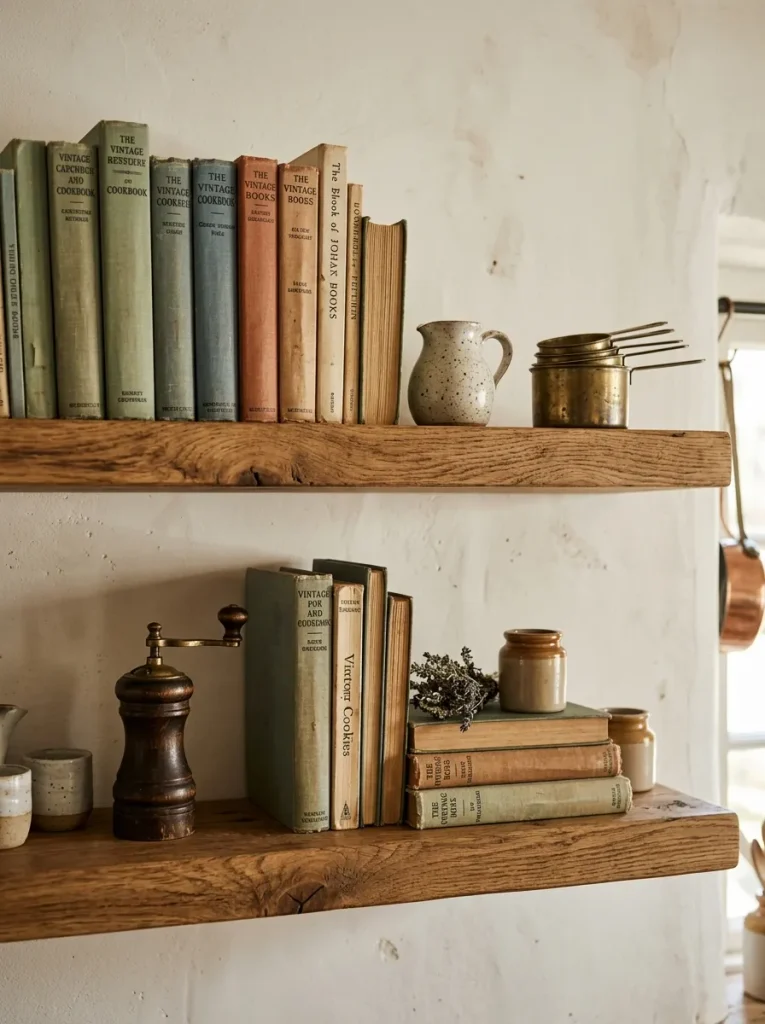
A kitchen shelf filled with unrelated accessories can feel cluttered and lack personality. Bright packaging and mismatched objects may distract from the overall design.
AFTER
A small stack of vintage cookbooks adds color, height and character. Their worn covers introduce a lived-in feeling, while the books create a sturdy base for a small decorative object.
Keep the arrangement practical by choosing books you genuinely enjoy using. Place frequently opened cookbooks on an accessible shelf and reserve delicate vintage editions for display. Two or three coordinated covers can create enough visual interest without making the shelves feel crowded.
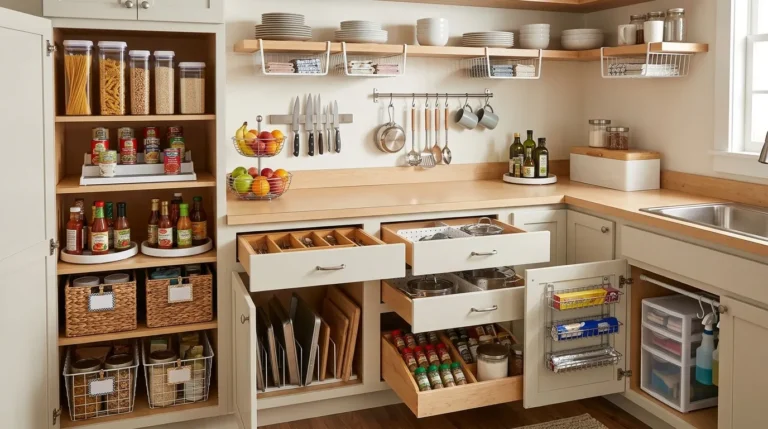
Glass Storage Jars
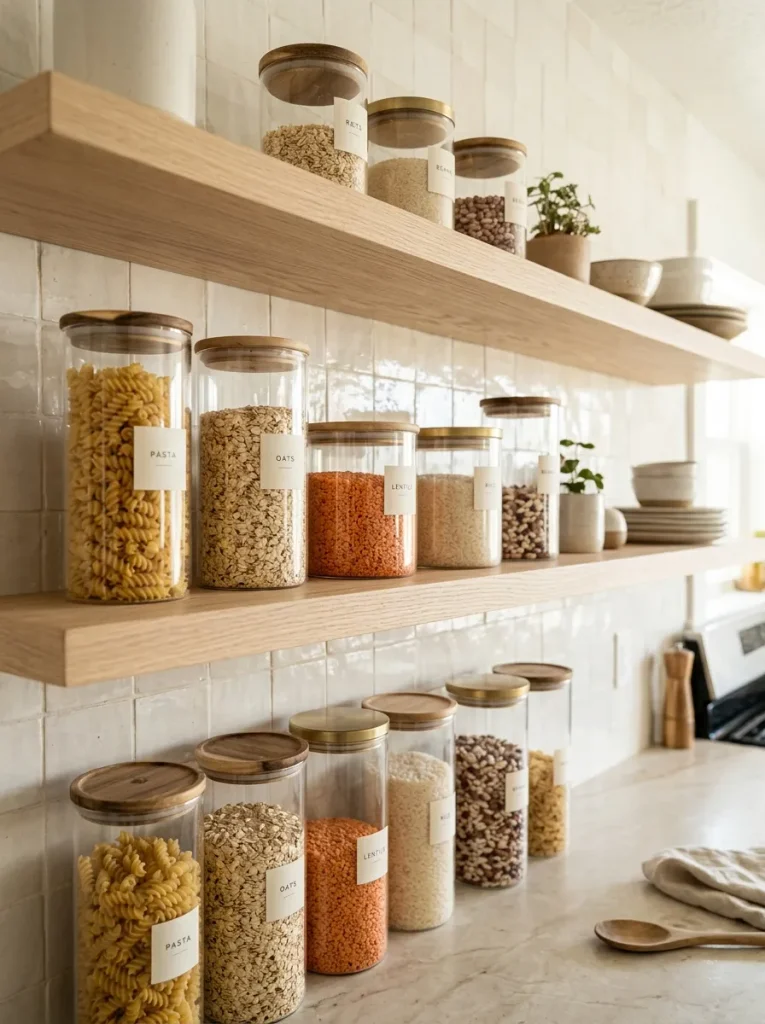
- Choose matching jars. Select clear containers in two or three sizes to create a consistent appearance.
- Group similar ingredients. Place baking ingredients together and arrange grains or pasta in a separate cluster.
- Add simple labels. Use small black, white or kraft paper labels for easy identification.
- Keep heavier jars low. Store large containers on sturdy, easily accessible shelves.
- Display attractive ingredients. Layered lentils, colorful beans and different pasta shapes add natural texture.
Glass storage makes everyday ingredients part of the decoration while helping you see what needs replenishing. For the best results, use airtight containers suitable for food storage and label them with the ingredient name and relevant date. Keep jars away from direct sunlight, steam, and heat to protect food quality.
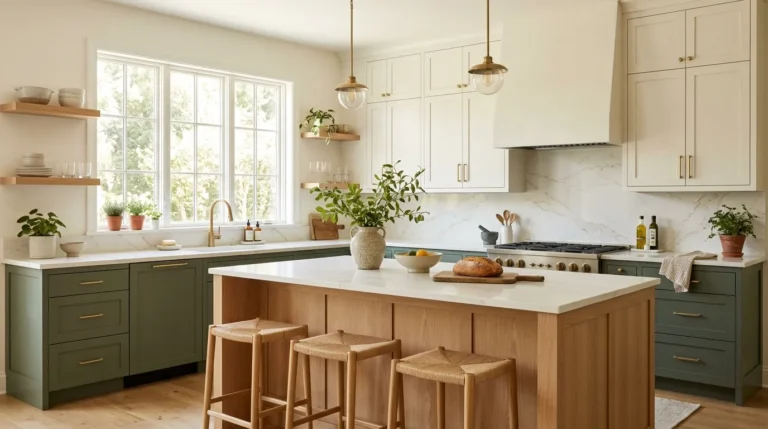
Open Shelves With Cabinets

| Feature | Open Shelves | Closed Cabinets |
|---|---|---|
| Visual effect | Airy and decorative | Clean and concealed |
| Best storage | Everyday dishes and attractive jars | Bulky appliances and mismatched items |
| Maintenance | Items need regular dusting | Contents stay more protected |
| Styling | Flexible, visible arrangements | Minimal styling required |
Combining open shelves with closed cabinets offers a practical balance between display and storage. Use the exposed sections for coordinated dishes, cookbooks and a few decorative accents. Keep less attractive essentials behind cabinet doors. This approach works especially well in smaller kitchens where an entirely open storage system could feel visually busy.
Farmhouse Wooden Accents
DO
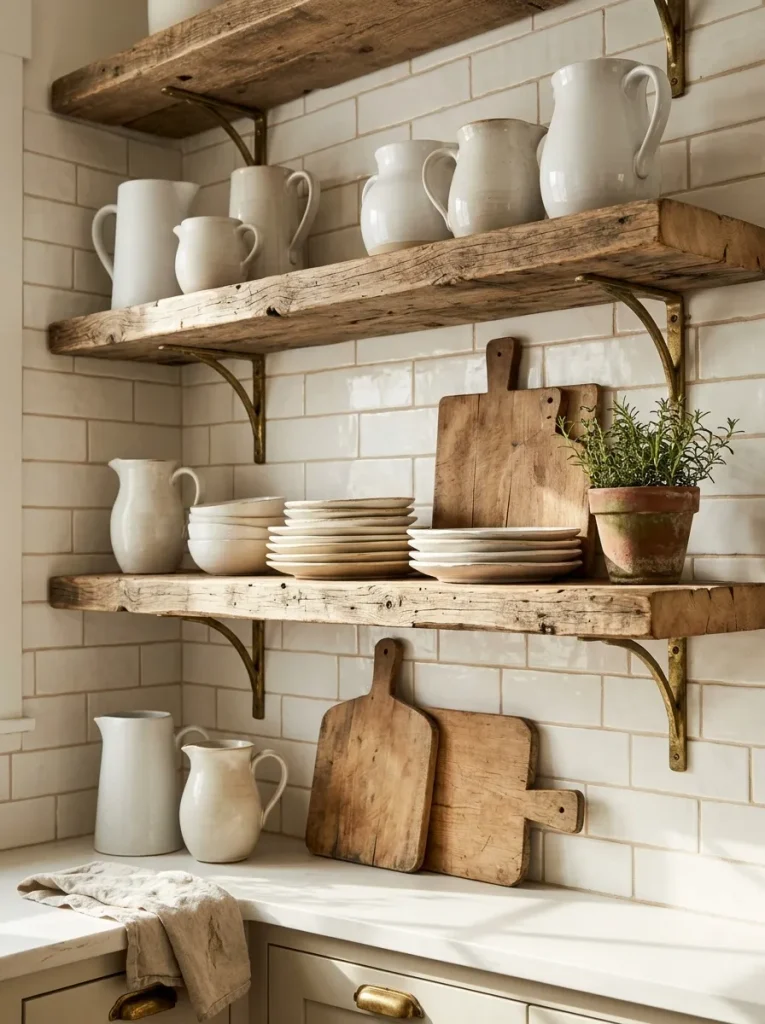
- Combine reclaimed wood with white or cream ceramics.
- Lean one or two wooden cutting boards against the backsplash.
- Add a small woven basket for lightweight kitchen essentials.
- Introduce greenery to soften the harder wood and ceramic surfaces.
DON’T
- Mix too many competing wood finishes in one small display.
- Overfill the shelves with oversized rustic accessories.
- Place untreated wood where it may become wet frequently.
- Use decorative signs that compete with the objects around them.
Farmhouse styling feels most convincing when the materials look natural and useful. A wooden board, a stoneware pitcher and a few everyday plates can establish the look without requiring a complete kitchen makeover. Keep the palette restrained and let the wood grain provide much of the decorative interest.
Minimalist White Dishware
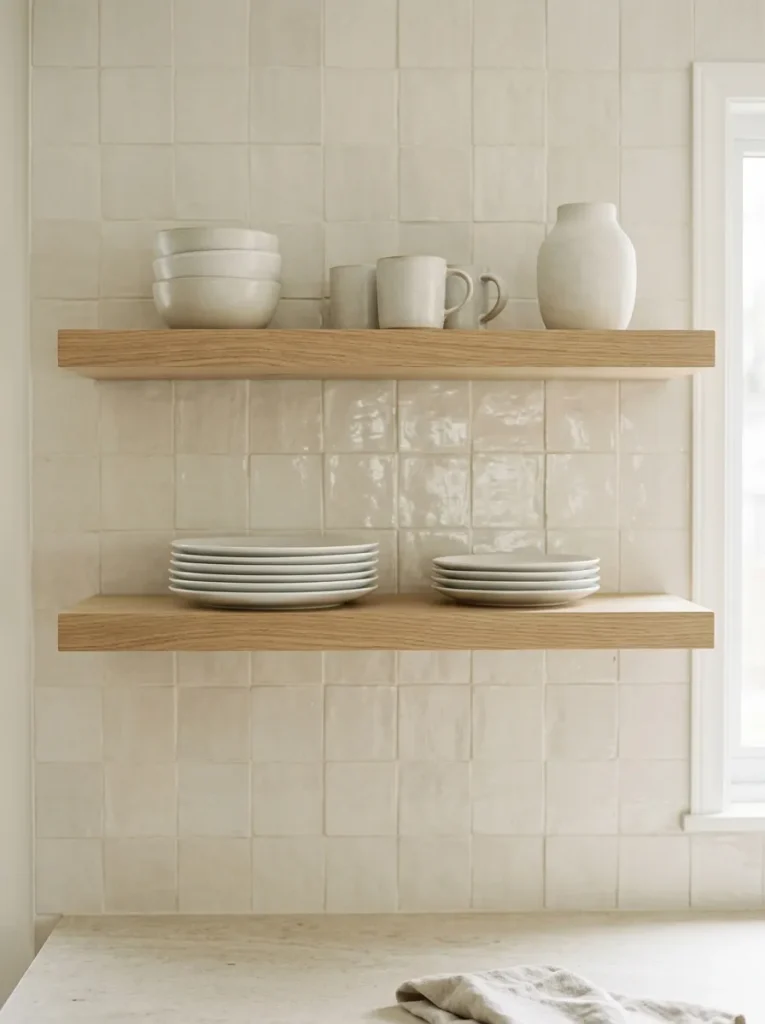
Style: Minimalist and Scandinavian
Cost: Low to moderate if using existing dishes
Skill Level: Beginner
Best For: Small kitchens, neutral interiors and uncluttered spaces
White dishware creates a clean visual rhythm because repeated shapes and colors make shelves appear organized. Stack plates in small groups, line up a few matching mugs and leave generous gaps between objects. One sculptural vase or a small green plant provides contrast without interrupting the simplicity.
Colorful Cookbook Corners
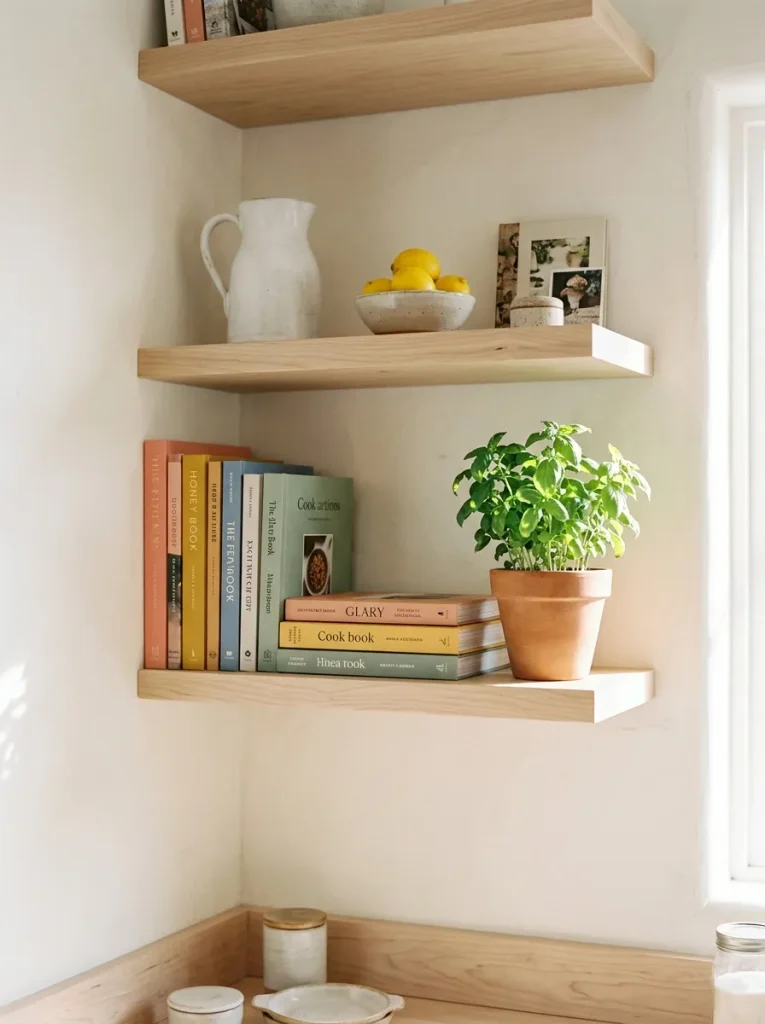
A little color can make kitchen shelving feel personal and energetic. Start with the cookbooks you already own, then choose two or three colors from their covers to repeat in nearby accessories. This creates a connected display without requiring a matching collection of new decorations.
Arrange books vertically in one group and horizontally in another to vary the shapes. A small bowl of seasonal fruit or a simple ceramic vase adds a finishing touch. If the covers are particularly bright, keep the surrounding dishes neutral so the colors remain the main attraction.
Brass Shelf Brackets

- Match the finish. Coordinate brass brackets with cabinet handles or nearby lighting for a connected appearance.
- Choose sturdy supports. Select brackets rated for the shelf material and intended load.
- Measure the spacing. Position brackets according to shelf length, thickness, and the manufacturer’s guidance.
- Keep the styling simple. Use neutral dishes and a few glass accessories to let the metal details stand out.
Brass brackets introduce a subtle decorative detail while supporting functional storage. They work particularly well with walnut, oak, cream cabinetry and muted green walls. Before installation, check wall construction, locate suitable supports and use hardware appropriate for the wall type and expected weight.
Layered Cutting Boards

BEFORE
A shelf with only flat plates and identical jars can look repetitive. Without varied shapes or heights, the arrangement may lack depth.
AFTER
Layering two or three cutting boards introduces height, texture, and warm natural color. Their overlapping silhouettes create a focal point without taking up much shelf space.
Choose clean, dry boards with finishes suitable for food-contact use. Display boards that are decorative or clean enough for kitchen use and keep them away from areas exposed to frequent splashes. Pair the wood with simple ceramics so the grain remains visible.
Seasonal Kitchen Styling
Quick Tip:
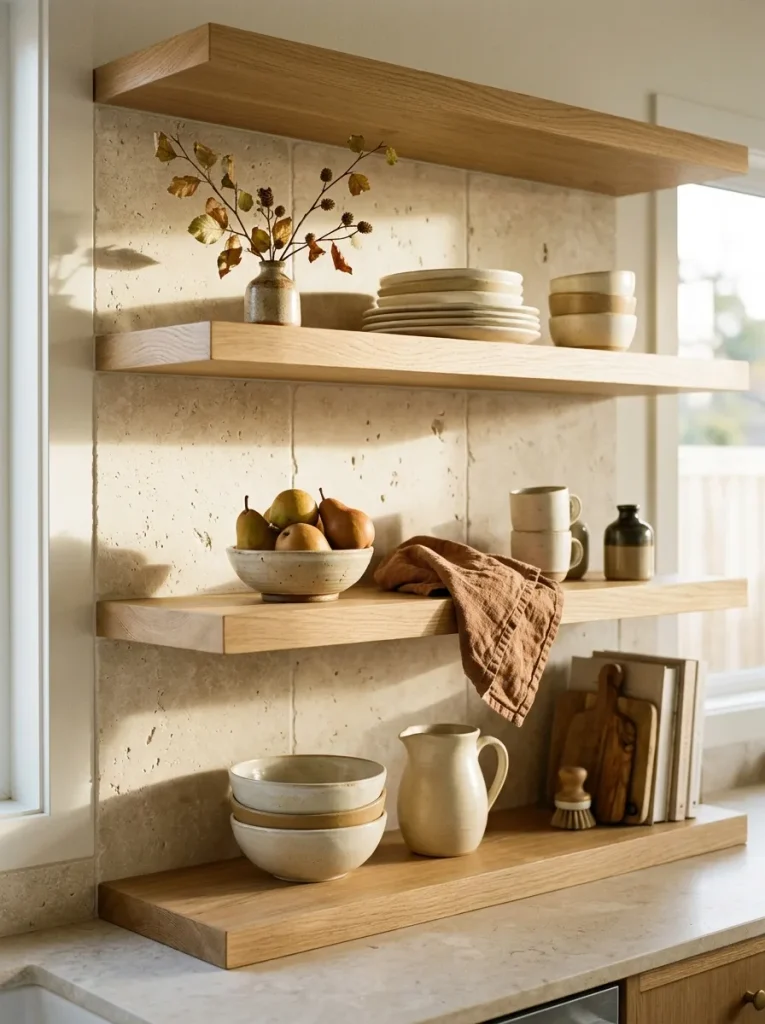
Keep your main dishes, jars, and storage containers consistent throughout the year. Change just two or three small accents, such as a fruit bowl, a linen towel, or a seasonal branch arrangement, to refresh the display without buying an entirely new collection.
Seasonal styling works best when the changes are small and easy to reverse. In autumn, introduce pears, muted orange tones and textured linens. During spring, swap them for fresh greenery and lighter fabrics. A consistent foundation keeps the kitchen cohesive while allowing the shelves to reflect the time of year.
Black and Wood Contrast

- Choose the dark element. Start with black shelves, brackets or a small group of matte black accessories.
- Add warm wood. Introduce a cutting board, wooden bowl or natural oak shelf to soften the contrast.
- Balance with light ceramics. Cream and white dishes prevent the arrangement from appearing too heavy.
- Repeat black sparingly. Use it in two or three places for a connected look.
- Leave open space. Avoid filling every section, especially in kitchens with limited natural light.
Black and wood create a striking combination that feels modern without becoming cold. The dark accents provide definition, while natural timber and pale ceramics maintain warmth. This palette is particularly effective in kitchens with white walls, stainless steel appliances, or simple cabinet fronts.
Woven Basket Storage

| Feature | Small Baskets | Large Baskets |
|---|---|---|
| Visual effect | Repeated, tidy groupings | Fewer, stronger shapes |
| Best use | Tea packets, napkins, small accessories | Lightweight linens and bulky items |
| Shelf requirement | Fits narrow spaces | Needs deeper, stronger shelves |
| Styling tip | Use matching pairs | Leave room around each basket |
Woven baskets add texture while keeping small items out of sight. Choose sizes that fit your shelves comfortably and use them for lightweight items you access regularly. Avoid overloading baskets or storing damp cloths inside them. A few coordinated baskets can make open storage feel calmer without hiding everything behind cabinet doors.
Vintage Glass Bottles
DO
- Group bottles in odd numbered clusters for a relaxed arrangement.
- Mix clear, amber and pale green glass for subtle variation.
- Choose a few different heights to create a natural silhouette.
- Wash display pieces regularly to remove dust and kitchen residue.
DON’T
- Fill every shelf with bottles of similar size.
- Place fragile glass near the edge of a shelf.
- Reuse decorative bottles for food without confirming they are food-safe.
- Mix too many bright glass colors in one small area.
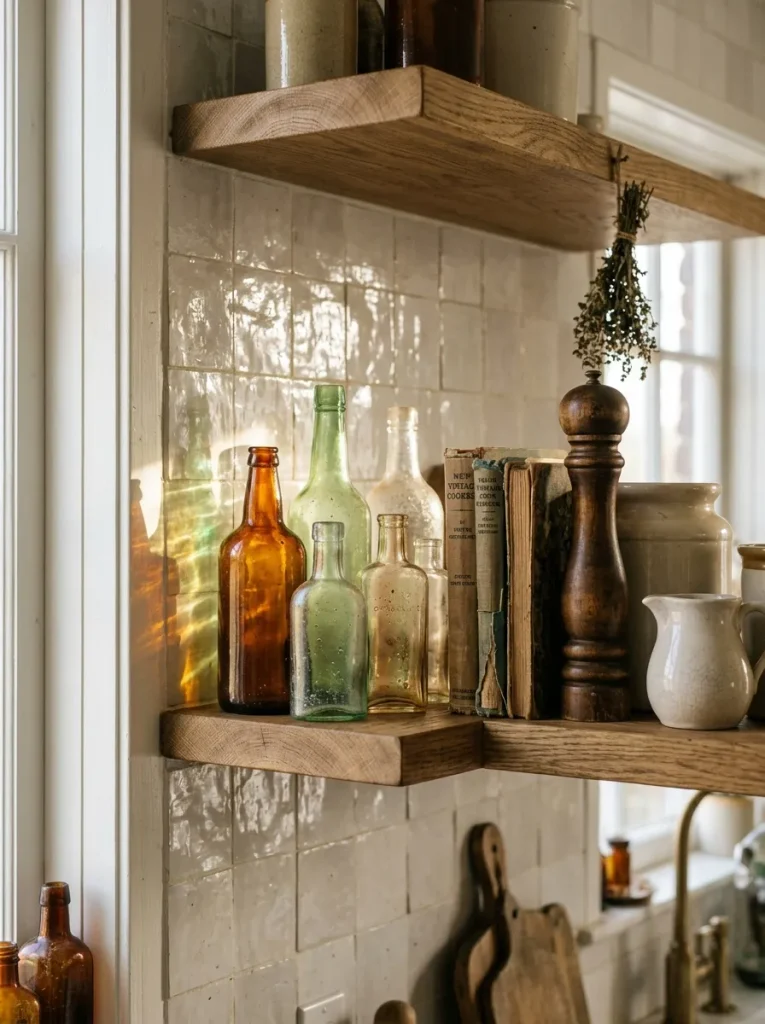
Vintage glass brings gentle color and reflective texture to an otherwise neutral kitchen. Look for interesting shapes at thrift stores or reuse clean decorative bottles you already own. Keep the collection modest and combine it with matte ceramics or natural wood to prevent the display from looking overly shiny.
Coffee Station Shelves

Cost: Low to moderate, depending on existing equipment
Time: One to two hours for styling
Skill Level: Beginner
Best For: Coffee lovers, small kitchens and unused counter corners
Dedicated coffee shelves keep morning essentials together and give an unused wall a clear purpose. Place mugs and airtight coffee containers on the easiest to reach shelf, reserving higher spaces for decorative prints or less frequently used items. Keep the shelves away from direct steam and ensure their supports can handle the weight of jars and cups.
Marble and Stone Accents
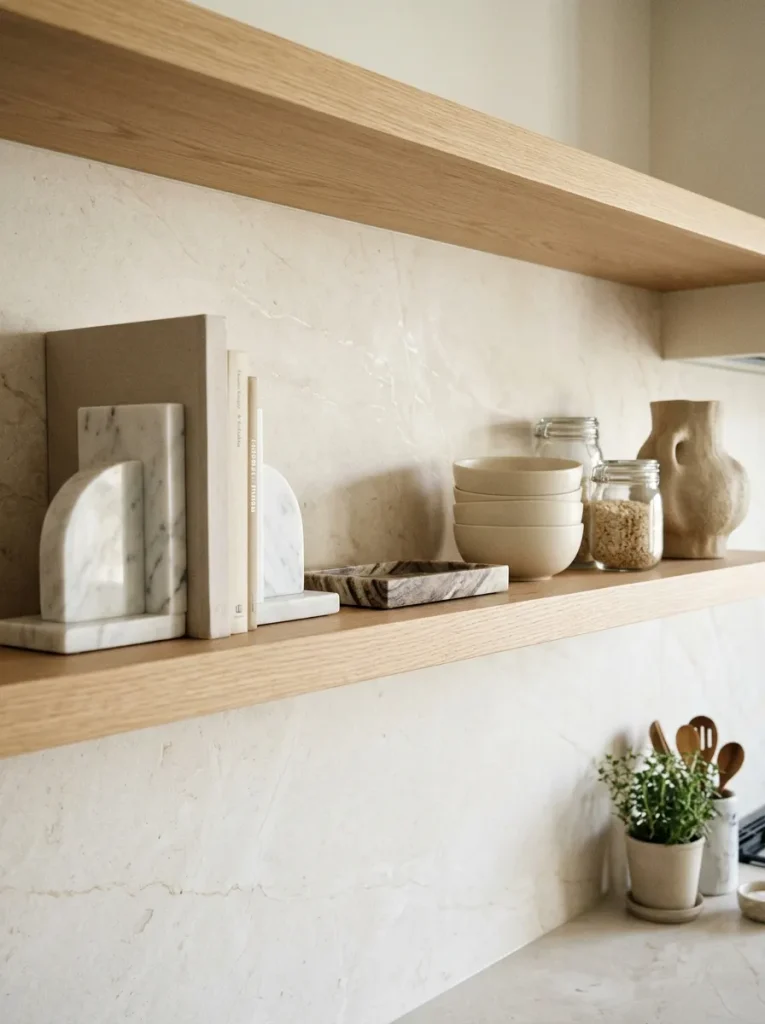
Marble and stone introduce subtle patterns that make simple kitchen shelving feel more layered. Choose one or two stone accents rather than covering the shelves with them. A small marble tray or a veined decorative object creates enough contrast beside plain dishes and wooden accessories.
For a budget-friendly version, look for a small stone coaster set or use an existing ceramic piece with a stone-like finish. Keep the rest of the display understated so the natural markings remain visible. If using real stone near food, follow the manufacturer’s cleaning and care recommendations.
Rustic Metal Containers

| Feature | Galvanized Metal | Painted Metal |
|---|---|---|
| Appearance | Industrial and weathered | Colorful or coordinated |
| Best pairing | Reclaimed wood and stoneware | White shelves and neutral dishes |
| Maintenance | Dry thoroughly to limit corrosion | Check for chips and rust |
| Ideal use | Dry utensils or decorative storage | Lightweight kitchen accessories |
Metal containers can add a useful industrial accent to rustic or farmhouse shelving. Pair them with natural wood and softer ceramic pieces to prevent the display from feeling too cold. Use containers suited to their intended purpose and keep unlined or rust-prone metal away from damp food and wet surfaces.
Small Art Prints

BEFORE
Shelves filled exclusively with plates, jars and containers can look functional but lack a personal touch. The display may feel more like storage than a decorated part of the home.
AFTER
Small framed prints introduce a personal focal point and break up the repeated shapes of kitchen essentials. Botanical illustrations, fruit sketches and vintage food artwork work particularly well with neutral ceramics.
Choose lightweight frames that fit securely on the shelf, and keep artwork away from direct heat, steam, and splashes. Leaning a frame against the backsplash creates a relaxed layered look, while leaving space around it prevents the arrangement from feeling crowded.
Matching Mug Collections
- Pick a limited palette. Choose one main color and one complementary shade.
- Arrange mugs in groups. Keep matching shapes together for a tidy visual rhythm.
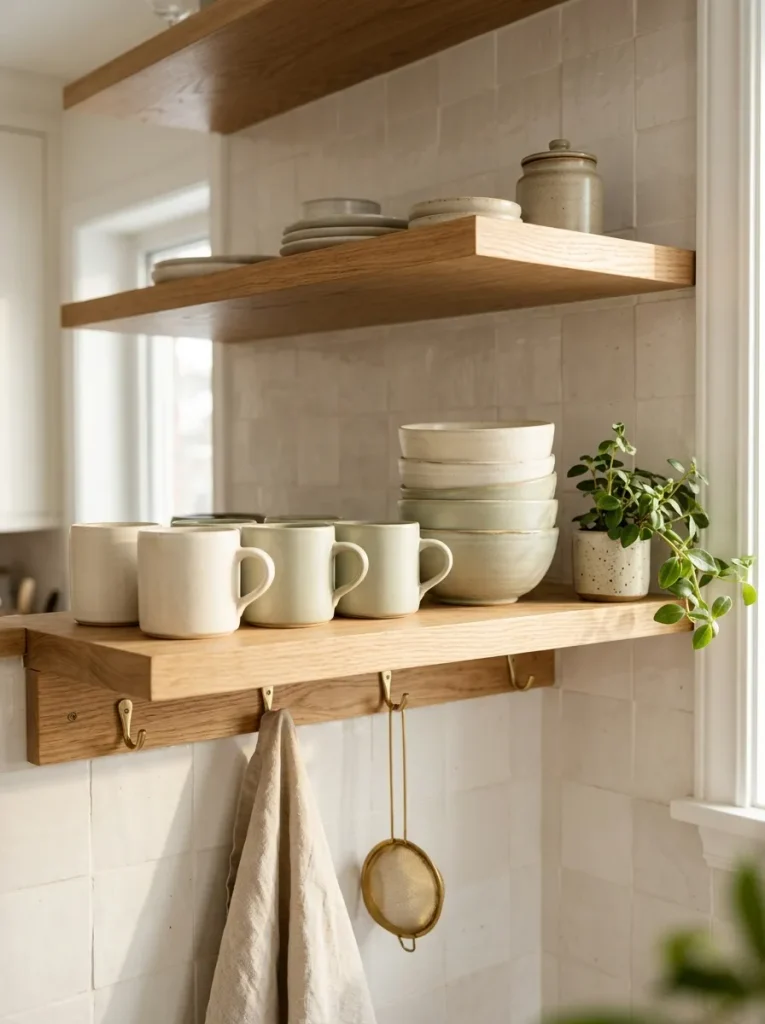
- Use hooks carefully. Install suitable hooks beneath sturdy shelves if you want to hang mugs.
- Balance the collection. Add one small plant or ceramic jar rather than several competing accessories.
Matching mugs create an organized display while keeping everyday drinkware within easy reach. If you already own a collection of mismatched mugs, group similar colors together instead of replacing everything. The goal is visual consistency, not perfection. Leave enough room to remove and return each mug comfortably.
Layered Plates and Bowls
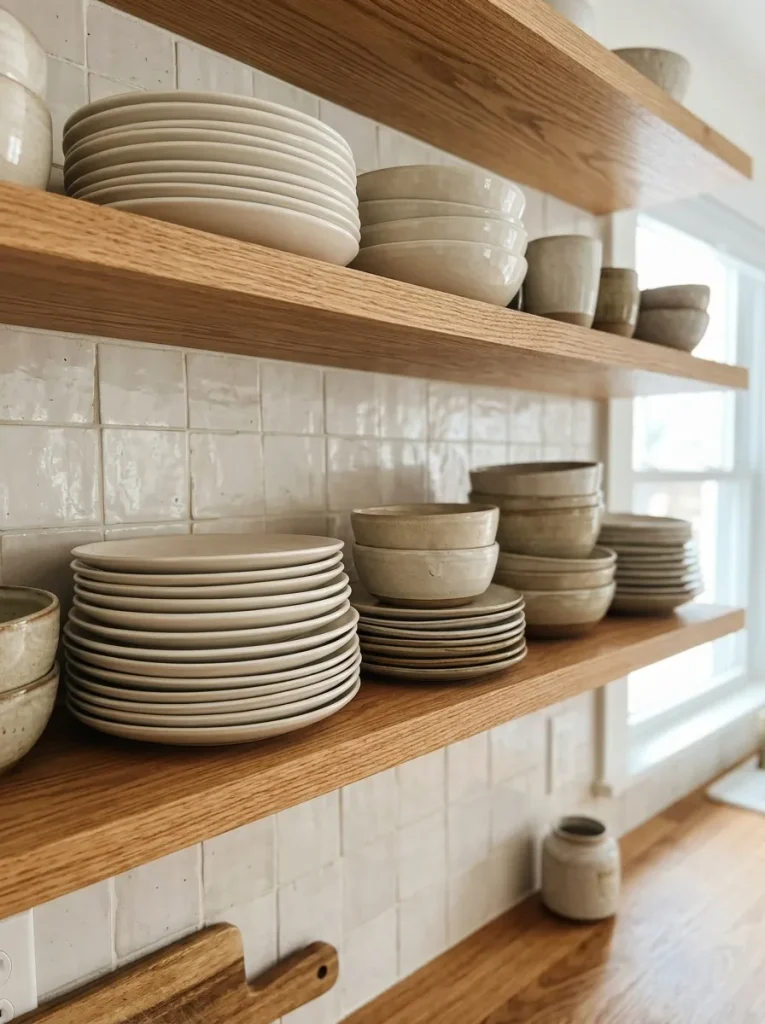
- Start with the largest plates. Place them at the back or in stable stacks.
- Add smaller dishes. Use side plates or shallow bowls to create variation in height.
- Repeat the same colors. Keep most pieces within a coordinated neutral palette.
- Leave clear gaps. Separate stacks so each group remains easy to access.
- Prioritize stability. Keep heavy dishes on sturdy lower shelves.
Layered dishware is one of the simplest ways to make kitchen storage look intentional. The repeated circular shapes create a natural pattern, while slight differences in size add depth. Choose a shelf with enough clearance to remove bowls safely and avoid tall stacks that could become unstable during everyday use.
Natural Linen Details
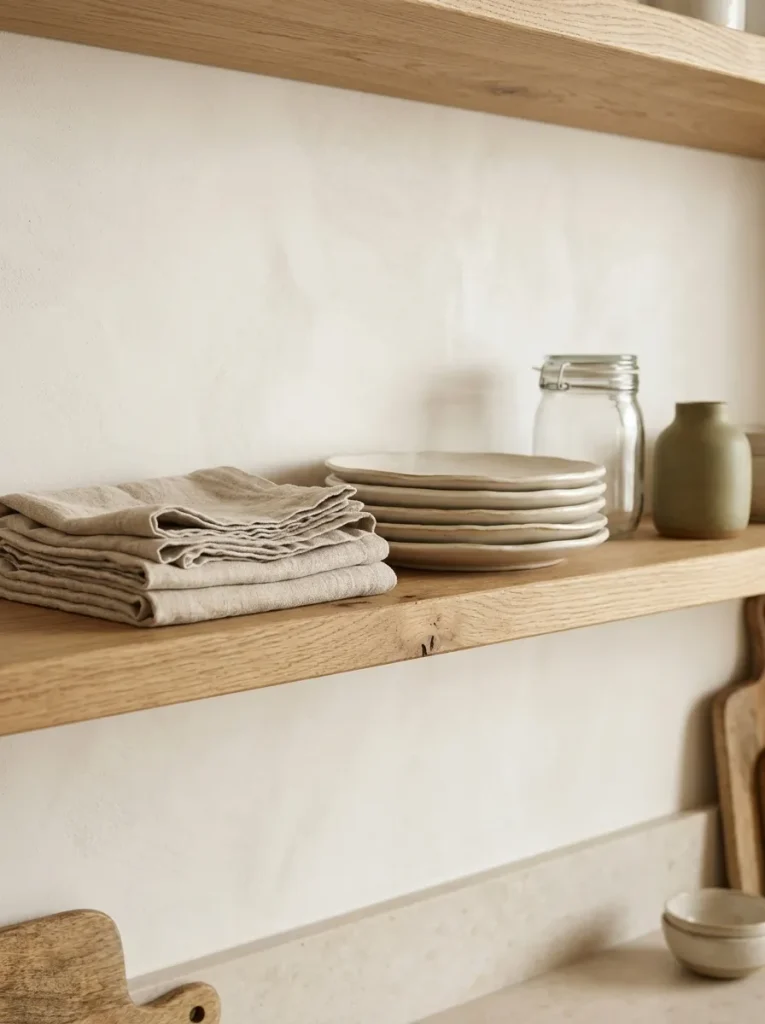
Quick Tip:
Fold linen towels into neat rectangles and limit the display to two or three pieces. Choose washable fabrics in colors that complement your dishes and store them fully dry to prevent musty odors or moisture buildup.
Linen adds softness to shelves filled with hard materials such as glass, metal, and ceramic. A folded tea towel can introduce a subtle color accent without taking up much room. For a practical display, keep clean linens separate from used kitchen cloths and place them away from cooking splashes.
Open Corner Shelving
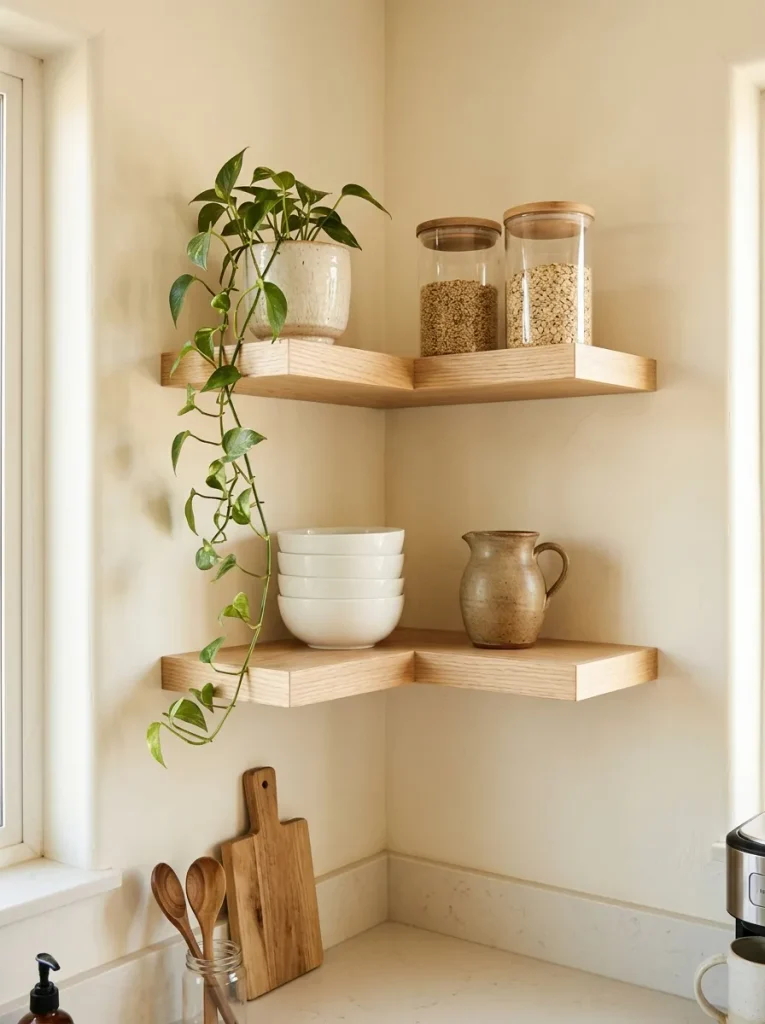
DO
- Measure both walls before choosing corner shelves.
- Keep frequently used cups and bowls on the lowest accessible shelf.
- Use compact accessories that fit within the shelf depth.
- Repeat the same materials and colors found elsewhere in the kitchen.
DON’T
- Overload narrow shelves with heavy dishes.
- Place fragile objects where they can be knocked from the corner.
- Ignore nearby cabinet doors or window clearances.
- Fill every corner with decorative items.
Corner shelves make use of wall space that might otherwise remain empty. They can hold everyday dishes, a small herb pot, or a few pantry jars without requiring a large installation. Measure carefully and check the shelf’s load rating before adding heavy items, especially when the shelves will be used daily.
Moody Dark Shelving
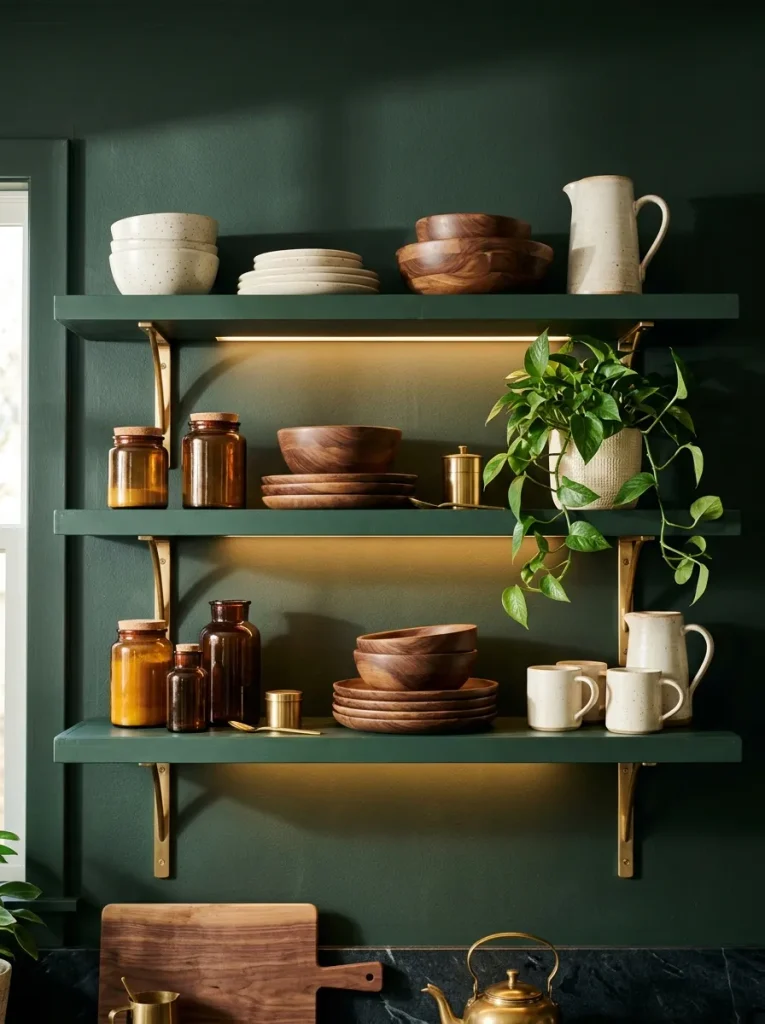
Style: Moody contemporary or modern traditional
Cost: Moderate if repainting or replacing shelves
Skill Level: Beginner to intermediate
Best For: Kitchens with good lighting and confident color choices
Dark shelving creates depth and makes pale dishes stand out. Forest green, charcoal, and deep navy all work well with cream ceramics, amber glass, and warm wood. If the kitchen receives limited daylight, use under shelf lighting and keep the surrounding countertop relatively light to balance the darker tones.
Seasonal Fruit Displays
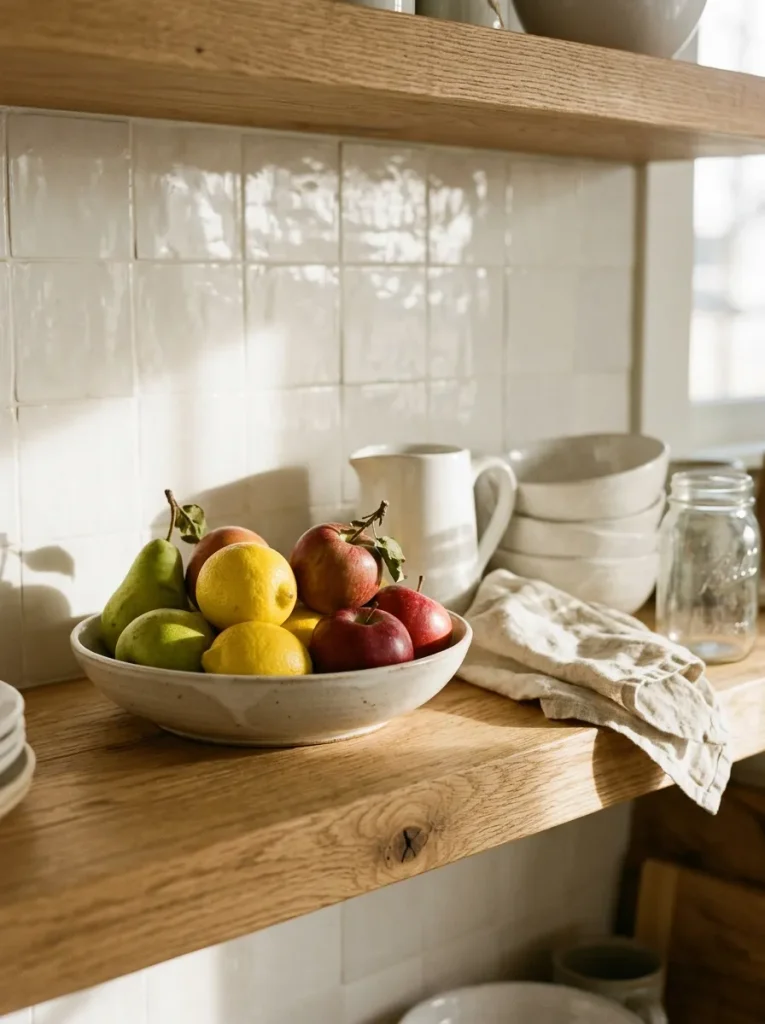
BEFORE
Decorative shelves filled only with permanent accessories can look unchanged throughout the year. The arrangement may also lack the natural color that fresh ingredients provide.
AFTER
A small bowl of seasonal fruit introduces fresh color and a useful everyday element. Lemons brighten a neutral display, while pears and apples create softer autumn tones.
Choose a shallow bowl that fits securely on the shelf and keep fruit away from direct heat. Check it regularly and remove damaged pieces. If your shelves are high or narrow, place the fruit bowl on the countertop instead for safer access.
Balanced Shelf Vignettes
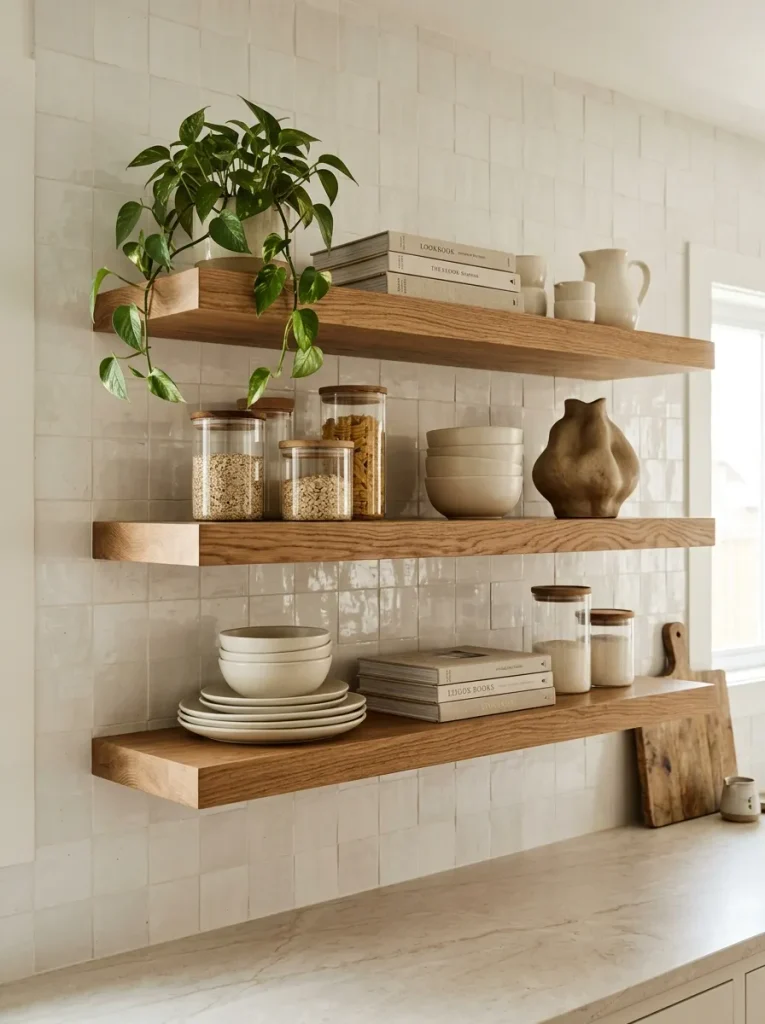
- Choose a focal piece. Start with a vase, a stack of plates, or a framed print.
- Add a practical group. Arrange nearby mugs, jars or bowls that share a color or material.
- Vary the heights. Combine tall objects with low stacks to create a balanced silhouette.
- Repeat a few finishes. Use wood, ceramic and glass in more than one place.
- Step back and edit. Remove any item that makes the shelf feel crowded or distracts from the main arrangement.
Balanced vignettes bring the whole display together by creating small, connected groupings instead of scattering objects randomly. In my experience, stepping back and removing one unnecessary accessory often improves a shelf more than adding another decoration. Keep the final arrangement attractive but practical enough for everyday cooking.
Conclusion
Beautiful kitchen shelves do not require expensive accessories or a complete renovation. Sometimes, a few well-chosen ceramics, neatly arranged glass jars, natural wood accents and fresh greenery are enough to create a welcoming space.
These 26 Kitchen Shelf Decor Ideas offer inspiration for every style, from minimalist and modern to rustic and farmhouse. Start with one shelf, choose a simple color palette and arrange your favorite practical items with a few decorative details. Adjust the display until it feels balanced and useful for your home.
Save this article on Pinterest so you can revisit your favorite ideas when you’re ready to decorate. Try one new arrangement and share this inspiration with someone who loves a beautiful kitchen. Your perfect shelf display can start with just a few thoughtful changes.

One Comment