
29 Radiant Kitchen Lighting Ideas to Create a Warm Glow
The right kitchen lighting can make your entire home feel warmer, brighter and more inviting. Even small changes can turn an ordinary kitchen into a cozy space you’ll love spending time in.
These Kitchen Lighting Ideas combine beautiful designs with practical solutions to help you create a kitchen that feels both stylish and functional. From elegant brass pendants and glowing under-cabinet LEDs to rustic lanterns and soft ambient lighting, there are plenty of ways to bring warmth and personality into your space.
Whether you’re updating a small kitchen on a budget or planning a complete renovation, you’ll find inspiration for different styles, layouts and lighting needs. I’ve noticed that kitchens often feel more comfortable when they use several layers of light instead of relying on one bright ceiling fixture. The key is finding the right balance between beauty and everyday usefulness.
Explore these ideas, discover the styles that suit your home and save your favorite designs for your next kitchen refresh.
Warm Pendant Lights
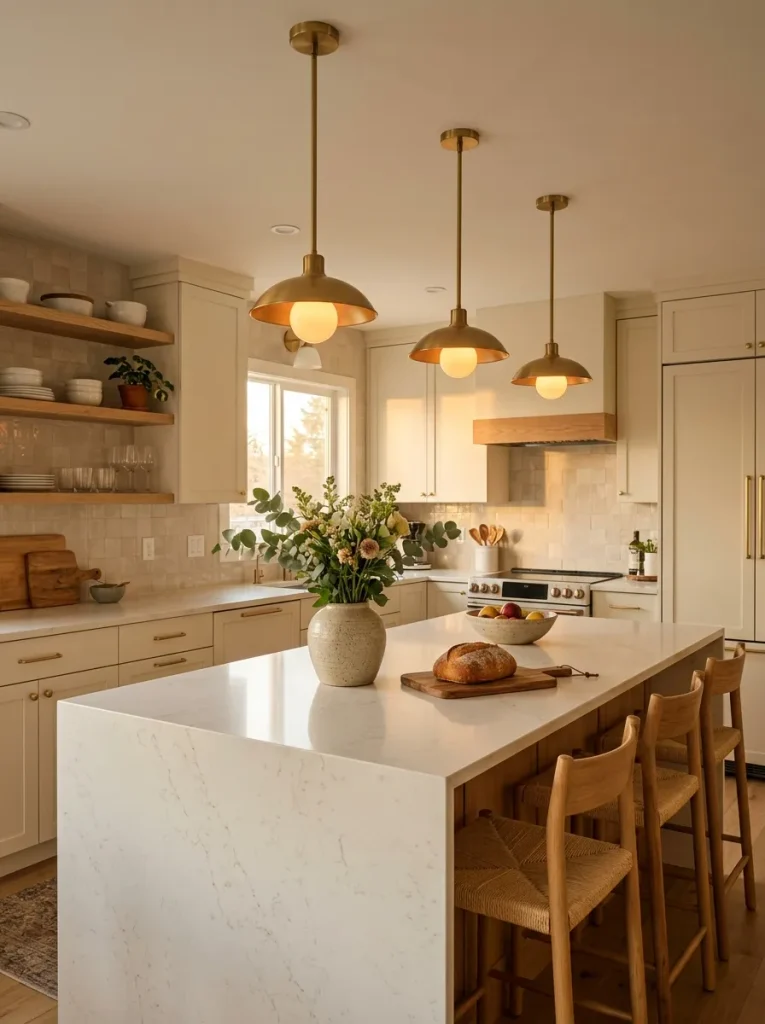
Warm pendant lights bring an inviting glow to the kitchen while adding a stylish focal point above the island. Choose brass, matte black or glass fixtures to complement your existing finishes. Soft, warm bulbs create a comfortable atmosphere for family dinners, morning coffee, and relaxed conversations.
For the best result, hang pendants at a height that illuminates the countertop without blocking sightlines across the room. Three matching fixtures often work beautifully above a longer island, while two larger pendants can suit a smaller space. Keep the scale balanced so the lighting feels intentional rather than crowded.
Glass Globe Fixtures

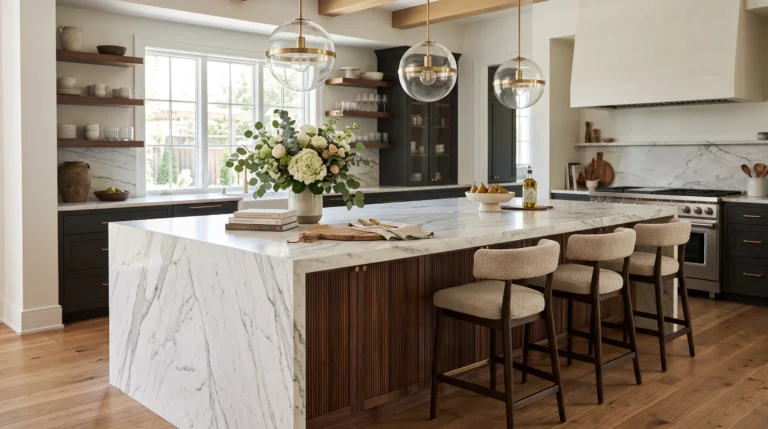
Glass globe fixtures offer a clean, airy look that works beautifully in both modern and traditional kitchens. Their transparent shades allow light to spread visually without making the room feel crowded. Choose clear glass for a crisp appearance or softly tinted globes for a warmer, more decorative finish.
- Best placement: Above kitchen islands, breakfast bars, or dining nooks.
- Bulb choice: Use warm white LEDs for a welcoming glow.
- Finish pairing: Combine clear glass with brass or black hardware.
- Cleaning tip: Wipe the globes regularly to remove fingerprints and cooking residue.
- Sizing advice: Leave enough space between fixtures to create a balanced arrangement.
These fixtures work especially well in smaller kitchens where bulky shades can feel overwhelming. Pair them with discreet recessed ceiling lights to maintain practical illumination throughout the room.
Under-Cabinet LED Strips
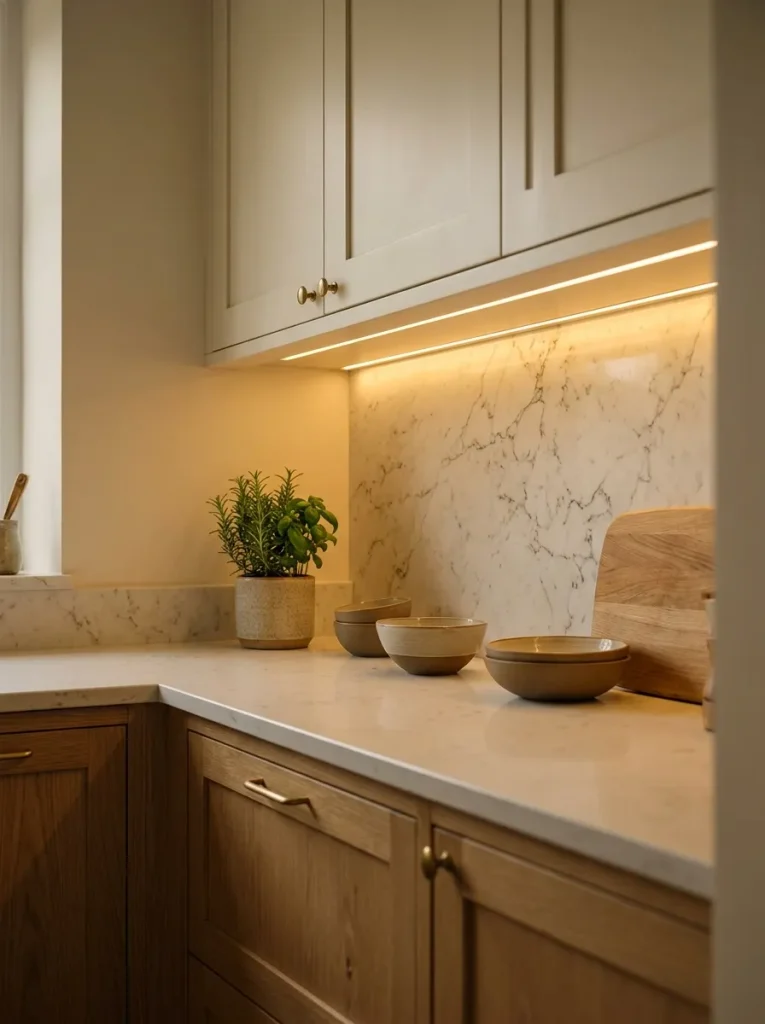
Quick Tip:
Choose dimmable, warm white LED strips with a continuous light output for a smooth glow beneath your cabinets. Position them toward the front underside of each cabinet to illuminate the countertop evenly and reduce distracting shadows.
Under-cabinet lighting makes everyday kitchen tasks easier while highlighting beautiful backsplash materials and countertop details. It is particularly useful when chopping vegetables, preparing breakfast, or reading recipe instructions beneath overhead cabinets. For a polished finish, conceal the strips inside suitable channels and choose a compatible dimmer. Always follow the manufacturer’s installation instructions, especially when working near sinks or other moisture-prone areas.
Read More: 26 Magazine-Worthy Kitchen Shelf Decor Ideas to Pin
Recessed Ceiling Lights
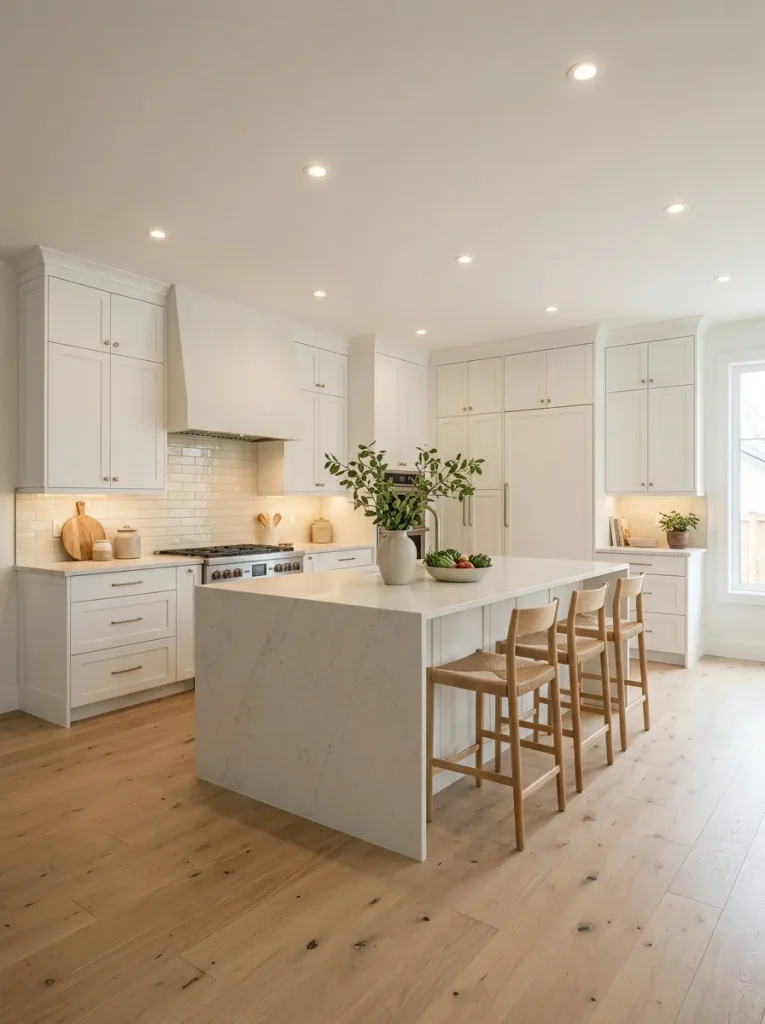
Recessed ceiling lights provide clean, even illumination without taking attention away from your kitchen’s design. They work particularly well in rooms with low ceilings or minimalist interiors where hanging fixtures might feel too heavy. Place them strategically to brighten work surfaces, walkways, and darker corners.
- Placement: Position lights to illuminate countertops rather than just the center of the floor.
- Color temperature: Choose warm white for a comfortable, welcoming atmosphere.
- Spacing: Follow the fixture manufacturer’s recommendations and account for ceiling height.
- Controls: Use compatible dimmers to adjust brightness throughout the day.
For a balanced result, combine recessed fixtures with decorative pendants or under cabinet lighting. This layered approach provides practical task lighting while keeping the ceiling visually uncluttered.
Brass Island Pendants
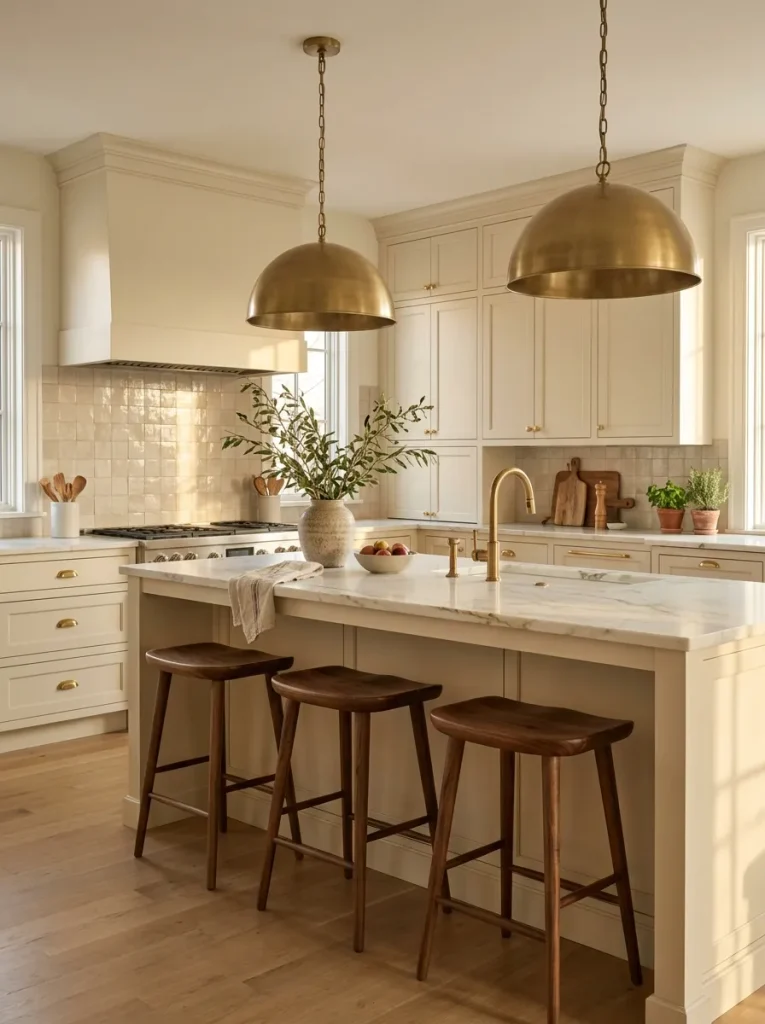
Brass island pendants introduce warmth and character, especially in kitchens dominated by white, gray, or cool stone finishes. Their golden surfaces catch the light and create a subtle decorative accent without requiring a complete renovation. Choose brushed brass for a softer appearance or polished brass for a more reflective finish.
- Measure the island before choosing fixture sizes.
- Select pendants that complement your cabinet hardware and faucet.
- Check that the shades direct sufficient light onto the countertop.
- Hang the fixtures high enough to preserve clear views across the kitchen.
Brass looks particularly appealing alongside natural wood, creamy cabinets, and marble-inspired surfaces. If your kitchen already has several metallic finishes, repeat the brass in one or two smaller details to keep the design cohesive.
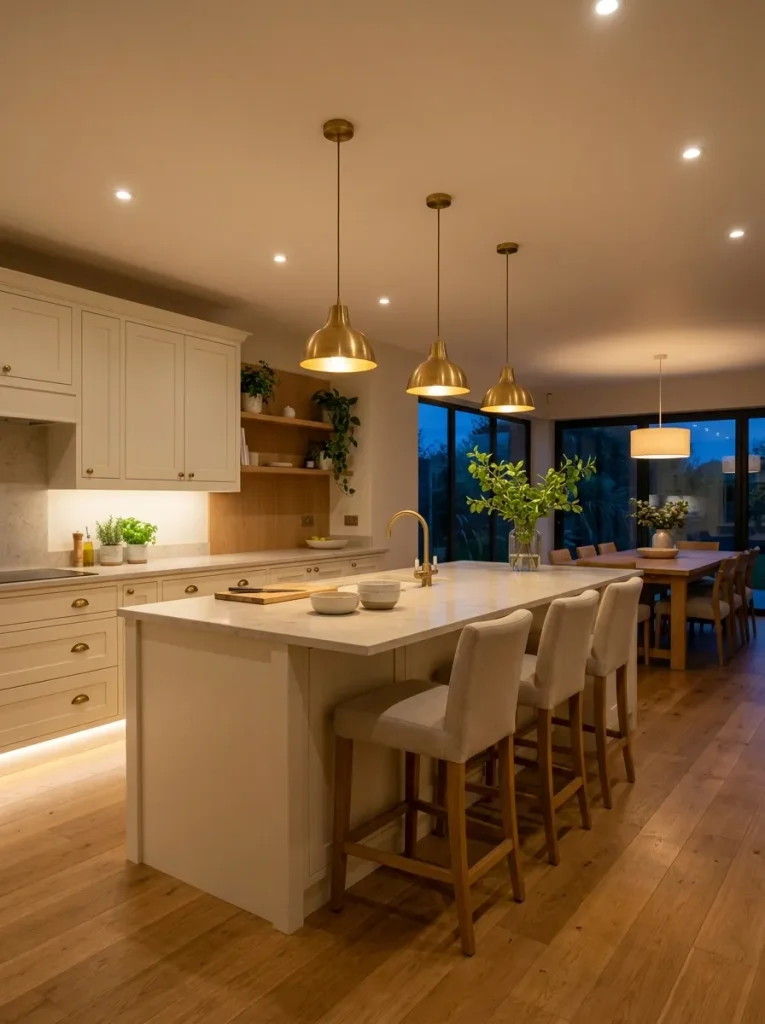
Layered Kitchen Lighting
| Lighting approach | Main benefit | Best use |
|---|---|---|
| Overhead lighting | General brightness | Whole kitchen |
| Pendant fixtures | Focused decorative light | Islands and breakfast bars |
| Under-cabinet LEDs | Clear countertop visibility | Food preparation |
| Accent lighting | Adds depth and warmth | Shelves and display areas |
Layered lighting helps a kitchen feel comfortable while supporting everyday tasks. Instead of relying on one bright ceiling fixture, combine several light sources that serve different purposes. Give each layer its own switch or compatible dimmer where practical. This makes it easier to brighten the room for cooking and soften the atmosphere for dinner.
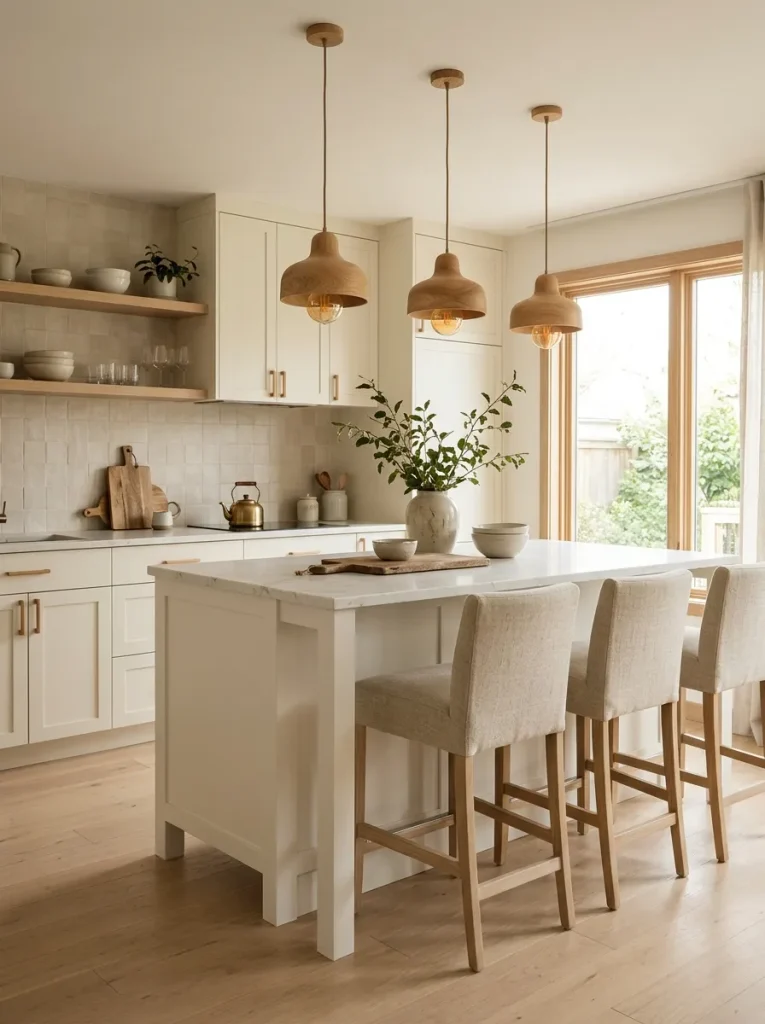
Wooden Pendant Shades
DO:
- Choose natural wood shades that complement existing cabinetry or flooring.
- Use warm white bulbs to emphasize the wood’s natural tones.
- Hang the fixtures above an island or dining counter.
- Pair wooden details with linen, stone or matte ceramic finishes.
DON’T:
- Mix too many competing wood tones without a clear design plan.
- Choose oversized shades that obstruct sightlines.
- Assume decorative shades provide enough light for every task.
- Place fixtures where grease and steam are difficult to clean.
Wooden pendants bring an organic softness to kitchens filled with hard surfaces. They suit farmhouse, Scandinavian and modern rustic interiors particularly well. For practical cooking areas, check that the shades are suitable for the location and supplement them with brighter task lighting where needed.
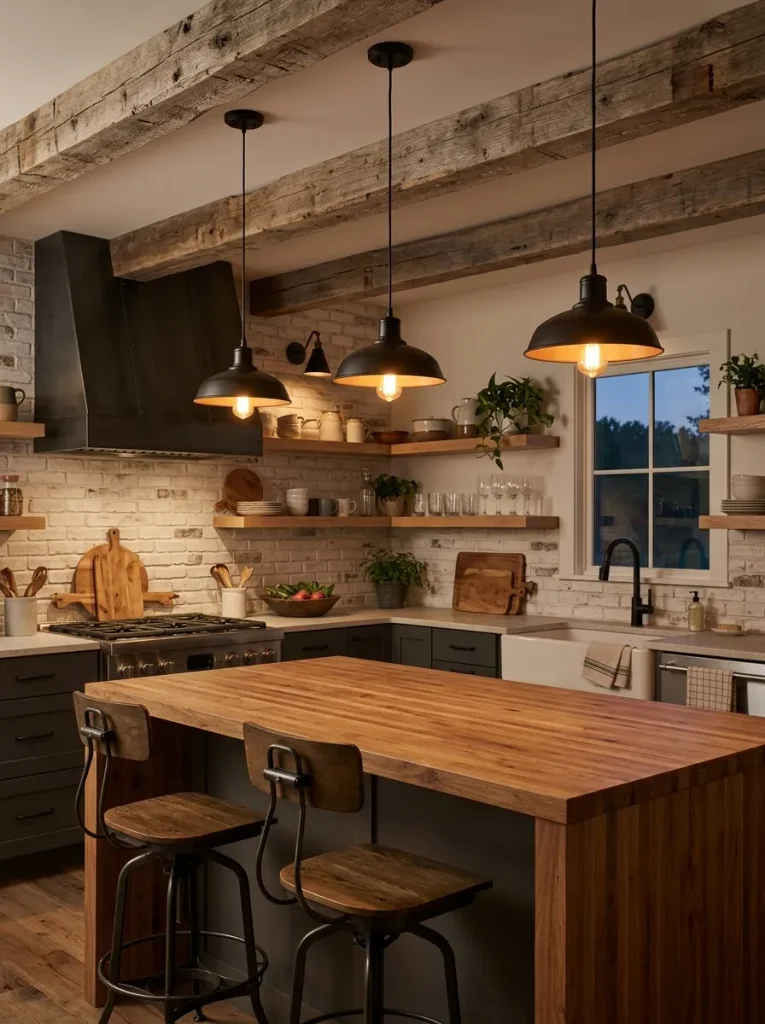
Vintage Industrial Lights
Cost: Moderate, depending on fixture materials and design.
Time: A few hours for a straightforward replacement by a qualified installer.
Skill Level: Beginner for choosing and styling; electrical installation may require professional help.
Best For: Industrial, farmhouse and rustic kitchens.
Vintage industrial fixtures add contrast and personality to kitchens with simple cabinetry. Their dark finishes stand out against pale walls, while warm bulbs keep the overall look comfortable rather than stark. Pair them with natural wood and understated hardware for a cohesive result. For a softer appearance, choose rounded shades instead of oversized metal domes.
Soft Cove Lighting
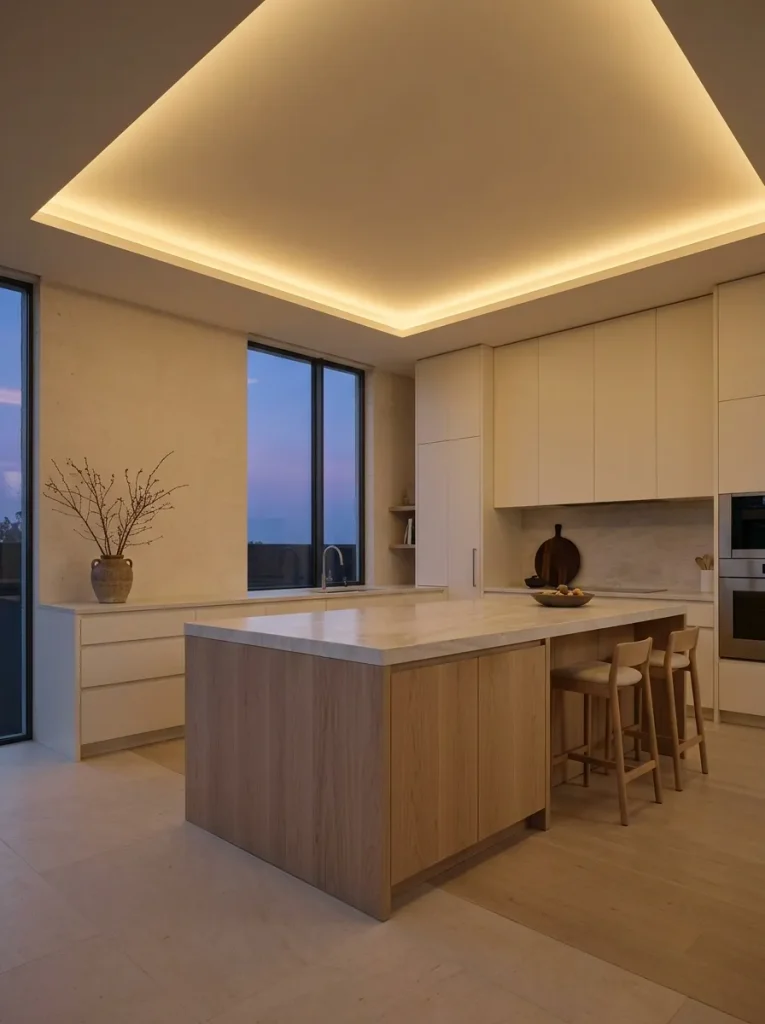
Concealed cove lighting creates a soft ceiling glow that makes a kitchen feel calmer and more spacious. LED strips hidden behind a ceiling ledge or architectural recess direct light upward, reducing harsh glare and adding visual depth. This approach works especially well in contemporary kitchens with clean lines and simple finishes.
For the best effect, select dimmable LEDs with consistent color output and hide the light source from direct view. Cove lighting is generally an ambient layer, not a replacement for countertop task lighting. Pair it with under cabinet strips and carefully positioned ceiling fixtures for a comfortable balance of brightness and atmosphere.
Farmhouse Lantern Pendants
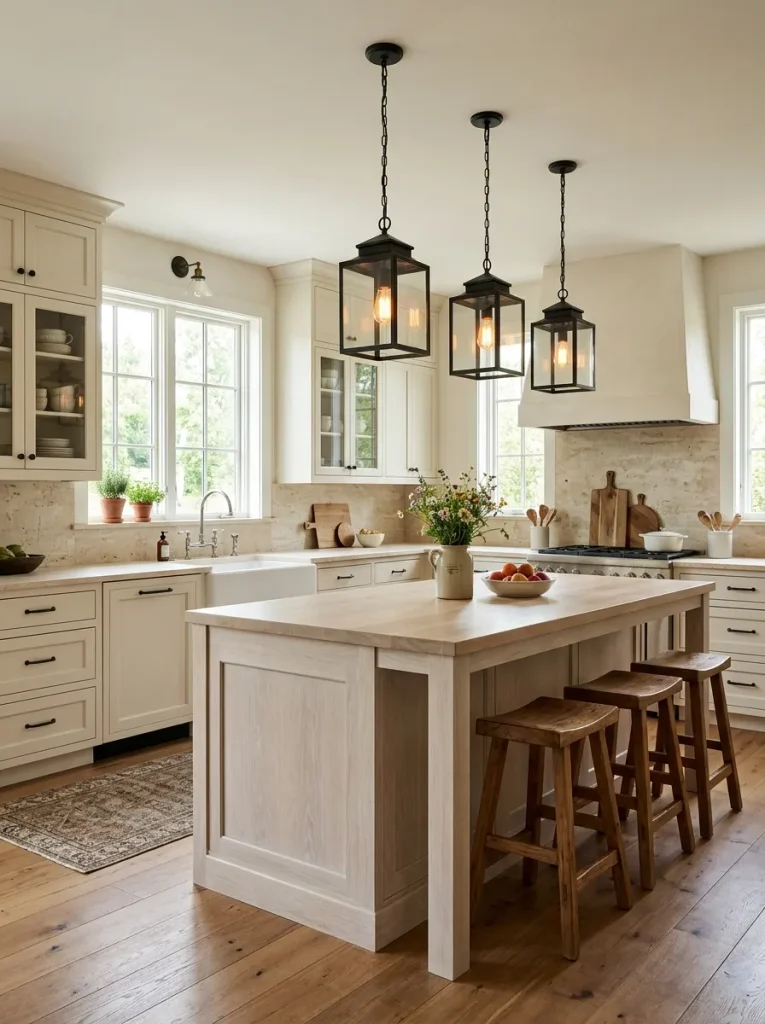
- Choose the frame: Black metal adds contrast, while aged brass creates a softer traditional look.
- Select the glass: Clear glass feels airy; seeded glass introduces subtle texture.
- Match the scale: Larger lanterns suit generous islands, while smaller fixtures work above compact counters.
- Balance the finish: Repeat the metal color in cabinet pulls or faucets.
Farmhouse lantern pendants combine traditional character with practical island lighting. Their open frames help preserve visual space, making them useful when you want a decorative fixture without a solid, heavy shade. Keep the surrounding decor relatively simple so the lantern shape remains a clear focal point.
Warm Dimmable Bulbs

Quick Tip:
Look for dimmable LED bulbs around 2700K for a cozy, golden glow. Check the fixture and dimmer compatibility before purchasing, because not every LED bulb works with every dimmer.
Warm dimmable bulbs let you adjust the kitchen’s atmosphere without changing the fixtures themselves. Keep brighter settings available for chopping, cleaning, and reading recipes, then lower the output during meals or quiet evenings. If your kitchen has several lighting zones, adjust them independently to avoid making the entire room too dim when only the island needs a softer glow.
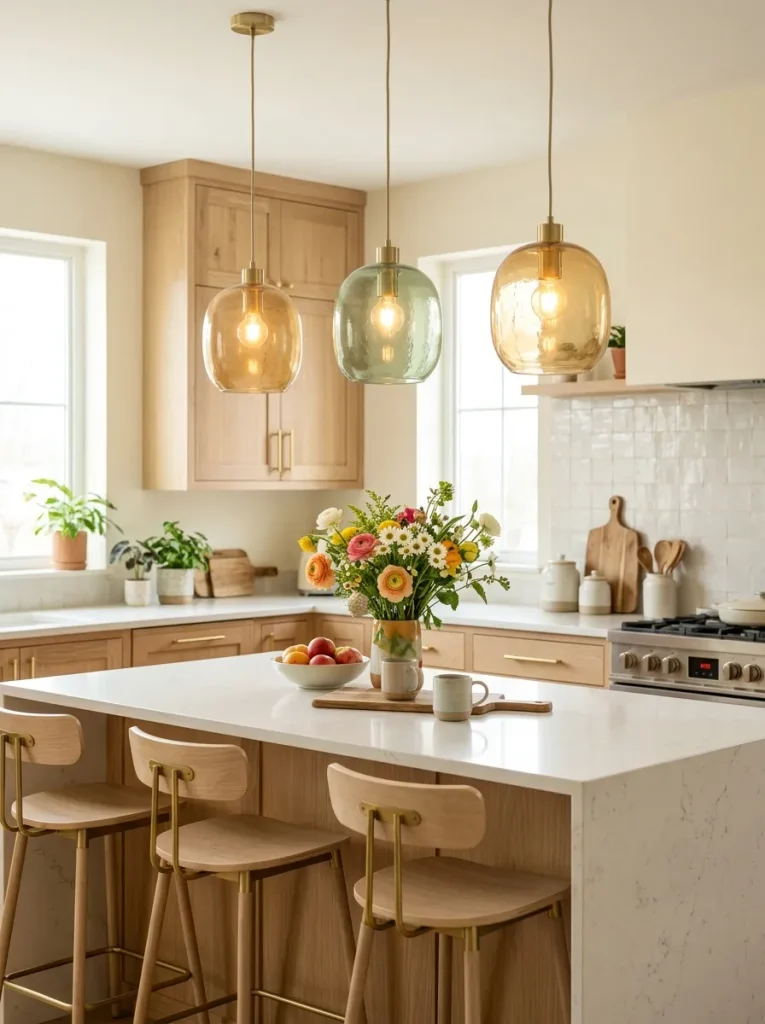
Colorful Glass Pendants
BEFORE
A neutral kitchen can feel visually flat when every fixture, cabinet and surface shares a similar color. The island may lack a focal point, even when the materials are attractive.
AFTER
Amber, smoky gray, or muted green glass pendants introduce color without overwhelming the room. The tinted shades create delicate reflections and help connect the lighting with nearby accessories.
Colored glass works best when the rest of the palette stays relatively restrained. Repeat one shade in a vase, runner, or set of ceramic bowls to make the design feel intentional. Check the light output through tinted glass before committing, since darker shades may provide less useful illumination for food preparation.
Track Lighting Systems
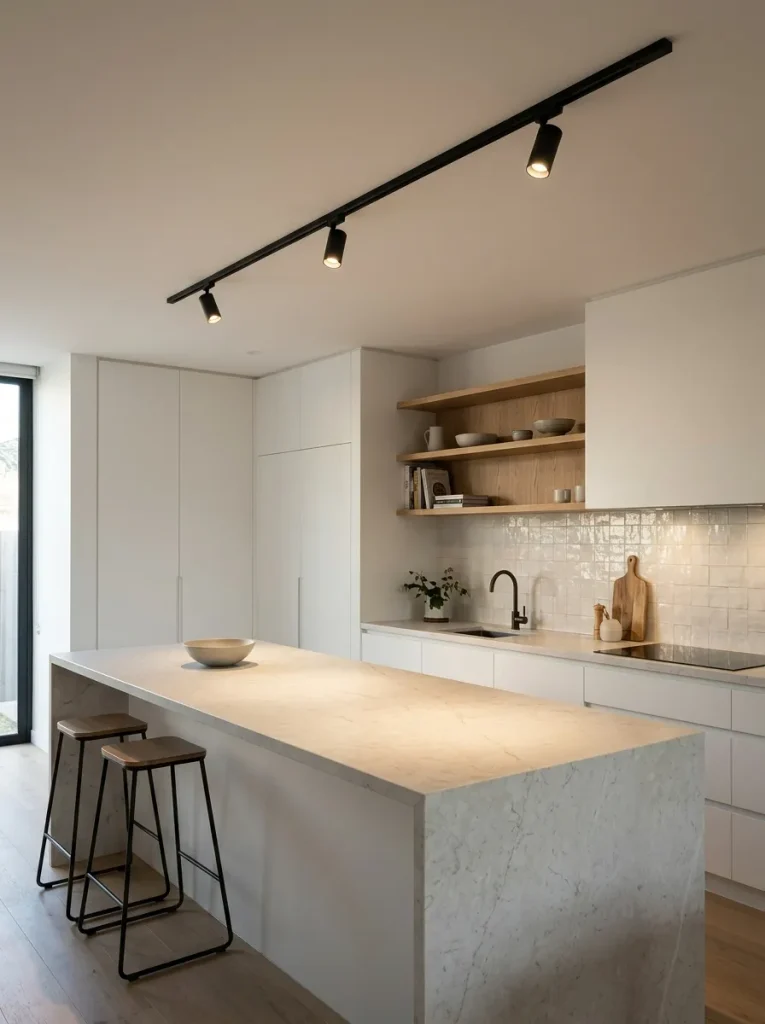
- Map your work zones: Identify the sink, stove, island and main preparation counter.
- Position the track: Arrange fixtures so their beams cover these areas without creating strong shadows.
- Aim each spotlight: Direct light toward useful surfaces and avoid shining it into people’s eyes.
- Choose compatible bulbs: Match color temperature and brightness across the system.
- Check the controls: Use suitable switches or dimmers for flexible lighting.
Track lighting offers flexibility when your kitchen layout needs several focused light sources. Adjustable heads can direct light toward worktops, shelving, or a breakfast bar, making this option useful in open plan rooms. Combine it with under-cabinet illumination when the ceiling fixtures alone leave shadows beneath upper cabinets.
Under-Shelf Accent Lights

| Feature | Option A: Visible strip | Option B: Concealed strip |
|---|---|---|
| Appearance | More noticeable | Cleaner, discreet finish |
| Installation | Often simpler | May require a channel |
| Light distribution | Depends on placement | Easier to control with proper positioning |
| Best use | Budget-friendly updates | Polished built-in designs |
Under-shelf lighting highlights decorative objects while providing extra illumination for nearby counters. Concealing the light source generally creates a more refined finish and reduces direct glare. Before installing, check that the shelves can safely accommodate the fixtures and wiring. Choose a light color that complements any nearby under cabinet lighting.
Oversized Statement Pendants

DO:
- Measure the island and ceiling height before selecting large fixtures.
- Use one or two statement pendants with intentional spacing.
- Keep nearby decorative elements relatively understated.
- Check that the light reaches the countertop effectively.
DON’T:
- Choose shades that block important sightlines.
- Overcrowd a small island with oversized fixtures.
- Ignore the weight and ceiling support requirements.
- Rely on decorative pendants as the only light source.
Oversized pendants can give a kitchen a strong visual anchor, especially above a long island with simple finishes. Look for shades that complement the room’s proportions rather than simply choosing the largest available design. A sculptural silhouette, balanced placement, and warm bulb color often create more impact than adding extra fixtures.
Hidden Toe-Kick Lighting
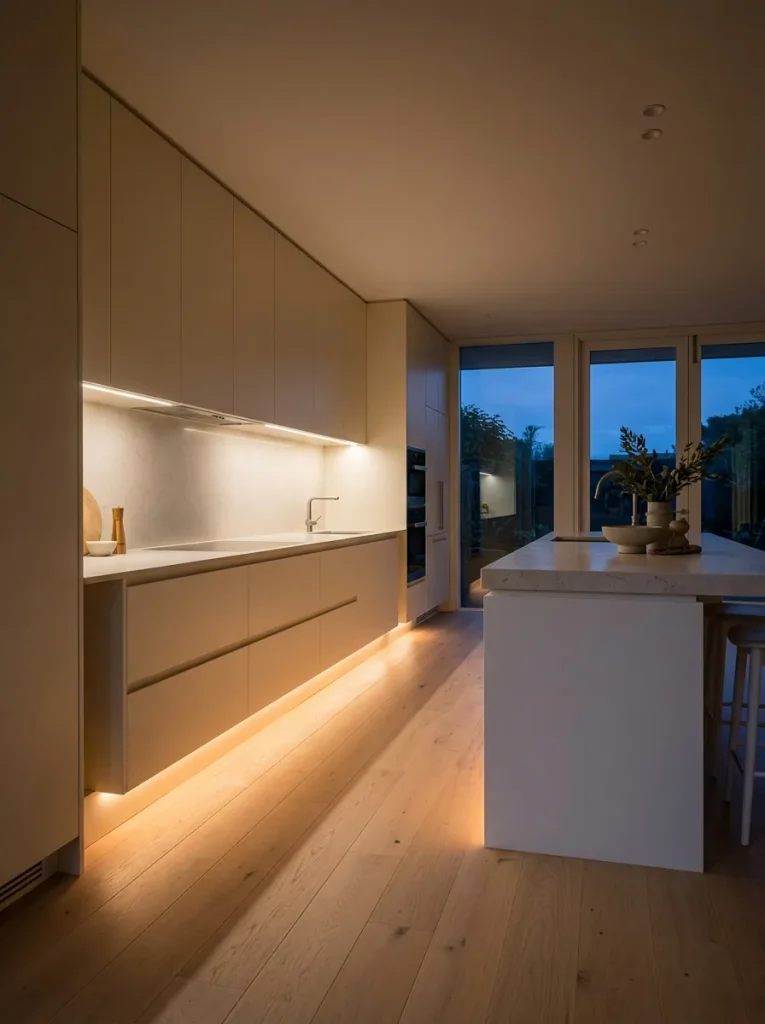
Cost: Moderate, depending on cabinetry access and electrical work.
Time: Several hours to a day, depending on the installation.
Skill Level: Beginner for planning; professional installation may be appropriate for hardwired systems.
Best For: Modern kitchens, floating cabinetry and nighttime navigation.
Toe-kick lighting creates a subtle glow along the base of cabinets, helping define the kitchen’s shape after dark. It can make a low-lit room easier to navigate without switching on every ceiling fixture. Choose low-glare, warm white LEDs and conceal the strips so the light source itself remains out of sight. Keep cables protected and away from areas exposed to water or cleaning products.
Natural Rattan Pendants

Natural rattan pendants bring texture and warmth to kitchens that feature white cabinets, pale stone and wooden accents. Their woven surfaces introduce a relaxed, organic quality without requiring bold colors or elaborate decoration. Choose a tighter weave for a more subtle effect or an open weave for stronger visual texture.
Because woven shades may cast patterned shadows, consider where the light falls across the worktop. A pendant can look beautiful while still leaving certain areas too dim for detailed tasks. Pair rattan fixtures with practical ceiling or under cabinet lighting and check that the material is suitable for the kitchen’s heat and moisture conditions.
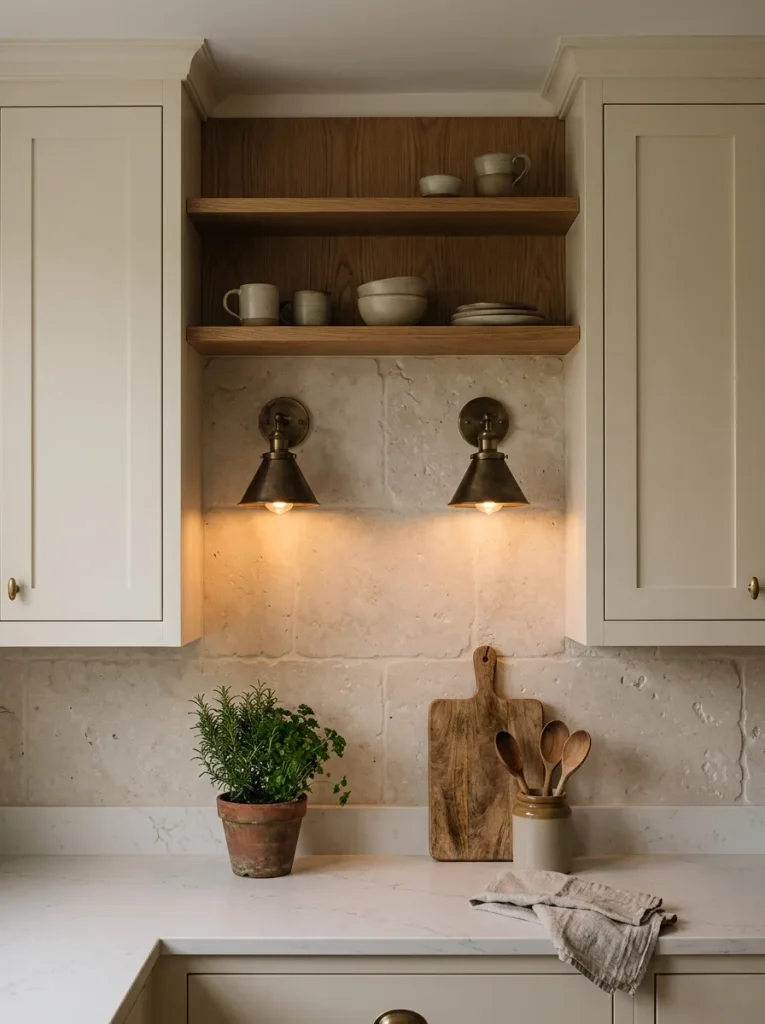
Wall Sconce Lighting
Quick Tip:
Mount wall sconces where they illuminate a useful surface without creating glare or interfering with cabinet doors. Check the fixture’s projection and required electrical clearances before choosing its location.
Wall sconces add another layer of light while drawing attention to a backsplash, open shelf, or coffee station. They work especially well in kitchens with a little extra wall space or where a decorative detail would benefit from focused illumination. Choose shades that direct light toward the intended surface, and coordinate their finish with nearby hardware for a connected look.
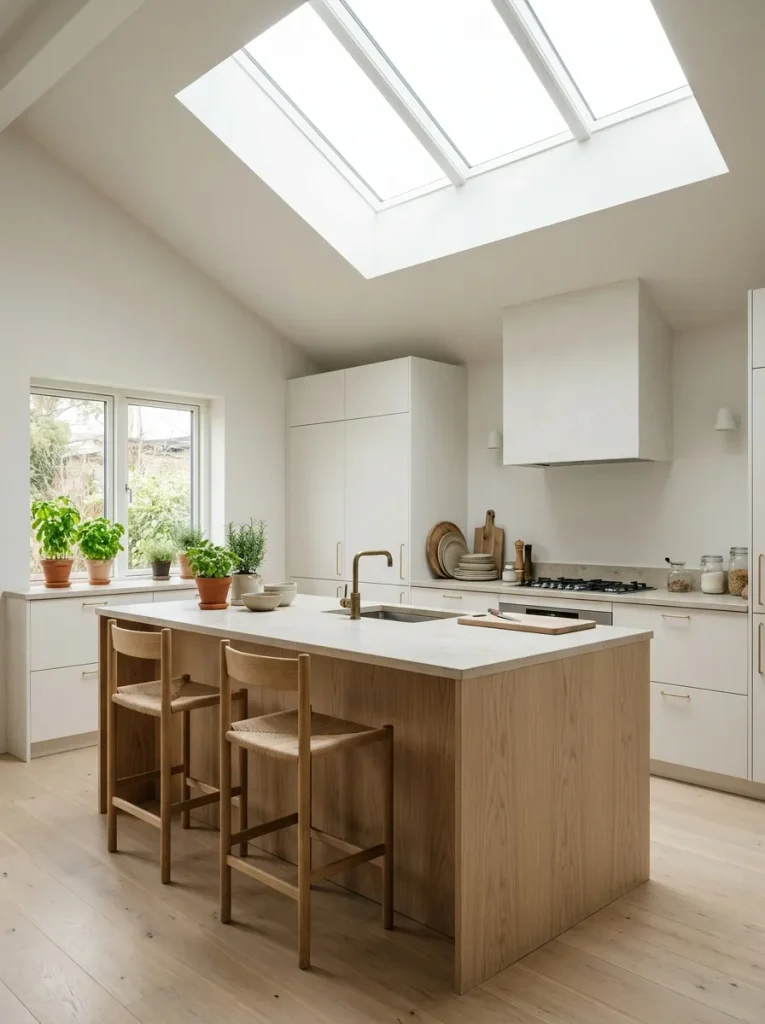
Skylight Daylighting
BEFORE
A kitchen with limited windows can feel dark during the day, particularly around central islands and interior walls. Artificial lights may need to stay on even when the sun is shining.
AFTER
A properly designed skylight can bring natural daylight deeper into the room, highlighting countertop textures and reducing the need for electric lighting during suitable daylight hours.
Skylights require more planning than most decorative lighting updates. Roof structure, waterproofing, insulation, glare, and heat gain all need careful consideration. If a skylight is not practical, a solar tube or improved window treatments may help brighten the space. Keep electric task lighting available for cloudy days and evening cooking.
Black Dome Pendants

- Choose the finish: Matte black creates a softer, less reflective look than glossy metal.
- Measure the island: Select shades that provide visual balance without crowding the counter.
- Check light direction: Look for shades that direct useful illumination downward.
- Coordinate accents: Repeat black in a few hardware details rather than everywhere.
- Layer the lighting: Add under-cabinet LEDs to reduce shadows on work surfaces.
Black dome pendants create a bold outline against pale cabinets and countertops. Their simple shape works with modern farmhouse, industrial, and contemporary designs. If the kitchen already contains many dark details, balance the fixtures with warm wood, light walls, or creamy textiles to keep the room from feeling visually heavy.
Backlit Backsplash Panels

| Feature | Option A: Standard backsplash | Option B: Backlit panel |
|---|---|---|
| Visual effect | Relies on surrounding light | Adds a luminous focal point |
| Installation | Usually straightforward | Requires compatible translucent material and lighting |
| Maintenance | Depends on the surface | Must allow access to lighting components |
| Best use | Everyday kitchen finishes | Feature walls and selected accent areas |
A backlit backsplash creates a distinctive glow that draws attention to natural stone or other suitable translucent materials. The lighting needs to be distributed evenly behind the panel to prevent bright spots and dark patches. Use materials and electrical components designed for the installation environment, and ensure that repairs remain accessible.
Brass Wall Lights

DO:
- Coordinate the brass finish with selected cabinet or faucet details.
- Position lights to illuminate shelves, counters or decorative wall areas.
- Use warm white bulbs for a welcoming glow.
- Check that fixtures provide adequate clearance from cabinets and shelves.
DON’T:
- Mix many unrelated metallic finishes without a consistent plan.
- Place shades where they obstruct cupboard access.
- Ignore cleaning requirements near cooking areas.
- Use decorative wall lights as a substitute for necessary task lighting.
Brass wall lights introduce a softer decorative layer than large ceiling fixtures. They can frame open shelving or brighten a small countertop while creating visual interest along a plain wall. Repeat the finish in just a few details for a cohesive appearance, and combine the sconces with brighter lighting wherever food preparation takes place.
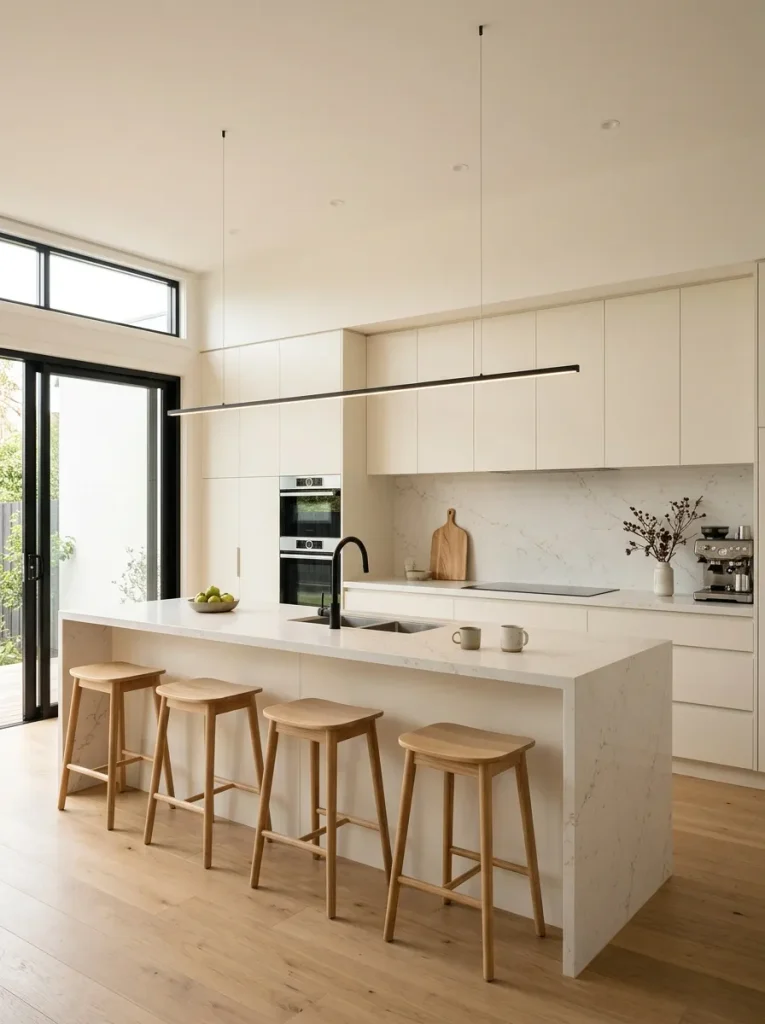
Minimalist Linear Pendants
Cost: Moderate to high, depending on length and integrated lighting features.
Time: Several hours for planning and professional installation.
Skill Level: Beginner for selecting a fixture; electrical work may require a qualified electrician.
Best For: Long kitchen islands and contemporary open plan layouts.
Linear pendants provide a streamlined alternative to several separate hanging fixtures. Their elongated shape can distribute light across a long island while keeping the ceiling visually simple. Check the fixture’s actual light output, beam direction and dimensions before purchasing. A beautiful linear design should illuminate the work surface, not merely decorate the space above it.
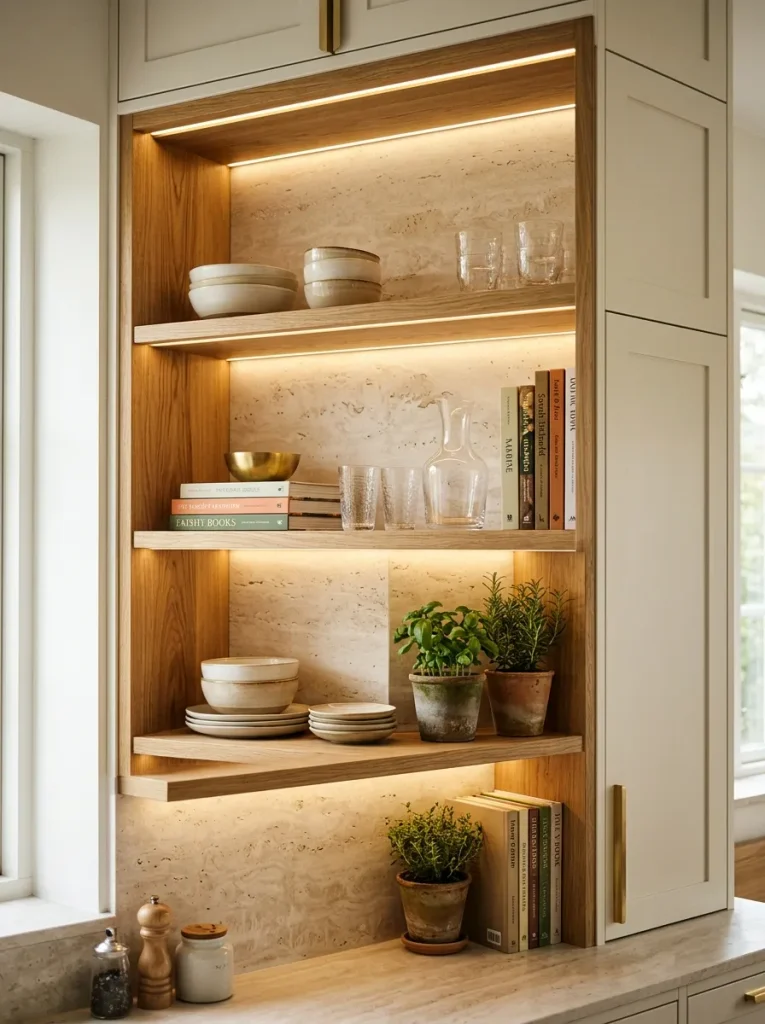
Recessed Shelf Lighting
- Plan the display: Decide which shelves will hold glassware, ceramics, or decorative objects.
- Select suitable LEDs: Choose consistent color temperature and dimmable output where supported.
- Hide the light source: Use recessed channels or concealed mounting positions to minimize glare.
- Protect the wiring: Keep electrical components accessible for maintenance.
- Arrange objects carefully: Leave gaps so the light can reach the shelf surfaces.
Recessed shelf lighting adds depth to kitchen storage and makes everyday objects feel more intentional. It is especially useful for glass-front cabinets, display niches, and open shelving that otherwise disappears into the background. Keep the arrangement simple enough for light to travel around the objects, and avoid placing fragile or heat-sensitive items against unsuitable fixtures.
Pendant Clusters

Quick Tip:
For a balanced cluster, choose shades with a shared finish or shape and vary their heights deliberately. Check the manufacturer’s hanging instructions and ensure the lowest fixture does not obstruct movement or sightlines.
Pendant clusters create a decorative focal point without requiring one oversized fixture. They work well above compact islands, breakfast counters and kitchen corners where a little visual interest is welcome. Keep the cluster proportional to the surface below it, and provide additional task lighting if the pendants leave shadows across food preparation areas.
Motion Sensor Lighting

Motion sensor lighting is useful when you enter the kitchen with full hands or need a little light during the night. Under-cabinet strips and low level fixtures can switch on automatically, helping you move around without activating every ceiling light.
- Best locations: Cabinet undersides, pantry interiors, and low-level pathways.
- Sensor placement: Position sensors where movement will be detected reliably.
- Brightness: Use enough light for safe movement without unnecessary glare.
- Settings: Adjust the activation time and sensitivity according to the manufacturer’s instructions.
- Practical note: Keep a manual override available where possible.
Motion sensors may respond differently depending on placement, obstacles, and the type of sensor. Test the system during normal use before relying on it for nighttime navigation. Choose fixtures designed for their installation location, and maintain separate task lighting for cooking and cleaning.
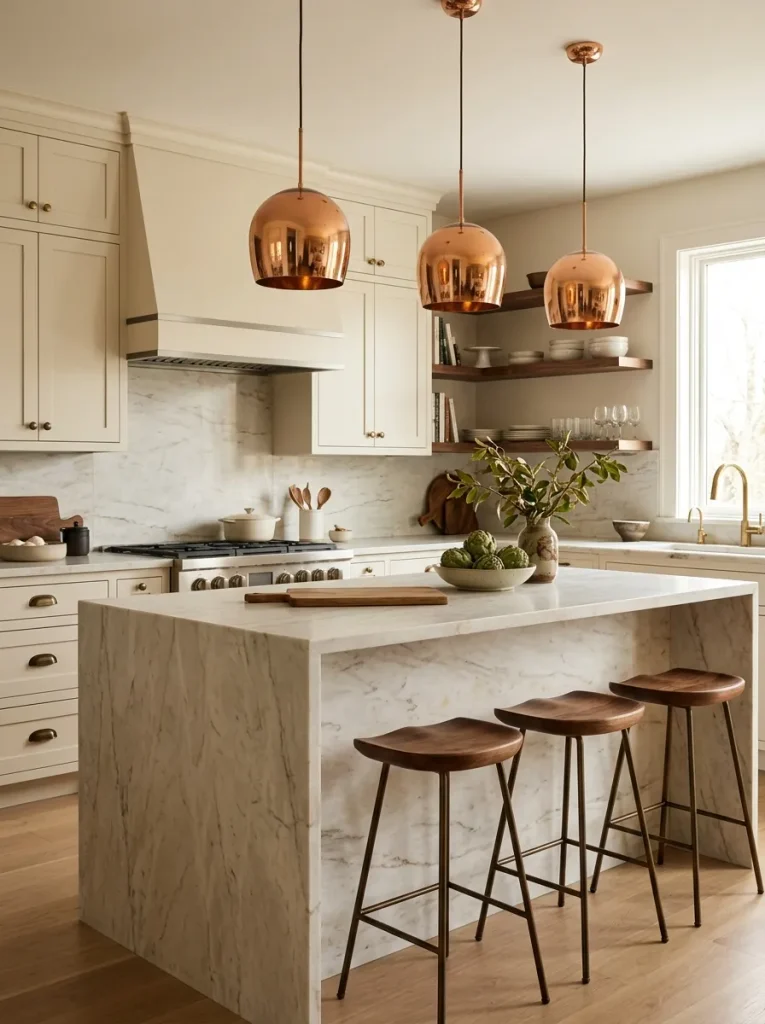
Copper Pendant Lights
BEFORE
A kitchen with mostly white cabinets and pale counters may lack contrast or a distinctive focal point, especially when the lighting fixtures blend into the background.
AFTER
Copper pendants introduce a rich metallic tone that catches surrounding light and adds warmth above an island or breakfast bar.
Copper pairs naturally with wood, cream, charcoal, and deep green. Polished finishes create stronger reflections, while brushed or aged copper looks more understated. Since metallic surfaces can show fingerprints, choose a finish that suits your maintenance preferences. Repeat copper in one or two smaller details rather than introducing too many competing metals.
Smart Kitchen Lighting

| Feature | Option A: Traditional controls | Option B: Smart lighting |
|---|---|---|
| Operation | Wall switches | App, compatible voice control, or switches |
| Scheduling | Usually manual | Automated schedules may be available |
| Brightness | Depends on the switch and bulbs | Dimming available with compatible equipment |
| Setup | Often simpler | May require compatible hubs, networks, or devices |
Smart lighting lets you adjust brightness and, with suitable bulbs, color temperature to suit different activities. You might use brighter settings for meal preparation and softer illumination for evening dining. Before purchasing, confirm compatibility between the bulbs, switches, dimmers and any smart-home platform. Keep manual controls practical for everyone who uses the kitchen.
Warm Ambient Ceiling Lights

DO:
- Choose ceiling fixtures that distribute light across the room.
- Use warm white bulbs for a relaxed atmosphere.
- Combine ambient lighting with dedicated countertop task lights.
- Add compatible dimmers for flexible brightness.
DON’T:
- Depend on a single dim fixture for the entire kitchen.
- Choose bulbs that make food preparation areas uncomfortably dark.
- Ignore shadows around corners or tall cabinets.
- Mix noticeably different light colors without a clear reason.
Warm ambient ceiling lights provide the foundation for a comfortable kitchen. Flush mounts, semi-flush fixtures, and suitable ceiling-mounted LEDs can all work, depending on the room’s height and style. Aim for even coverage, then supplement it with island pendants or under-cabinet lighting. The result should feel welcoming while remaining bright enough for everyday tasks.
Conclusion
Beautiful kitchen lighting is about more than choosing attractive fixtures. It’s about creating a space that feels welcoming, supports your daily routine and reflects your personal style. These Kitchen Lighting Ideas offer inspiration for every kind of kitchen, from simple under-cabinet LEDs to statement pendants and soft ambient ceiling lights.
Start with one change that fits your space and budget. You might add a warm bulb, brighten a dark countertop or introduce a decorative pendant above your island. Save this article on Pinterest, try your favorite idea and share it with someone planning a kitchen update. A little thoughtful lighting can make everyday moments feel special.

One Comment