
Dream Pantry? 25 Kitchen Pantry Ideas to Try Today
A pantry should make dinner easier, not hide the pasta behind three boxes of cereal. These kitchen pantry ideas show you how to turn any cupboard, closet or corner into a space that actually works for your daily routine.
Most of us know the feeling of buying a third jar of cumin because the first two disappeared. In my experience, a messy pantry costs more than space. It costs money, time and patience.
This article shares 30 simple ideas, from pull-out drawers and labeled jars to hidden doors and kid-friendly snack shelves. Each one includes practical sizing tips, small budget choices and easy steps you can try this weekend. Whether you have a walk in room or one tall cabinet, you will find a layout that fits. Scroll through, save your favorites and start with the idea that feels easiest.
Walk In Pantry Layout
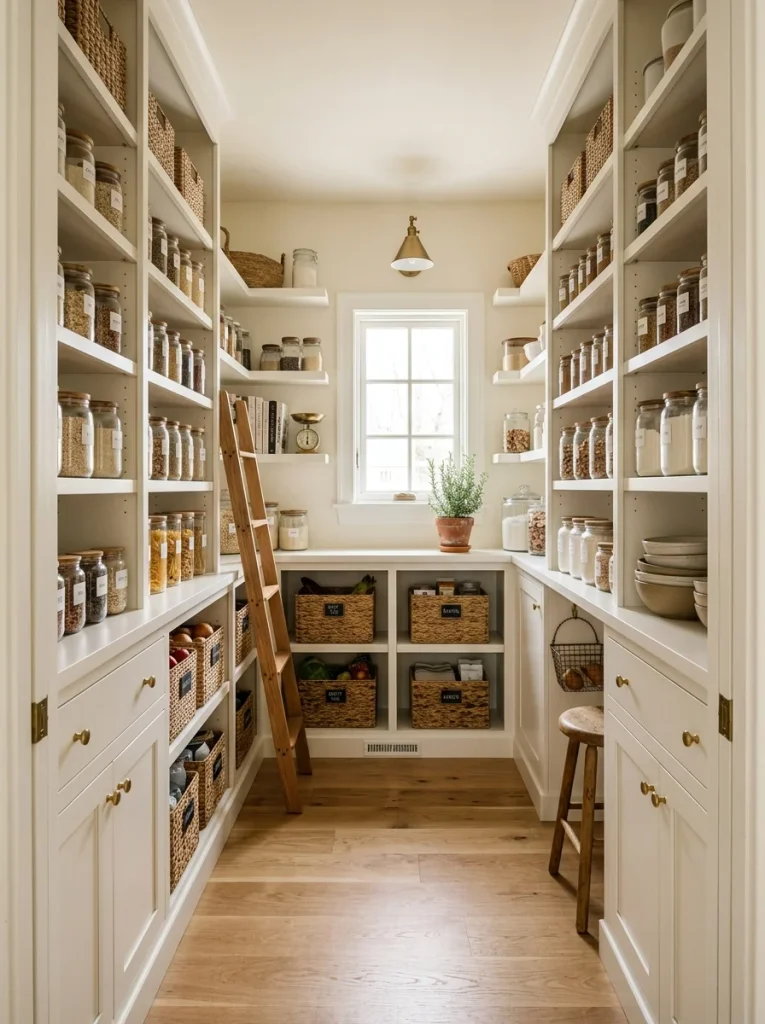
A pantry you can step into changes how you shop, cook and store. Shelves on three walls keep every item visible, so nothing hides behind a box and expires. Leave an aisle of at least 36 inches so you can turn with a bag of flour.
Put heavy items like canned goods and bottled water on lower shelves and lighter snacks up high. I’ve noticed that shelves deeper than 14 inches turn into black holes, so keep them shallower. Among all kitchen pantry ideas, this layout gives you the most room to grow.
Pull Out Drawers

- Choose full extension slides so you can see the back of every drawer. Standard slides hide the last third.
- Pick drawers rated for 75 pounds or more, since canned goods add up fast.
- Measure your cabinet opening first, then subtract about an inch on each side for the slides.
- Group items by use, such as baking, breakfast and snacks, so each drawer has one job.
Bending to dig through a dark cabinet gets old fast. Drawers bring the entire contents to you in one smooth pull. Narrow cabinets with a forgotten back shelf benefit the most, since every inch becomes reachable. Add a shallow rim to keep cans from rolling.
Over the Door Racks
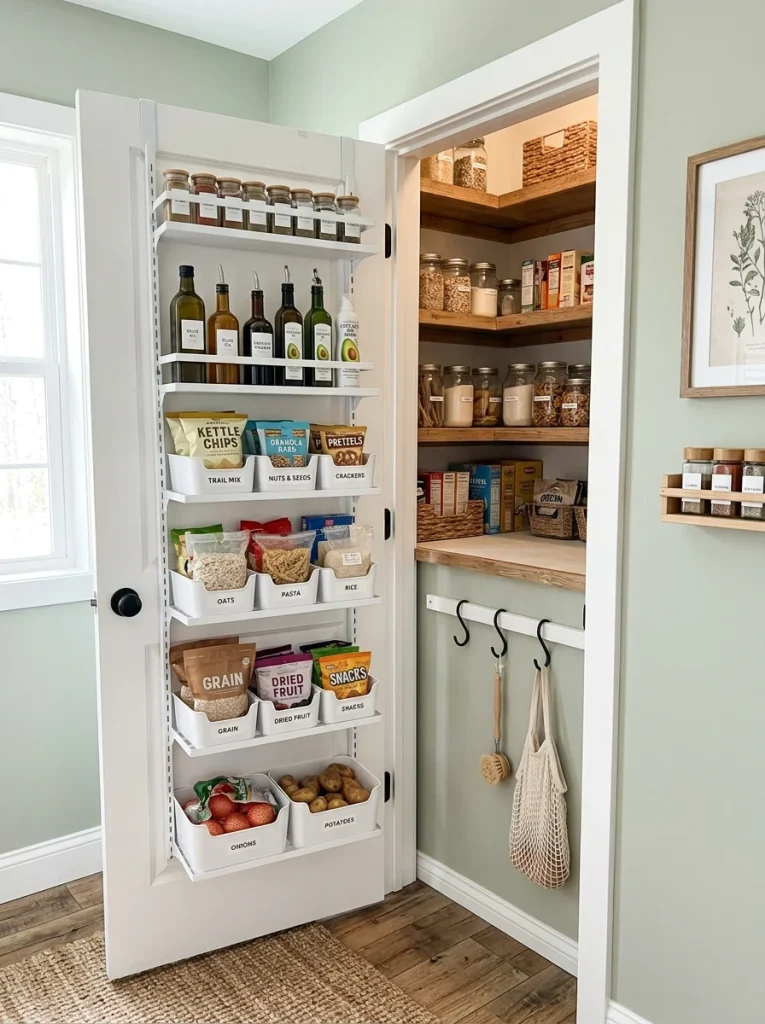
Quick Tip:
Measure the gap between your door and the first shelf before buying a rack. Most racks need about 4 inches of clearance and one that is too deep will keep the door from closing. Choose a rack with adjustable shelves so it fits both cans and tall bottles.
The back of a pantry door is prime real estate that most people ignore. A rack turns it into a second pantry for spices, foil and snacks. I’ve tried this in a small apartment and it freed up a full shelf. Group small items by type so you grab them fast.
Read More: 27 Sun-Soaked Kitchen Window Ideas You’ll Want Today
Lazy Susan Corners

Before: A deep corner swallows jars at the back. You reach in, knock over a bottle, and forget what is hiding in the dark.
After: A turntable spins every item into view. One quick turn shows the olive oil, the pasta, and the sauce you forgot you owned.
Corner cabinets waste more space than any other spot in a kitchen. A two tier turntable about 18 inches wide fits most blind corners. Put tall bottles in the center and short jars around the edge. Leave a half inch of clearance so nothing catches the door when it closes.
Labeled Glass Jars

- Empty one shelf and wipe it down before you start.
- Buy jars in two or three matching sizes so they stack evenly.
- Pour in dry goods and write the expiry date on the label.
- Label each jar on the front with a waterproof label or chalk marker.
Clear jars let you see when flour runs low, so you stop buying duplicates. A uniform set also makes a pantry feel calmer within minutes. Keep original packaging for anything with allergen information or cooking directions and save the jars for staples you use weekly.
Tiered Shelf Risers
| Feature | Flat Shelf | Tiered Riser |
|---|---|---|
| Back row visibility | Hidden | Fully visible |
| Items per shelf | Fewer | More |
| Digging required | Yes | No |
| Cost | Free | Low |
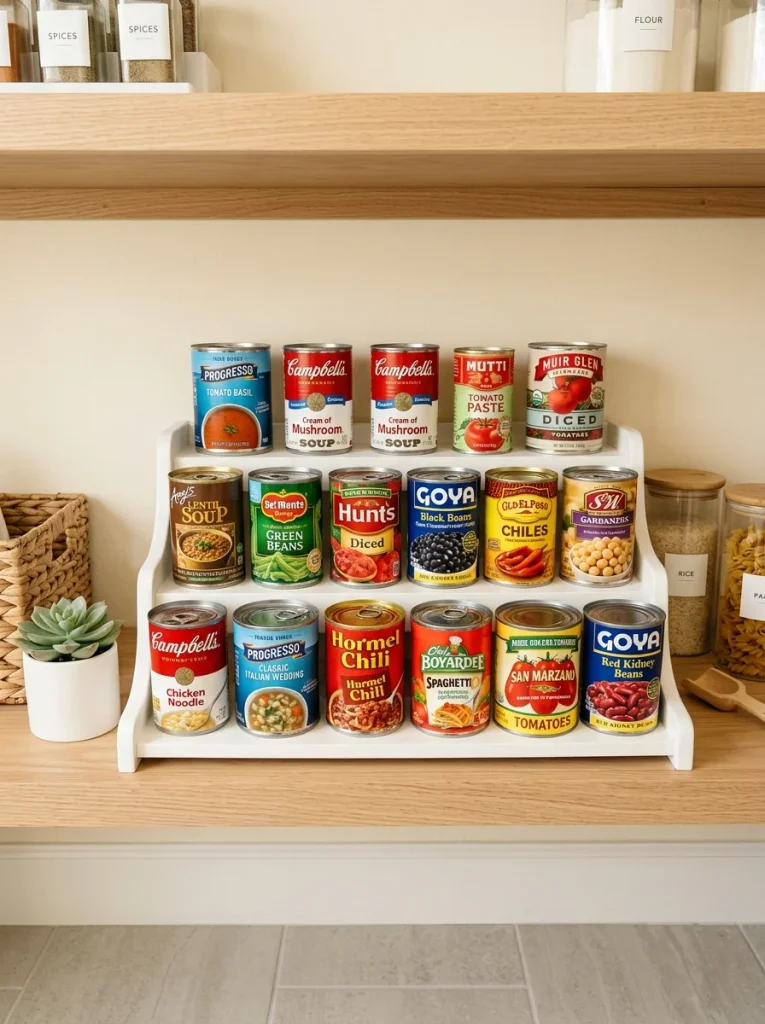
Cans and jars stacked front to back become a guessing game. Risers lift each row a few inches, so labels face you. Measure shelf depth first, then pick risers that leave at least one inch of space on each side. Expandable versions suit uneven shelves.
Slim Rolling Pantry

Do:
- Measure the gap beside your fridge and allow half an inch of clearance.
- Choose a cart with locking wheels so it stays put when loaded.
- Store narrow items like spices, oils and canned tomatoes.
- Keep the heaviest items on the bottom tier.
Don’t:
- Don’t load any tier beyond its weight rating.
- Don’t park it where it blocks a fridge or oven door.
- Don’t buy before measuring, since even a quarter inch matters.
A six inch gap can hold dozens of items, from spices to canned soup. Rolling carts suit renters, since nothing is drilled into walls. I’ve seen these carts rescue tiny kitchens with no cabinet space at all. Roll it out for cooking, then slide it back after dinner.
Hidden Door Pantry

Cost: Medium to high
Time: One to two weeks
Skill Level: Carpenter
Works In: Kitchens with a spare wall
Nobody needs to see your cereal boxes. A flush door hides the whole pantry, so the kitchen stays calm. Match the door to your cabinet finish and use a push latch or slim pull. Wire interior lighting to a door switch so the shelves glow when it opens.
Pantry Under Stairs

Dead space under the stairs can hold more food than a standard cabinet and most homeowners never use it. Follow the slope: tall pull out units sit at the high end and shallow drawers fill the low corner. Measure the height at three points before ordering any hardware.
I’ve seen under stair pantries rescue homes with no kitchen storage at all. Add a slim battery puck light or wired strip so you can see to the very back. Put heavy items like canned goods in shallow drawers, since deep ones get hard to pull.
Baking Station Nook

- Set up a shelf or pull out board at 30 to 36 inches high, so you can roll dough without moving to the counter.
- Store flour, sugar and baking powder in airtight canisters within arm’s reach.
- Keep a marble slab on the shelf, since cool stone helps pastry dough stay firm.
- Hang measuring cups and spoons on hooks inside the door.
- Place the stand mixer on a lower shelf near an outlet so you never lift it far.
Baking goes faster when every tool lives in one spot. I’ve noticed that people who set up a station bake more often, simply because there is less to gather and less to put away. Add a small label for each canister and keep a shelf for pans.
Wire Basket Storage

Quick Tip:
Pick baskets with solid or fine-mesh bottoms so small packets cannot slip through. Group by category, such as snacks, pasta and baking, then label the front. Leave one basket empty for new groceries.
Baskets act like drawers on an open shelf. You pull one out, find what you need, and slide it back. Basket systems keep shelves tidy even in busy households, because putting things away takes one motion. Choose sizes that fit your shelf depth, not just what looks pretty in a store.
Chalkboard Door Pantry

Before: The grocery list lives on a scrap of paper that disappears by Saturday. Someone buys milk twice and the pasta runs out.
After: A chalkboard door holds the list, the weekly menu and a short inventory right where you need them. Everyone in the house can add to it.
Most kitchen pantry ideas focus on shelves, but the door can work just as hard. Two coats of chalkboard paint cost under twenty dollars. Let it cure for three days, then rub the side of a chalk stick across the surface before first use so writing wipes off cleanly.
Open Shelf Pantry
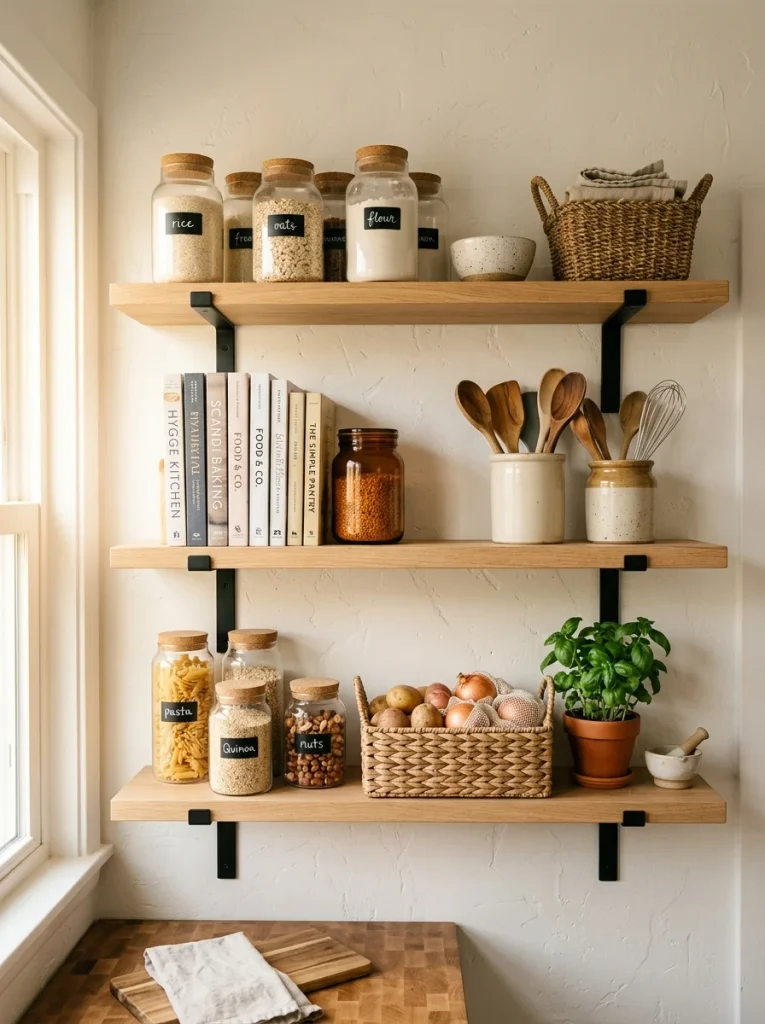
- Mark stud locations with a stud finder before you hang a single bracket.
- Space shelves 12 to 14 inches apart so jars and boxes fit without wasted gaps.
- Use a level and pre drill holes to keep the shelves straight.
- Load heavy jars on the lowest shelf and lighter items above.
Open shelves make a pantry feel like part of the room, so what you store becomes part of the look. Decant dry goods into matching containers and keep original boxes out of sight. Leave about a third of each shelf empty and the whole wall will look calm instead of crowded.
Cabinet Pantry Conversion

| Feature | Old Way | Better Way |
|---|---|---|
| Shelves | Fixed, with wasted gaps | Adjustable every inch |
| Door | Left empty | Spice or snack rack |
| Back items | Lost in the dark | Slide-out trays |
No spare room? A single tall cabinet can hold a surprising amount of food. Measure the interior height, then plan shelves around your tallest items first. Keep cereal boxes in one section and cans in another. Pick one cabinet near the fridge, since you reach for food there most.
Spice Rack Wall
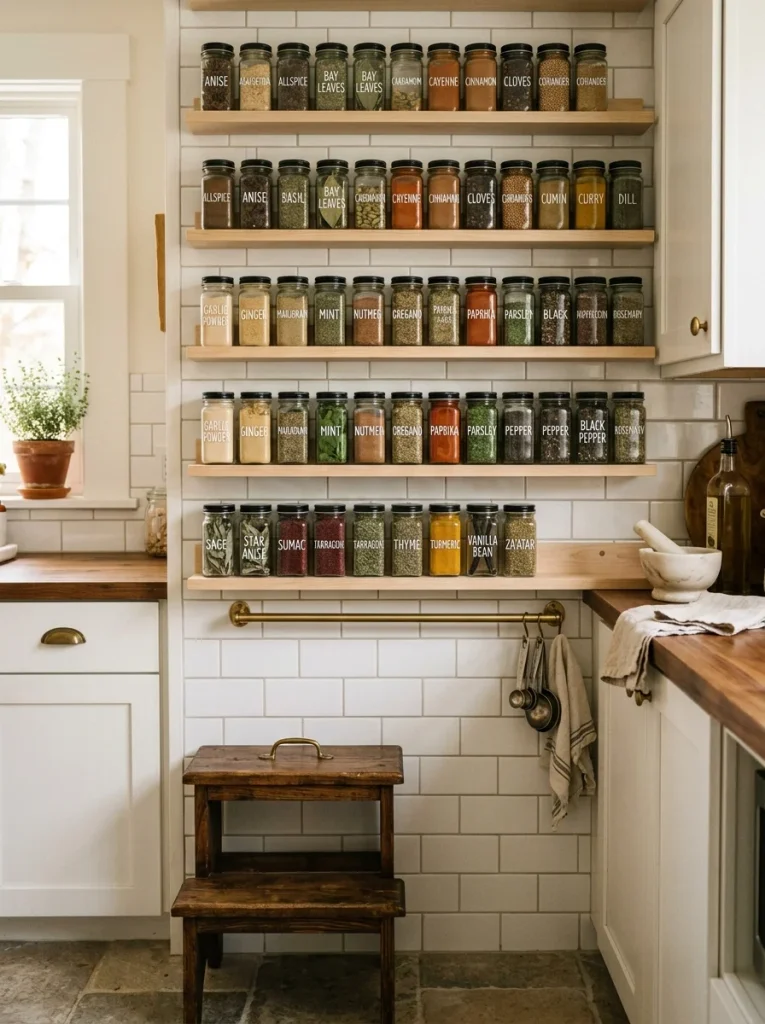
Do:
- Label the lid and the front of every jar.
- Group spices by cuisine, such as Italian, Mexican, and baking.
- Place the most used spices at eye level.
- Keep the rack at least three feet from the stove.
Don’t:
- Don’t store spices above the stove, since heat and steam fade flavor.
- Don’t leave jars in direct sunlight.
- Don’t mix jar sizes, since uneven heights look cluttered.
- Don’t keep jars that have lost their smell.
Heat, light and moisture are the enemies of spice flavor. A wall rack tucked in a cool corner of the pantry keeps jars fresh and visible. Date each jar with a marker when you open it. Ground spices usually last two to three years.
Appliance Garage Pantry
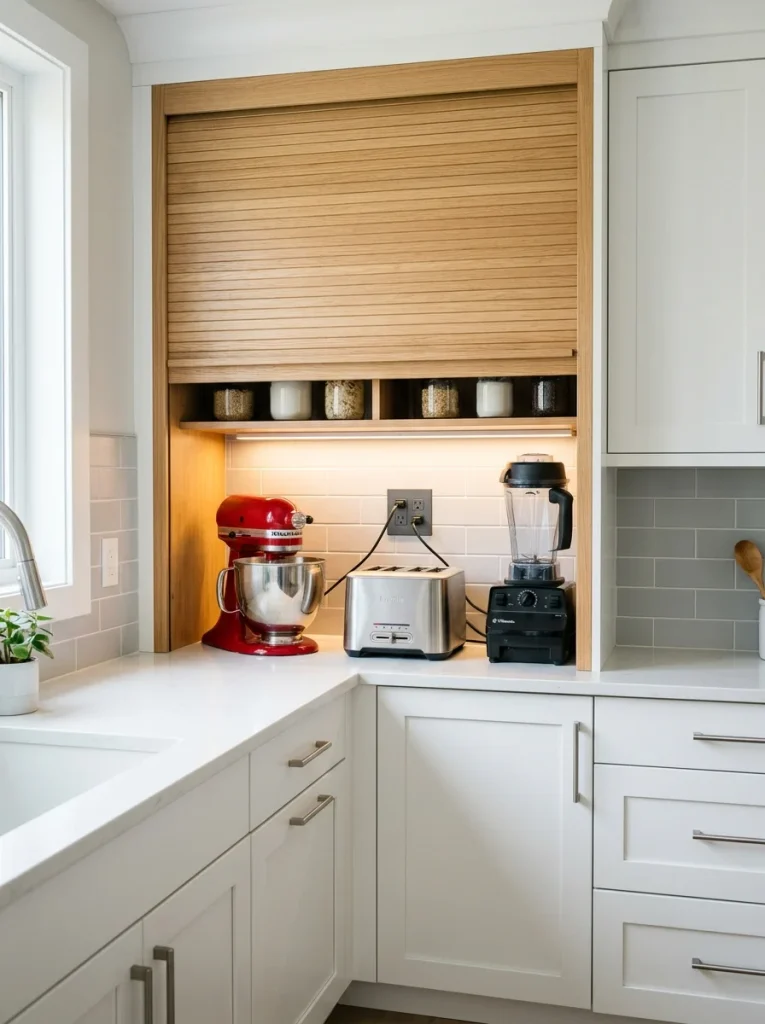
Cost: Medium
Time: One weekend
Skill Level: Intermediate
Best For: Counters crowded with appliances
Appliances crowd a counter faster than any other item. An appliance garage tucks them behind a sliding door, so the surface stays clear. Install an outlet inside the cabinet and unplug heat making appliances like toasters after use. Choose a shelf at least 18 inches tall so a stand mixer fits with the head tilted back.
Kid Friendly Snack Zone

Kids ask for snacks all afternoon. A low shelf they can reach ends the constant parade through your cooking space. Fill clear bins with pre-approved choices like crackers, fruit pouches and granola bars, then let them pick. Set the shelf about 24 inches off the floor.
Simple icons help little ones who cannot read yet. Keep sweets and choking hazards like whole nuts on a high shelf. In my experience, kids who choose their own snacks ask for them less often, and parents get a calmer evening. Rotate the options weekly so the shelf stays interesting.
Bulk Food Containers

- Choose square containers over round ones, since they waste less shelf space.
- Look for gasket seals, which keep pests and humidity out.
- Keep a scoop inside each container so you never reach in with a cup.
- Write the purchase date on a label so older stock gets used first.
- Save the bag’s barcode or allergen panel if you need recall or ingredient details later.
Buying in bulk saves money only if the food stays fresh. Airtight containers protect against pests and stale flavor. A stocked, labeled shelf also cuts last minute store runs. Start with the three staples you use most, such as rice, flour and oats and expand from there.
Motion Sensor Lighting

Quick Tip:
Choose warm white LED strips rated 2700 to 3000K, so food looks natural. Pair them with a motion sensor or door switch, so the lights turn on and off without you. Stick on battery strips work fine for renters.
Dark shelves hide expired food. A bright pantry shows you what you own and what you need. Light the back of each shelf, not just the ceiling, so shadows do not fall across labels. Hardwired options should be installed by a licensed electrician to meet local code.
Color Coded Zones

Before: Cereal sits next to cleaning spray, and baking supplies hide behind soup. Finding anything takes five minutes of digging.
After: Each zone has one color and one purpose. Blue is baking, green is breakfast, tan is snacks, and everyone in the house knows where things go.
Color gives your brain a shortcut. Instead of reading every label, you spot blue and reach for the baking supplies. Limit yourself to three or four zones or the system gets confusing. Match bin colors to your wall or cabinet tones so the pantry looks planned, not random.
Butler’s Pantry Setup

- Pick a spot between the kitchen and dining room, such as a hallway or alcove at least five feet wide.
- Install base cabinets about 24 inches deep with a countertop for landing dishes.
- Hang open shelves or glass front cabinets above for glasses and platters.
- Add a small sink or beverage fridge if plumbing and power are nearby.
A butler’s pantry works like a backstage area for hosting. Dishes, drinks, and platters wait here while guests enjoy the meal. I’ve seen hosts rely on this space during holidays, since the kitchen stays clear for cooking. Even a narrow hallway can do the job with one counter and two shelves.
Small Closet Pantry

| Feature | Coat Closet | Pantry Closet |
|---|---|---|
| Shelving | One deep rod | Shallow adjustable shelves |
| Lighting | Often none | LED strips |
| Door | Wasted | Hooks and racks |
Many homes have a closet near the kitchen that holds coats nobody wears. Swap it for shelves 10 to 12 inches deep and it becomes a pantry. Remove the rod and keep the top shelf for rarely used items. Check that the space stays cool and away from heating vents before storing food.
Beverage Station Nook
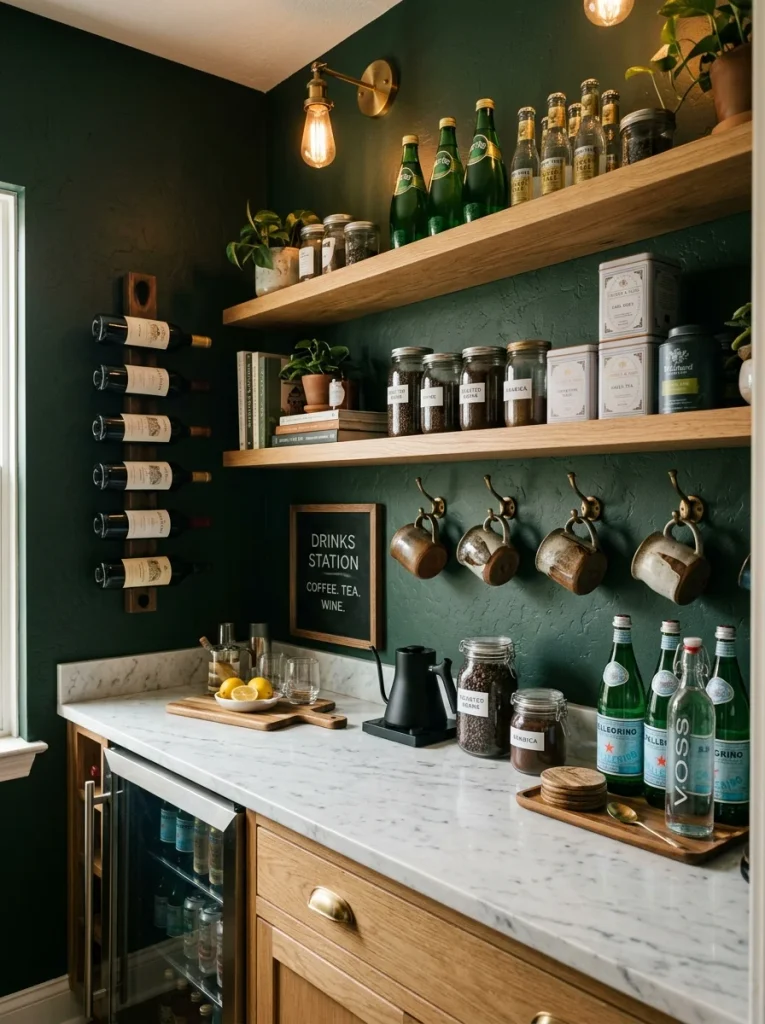
Do:
- Keep coffee, tea and mugs together at one end.
- Lay wine bottles flat on a slim rack.
- Label bottle shelves so guests can find what they want.
Don’t:
- Don’t store wine near the stove or a sunny window.
- Don’t stack heavy bottles on thin shelves.
- Don’t crowd the counter with appliances you rarely use.
A beverage nook pulls every drink into one clear zone. Mornings go faster when mugs, beans and kettle sit within one step of each other. Dedicate a lower shelf to sparkling water and juice so guests can help themselves. A small tray under the coffee maker keeps the shelf dry.
Glass Door Pantry
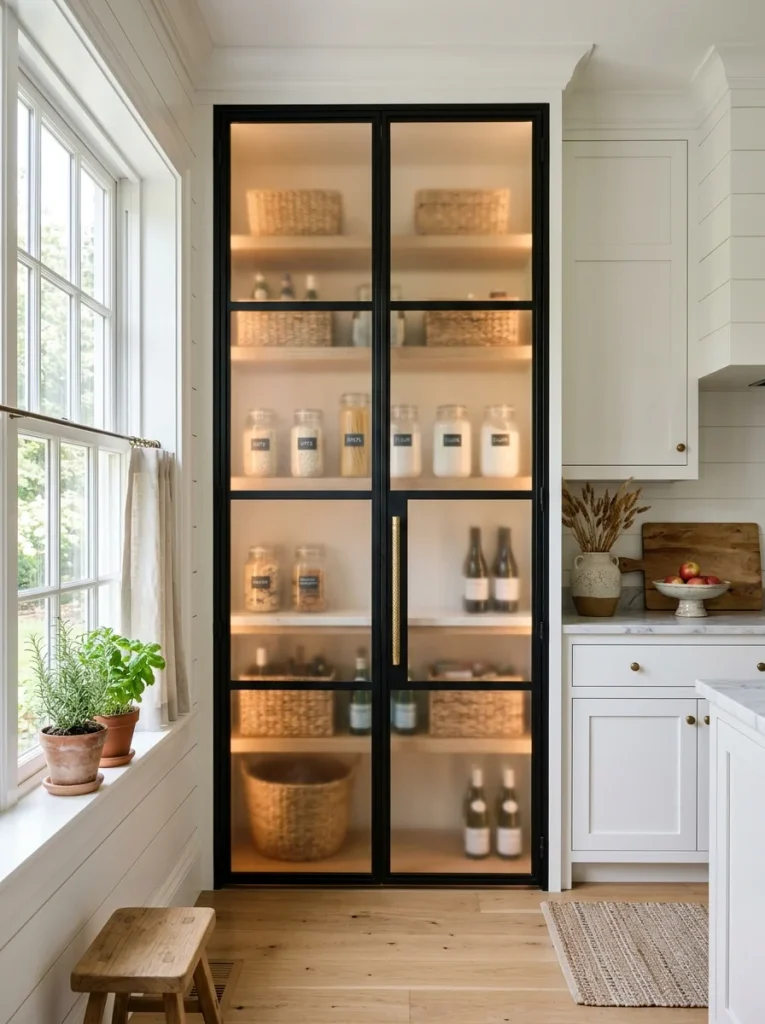
Cost: Medium
Time: One day for a pre-hung door
Skill Level: Intermediate
Best For: Dark kitchens that need more light
Glass lets light travel from the kitchen into the pantry and back. Frosted or reeded panels blur the contents, so the shelves stay private while the room feels open. Clear glass works only if you keep shelves neat. I’ve noticed that a glass door also encourages tidier habits.
Produce Storage Bins

Potatoes and onions last longer in a cool, dark, airy spot. A pantry shelf with ventilated bins is ideal. Wood crates and wire baskets let air move around each item, which slows sprouting and softening. Give each vegetable its own container. Aim for the coolest spot in your pantry.
Never store potatoes and onions together. Onions release moisture and gases that speed up sprouting in potatoes. Keep both away from the stove and fridge wall, which run warm. In my experience, a lined crate also catches dirt, so cleanup takes thirty seconds. Check weekly and toss any soft produce before it spreads.
Conclusion
A calm, organized pantry makes every meal feel a little easier. You do not need a big budget or a full remodel to get there. Sometimes one labeled jar, one pull out basket or one new light is enough to change how your kitchen works. I’ve seen how small changes like these can completely shift the way a home runs day to day. Keep these kitchen pantry ideas close as you plan. Save this post on Pinterest, try one idea this weekend, and share it with a friend who is tired of digging for the paprika. Your dream pantry starts with one shelf.



One Comment