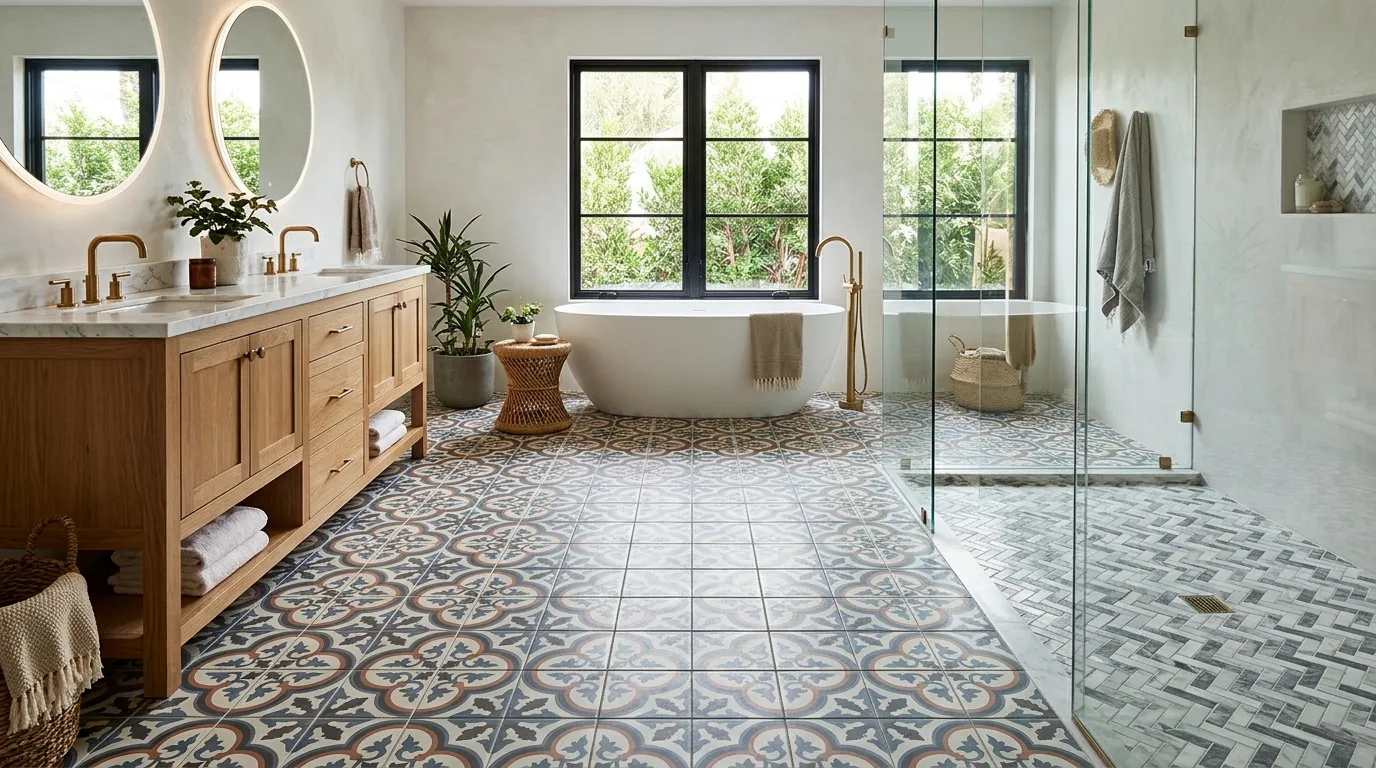
27 Luxe Bathroom Flooring Ideas Worth Every Last Penny
The right bathroom floor can make an ordinary bathroom feel like a luxurious retreat. And sometimes, the smallest design detail creates the biggest visual impact.
These Bathroom Flooring Ideas will help you discover beautiful ways to refresh your space, whether you love timeless marble, warm wood look tiles, bold geometric patterns or elegant natural stone. From sophisticated hotel inspired finishes to cozy, spa like textures, there is a style to suit different tastes, spaces and budgets.
Choosing flooring involves more than finding a pretty pattern. You also need to consider moisture, slip resistance, cleaning requirements and how the material works with your existing fixtures. I’ve noticed that bathrooms often feel more cohesive when the flooring, wall colors and hardware share complementary undertones.
Inside, you’ll find 26 inspiring designs to help you compare materials, explore fresh combinations and identify the details that make a bathroom feel thoughtfully finished. Save your favorite ideas as you browse and use them to plan a space that feels beautiful and practical every day.
Large Format Marble Tiles
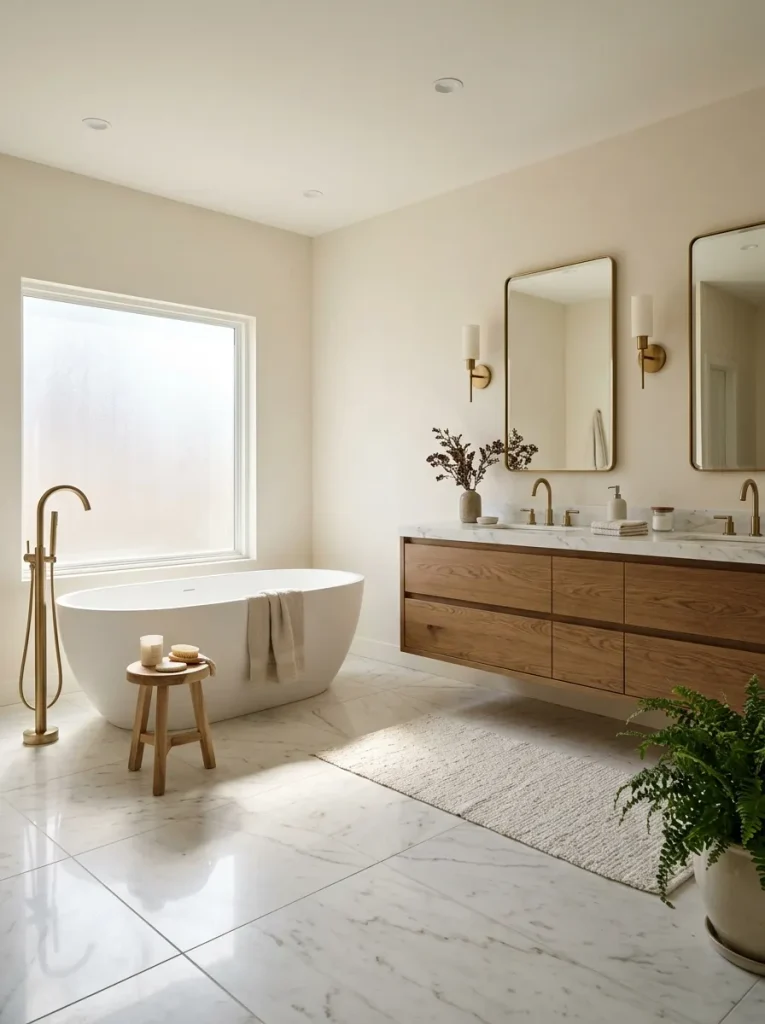
Large format marble tiles bring a quiet sense of luxury to a bathroom without relying on excessive decoration. Their expansive surfaces create fewer grout lines, helping the floor look cleaner and more spacious. White marble with subtle gray veining pairs beautifully with brass hardware, creamy walls and natural wood accents.
For a balanced finish, choose tile sizes that suit your bathroom’s proportions and plan the layout before installation. Marble is porous and requires appropriate sealing and maintenance. Polished surfaces can also become slippery when wet, so consider a honed finish or a suitable slip resistant alternative for areas around showers and tubs.
Warm Beige Porcelain Tiles

- Choose a warm undertone. Beige tiles with creamy or sandy undertones create a welcoming foundation for elegant bathroom finishes.
- Consider a stone effect surface. Porcelain with subtle limestone detailing delivers natural character without the upkeep of genuine stone.
- Coordinate the grout. A shade close to the tile color creates a continuous, spacious appearance.
- Pair with natural wood. Walnut or light oak cabinetry adds depth and keeps the palette from feeling flat.
- Check slip resistance. Select flooring specifically suitable for wet areas, particularly near showers and bathtubs.
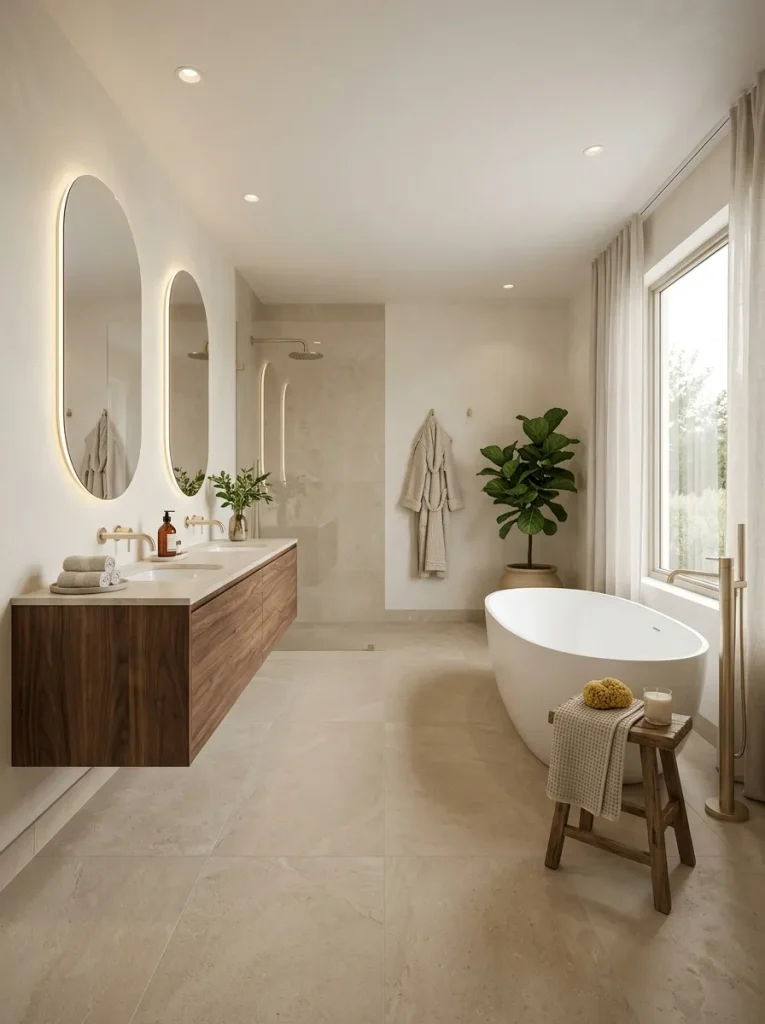
Warm beige porcelain works especially well in bathrooms that feel cold or overly white. It softens contemporary fixtures while maintaining a polished appearance. I’ve noticed that combining sandy floor tones with ivory walls and warm metal finishes creates a cohesive look without requiring expensive decorative accessories.
Black and White Checkerboard Floors
Quick Tip:
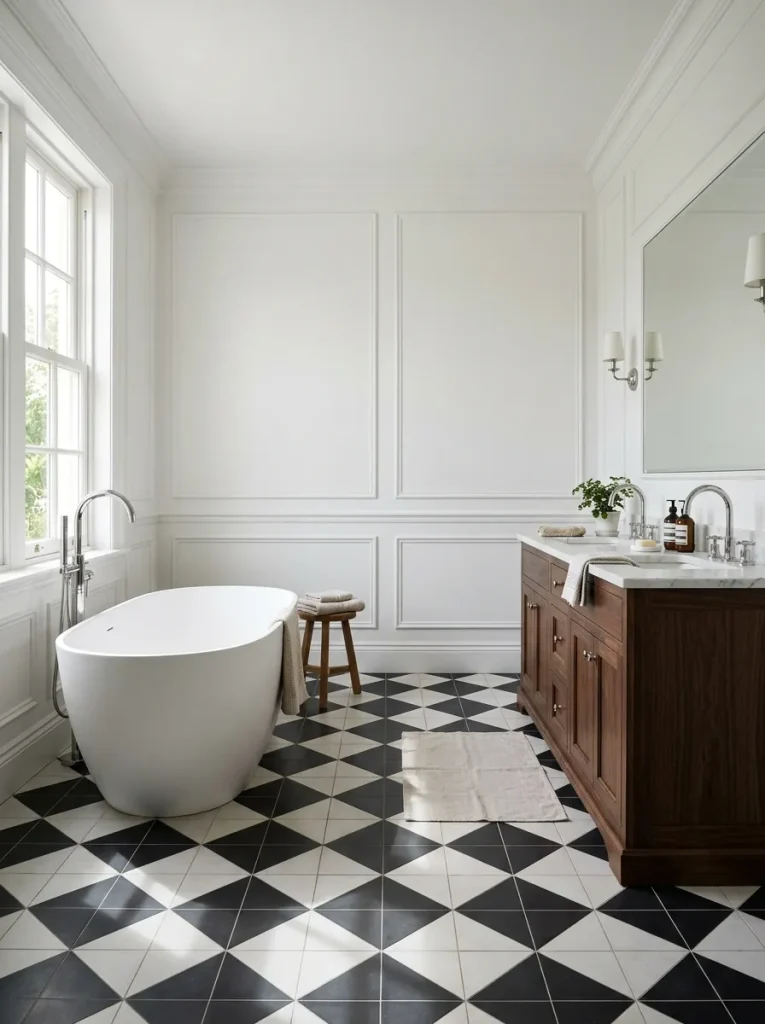
Choose matte black and white porcelain tiles for a classic checkerboard effect with a more practical surface for everyday bathroom use. Test a small layout before installation to ensure the squares align neatly with the walls, vanity and doorway.
Checkerboard flooring gives a bathroom instant architectural character, even when the rest of the room stays simple. Smaller squares suit traditional bathrooms and vintage-inspired spaces, while larger squares create a bolder, more contemporary look. Keep wall finishes relatively restrained so the floor remains the focal point. For busy family bathrooms, select a slip resistant tile rated for the intended wet area and remember that contrasting grout may require more frequent cleaning.
Read More: Bathroom Cabinet Ideas: 30 Sleek Designs That Hide Mess
Terrazzo Statement Flooring

Before settling on terrazzo, consider how much personality you want your bathroom floor to bring. Its distinctive chips create visual interest without requiring elaborate wall decorations, making it especially appealing in minimalist bathrooms.
Terrazzo look porcelain offers a practical alternative to traditional terrazzo, with less demanding routine care. Choose small, subtle flecks for a sophisticated finish or larger, colorful fragments for a more expressive design. Pair the flooring with simple cabinetry and understated hardware so the pattern feels intentional rather than busy. Always check the tile’s slip resistance and suitability for bathroom use before purchasing.
Herringbone Porcelain Planks
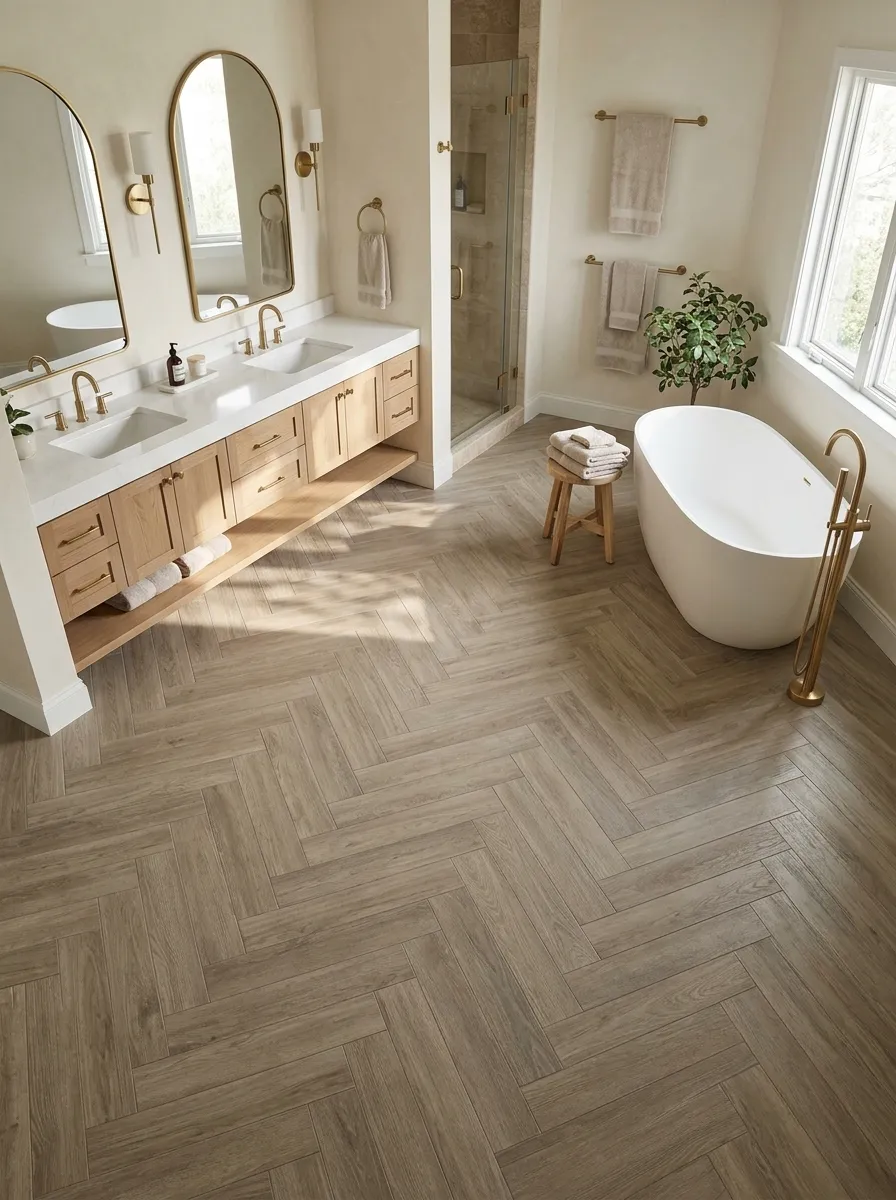
- Select rectangular planks. Choose wood look porcelain tiles with realistic grain and subtle color variation for a natural appearance.
- Pick your direction. Run the herringbone pattern toward the bathtub or along the room’s longest dimension to guide the eye.
- Test the layout. Dry lay a few rows to check alignment around doorways, toilets, and vanity edges.
- Choose coordinating grout. A close color match keeps attention on the geometric pattern instead of individual joints.
- Confirm floor suitability. Check the manufacturer’s slip resistance rating and installation requirements before ordering.
Herringbone flooring introduces movement and craftsmanship without relying on bold colors. It works particularly well in narrow bathrooms because the directional pattern can help guide the eye through the room. Wood look porcelain also delivers a warmer visual effect than plain gray tile, without the moisture concerns of natural hardwood.
Travertine Stone Floors

| Feature | Option A: Natural Travertine | Option B: Travertine Look Porcelain |
| Appearance | Authentic stone variation | Consistent stone inspired pattern |
| Maintenance | Requires appropriate sealing and stone safe cleaners | Generally easier routine care |
| Texture | Naturally varied surface | Available in matte and textured finishes |
| Cost considerations | Often higher material and maintenance costs | Multiple price points and styles |
| Best suited for | Homeowners who value authentic stone | Busy households seeking easier upkeep |
Travertine brings earthy warmth that feels especially inviting in spa-inspired bathrooms. Its natural variation pairs beautifully with oak cabinetry, cream walls, and aged brass details. Porcelain alternatives can recreate much of this character with less maintenance. Whichever material you choose, verify its suitability and slip resistance for the intended bathroom area.
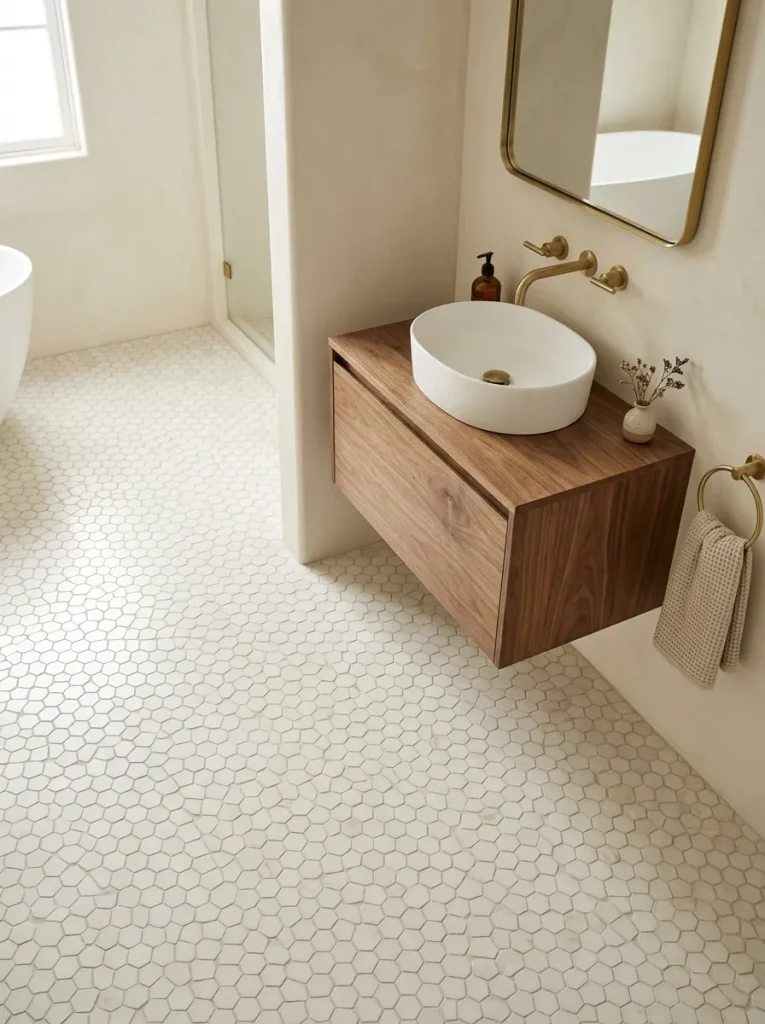
Hexagon Mosaic Floors
DO:
- Choose small hexagons for intricate detail in compact bathrooms.
- Use warm white or pale gray tiles to maintain a light, airy appearance.
- Match grout color to the tile for a softer geometric effect.
- Request a slip resistance rating appropriate for wet bathroom floors.
DON’T:
- Choose glossy mosaics without checking their wet floor suitability.
- Use high-contrast grout unless you want the pattern to stand out.
- Ignore the extra grout lines, which may require more frequent cleaning.
- Skip a layout check around drains and awkward corners.
Hexagon mosaics add personality through shape rather than color, making them an appealing choice for sophisticated bathrooms. Their smaller pieces can also accommodate sloping shower floors when the selected tile and installation system are suitable. Pair them with larger wall tiles to create contrast without overwhelming the room.
Dark Slate Flooring
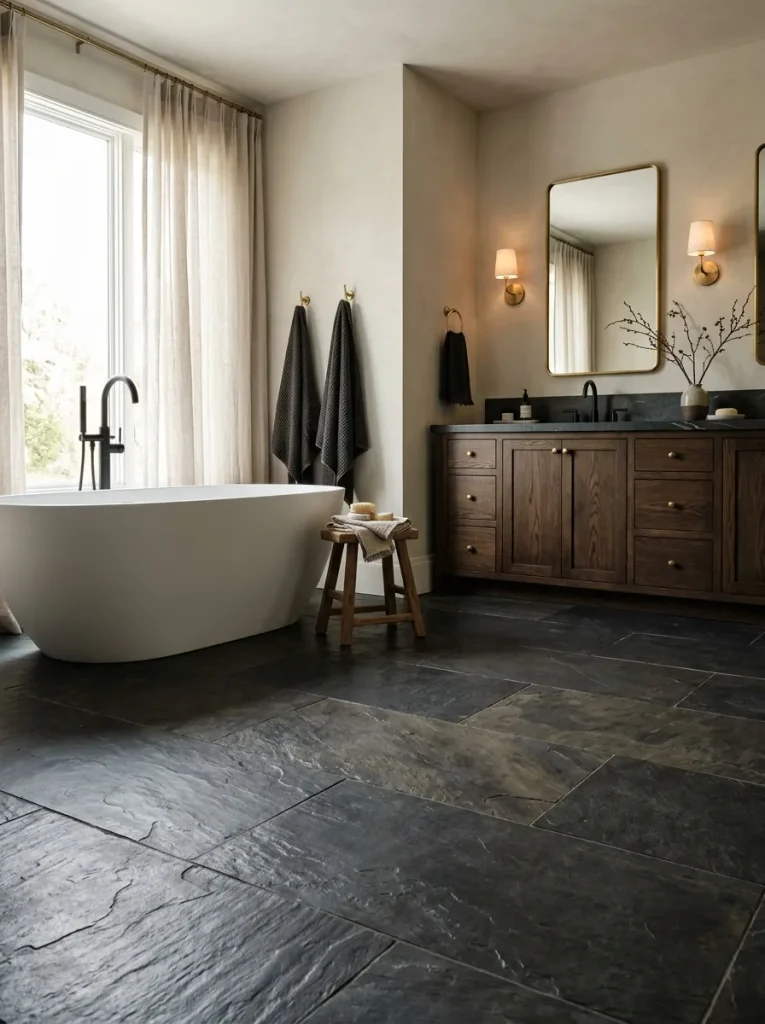
Cost: Varies by stone grade, finish, and installation.
Maintenance: Natural slate may require sealing and stone safe cleaning products.
Skill Level: Professional installation is recommended for complex layouts and uneven substrates.
Best For: Contemporary, industrial and spa inspired bathrooms.
Dark slate flooring gives a bathroom a grounded, architectural quality that feels luxurious without looking overly decorative. Its charcoal tones provide a striking backdrop for white sanitaryware and warm wood finishes. Choose a finish suitable for wet areas and test samples under your bathroom lighting because darker surfaces can make a small, poorly lit room feel heavier.
Cream Limestone Tiles
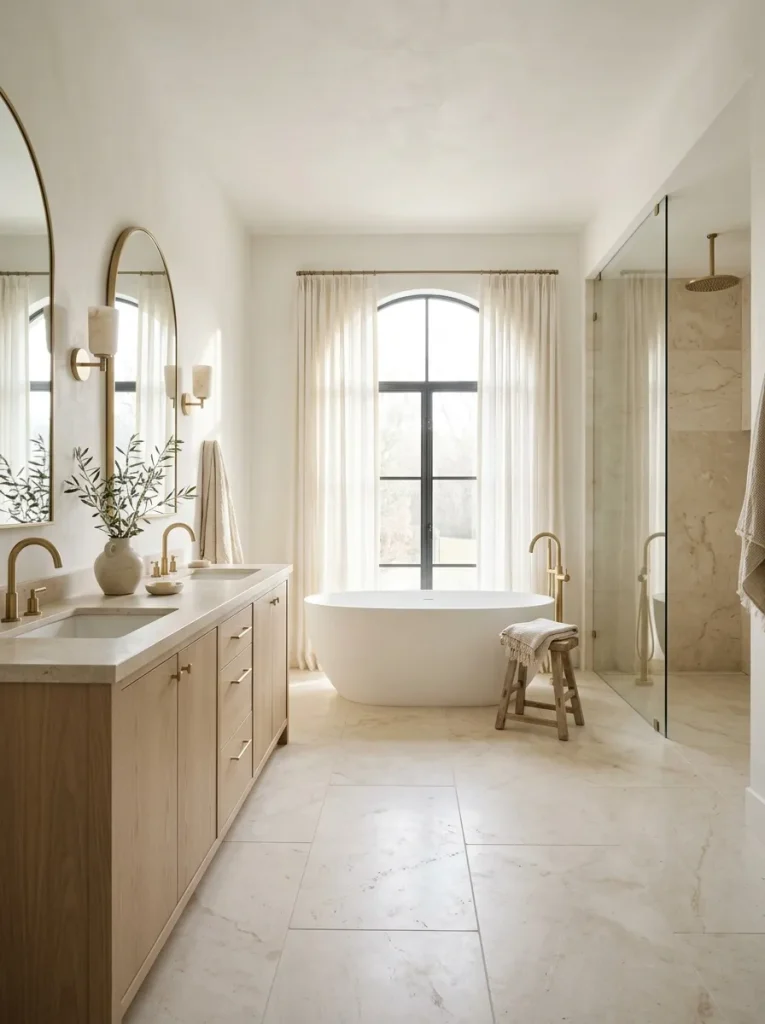
Cream limestone creates the understated richness often found in boutique hotels and carefully designed spa bathrooms. Its gentle variations add depth while keeping the overall palette light and peaceful. Natural limestone is porous, so sealing and suitable cleaning products are important. Before choosing it for a shower or frequently splashed floor, confirm that the specific stone finish is appropriate for those conditions.
Bold Geometric Tiles
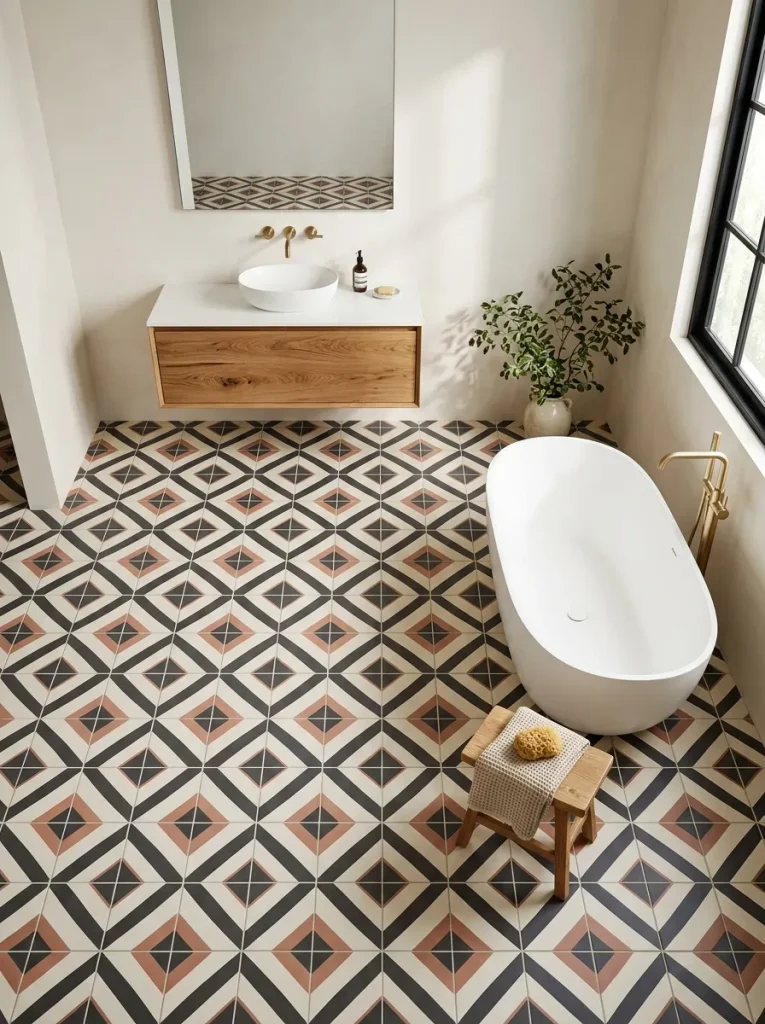
- Start with a defined palette. Limit the pattern to two or three coordinated colors so the floor feels intentional.
- Balance the geometry. Pair intricate flooring with simple walls, clean cabinetry and understated fixtures.
- Choose the right scale. Larger motifs work well in open bathrooms, while smaller patterns can suit compact powder rooms.
- Plan the alignment. Center the pattern around a focal point, such as the vanity or bathtub, whenever the layout allows.
- Order enough material. Account for cuts, pattern matching, and spare tiles for future repairs.
Geometric flooring brings the personality of designer interiors into an everyday bathroom. It can make a simple vanity feel more distinctive without requiring expensive accessories. Porcelain is available in many graphic designs and finishes, giving you plenty of options. Before installation, review a full size sample because repeating patterns can look very different across an entire floor.
Wood Look Porcelain Floors
Quick Tip:
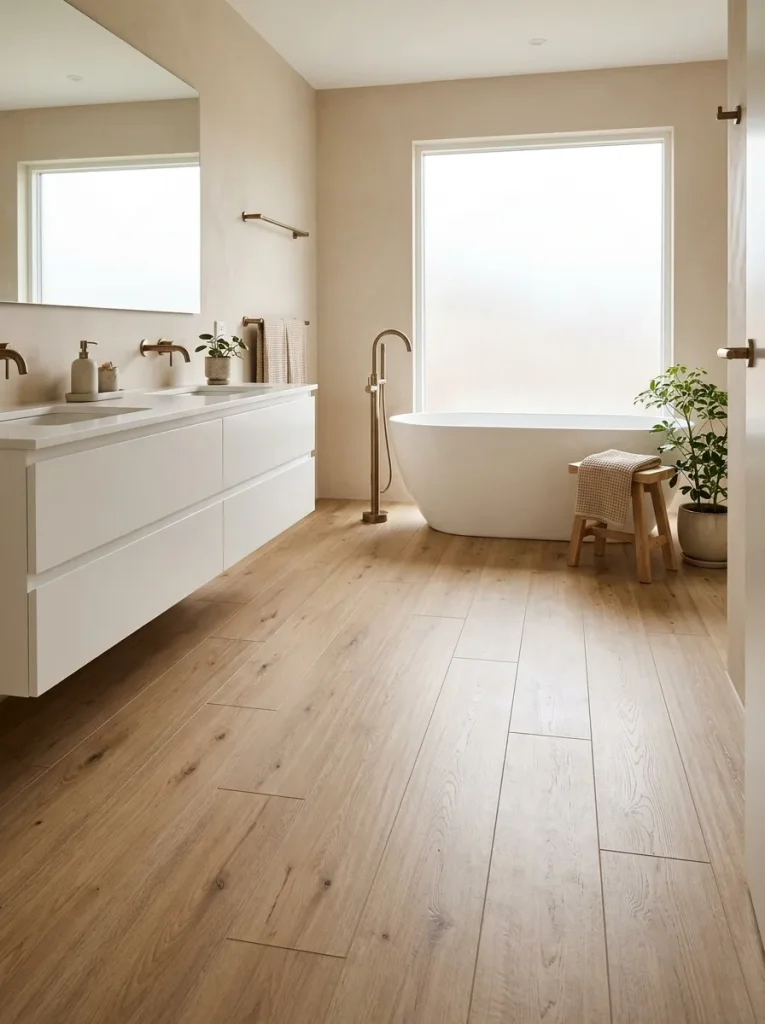
Select wood look porcelain with varied grain patterns and several coordinating plank shades to avoid an overly repetitive appearance. Choose a finish rated for bathroom use, particularly around the shower and bathtub.
Wood-look porcelain offers the cozy appearance of timber while avoiding many of the moisture related concerns associated with natural hardwood. It works beautifully with white fixtures, oak cabinetry, and warm neutral walls. For a convincing finish, choose planks with realistic knots and subtle grain variation. A suitable grout color and narrow joints help reinforce the wood plank effect, while careful installation prevents uneven edges from becoming uncomfortable underfoot.
Large Gray Porcelain Slabs

BEFORE
Small floor tiles with dark grout create a busy grid across the bathroom. The numerous joints compete with the vanity, shower glass, and other finishes, making the floor feel visually fragmented.
AFTER
Large gray porcelain slabs create broader, calmer surfaces with fewer grout lines. The room feels more unified, particularly when the walls and fixtures follow a restrained color palette.
For the best result, choose a slab size that suits the room and can be installed safely over a properly prepared substrate. Large-format tiles require careful leveling and suitable adhesive coverage. Their understated gray tones pair well with black, chrome, or brushed nickel fixtures, but a textured, bathroom-rated finish is worth considering for wet areas.
Penny Round Mosaic Tiles
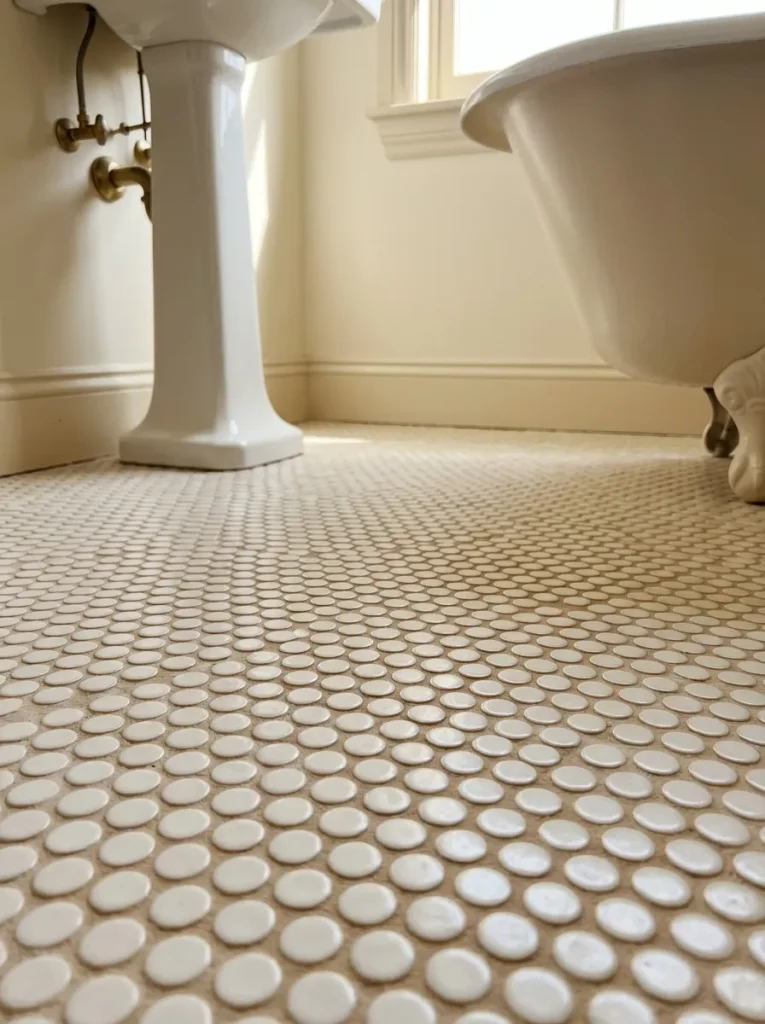
- Choose your finish. Matte or lightly textured mosaics can offer a softer look than glossy surfaces.
- Select a grout shade. Warm white grout creates a gentle, continuous appearance, while darker grout emphasizes each circle.
- Coordinate the fixtures. Brass taps and rounded mirrors complement the small circular pattern.
- Plan around drains. Ask your installer to check how the mosaic sheets will fit around floor drains and edges.
Penny round tiles bring charming detail to bathrooms without requiring a bold color scheme. Their small circular shapes work especially well in vintage inspired spaces, powder rooms and compact ensuites. The numerous grout joints can provide useful texture, but they also mean more cleaning. Choose a tile specifically suitable for floors and confirm its wet area slip resistance before installation.
Luxury Vinyl Stone Flooring
| Feature | Option A: Stone Look Luxury Vinyl | Option B: Porcelain Tile |
| Underfoot feel | Generally softer and warmer | Harder and cooler |
| Installation | Often simpler, depending on the product | Usually requires tile setting skills |
| Water protection | Depends on the product and installation | Porcelain itself absorbs very little water |
| Maintenance | Generally straightforward | Generally straightforward |
| Best suited for | Suitable bathrooms with approved vinyl systems | Bathrooms needing a durable tiled surface |
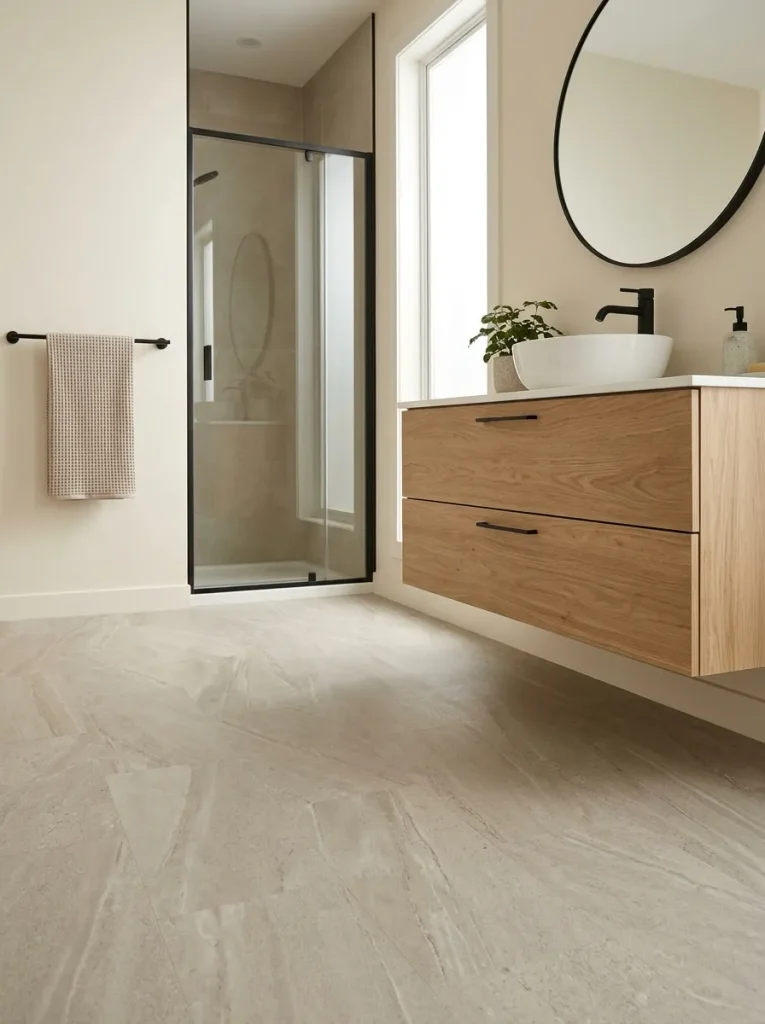
Luxury vinyl can deliver a refined stone-inspired look without the hard feel of ceramic or porcelain. It may be especially appealing during a renovation where comfort and installation time matter. However, not every vinyl product is approved for full bathrooms or shower areas. Check the manufacturer’s written requirements for waterproofing, subfloor preparation, perimeter sealing, and wet area use before purchasing.
Patterned Cement Tiles
DO:
- Choose a restrained color palette that complements the vanity and wall finishes.
- Seal cement tiles with a compatible product before use and maintain the finish as recommended.
- Test a sample against your bathroom lighting and other materials.
- Keep wall decor simple to let the patterned floor stand out.
DON’T:
- Assume cement tiles are naturally waterproof.
- Use acidic cleaners that can damage cement based surfaces.
- Skip the manufacturer’s sealing and maintenance instructions.
- Forget to check slip resistance for the intended wet area.
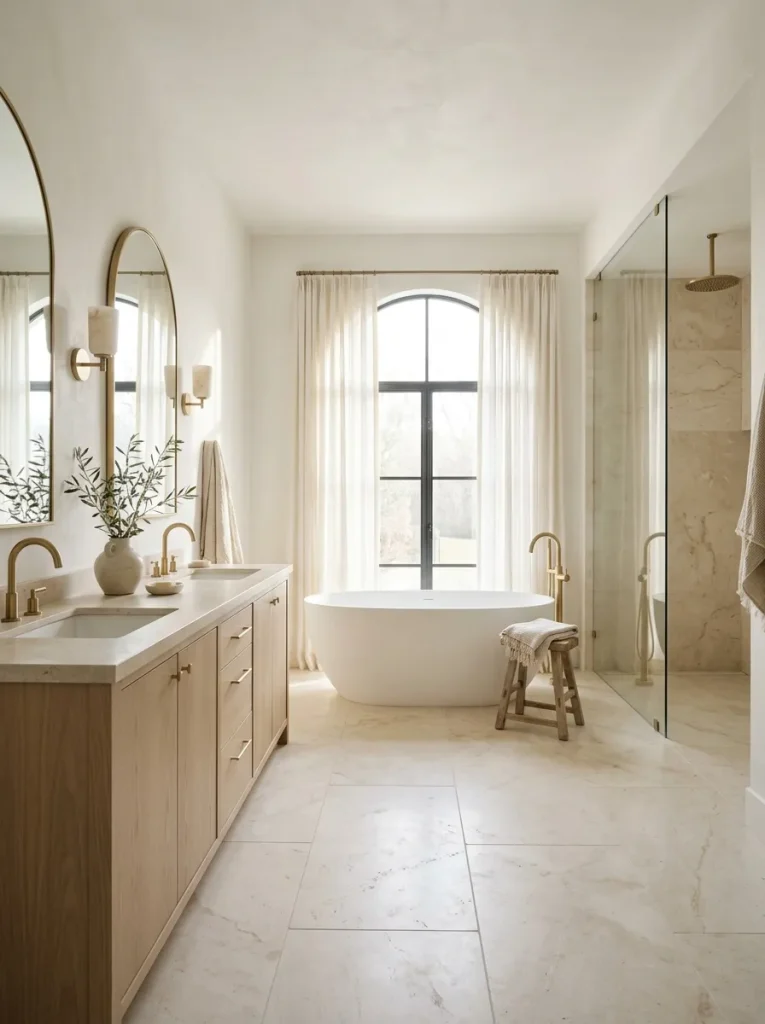
Patterned cement tiles add handcrafted character that feels distinctive and personal. Their rich motifs suit Mediterranean, vintage, and eclectic bathrooms, especially when paired with simple cabinetry. Unlike many porcelain alternatives, cement tiles are porous and can stain or etch without suitable protection. Proper sealing, compatible cleaning products and regular maintenance help preserve their color and finish over time.
White Marble Mosaic
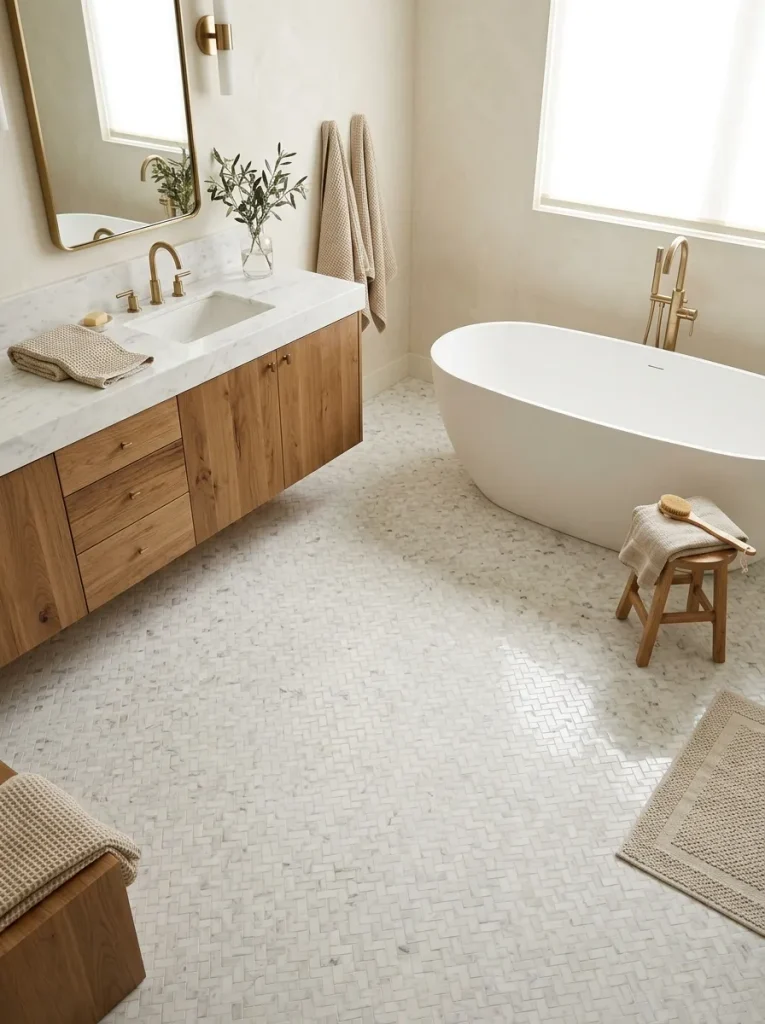
Cost: Moderate to high, depending on marble grade and mosaic design.
Maintenance: Requires suitable sealing and pH neutral stone cleaners.
Best For: Classic, transitional and spa inspired bathrooms.
Visual Effect: Delicate veining adds texture without overwhelming a small room.
White marble mosaics bring intricate detail to the floor while maintaining a light, elegant palette. Their smaller pieces can also work well on properly sloped shower floors when the tile and installation system are suitable. Keep the surrounding finishes simple, especially if the marble has prominent veining. Since polished stone can become slippery when wet, check the finish and its suitability for the intended floor area.
Terracotta Porcelain Tiles
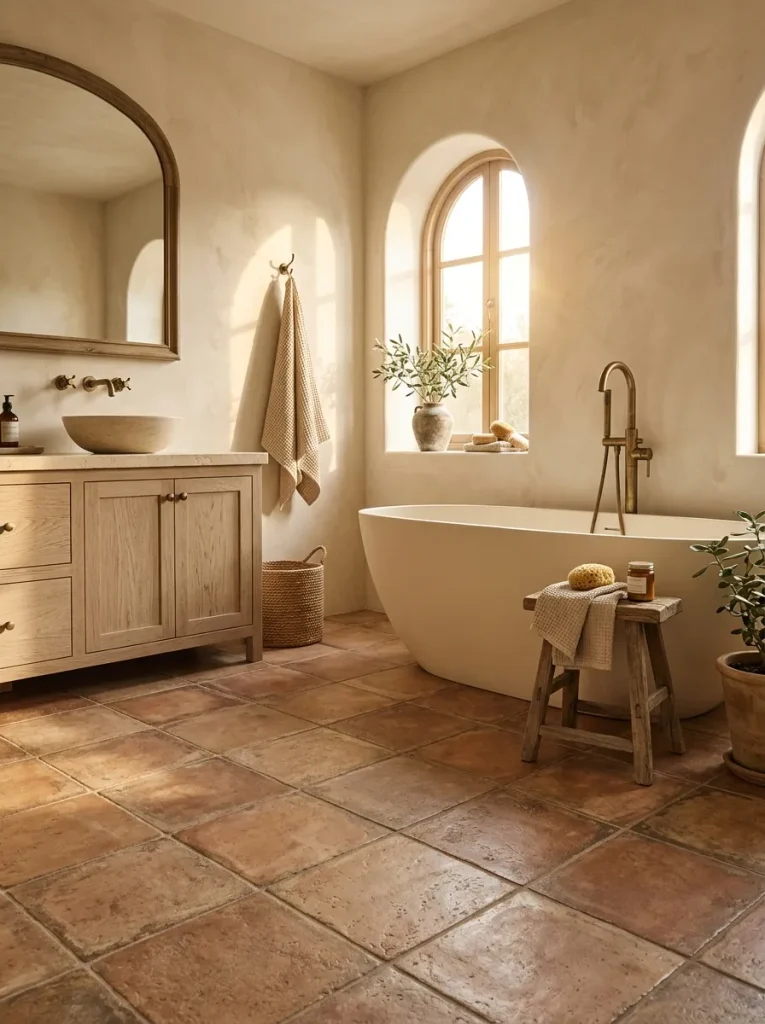
Terracotta inspired flooring gives a bathroom a warm, welcoming personality that feels especially inviting in cooler seasons. Porcelain versions recreate the earthy color of traditional clay while generally requiring less maintenance than porous natural terracotta.
- Coordinate the palette: Pair rust colored tiles with creamy walls, light oak and brushed brass.
- Choose the finish carefully: Look for a bathroom rated surface with suitable slip resistance.
- Balance the warmth: Add white sanitaryware or pale stone accents to keep the room from feeling too dark.
- Check undertones: Order samples before committing, because terracotta can shift from orange to brown under different lighting.
For a cohesive finish, repeat one of the floor’s warm tones in a small accessory or vanity detail. This creates a considered design without making every surface match.
Fish Scale Mosaic Floors

Before
Plain bathroom flooring can leave an otherwise lovely space feeling predictable. Adding several contrasting finishes may create visual clutter rather than a clear design focal point.
After
Fish scale mosaics introduce a graceful repeating pattern with soft, curved edges. Muted green or blue tones bring subtle color, while ivory versions offer texture without a strong contrast.
Use the pattern selectively and keep surrounding finishes uncomplicated. A neutral vanity and simple wall tiles allow the scalloped shapes to remain the star. Before installation, confirm that the selected mosaic is rated for bathroom floors and has suitable wet-area slip resistance. A sample layout also helps ensure the pattern runs consistently around edges and drains.
Glossy Porcelain Tiles
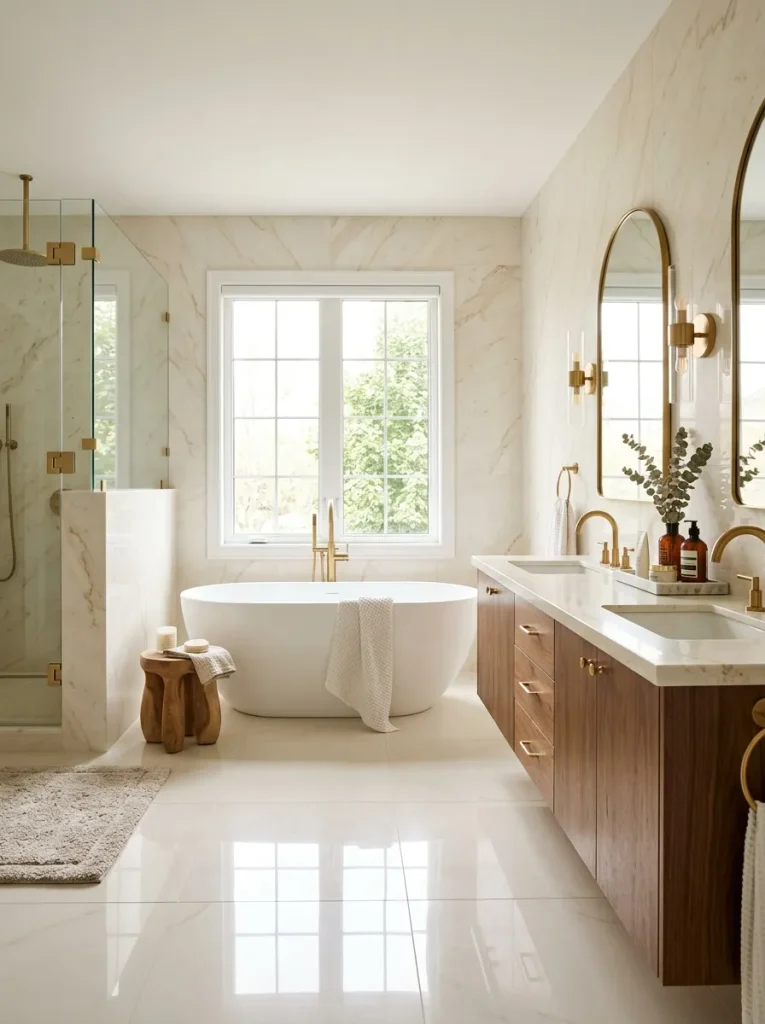
- Choose a light color. Ivory, pale beige and soft gray help reflect light and create an airy appearance.
- Coordinate the grout. A similar shade keeps the floor looking calm and cohesive.
- Check the finish. Confirm that the tile is suitable for bathroom floors and offers appropriate slip resistance when wet.
- Use lighting thoughtfully. Warm wall sconces and diffused daylight can soften reflections across glossy surfaces.
- Consider maintenance. Glossy finishes may show water spots, footprints, and smudges more readily than matte alternatives.
Glossy porcelain can give a bathroom a bright, polished appearance, especially where natural light is limited. Its reflective surface complements metallic fixtures and smooth cabinetry, making it a natural fit for glamorous interiors. However, shine should never take priority over safety. For floors around showers and bathtubs, compare product specifications carefully and consider a textured or matte finish if it provides better traction.
Basketweave Marble Floors

Quick Tip:
Use a basketweave pattern with small contrasting inserts if you want intricate detail without introducing multiple colors. Request a sample sheet to check the scale and grout appearance before ordering.
Basketweave marble flooring brings the craftsmanship of traditional interiors into a polished modern bathroom. The woven pattern creates movement while the pale stone keeps the overall look light. It pairs particularly well with framed mirrors, classic faucets and understated cabinetry. Because natural marble requires careful maintenance, use stone safe cleaners and appropriate sealers, and verify the selected finish’s suitability for wet floors.
Charcoal Hexagon Tiles
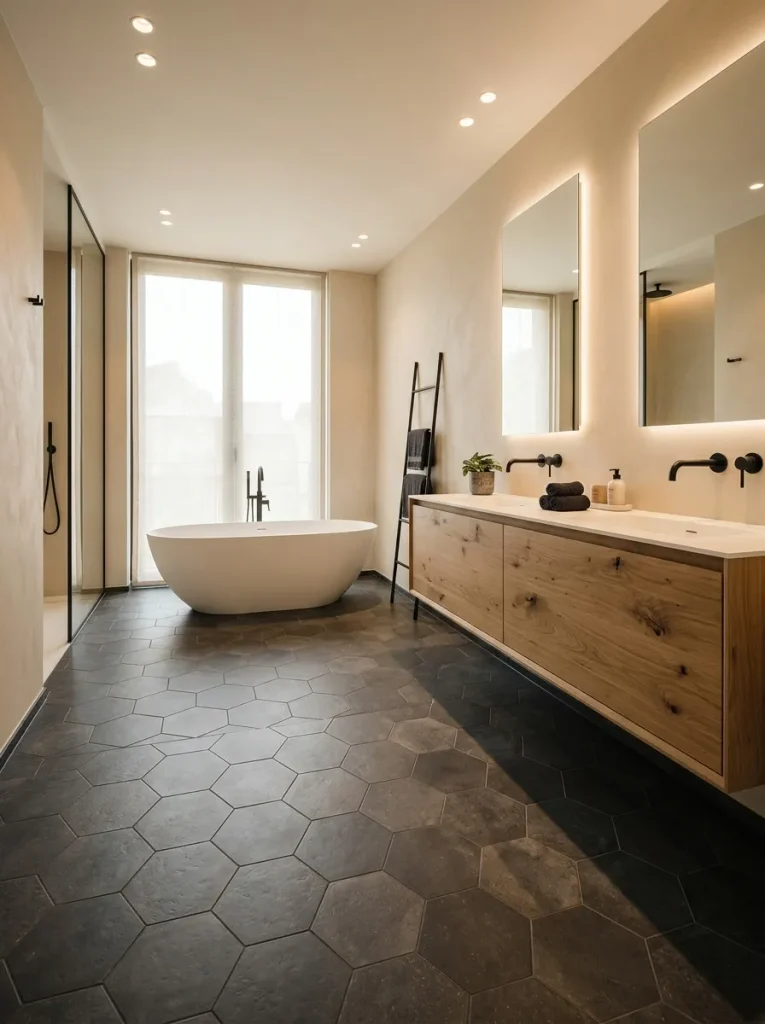
BEFORE
Pale, uniform flooring can sometimes make a bathroom feel visually flat, particularly when the walls and cabinetry share similar shades. The room may lack a clear focal point.
AFTER
Charcoal hexagon tiles establish a defined foundation and add geometric character. Their deep tone contrasts beautifully with white fixtures and warm wood, creating a sophisticated, contemporary finish.
For a balanced result, use lighter walls and avoid introducing too many competing patterns. In smaller bathrooms, consider charcoal tiles with subtle tonal variation rather than a completely uniform black surface. Check samples under both daylight and artificial lighting and select a floor-rated product with suitable slip resistance for wet conditions.
Soft Pink Marble Floors

- Choose muted tones. Look for blush marble with soft veining rather than saturated pink for a sophisticated finish.
- Coordinate warm metals. Champagne brass or brushed gold complements the stone’s rosy undertones.
- Balance the color. Use ivory walls, white sanitaryware, and pale wood to keep the room feeling light.
- Seal natural stone. Follow the marble supplier’s recommendations for sealing and ongoing maintenance.
Soft pink marble offers a distinctive alternative to traditional white and gray bathroom flooring. Its gentle color adds warmth without demanding bold accessories or dramatic wall treatments. I’ve noticed that muted blush tones work especially well when repeated sparingly in towels or small decorative details. Before buying, inspect the actual slabs or tiles because natural marble can vary considerably in color and veining.
Concrete Look Porcelain Floors
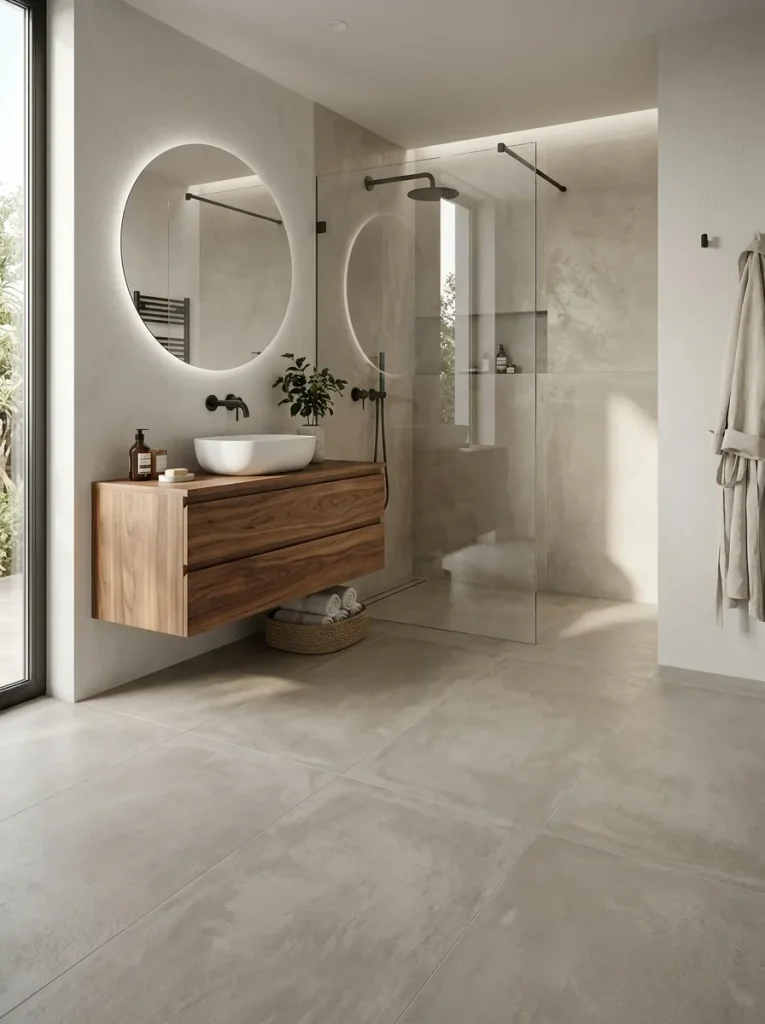
Cost: Varies by tile size, finish and installation requirements.
Maintenance: Generally straightforward with regular sweeping and compatible tile cleaners.
Best For: Contemporary, industrial and minimalist bathrooms.
Visual Effect: Creates a calm, continuous foundation with subtle texture.
Concrete-look porcelain combines the understated character of polished cement with the practical qualities of porcelain tile. Its restrained pattern works well alongside warm wood, glass shower screens, and simple metal fixtures. Choose warm greige for a softer appearance or cooler gray for a more industrial mood. Large tiles can reduce visible grout lines, but proper substrate preparation and installation remain essential for a level, durable floor.
Blue Patterned Porcelain Tiles
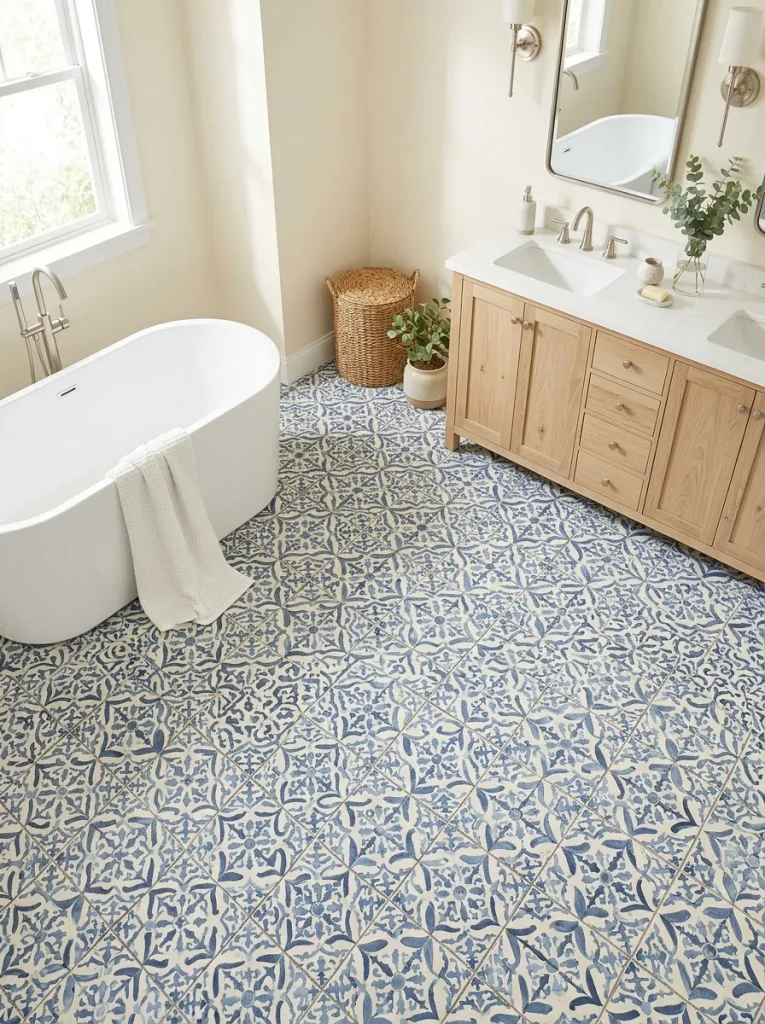
DO:
- Choose two or three coordinating blue shades for a cohesive pattern.
- Pair decorative tiles with plain walls and uncomplicated cabinetry.
- Order samples to compare the pattern against your fixtures and wall colors.
- Confirm that the tiles are suitable for bathroom floors and provide appropriate wet area slip resistance.
DON’T:
- Combine several competing patterns across the same small room.
- Assume every decorative wall tile is suitable for flooring.
- Ignore grout color, which can change the overall appearance.
- Forget to account for pattern alignment and cuts around fixtures.
Blue patterned flooring brings color and personality to a bathroom while maintaining a classic, timeless feel. It suits coastal, Mediterranean and traditional interiors, particularly when balanced with white surfaces and natural wood. For a calmer result, choose a pattern with plenty of cream in its design. Keep a few spare tiles for future repairs, especially if the collection may eventually be discontinued.
Mixed Stone Mosaic Floors
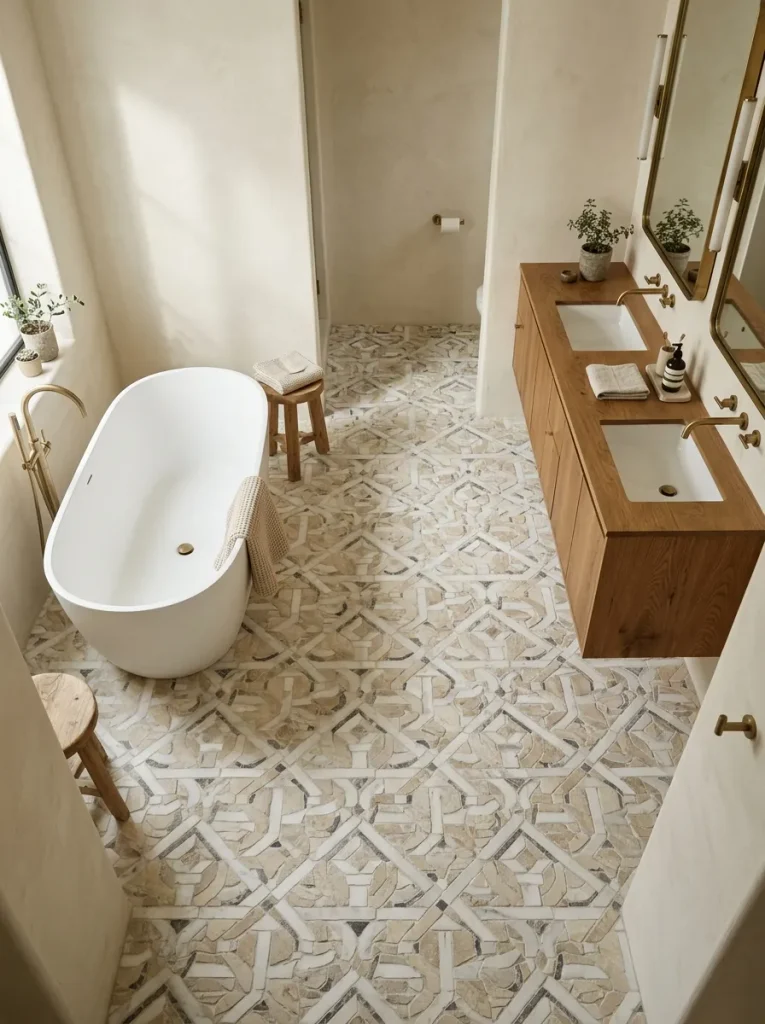
Cost: Moderate to high, depending on the stone types and mosaic complexity.
Maintenance: Depends on the stone; many natural stone mosaics require sealing and stone safe cleaners.
Best For: Spa-inspired bathrooms and interiors with layered natural materials.
Visual Effect: Adds depth and texture without relying on a single uniform tile.
Mixed-stone mosaics create a richly layered floor that feels distinctive and thoughtfully designed. Combining warm and cool stone tones can help connect different finishes throughout the bathroom, from brass fixtures to gray cabinetry. For a cohesive result, choose a mosaic with one dominant color and smaller amounts of contrasting stone. Check the individual materials’ maintenance needs and wet-area suitability before installation.
Veined Marble Look Porcelain
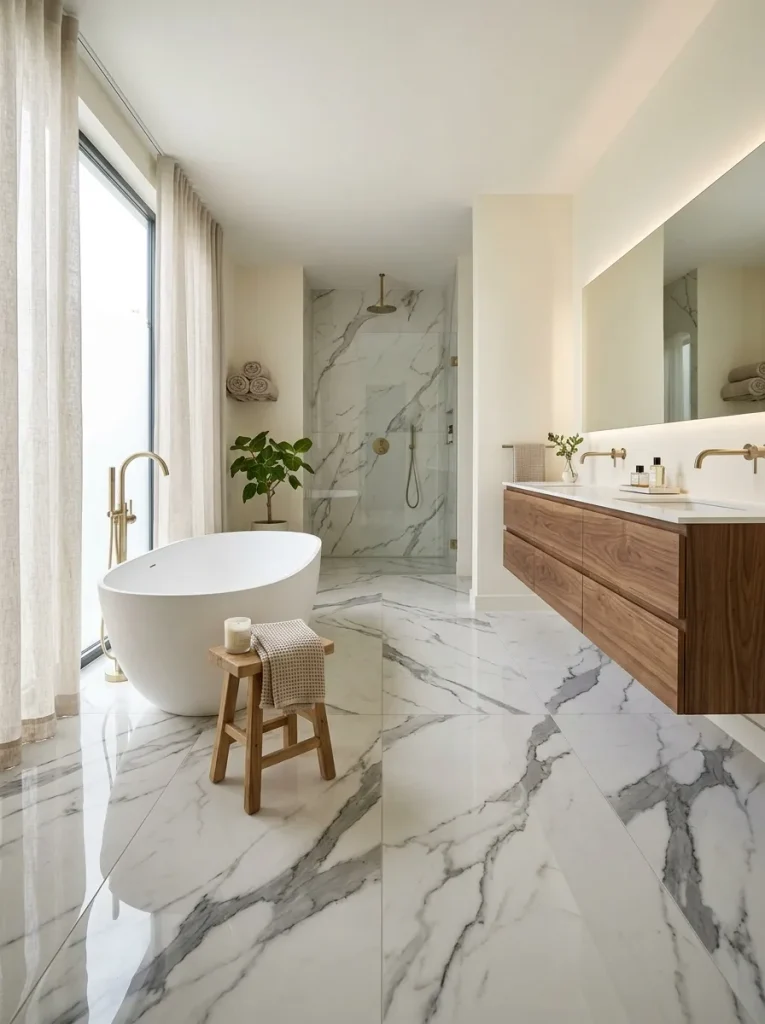
DO:
- Choose a vein pattern that complements the room’s size and overall color palette.
- Compare several tiles together to see how the veining repeats across the floor.
- Pair dramatic flooring with understated cabinetry and simple wall finishes.
- Select a bathroom rated finish with appropriate slip resistance for the intended area.
DON’T:
- Choose a pattern without checking how its design repeats across multiple tiles.
- Mix several bold stone patterns in one small bathroom.
- Assume a polished surface is suitable for a wet floor.
- Skip professional installation advice for large format tiles.
Marble look porcelain offers the dramatic appearance of natural marble with generally lower maintenance demands. Its flowing veining creates a luxurious focal point, particularly alongside warm wood, brushed brass and simple white fixtures. For a refined finish, choose a design with realistic variation rather than a visibly repetitive print. Review full size samples before ordering and make sure the selected surface suits your bathroom’s moisture and slip resistance requirements.
Herringbone Marble Flooring
Herringbone marble flooring brings timeless elegance and beautiful movement to a luxury bathroom. The distinctive zigzag pattern adds visual interest, while the marble’s natural veining creates depth and character. Pair white marble with warm wood cabinetry and brushed brass fixtures for a balanced, high end finish.
For the best result, choose rectangular marble tiles with complementary veining and plan the layout carefully before installation. Natural marble requires appropriate sealing and stone safe cleaning products. Since polished stone can become slippery when wet, consider a honed finish and verify its suitability for bathroom floors. This combination works especially well in bathrooms where classic materials and thoughtful details take center stage.
Conclusion
Beautiful bathroom flooring can set the tone for your entire space, bringing warmth, character and a sense of everyday luxury. From classic marble and elegant mosaics to modern porcelain and earthy terracotta tones, these 26 ideas offer inspiration for a range of styles and budgets.
Before choosing your favorite, compare samples, consider maintenance needs and check that the surface is suitable for wet areas. Even one thoughtful flooring choice can help your bathroom feel more cohesive and inviting.
Save this article on Pinterest for your renovation mood board, try an idea that suits your home and share it with someone planning a bathroom makeover. Your dream bathroom starts with a floor you truly love.



One Comment