
26 Bathroom Lighting Ideas That Make Mornings Brighter
The right lighting can make your bathroom feel brighter, more spacious and surprisingly luxurious, even without a full renovation. A few thoughtful changes can make your morning routine easier and your evening wind-down more relaxing.
These 26 Bathroom Lighting Ideas offer inspiration for every style and space, from small bathrooms and modern vanities to spa inspired retreats and elegant statement fixtures. Whether you’re updating outdated bulbs, adding stylish wall sconces or exploring soft LED accents, you’ll find practical ways to improve both the look and function of your bathroom. I’ve noticed that lighting often makes a bigger difference than expected because it changes how colors, textures, and even the room’s size appear. Explore these ideas, discover what suits your needs, and find simple upgrades that make your bathroom feel more inviting every day.
Layered Vanity Lighting

Good lighting around the mirror can make your morning routine feel calmer and more comfortable. Instead of relying on one ceiling fixture, combine flattering vanity lights with softer ambient lighting to reduce harsh shadows and brighten the entire room.
In my experience, placing matching sconces on both sides of the mirror creates more even illumination across the face than relying on a single light above it. Choose diffused bulbs with a high color rendering index so makeup, skincare, and shaving are easier to manage. Keep the fixtures appropriately rated for their bathroom location.
Backlit Bathroom Mirrors

- Choose the right color temperature. Warm white around 2700K creates a relaxing glow, while 3000K to 3500K can feel clearer for everyday grooming.
- Check brightness. Look for a mirror with enough output for your routine, not just decorative illumination.
- Measure the wall. Leave comfortable space between the mirror, faucet, and surrounding fixtures.
- Look for dimming controls. Adjustable brightness helps you switch from gentle evening light to brighter morning illumination.
- Check bathroom ratings. Select a suitable fixture and have electrical work completed according to local safety requirements.
A backlit mirror adds soft, indirect light without taking up extra wall space. It works especially well in small bathrooms with clean, uncluttered designs. For detailed tasks such as shaving or applying makeup, pair it with suitable front facing vanity lighting because a halo alone may not illuminate your face evenly.
Warm Pendant Lights

Quick Tip: Choose compact pendants with enclosed or diffused shades to reduce glare around the mirror. Before installation, check ceiling height, pendant drop, and the fixture’s suitability for the bathroom location.
Pendant lighting adds character while drawing the eye upward, which can help a small bathroom feel thoughtfully designed. Position the fixtures so they do not obstruct the mirror or create shadows across the face. Keep them away from splashing zones unless specifically rated for that location, and use a qualified electrician for new wiring.
Read More: 29 Bathroom Shelf Ideas You’ll Want to Steal Right Now
Recessed Ceiling Lights
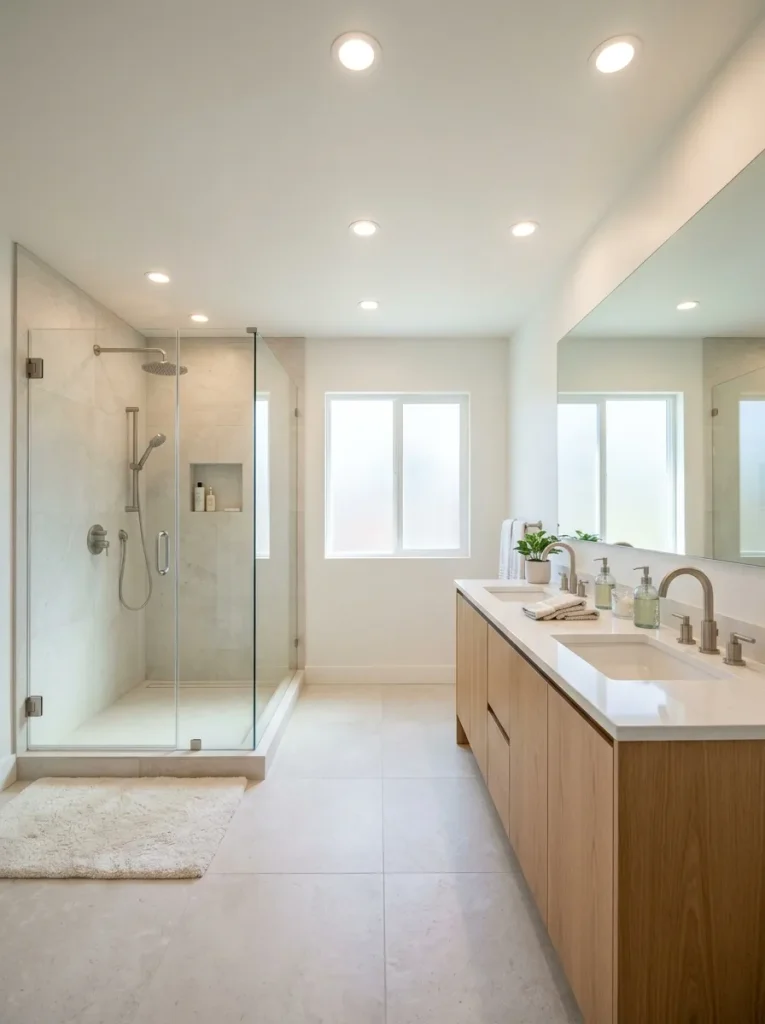
Before: A bathroom with one central ceiling fixture can have dark corners, uneven brightness, and shadows around the sink. Even a beautiful room may feel gloomy when the light does not reach every area.
After: Recessed ceiling lights spread illumination more evenly across the bathroom. Their low-profile design keeps the ceiling uncluttered, making them especially useful in small spaces or rooms with a simple, modern style.
These fixtures work well as general lighting, but they should not be the only source of light near your mirror. Combine them with suitable vanity lighting for clearer visibility while shaving, applying makeup, or styling your hair. Choose fixtures rated for the bathroom zone where they will be installed, particularly near showers and tubs.
Frosted Glass Sconces

1. Choose the placement. Position matching sconces on either side of the mirror when wall space allows. This arrangement can reduce harsh facial shadows.
2. Pick a shade. Frosted glass softens the glow and helps prevent the light from feeling too sharp.
3. Match the finish. Coordinate the sconce hardware with your faucets, cabinet pulls, or towel hooks for a cohesive appearance.
4. Check the bulb. Choose a suitable color temperature that makes skin tones look natural and supports your daily routine.
Frosted glass sconces suit traditional, contemporary, and transitional bathrooms because they add a decorative touch without overwhelming the room. Before installing them, check the mirror width and available wall space to ensure the fixtures feel balanced. A qualified electrician can help confirm safe placement and appropriate bathroom ratings.
Dimmable LED Lighting

| Lighting option | Best for | Main benefit |
| Bright LED setting | Morning grooming | Clear visibility |
| Medium LED setting | Everyday routines | Comfortable, balanced light |
| Low LED setting | Evening baths | A softer atmosphere |
| Dimmable mirror lighting | Skincare and makeup | Adjustable face level illumination |
Dimmable LEDs let you adjust the bathroom’s brightness to suit different times of day. A brighter setting can help with detailed grooming, while a lower setting creates a calmer mood in the evening. Check that your bulbs, fixtures, and dimmer switch are compatible, since not every LED works with every dimmer. For the best result, use dimmable lighting alongside a reliable main light source so the room remains practical as well as relaxing.
Statement Chandelier
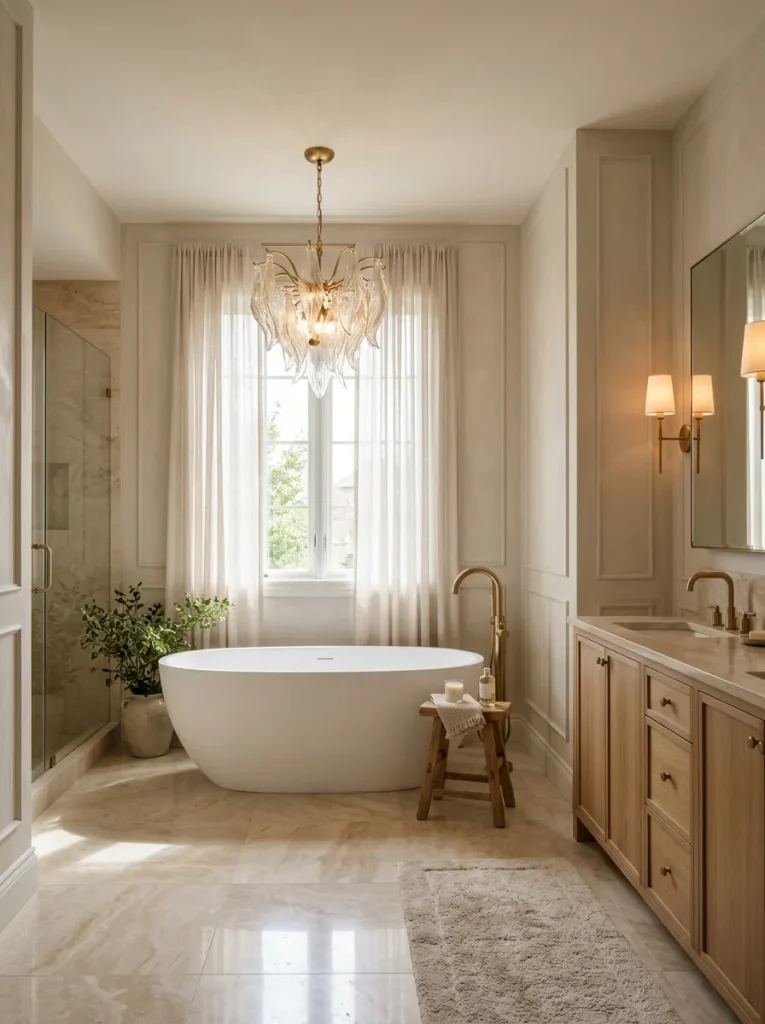
A statement chandelier can turn an ordinary bathroom into a space that feels special. Choose a design that complements your existing finishes, whether that means brushed brass, matte black, glass, or a sculptural modern shape. In bathrooms with high ceilings, a larger fixture can create a beautiful focal point without making the room feel crowded.
Placement matters just as much as appearance. Keep the chandelier clear of walkways and areas where people could bump into it, and check local electrical codes for the required clearance above tubs and showers. Always select a fixture rated for its intended bathroom location and have it installed by a qualified electrician.
Shower Lighting
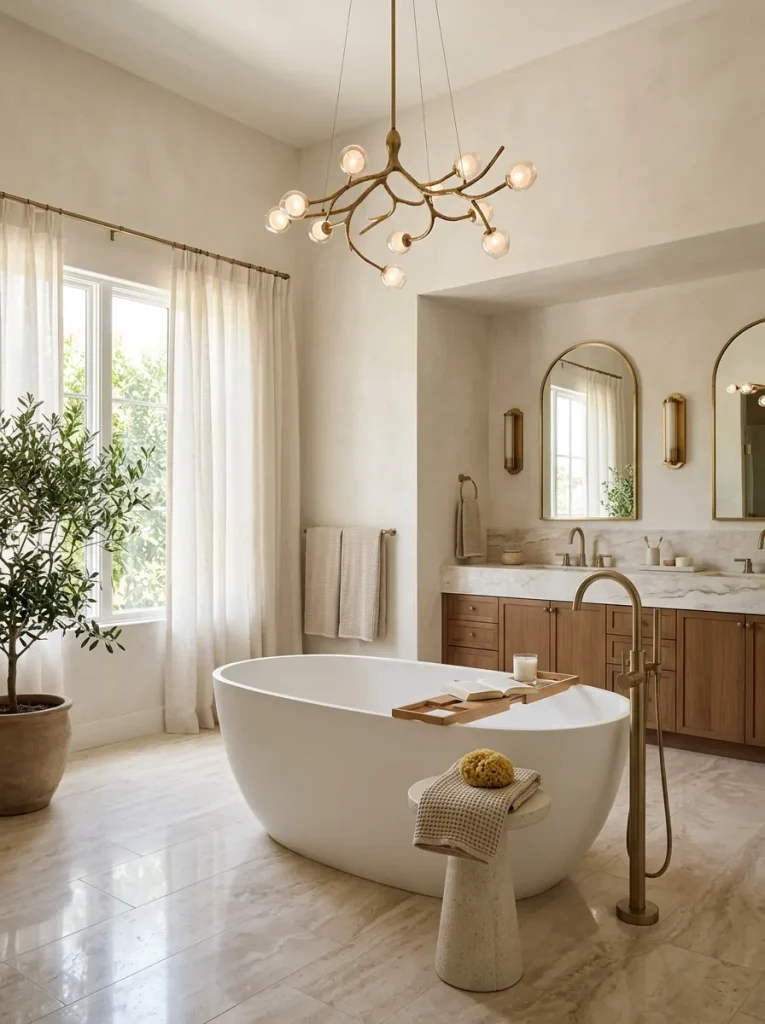
Good shower lighting helps you see clearly while highlighting beautiful tilework and fixtures. A dedicated ceiling light can brighten the enclosure, especially in bathrooms where natural light is limited. For a more polished appearance, position the lighting to illuminate the shower floor, controls, and storage niches without creating uncomfortable glare.
Quick Tip: Check the fixture’s wet-location rating and the electrical requirements for its exact installation zone before buying. A light suitable for a damp bathroom ceiling may not be appropriate inside a shower enclosure.
Consider how the shower lighting works with the rest of the room, too. A combination of general ceiling lights, mirror lighting, and a properly rated shower fixture creates a more balanced result. If your shower has a dark accent wall or textured tile, thoughtful placement can bring out those details without making the space feel overly bright.
Natural Light Enhancement
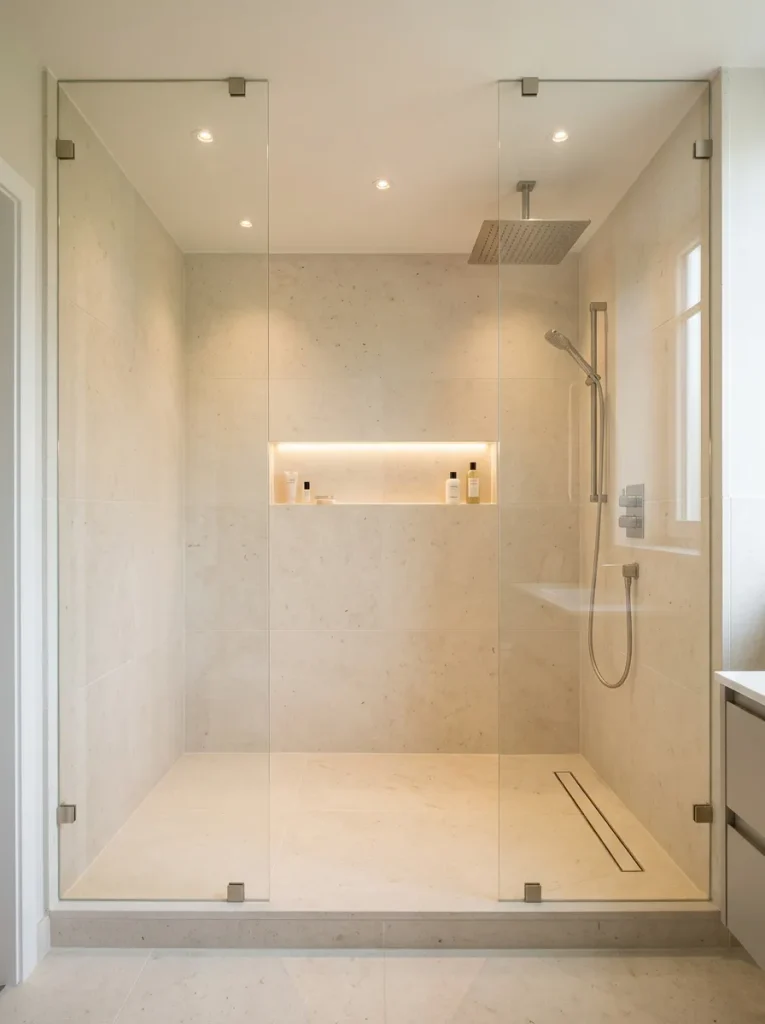
Natural daylight can make a bathroom feel more spacious and inviting, even before you switch on the lights. If your bathroom has a window, keep the area around it uncluttered so sunlight can travel farther into the room. A large mirror placed thoughtfully opposite or beside the window can also help distribute available daylight.
Privacy is important, particularly in bathrooms that face neighboring homes. Frosted glass, privacy film, or suitable window treatments can soften incoming light without exposing the room. For bathrooms with limited windows, lighter wall colors and reflective finishes can help make the most of the daylight you do receive.
Natural light changes throughout the day, so it works best alongside reliable artificial lighting. Use dedicated mirror lights for grooming and ceiling lights for darker mornings or evenings. This combination keeps your bathroom functional in different conditions while preserving the fresh, daylight inspired look.
Brass Bathroom Fixtures

Before: A bathroom with mixed finishes and plain lighting can feel disconnected, even when every fixture serves its purpose. Cool metal accents may also look stark against warm wall colors or natural wood.
After: Coordinated brass lighting and hardware bring warmth and visual consistency to the room. Brass sconces can add a decorative element beside the mirror, while matching faucets and cabinet handles help tie the design together.
You do not need to replace every fixture to achieve this look. Start with one or two brass lighting pieces, then repeat the finish in smaller details for a balanced effect. Brushed brass offers a softer appearance, while polished brass creates a more noticeable shine. Choose bathroom-appropriate fixtures and finishes designed to handle moisture, and check how the brass looks under your chosen bulb color before committing.
Mirror Lighting
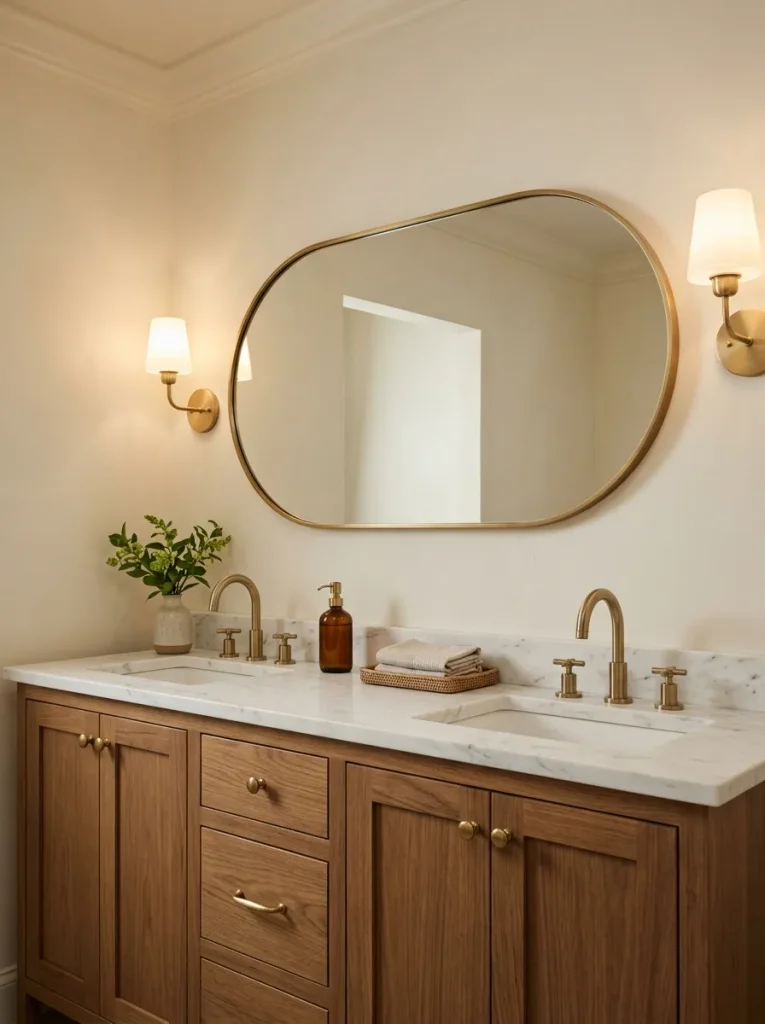
1. Measure the vanity. Check the width of your sink and mirror so the lighting looks proportional rather than too narrow or oversized.
2. Choose the lighting style. Integrated LED mirrors provide a streamlined appearance, while separate lights mounted above or beside a mirror offer more flexibility.
3. Review the brightness. Look for comfortable, even illumination that supports everyday tasks without creating excessive glare.
4. Check the color quality. A high color rendering index, ideally 90 or above, can help colors and skin tones appear more natural.
5. Confirm installation needs. Verify electrical connections, moisture ratings, and compatibility with any dimmer before purchasing.
Mirror lighting can improve both the function and appearance of your bathroom. It helps create a well-lit area for skincare, shaving, and makeup while making the vanity a natural focal point. For the most useful setup, pair mirror lighting with general room illumination rather than relying on the mirror alone. Compare the product dimensions and lighting specifications carefully so the finished arrangement suits your bathroom’s size and daily needs.
Cool Versus Warm Lighting

| Lighting color | Appearance | Works well for |
| Warm white, around 2700K | Soft and golden | Relaxing baths and cozy evenings |
| Soft white, around 3000K | Warm but balanced | Everyday bathroom lighting |
| Neutral white, around 3500K | Clear and less yellow | General grooming and versatile spaces |
| Cool white, around 4000K | Crisp and bright | Task focused bathrooms and modern finishes |
The best color temperature depends on the atmosphere you want and the tasks you do in the room. Warm white can make a bathroom feel restful, while neutral white often offers a useful balance for morning routines. Consistency matters, so try to keep nearby fixtures within a similar color range instead of mixing noticeably different whites. For makeup or skincare, also check the bulb’s color rendering quality, since temperature alone does not determine how accurately colors appear.
Minimalist Wall Lights

Minimalist wall lights are a practical choice for bathrooms where every design detail matters. Their slim profiles keep the vanity area visually uncluttered while providing useful illumination for everyday grooming. Look for simple cylindrical fixtures, narrow LED bars, or understated glass designs that complement your mirror and faucet finishes.
Placement can make a noticeable difference. Lights positioned on both sides of the mirror often provide more balanced facial illumination than a single overhead source. If your bathroom has limited wall space, compact fixtures can deliver a similar effect without competing with shelves or cabinets. Choose a finish that coordinates with your existing hardware, and check the light output before buying to make sure the fixture is attractive and functional.
Vintage Glass Pendants

1. Pick a glass style. Clear glass creates a decorative focal point, while seeded or lightly textured glass adds visual interest.
2. Select a finish. Antique brass, aged bronze, and polished nickel can reinforce a vintage-inspired design.
3. Plan the height. Hang pendants so they illuminate the vanity without obstructing the mirror or creating glare at eye level.
4. Check the proportions. Smaller pendants generally suit narrow vanities, while wider counters may accommodate a pair of larger fixtures.
5. Verify safety requirements. Confirm the fixture’s bathroom rating and required clearance from water sources before installation.
Vintage glass pendants work particularly well in bathrooms that mix traditional details with modern convenience. Their transparent shades can keep the design feeling light while adding texture and personality. Use them alongside suitable general lighting so the room stays evenly illuminated. If you prefer a softer glow, choose compatible bulbs with a warm color temperature, and make sure the pendants are practical for the ceiling height and layout.
Smart Bathroom Lighting
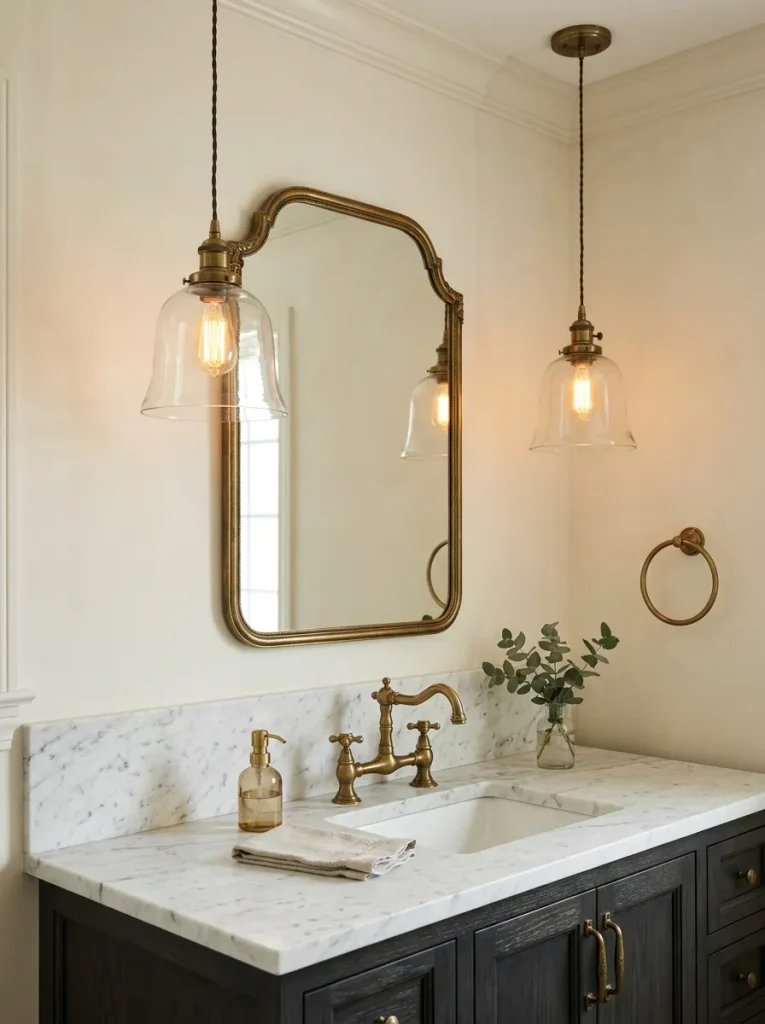
Smart lighting allows you to adjust brightness and, with compatible bulbs or fixtures, color temperature to suit different routines. You might prefer bright, neutral light while getting ready and a softer glow before bed. Some systems also offer schedules, voice control, or app based adjustments, depending on the products you choose.
Before investing, check whether the lights require a hub, connect directly to Wi Fi, or work with your existing smart home system. Confirm that the switches, bulbs, and dimmers are compatible, since not every combination supports all features. For bathrooms, select fixtures and bulbs suitable for their installation locations, especially around showers and tubs.
Start with one useful upgrade, such as smart mirror lighting or a dimmable ceiling fixture, rather than replacing every light at once. This lets you test which controls make your routine easier. Keep a simple wall switch option where practical, so everyday lighting remains convenient even when an app or voice assistant is unavailable.
Under Cabinet Lighting

Before: A floating vanity can appear heavy or blend into the floor when the area beneath it is dark. At night, switching on the main ceiling light may also feel too harsh for a quick bathroom visit.
After: Under-cabinet LED strips create a gentle pool of light beneath the vanity. The glow highlights the cabinet’s floating design and can help with nighttime navigation without illuminating the entire room at full brightness.
For a polished finish, choose LED strips designed for the installation environment and conceal them behind a discreet diffuser or recessed channel. This helps create a more even line of light rather than visible dots. Under cabinet lighting works best as an accent or secondary source, so pair it with proper ceiling and mirror lights for daily grooming. If you want nighttime convenience, consider a compatible dimmer or motion sensor, with installation suited to the bathroom’s moisture conditions.
Industrial Black Fixtures

1. Start with the finish. Matte black fixtures pair well with white tile, natural wood, concrete-look surfaces, and monochrome palettes.
2. Choose the shape. Exposed-bulb sconces, simple metal shades, and geometric wall lights can each create a different industrial effect.
3. Balance dark details. Repeat black in small elements, such as faucets or cabinet handles, instead of covering every surface in a dark finish.
4. Select suitable bulbs. Warm or neutral white bulbs can soften the contrast and keep the vanity comfortable for daily use.
5. Confirm fixture ratings. Make sure each light is approved for its intended bathroom location and is installed safely.
Industrial black fixtures bring definition to a bathroom without requiring a full renovation. Their crisp outlines can make mirrors and vanities stand out, particularly against lighter walls. For a balanced result, combine the dark metal with warm wood, soft textiles, or pale stone. Keep task lighting bright enough for grooming, and test bulb color before installation to avoid a stark or overly yellow appearance.
Skylight Illumination
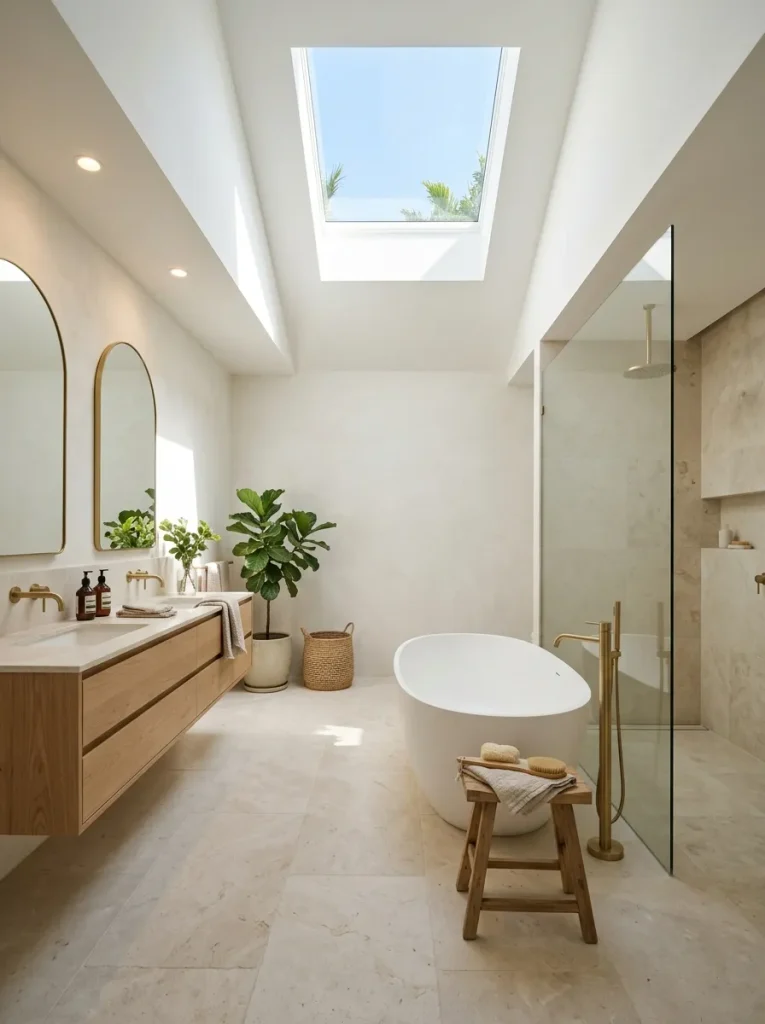
A skylight can bring natural light into a bathroom that has little or no wall space for a window. It can brighten the center of the room, highlight tile textures, and make the ceiling feel more open. This approach is especially appealing in top-floor bathrooms where a conventional window may not provide enough daylight.
Quick Tip: Before adding a skylight, consider roof structure, waterproofing, privacy, ventilation, and the amount of direct sunlight your bathroom receives. A qualified professional can help assess the installation requirements.
Skylights work best as part of a complete lighting plan rather than a replacement for artificial lighting. Daylight changes with the weather and time of day, so mirror lights and ceiling fixtures remain important for early mornings and evenings. If direct sun creates excess heat or glare, suitable glazing or a compatible shade may help. For an existing bathroom without roof access, a solar tube may be another option worth discussing with an installer.
Art Deco Lighting
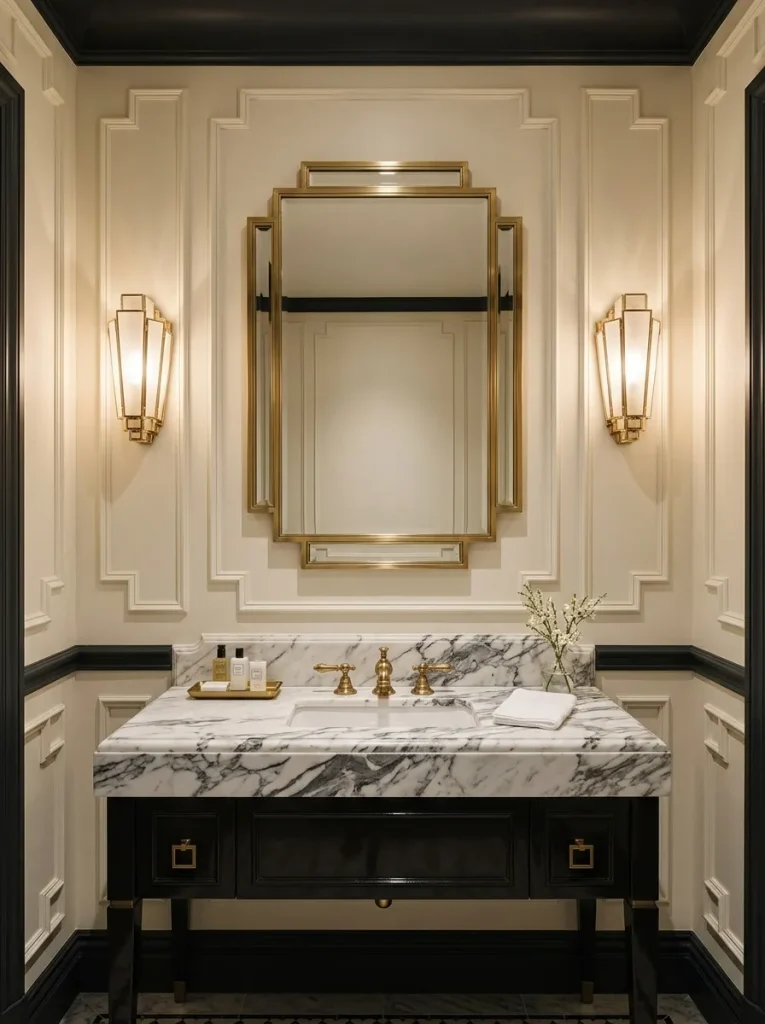
Art Deco lighting adds character through geometric shapes, elegant materials, and balanced arrangements. Look for sconces with stepped details, fan-shaped glass, or brass frames that complement your mirror and vanity. These fixtures can make a simple bathroom feel more distinctive without requiring new tiles or expensive cabinetry.
Symmetry is a useful design principle for this look. Matching lights on either side of the mirror create a deliberate focal point and can provide balanced illumination for grooming. Pair them with a clean countertop and a limited selection of metallic finishes to keep the room from feeling busy. Choose bulbs that render colors naturally, and check the fixture dimensions before installation so decorative shades do not crowd the mirror.
Motion Sensor Lights

1. Identify the area. Consider installing motion-activated lighting near the doorway, beneath the vanity, or along a route to the toilet.
2. Choose the brightness. A lower brightness setting can provide enough visibility at night without flooding the room with light.
3. Check the sensor range. Make sure the sensor detects movement where needed without triggering constantly from outside the bathroom.
4. Review the power source. Decide whether a hardwired fixture, plug-in light, or battery-operated option best suits your layout.
5. Test the settings. Adjust the activation time and sensitivity to match how your household uses the bathroom.
Motion sensor lights are especially useful for nighttime visits, guest bathrooms, and family homes where convenient lighting matters. They can reduce the need to reach for a switch in the dark, while a low-level glow helps preserve a relaxed atmosphere. Use them as supplementary lighting rather than the only source, and choose products appropriate for the bathroom’s moisture levels. A manual override can also be helpful when you need the light to stay on for longer grooming or cleaning tasks.
Double Vanity Lighting

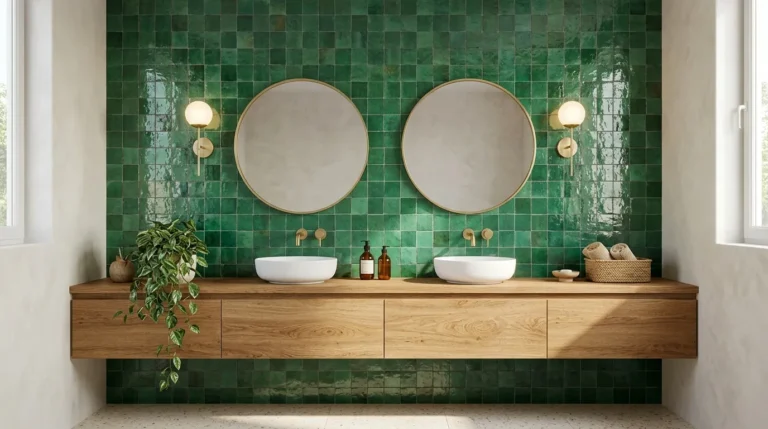
Double vanities benefit from lighting that gives each person a clear, comfortable workspace. Matching mirror lights or paired sconces help define the two sink areas, while general ceiling lighting keeps the rest of the bathroom evenly illuminated. The goal is to make the vanity feel organized without leaving the middle of the counter too dark.
Measure the distance between the sinks and mirrors before choosing fixtures. Two matching lighting arrangements can look balanced, but the spacing should suit the actual vanity width. For wider mirrors, consider whether one fixture per mirror will provide enough light or whether additional side lighting is needed. Keep bulb color and brightness consistent across both sides so the room feels cohesive.
If several people use the bathroom at the same time, individual mirror lights with separate controls can make the space more convenient. One person can use the vanity while the other keeps the overall lighting lower. Combine practical task lighting with a dimmable main fixture for flexibility throughout the day.
Coastal Bathroom Lighting

Before: A bathroom with cool white lighting, heavy dark finishes, and little texture can feel stark rather than relaxing. Even a pale color palette may lack warmth when the fixtures do not complement the materials.
After: Coastal-inspired lighting introduces soft finishes, gentle illumination, and natural-looking details. White glass pendants, brushed nickel sconces, or subtle woven accents can complement light wood, blue-gray walls, and sandy tones.
To create this look, keep the main colors light and use lighting fixtures with simple, relaxed shapes. Frosted glass can soften the glow, while brushed metal finishes provide a clean touch without drawing too much attention. Pair decorative fixtures with suitable mirror and ceiling lights to maintain good visibility. If you are updating an existing bathroom, changing the light fixtures and bulbs may be enough to introduce a coastal feel without replacing the entire vanity or tilework.
Ceiling Cove Lighting

1. Plan the cove. Identify a ceiling edge, recessed detail, or bulkhead where an LED strip can remain hidden from direct view.
2. Choose the brightness. Select a light output that creates a gentle wash across the ceiling without making the room feel dim.
3. Match the color temperature. Warm white can support a restful atmosphere, while a neutral white may suit a bathroom with a crisp, modern palette.
4. Conceal the source. Use an appropriate channel or diffuser to create a more even line of illumination.
5. Check the installation. Confirm ventilation, access for maintenance, and suitable electrical protection for the bathroom environment.
Cove lighting adds depth by illuminating surfaces indirectly instead of shining directly into the eyes. It can make a bathroom feel softer in the evening and highlight architectural features such as a tray ceiling or recessed alcove. Because indirect lighting may not provide enough brightness for grooming, combine it with well-positioned vanity lights and general illumination. A compatible dimmer gives you more control over the mood, while a professional installer can help ensure the LED strips and drivers are appropriate for the location.
Bathroom Lighting on a Budget

| Budget-friendly update | What it changes | Best use |
| Replace outdated bulbs | Color and brightness | Quick improvement |
| Add a mirror light | Visibility at the vanity | Daily grooming |
| Install a simple wall sconce | Style and facial illumination | Small or medium bathrooms |
| Add LED strip lighting | Accent glow | Floating vanities or shelves |
| Replace an old ceiling fixture | General illumination | Overall brightness |
You can improve bathroom lighting without replacing every fixture or remodeling the room. Start by identifying the darkest areas and deciding whether they need better task lighting, general illumination, or a decorative accent. Sometimes a suitable bulb with a more comfortable color temperature can make a noticeable difference. Before buying new fixtures, check their dimensions, brightness, and bathroom ratings. If electrical work is needed, include professional installation in your budget so the finished update remains safe as well as attractive.
Small Bathroom Lighting

Small bathrooms need lighting that makes the most of limited space. Slim wall sconces, integrated mirror lights, and recessed ceiling fixtures can provide useful illumination without crowding the walls or ceiling. Keeping the fixture designs simple also helps the room feel visually open, especially when the vanity and storage are compact.
Pay particular attention to shadows around the mirror. A single overhead light may leave your face unevenly lit, so consider a lighted mirror or appropriately positioned side lights for grooming. Lighter wall finishes can help reflect available light, while a well-placed mirror may make the room feel more spacious. Choose fixtures suited to the bathroom’s size and moisture conditions, and avoid adding so many accent lights that the small space feels visually busy.
Spa Inspired Lighting
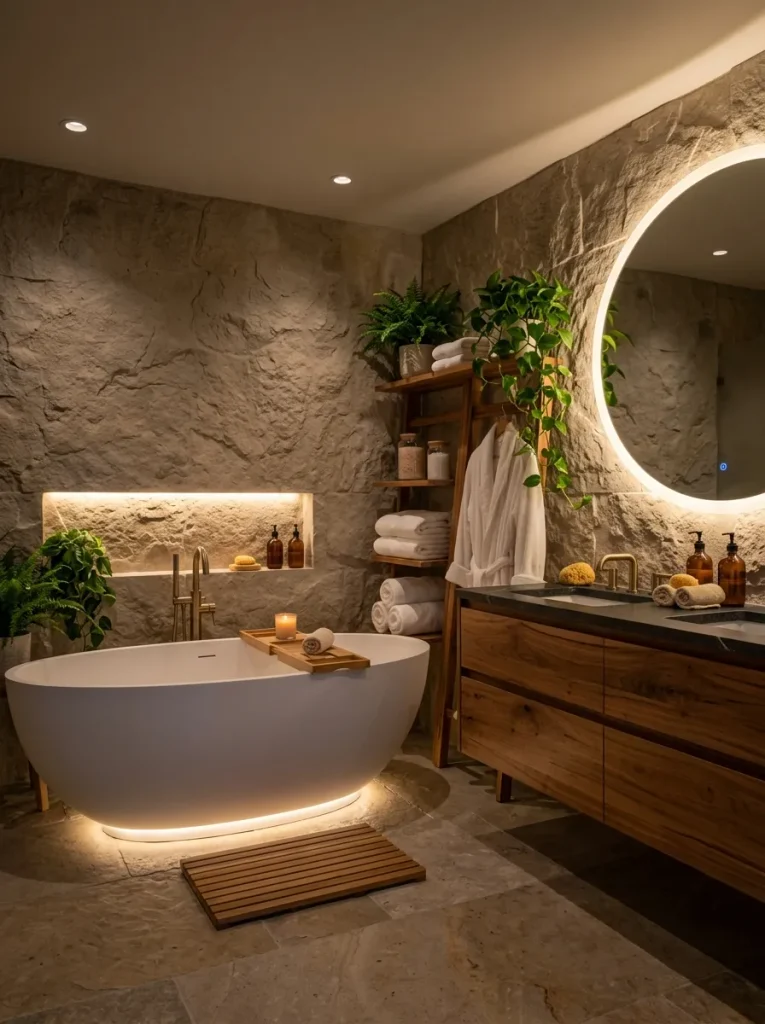
1. Begin with soft general lighting. Choose ceiling fixtures that illuminate the room evenly without producing harsh glare.
2. Add comfortable mirror lighting. Use well-positioned vanity lights to make grooming practical while keeping the overall atmosphere calm.
3. Introduce a subtle accent. Concealed LED strips beneath a floating vanity or inside a suitable niche can create a gentle glow.
4. Use dimming where possible. Compatible dimmable fixtures let you adjust the brightness for busy mornings or relaxing evenings.
5. Keep the finishes cohesive. Natural wood, pale stone, soft textiles, and understated metallic details help reinforce a restful design.
Spa-inspired lighting is about balancing practical brightness with a soothing atmosphere. Combine several light sources so you can see clearly at the mirror while keeping the rest of the bathroom softly illuminated. Warm or neutral white light often works well, depending on your preferred look and the room’s finishes. Add simple accessories rather than excessive decoration, and make sure every fixture is suitable for its installation location. With thoughtful placement and adjustable brightness, your bathroom can feel comfortable and welcome throughout the day.
CONCLUSION
Beautiful bathroom lighting doesn’t have to mean an expensive renovation. The right combination of mirror lights, ceiling fixtures, sconces, and subtle accents can make your space brighter, more functional, and more relaxing. These 26 Bathroom Lighting Ideas offer plenty of inspiration, whether you’re refreshing a tiny bathroom or creating a spa-like retreat. Start with one change that fits your budget and daily routine, then build from there. Save this article on Pinterest so you can revisit your favorite designs, try an idea that inspires you, and share the post with anyone planning a bathroom refresh. A brighter, more welcoming space can start with one thoughtful change.




One Comment