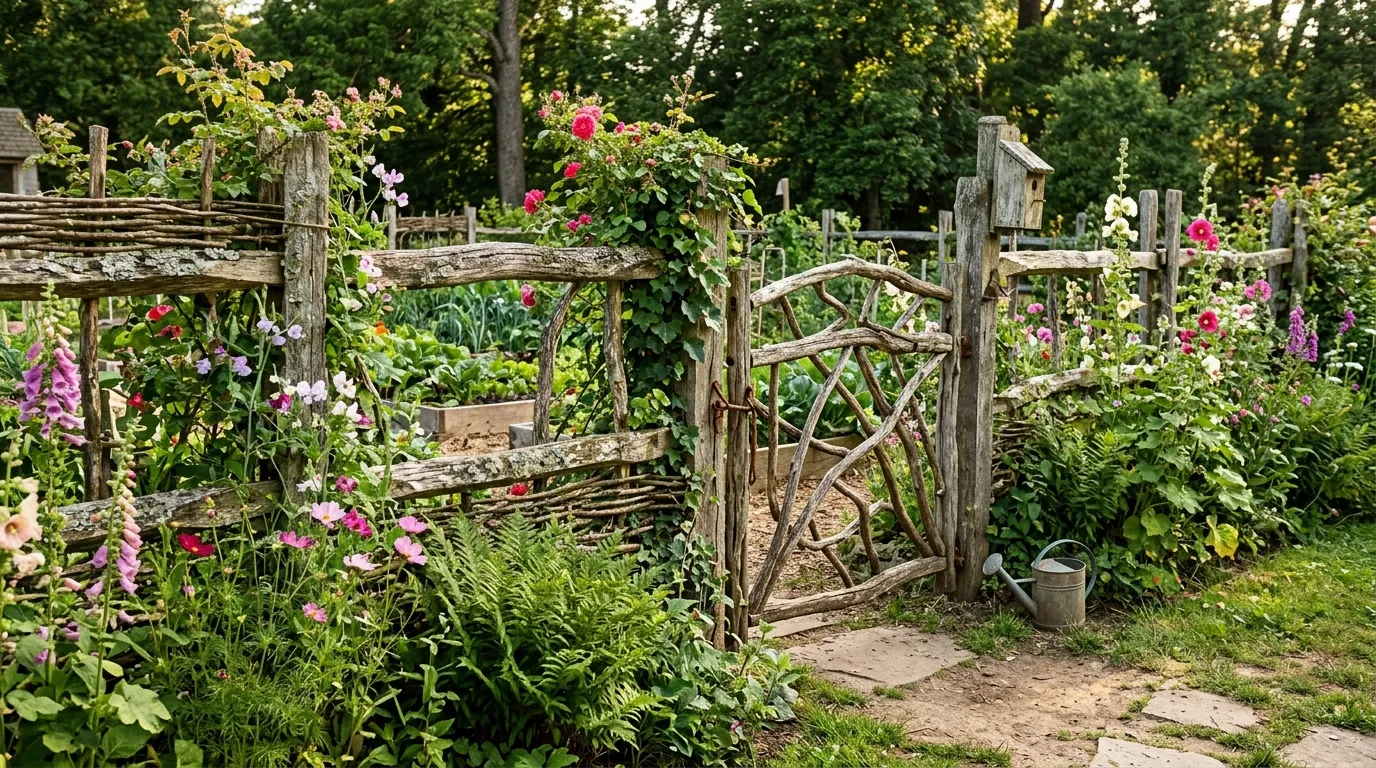
30 Rustic Garden Fence Ideas That Protect in Style
A beautiful garden deserves a fence that offers both protection and timeless charm. The right Garden Fence Ideas can help keep plants safe, define your outdoor space, and create the cozy countryside look you’ve always wanted.
From weathered wooden panels and woven willow barriers to charming white picket fences and creative recycled designs, rustic fencing offers plenty of ways to match your garden’s personality. Whether you’re working with a small backyard, a spacious vegetable patch, or a flower-filled cottage garden, there is an option to suit your space and budget.
The best part is that rustic fencing doesn’t have to look expensive or complicated. Simple materials, thoughtful placement, and a little creativity can make a noticeable difference. You’ll discover practical designs that balance appearance with everyday function, along with helpful tips for choosing materials, improving durability, and protecting your plants.
Weathered Wooden Fence

Weathered wood brings a timeless countryside charm to any garden while creating a clear boundary around your plants. Its faded finish blends beautifully with greenery, raised beds, and colorful flowers. For a natural look, choose reclaimed boards with visible grain and slight imperfections.
I recommend using rot-resistant wood or treating suitable lumber for outdoor exposure. Set the posts securely, keep the bottom edge away from constantly wet soil, and check the boards regularly for loose nails or decay. A little maintenance helps preserve both the rustic appearance and the fence’s protective function.
Split Rail Fencing
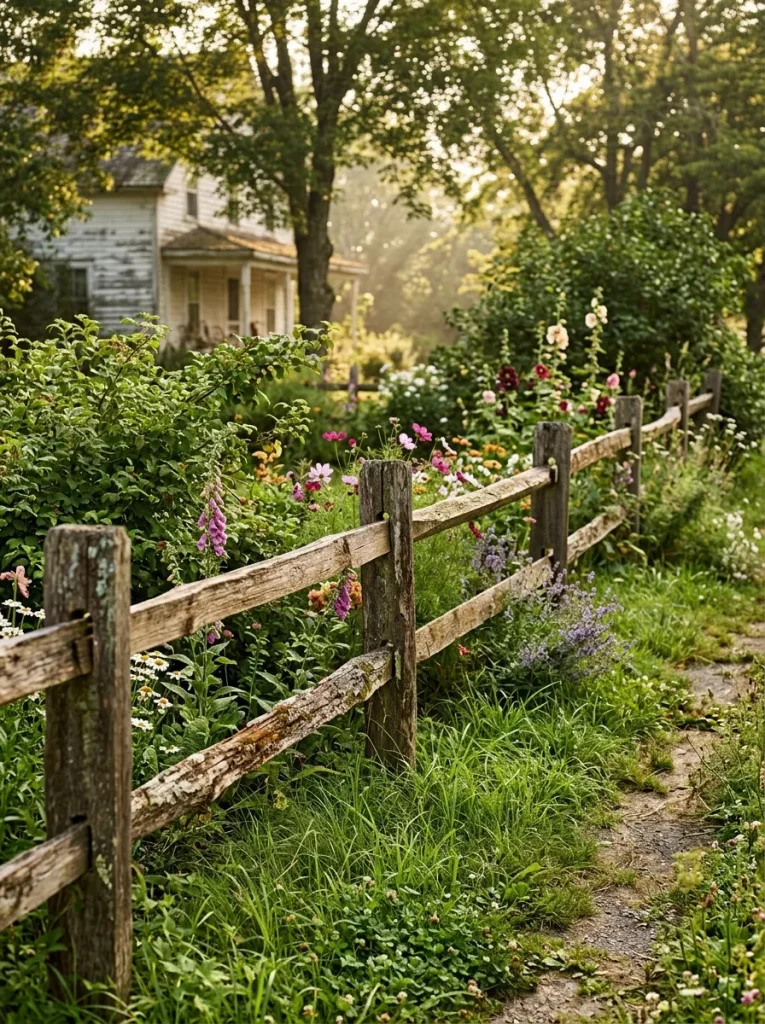
Split rail fencing gives a garden an open, welcoming country feel without hiding the landscape. The rough timber lines look especially attractive beside vegetable patches, wildflower beds, and spacious lawns.
- Best material: Naturally durable or properly treated outdoor timber.
- Ideal setting: Large gardens, country homes, and open yards.
- Visual benefit: Creates a rustic boundary without making the space feel closed in.
- Protection level: Helps define garden areas, but gaps between rails do not keep out small animals.
For a more finished appearance, space the rails evenly and anchor the posts firmly. If rabbits or other small animals are a concern, attach suitable wire mesh along the lower section. This keeps the traditional look while adding a more practical barrier.
Rustic Woven Willow Fence

Quick Tip:
Choose flexible willow branches and weave them tightly between sturdy stakes for a charming, natural garden border. Keep the stakes firmly anchored and inspect the lower branches for moisture damage, especially where the fence touches damp soil.
A woven willow barrier works beautifully around herb gardens, flower beds, and small vegetable patches. Its intricate pattern adds texture without competing with colorful plants. In my experience, natural fencing looks most cohesive when its warm tones complement nearby wood planters and garden paths. Remember that decorative willow fencing is not a substitute for a strong animal-proof enclosure.
Read More: 27 Irresistible Garden Seating Ideas for Lazy Days
Reclaimed Barn Wood
BEFORE
A plain garden boundary can look unfinished and offer little character. New, uniform fence panels may also feel out of place in a countryside-inspired garden.
AFTER
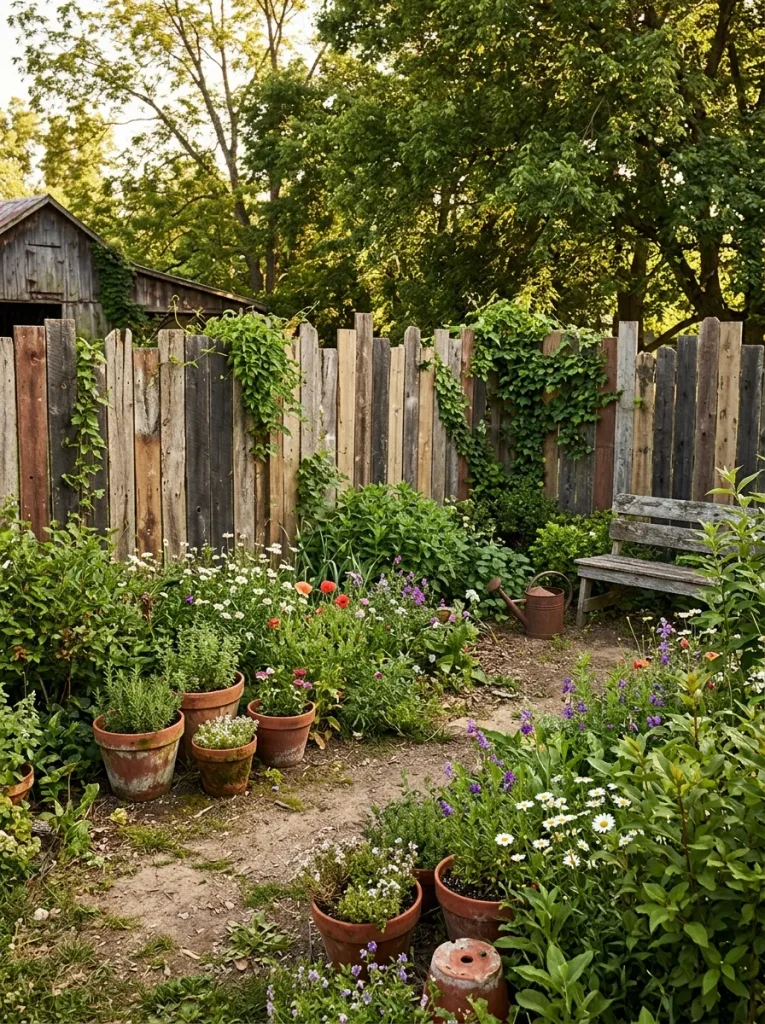
Reclaimed barn wood creates a rich, aged appearance with natural color variations. The solid boards provide privacy while helping protect flower beds and vegetable patches from casual foot traffic.
Reclaimed timber is especially attractive when paired with stone paths, galvanized planters, and climbing roses. Before installation, remove protruding nails and inspect every board for rot or insect damage. Avoid wood treated with unknown chemicals, particularly around edible plants. Secure the posts properly and choose boards that can withstand outdoor conditions.
Rustic Pallet Fence
- Select suitable pallets. Choose clean, structurally sound pallets with known, safe treatment histories.
- Prepare the wood. Remove loose nails, sand rough edges, and replace damaged boards.
- Set the posts. Anchor sturdy supports according to soil conditions and fence height.
- Attach the panels. Fasten the pallet sections securely and check that the fence remains level.
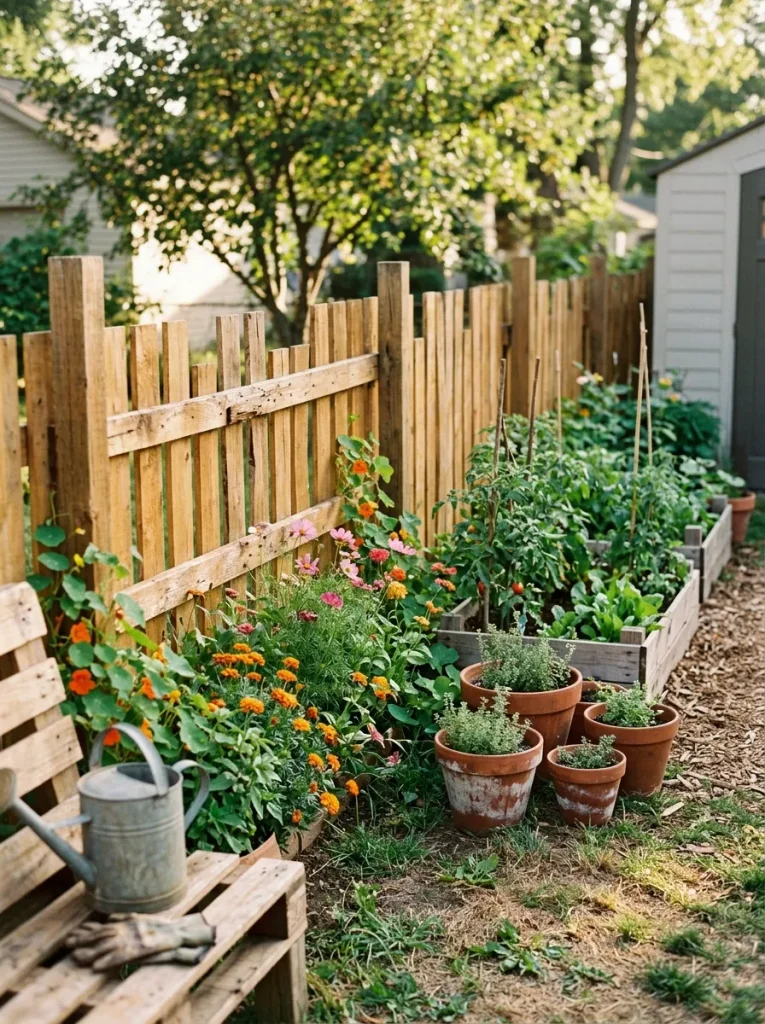
Pallet fencing can be an economical way to define a vegetable patch or create a rustic garden enclosure. Its appearance works well with recycled planters and simple outdoor furniture. However, pallets vary in strength and treatment, so avoid painted or chemically contaminated wood. For animal protection, close the lower gaps with appropriate mesh.
Stone and Timber Border

| Feature | Option A: Timber Fence | Option B: Stone and Timber |
|---|---|---|
| Appearance | Warm and simple | Textured and substantial |
| Materials | Primarily wood | Wood and natural stone |
| Maintenance | Periodic wood inspection | Wood inspection and stone checks |
| Best setting | Cottage and farmhouse gardens | Rustic gardens with stone paths |
Combining stone and wood creates a distinctive boundary that feels connected to the landscape. Stone sections can help define garden edges, while timber rails add height and visual continuity. Build any substantial stonework on a suitable base, and secure wooden posts independently where necessary. Check local requirements before constructing tall or retaining structures.
Rustic Chicken Wire Fence

DO
- Use sturdy posts and corrosion-resistant mesh.
- Secure the mesh tightly to prevent sagging.
- Add a properly fitted gate for easy access.
- Bury or extend suitable mesh outward where digging animals are a concern.
DON’T
- Leave sharp wire ends exposed.
- Assume lightweight chicken wire will stop every predator.
- Leave large gaps around gates or corners.
- Attach mesh to weak or rotten posts.
Chicken wire adds a traditional farm-inspired look while helping protect plants from some small animals. It works particularly well around herbs, leafy vegetables, and young seedlings. For rabbits or persistent digging animals, select stronger welded mesh with appropriately sized openings. The right mesh depends on the animals you need to exclude, not just the appearance you want.
Rustic Bamboo Screening
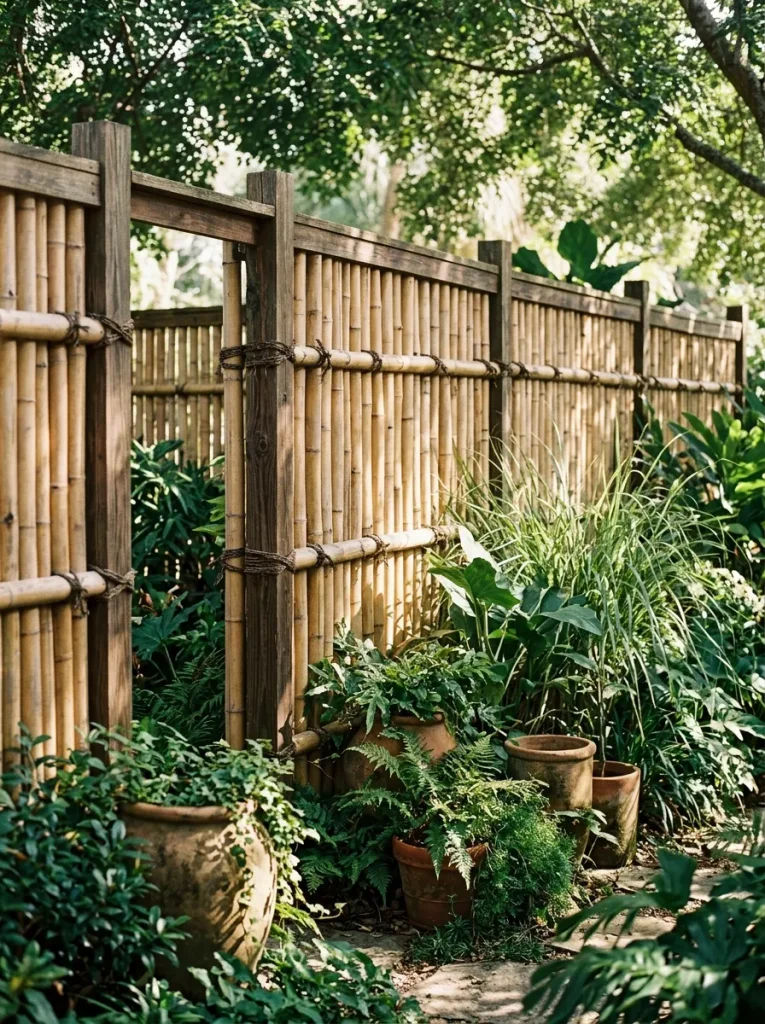
Cost: Varies by bamboo quality, fence height, and frame construction.
Time: Usually a weekend for a small DIY section.
Skill Level: Beginner to intermediate.
Best For: Garden privacy, patio screening, and decorative boundaries.
Bamboo screening introduces a warm, natural texture without the heavy appearance of a solid timber wall. Attach the poles securely to a durable frame, and choose outdoor-rated fasteners or weather-resistant ties. Bamboo can split or deteriorate when exposed to moisture, so allow drainage and inspect the connections periodically. For meaningful protection, use a strong underlying fence rather than relying on decorative screening alone.
Rustic Log Fence
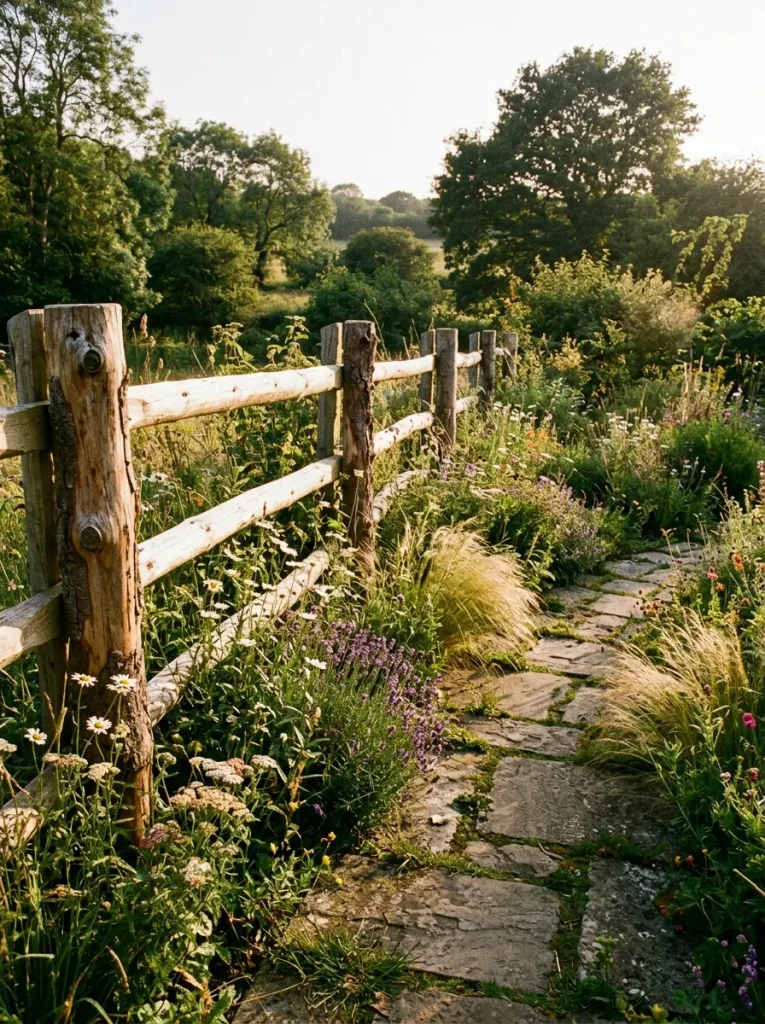
Logs give a garden a woodland character that suits wooded properties, spacious yards, and informal flower gardens. Their substantial texture looks especially appealing beside native plants and natural stone.
For a lasting structure, choose sound, durable timber and inspect the logs before installation. Keep untreated wood from remaining in direct contact with constantly wet soil. Logs can be heavy, so plan the layout carefully and use appropriate lifting help. If the boundary must contain pets or deter wildlife, close gaps and reinforce the structure to suit that purpose.
Rustic White Picket Fence

A white picket fence adds a crisp, welcoming contrast to rustic garden textures. The pale finish highlights colorful flowers and makes a small garden feel visually organized.
- Choose exterior-grade paint or stain for outdoor use.
- Space pickets consistently for a balanced appearance.
- Install sturdy posts and reliable gate hardware.
- Inspect painted surfaces for peeling and exposed wood.
This design works particularly well around cottage gardens, front yards, and flowering borders. White fencing does require occasional cleaning and repainting, especially in damp or dusty environments. If you prefer a softer rustic finish, choose an aged white rather than a bright glossy coating. Keep the surrounding planting informal to balance the fence’s neat lines.
Rustic Corrugated Metal Fence
Quick Tip:
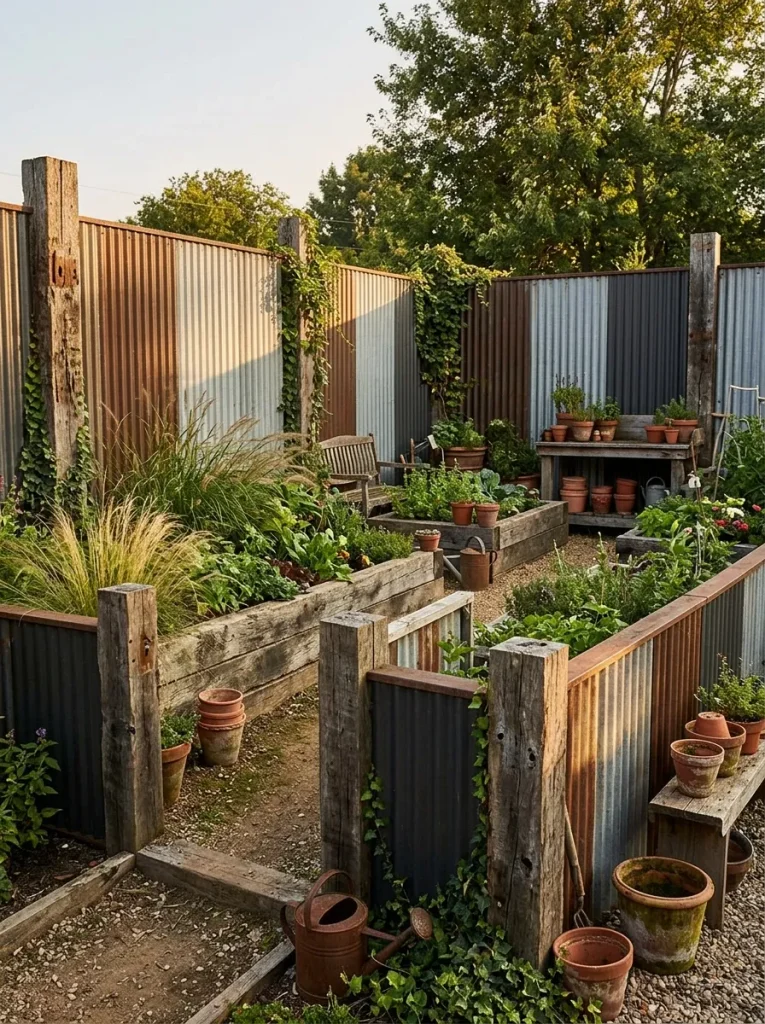
Use corrugated metal panels designed for exterior applications, and secure them to a properly braced frame. Cover or protect sharp edges, and account for wind loads when planning the posts and fasteners.
Metal fencing offers a distinctive contrast to green foliage and rough timber. It can provide privacy when solid panels are installed closely together, making it useful for patios and vegetable gardens near neighboring properties. Choose compatible fasteners to reduce corrosion, and consider how much heat the panels may reflect onto nearby plants. A timber frame can soften the overall appearance.
Rustic Garden Gate
BEFORE
An open garden entrance may leave plants exposed to wandering pets, children, or visitors cutting across delicate beds. A poorly defined entrance can also interrupt the visual flow of the fence.
AFTER
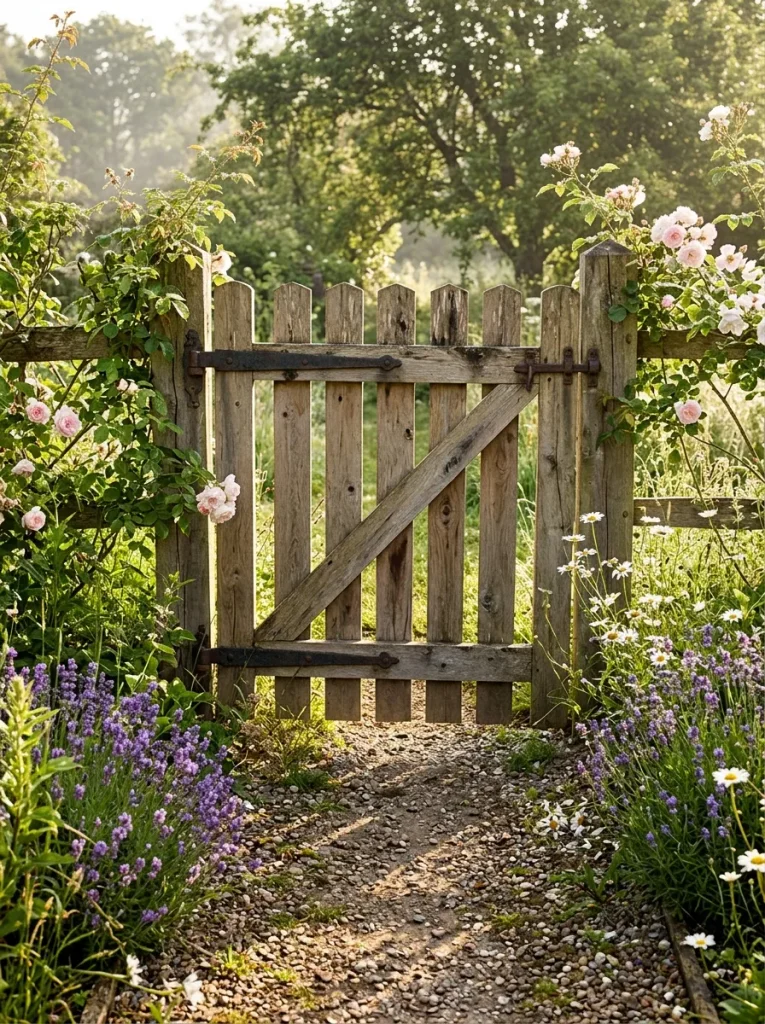
A well-fitted rustic gate creates a clear entry point and makes the garden feel complete. Diagonal bracing helps resist sagging, while a suitable latch keeps the gate securely closed.
Measure the opening before building, and allow enough clearance for the gate to swing without dragging on gravel or soil. Use weather-resistant hinges and sturdy posts sized for the gate’s weight. If pets need to stay inside, check the bottom gap and side openings carefully. A matching gate makes the entire enclosure feel intentional.
Living Willow Fence

- Choose suitable willow. Select a variety appropriate for your climate and intended fence height.
- Prepare the ground. Clear weeds and loosen the soil along the planned boundary.
- Plant the rods. Insert suitable willow cuttings at the recommended depth and spacing.
- Weave and secure. Arrange the rods into a consistent pattern and secure intersections where needed.
- Maintain growth. Water during establishment and prune to keep the fence within bounds.
A living willow fence can become a beautiful, leafy boundary rather than a static structure. It suits informal gardens and properties where a natural appearance is welcome. However, willow needs moisture, regular pruning, and enough room for growth. Check whether the variety is suitable for your soil and distance from drains, foundations, and underground services before planting.
Stone Wall with Wooden Gate

| Feature | Option A: Low Stone Wall | Option B: Stone Wall with Gate |
|---|---|---|
| Access | Openings must be planned | Controlled through a gate |
| Appearance | Solid, traditional boundary | More welcoming and defined entrance |
| Construction | Stonework and foundation | Stonework plus gate posts and hardware |
| Maintenance | Check stability and drainage | Check stability, hinges, and latch |
A stone wall paired with a wooden gate combines a substantial garden boundary with easy everyday access. It looks especially attractive beside gravel paths and cottage-style planting. Make sure the wall rests on a suitable foundation, and install gate posts securely so their movement does not disturb the stonework. For tall walls or sloped ground, seek appropriate construction advice before building.
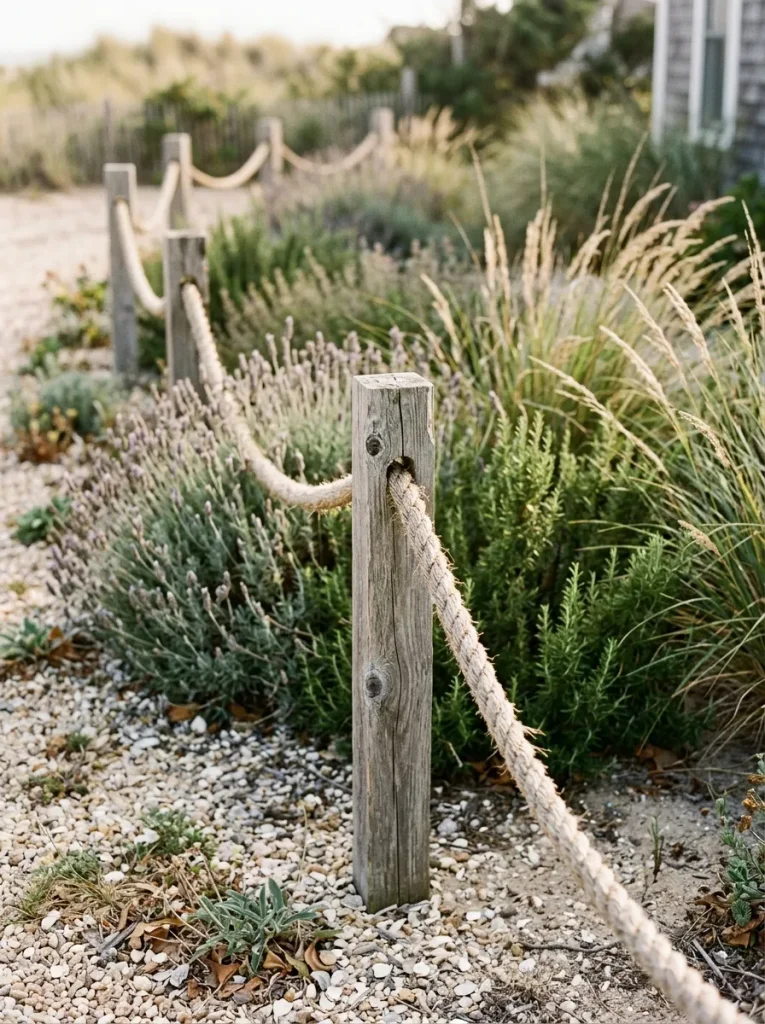
Rustic Rope Fence
DO
- Choose outdoor-rated rope and durable posts.
- Keep the rope taut enough to maintain a neat line.
- Use the boundary to define paths and planting areas.
- Check knots and connections regularly.
DON’T
- Treat a decorative rope barrier as a secure animal enclosure.
- Allow loose loops that could catch children or pets.
- Leave natural-fiber rope in prolonged wet conditions without checking for decay.
- Use weak posts that may lean under tension.
Rope fencing creates a light, informal boundary that works well around ornamental beds, pathways, and coastal-style gardens. Its open design preserves views and avoids making a small outdoor area feel crowded. Because it offers little physical protection, pair it with stronger fencing if you need to keep pets in or wildlife out. Choose materials that suit the local weather.
Rustic Branch Fence

Cost: Low if suitable fallen branches are available locally.
Time: One afternoon for a small decorative boundary.
Skill Level: Beginner.
Best For: Woodland gardens, informal flower beds, and natural landscaping.
A branch fence makes use of natural materials and gives the garden an intentionally relaxed character. Select sound branches of similar lengths, and secure them firmly to prevent shifting. Avoid collecting wood from protected land or removing living branches where permission is required. Because branch fencing can leave gaps and weaken over time, use it mainly for decorative separation unless reinforced for a specific protective purpose.
Rustic Lattice Fence

Lattice fencing provides structure while allowing light and air to pass through the garden. Its repeating diamond pattern looks attractive behind climbing plants, making it useful for flower beds, patios, and smaller yards.
Choose sturdy lattice panels made for outdoor use and fasten them to a secure frame. Leave room for mature vines so the structure does not become overloaded. A lattice panel alone may not provide privacy or keep animals out, so consider adding suitable backing or a stronger fence where needed.
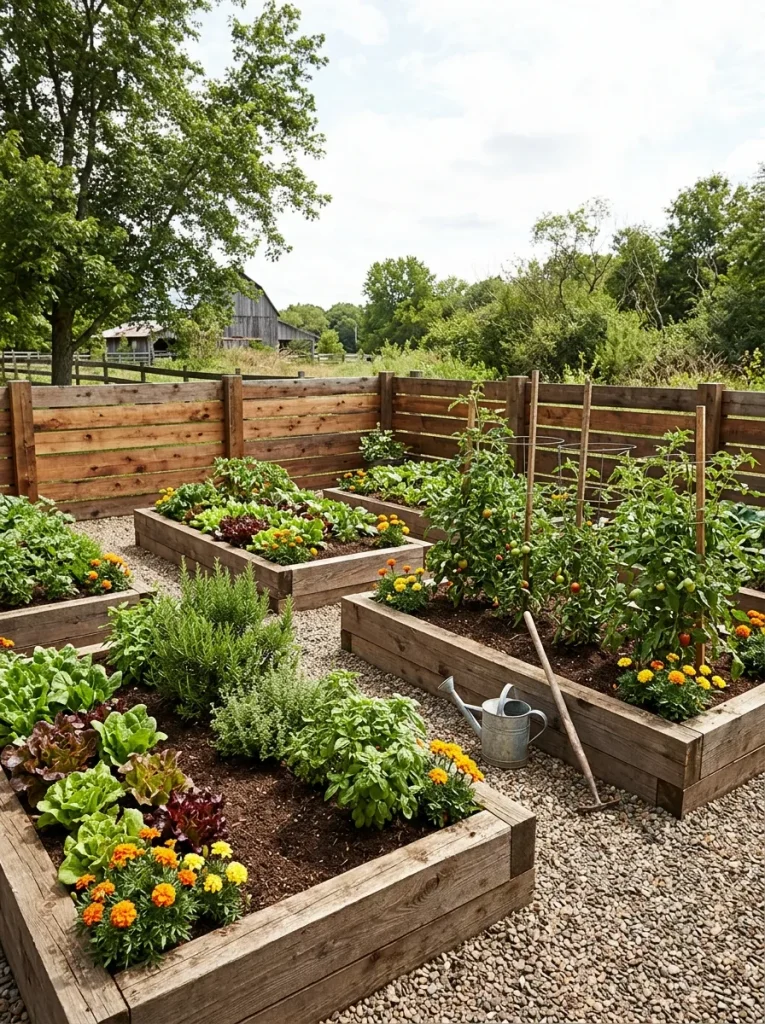
Raised Timber Fence
Quick Tip:
Use durable outdoor lumber and build the fence frame to suit the height and soil conditions. If the design also includes raised planting beds, keep the bed structure separate from the fence unless both are engineered to handle the same loads.
Raised timber elements create a layered garden appearance and can help define different planting zones. A slightly taller fence may also provide useful privacy without overwhelming the landscape. Keep wood surfaces away from prolonged soil contact where possible, and use suitable drainage around the base. Before attaching heavy planters or shelves, check that the posts and frame can safely support their weight.
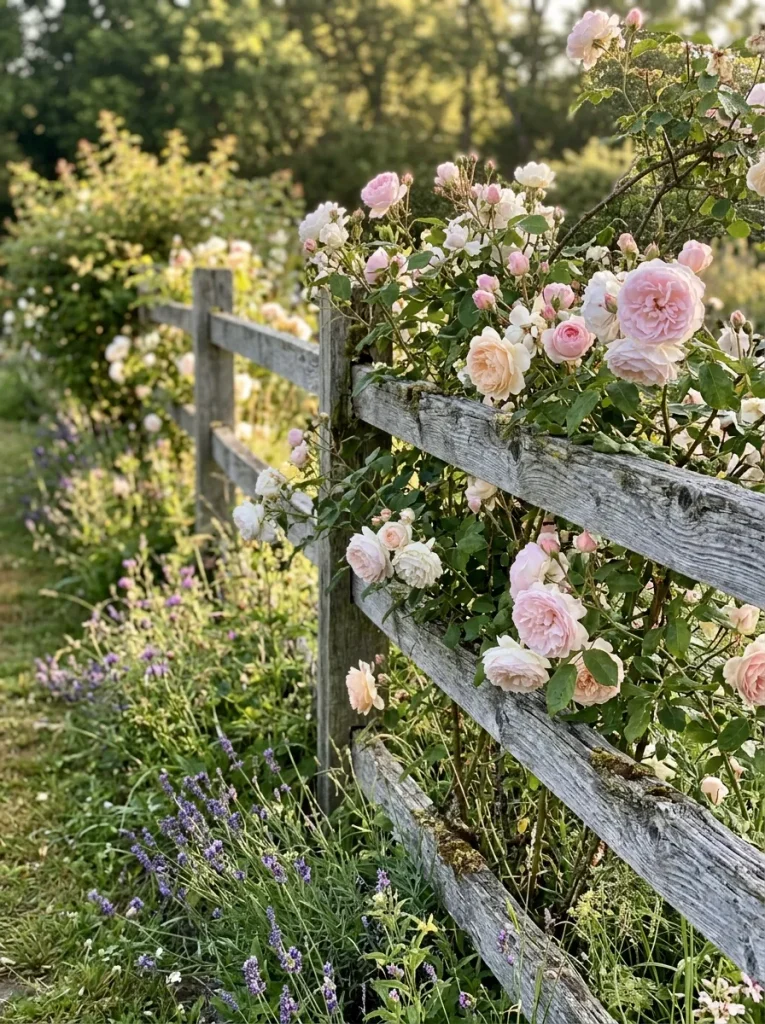
Rustic Fence with Climbing Roses
BEFORE
A bare fence can look flat and disconnected from the rest of the garden, particularly in a space filled with colorful flowers and layered planting.
AFTER
Climbing roses soften the fence line and introduce color, fragrance, and vertical interest. The wooden structure becomes a living backdrop that changes with the seasons.
Choose rose varieties suited to your climate and the amount of sunlight the fence receives. Provide strong supports and tie the canes loosely so they can grow without damage. Leave room for pruning and airflow, and avoid allowing thorny stems to block narrow paths. The result is most attractive when the fence remains visible in places rather than disappearing completely beneath foliage.
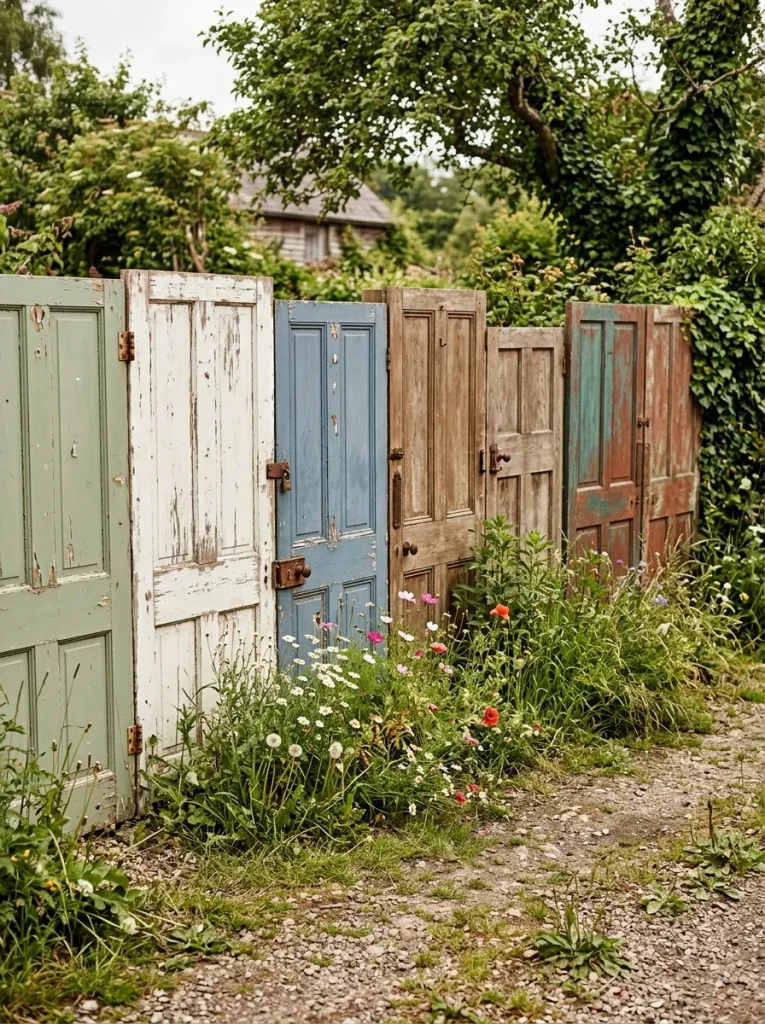
Rustic Recycled Door Fence

- Find suitable doors. Choose solid, stable panels without excessive rot or hazardous paint.
- Check their size. Arrange the doors so their heights create a balanced boundary.
- Prepare the supports. Install strong posts and a secure frame to carry the panels.
- Attach the doors. Fasten each panel firmly and protect exposed wood against weather.
- Inspect the finish. Remove loose paint and address sharp hardware or splintered edges.
Recycled doors can turn an ordinary garden boundary into a distinctive focal point. Their varied finishes suit creative gardens with vintage pots, reclaimed furniture, and informal planting. Before installation, determine whether the doors contain lead-based paint or other hazardous coatings, especially if they are old. Use safe removal methods when necessary, and ensure every panel is secure enough to withstand wind.
Rustic Horizontal Slat Fence

Horizontal slats offer a simple, structured appearance that complements both traditional and contemporary rustic gardens. The long lines can make a narrow yard feel wider, while the wood adds warmth.
- Choose outdoor-rated timber suited to your climate.
- Keep the spacing consistent for a tidy finish.
- Secure slats to sturdy posts with appropriate fasteners.
- Seal or stain the wood if required by the material.
For greater privacy, reduce the gaps or overlap the boards. If airflow matters more than screening, wider spacing may work better. Remember that fence height, wind exposure, and local rules affect the design. A well-built slat fence offers a polished backdrop for ornamental grasses, raised beds, and simple outdoor seating.
Rustic Gabion Fence
| Feature | Option A: Timber Fence | Option B: Stone-Filled Gabion |
|---|---|---|
| Visual texture | Warm grain and boards | Layered stone and wire |
| Weight | Relatively light | Very heavy |
| Foundation | Depends on fence design | Requires a suitable stable base |
| Main maintenance | Wood treatment and repairs | Check baskets, ties, and stability |
Gabion fencing creates a bold rustic boundary with a natural stone appearance. It can suit sloped or contemporary gardens when designed appropriately, but the weight demands careful planning. Use suitable gabion baskets, correct stone sizes, and a stable foundation. For tall sections or retaining applications, consult a qualified professional. Add timber accents or nearby plants to soften the industrial appearance without compromising the structure.
Rustic Fence with Built-In Planters

Built-in planters help a fence serve two purposes: defining the garden and displaying plants. This arrangement is especially useful in compact yards where floor space is limited.
Choose weather-resistant planter boxes and secure them to posts or framing designed to carry the filled weight. Include drainage holes and use suitable liners where appropriate. Keep irrigation water from constantly soaking the fence, and position heavier boxes low for stability. Compact herbs and trailing flowers work well, while plants with large root systems may need deeper containers.
Rustic Fence with Solar Lights

DO
- Choose outdoor-rated solar lights with weather-resistant housings.
- Position the solar panels where they receive adequate daylight.
- Space fixtures evenly for a balanced appearance.
- Check mounting brackets and clean panels regularly.
DON’T
- Install lights where dense foliage blocks the solar panels.
- Assume decorative lights provide enough illumination for steps.
- Use indoor-only wiring or fixtures outdoors.
- Attach heavy lights to loose or deteriorating boards.
Solar lighting adds evening charm without requiring a nearby electrical outlet for many standalone models. Warm-white fixtures generally complement weathered wood and natural stone. Check the manufacturer’s guidance for charging time and expected runtime, since shade and seasonal daylight can affect performance. For stairs, gates, and frequently used paths, add suitable task lighting rather than relying entirely on decorative glow.
Rustic Farm Gate Fence

Cost: Depends on gate size, timber quality, and hardware.
Time: One to two days for a straightforward installation, depending on site conditions.
Skill Level: Intermediate.
Best For: Larger gardens, rural properties, and wide entrances.
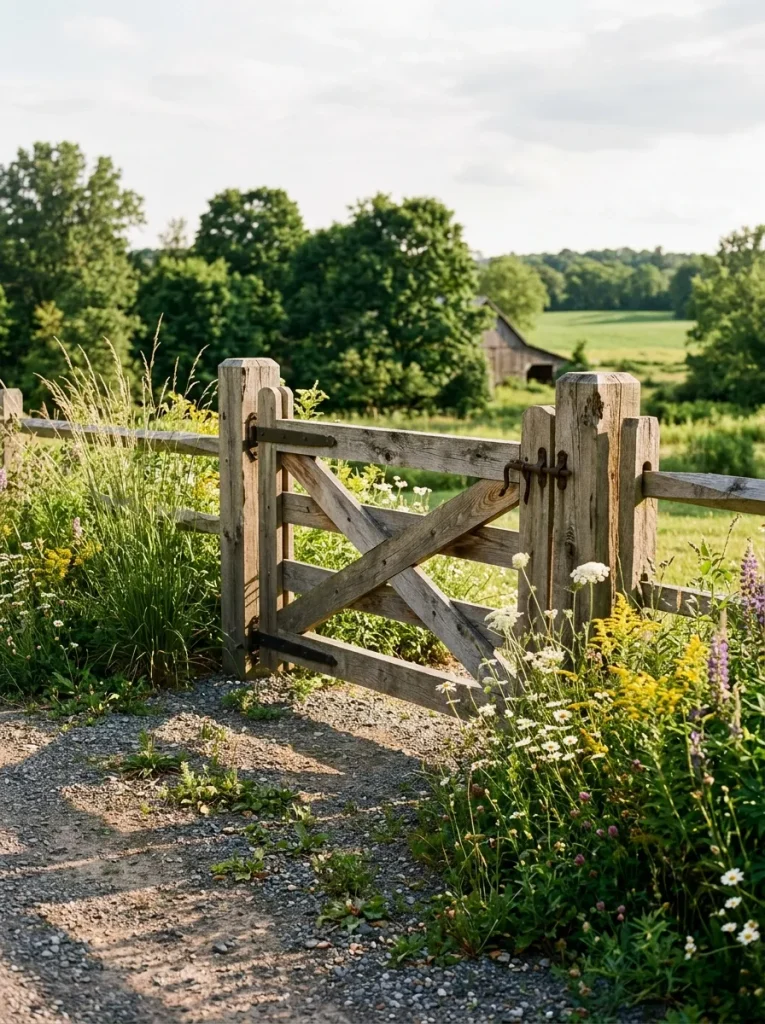
A farm gate creates a strong visual entrance and can help control access to a larger garden. Cross-bracing supports the gate against sagging, while sturdy hinges carry its weight. Measure the opening carefully and consider the direction of swing, ground slope, and clearance for wheelbarrows or garden equipment. Choose a reliable latch and keep the gate posts firmly anchored to maintain smooth operation.
Rustic Fence with Wildflowers
Quick Tip:
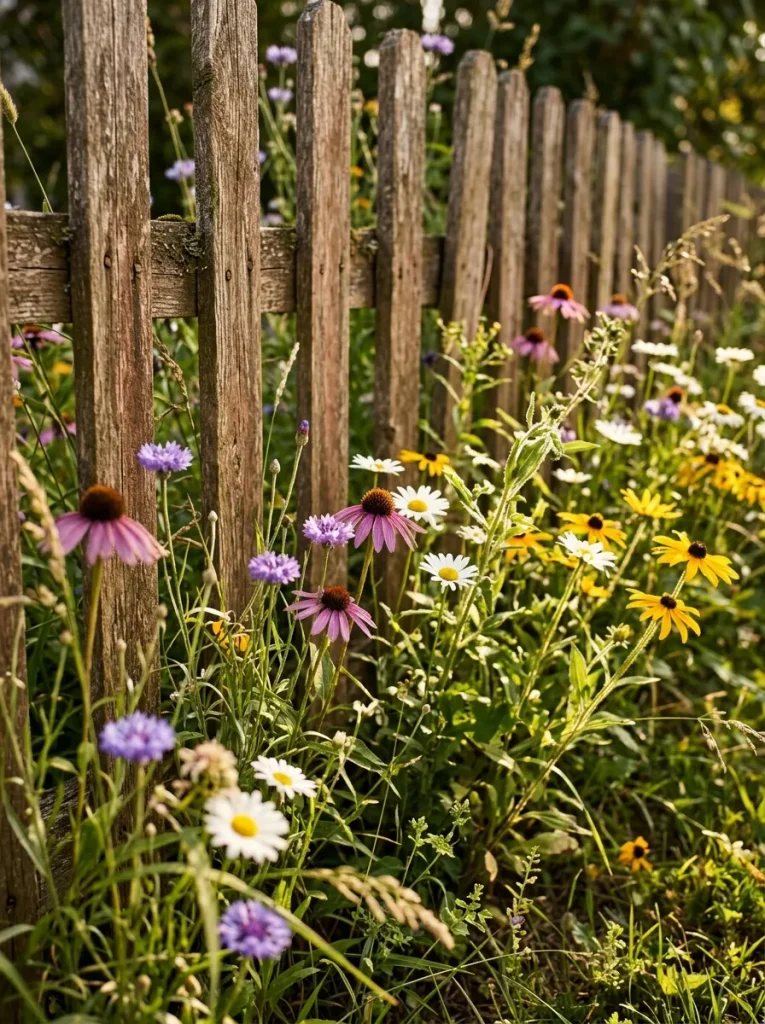
Choose wildflower species suited to your local climate, soil, and sunlight. Plant them at a sensible distance from the fence so you can inspect the boards and reach the base for maintenance.
Wildflowers create a softer transition between a rustic fence and the surrounding landscape. A mix of heights and bloom times can provide seasonal interest, while native species may support local pollinators. Leave enough access for pruning, repairs, and watering. If the garden contains aggressive spreaders, select plants carefully to prevent them from overwhelming nearby beds or blocking the path.
Rustic Fence with Reclaimed Windows
Reclaimed window frames add unusual shapes and vintage character to a garden boundary. They work best as decorative accents rather than as the main structural fence.
Inspect every frame for rot, loose glass, and unstable joints before use. Remove broken panes and secure remaining glass safely, especially in areas where children or pets play. Attach the frames to a sturdy support structure and account for wind pressure. Repeating a similar finish across several frames helps the design feel cohesive instead of cluttered.
Rustic Privacy Fence

BEFORE
An exposed patio may feel uncomfortable when neighboring windows overlook the seating area. Open fencing can also leave outdoor storage and garden equipment visible.
AFTER
A well-designed privacy fence creates a more sheltered outdoor setting and gives the garden a consistent backdrop. Closely spaced boards reduce direct sightlines while maintaining a natural wood appearance.
Check local height restrictions before building, and use posts and framing suitable for wind exposure. Leave adequate clearance from soil and manage drainage along the base. For a less enclosed feeling, combine solid sections with climbing plants or shorter open fencing in selected areas. This approach balances privacy with light and airflow.
Rustic Fence with Stone Path

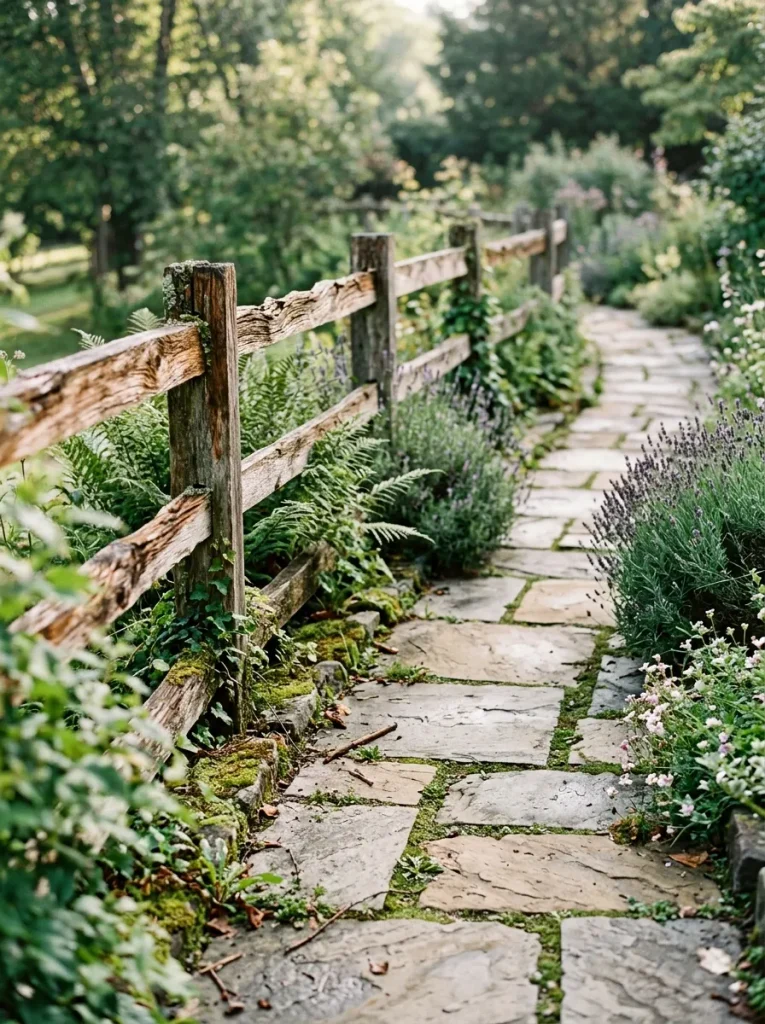
A stone path alongside a rustic fence creates a clear route through the garden and protects the surrounding planting from repeated foot traffic. The contrast between rough timber and natural stone adds depth without requiring extra decoration.
Lay the path on a stable, well-drained base, and keep the surface even enough for safe walking. Leave sufficient space between the path and fence for maintenance access. Avoid allowing soil or mulch to accumulate against the wood. If the area becomes slippery when wet, select suitable stone finishes and maintain the joints regularly.
Mixed Rustic Material Fence
Cost: Moderate to high, depending on materials and construction complexity.
Time: Several days for a mixed-material installation, depending on the size of the garden.
Skill Level: Intermediate to advanced.
Best For: Gardens that need a distinctive boundary with varied textures.
Combining materials gives a rustic fence a custom appearance, especially when the design reflects features already found in the garden. Use timber for warmth, stone for visual weight, and woven branches for softer details. Keep the palette consistent and avoid adding too many competing patterns. Make sure each material is installed using suitable methods, with secure posts, compatible fixings, and proper drainage.
Conclusion
Creating a charming garden starts with choosing details that work for your space, and the right rustic fence can bring everything together. From reclaimed wood and natural branches to stone accents and climbing roses, these Garden Fence Ideas offer inspiration for different budgets, garden sizes, and personal styles.
Start with one design that suits your needs, then consider how its materials, height, and maintenance requirements fit your garden. Even a small improvement can make your outdoor space feel more welcoming and organized.
Save this article on Pinterest for future inspiration, try your favorite idea, and share it with someone planning a garden of their own. Your dream rustic garden can begin with one simple change.



One Comment