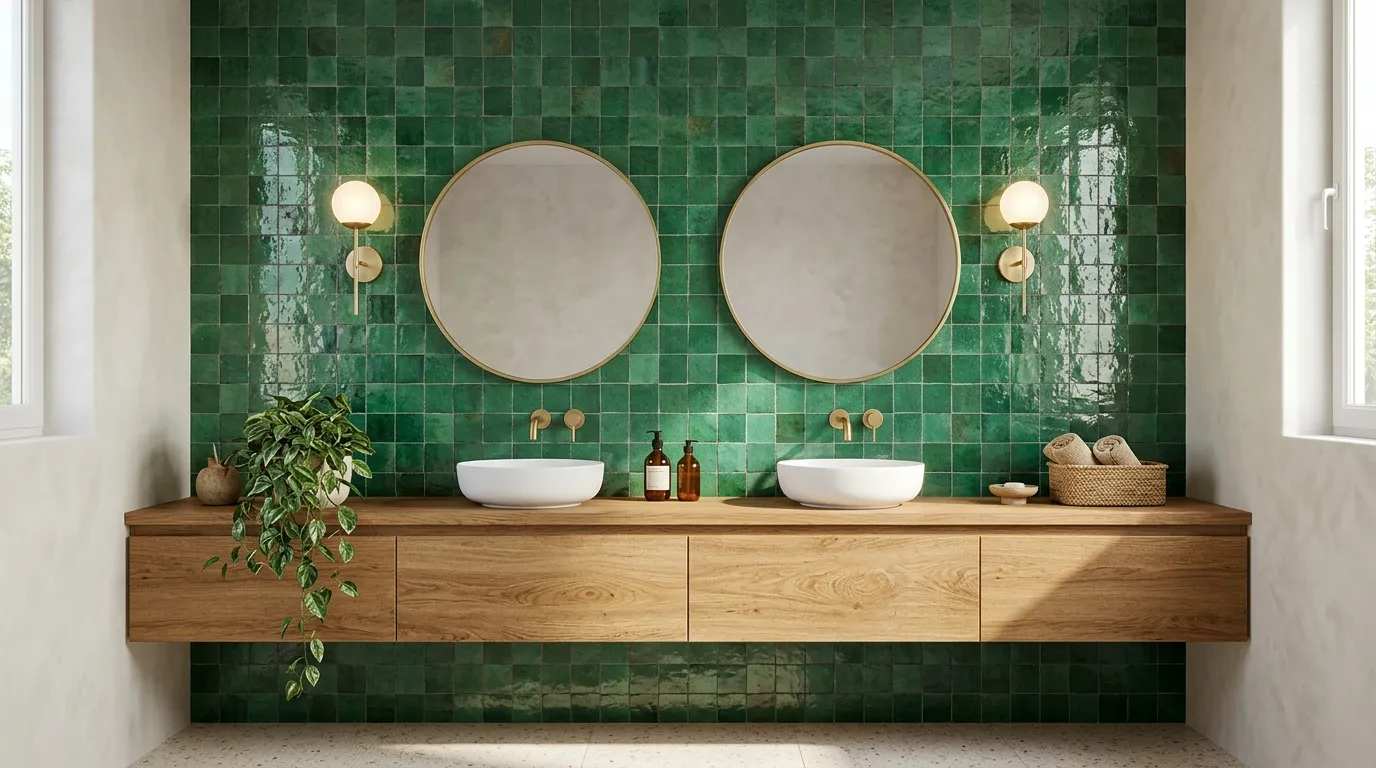
Why Not Try These 26 Daring Bathroom Accent Wall Ideas?
Your bathroom walls deserve more than plain paint and an empty stretch of space. The right accent can turn an ordinary room into a stylish retreat you’ll love seeing every day.
These Bathroom Accent Wall Ideas offer fresh inspiration for adding color, texture and personality without committing to a complete bathroom renovation. Whether you love dramatic black tiles, botanical wallpaper, warm wood slats or earthy plaster finishes, you’ll find options for different tastes, room sizes and budgets.
An accent wall can also help define a vanity area, highlight a bathtub or make a small bathroom feel more thoughtfully designed. I’ve noticed that the most successful designs often start with one clear focal point, then use simpler finishes elsewhere to keep the room balanced. Before choosing a look, consider your bathroom’s lighting, ventilation and exposure to moisture, since these factors affect both appearance and durability.
Explore these 26 ideas to discover a design that suits your home. From simple paint techniques to bold tile patterns, there’s plenty of inspiration to help you create a bathroom that feels personal, polished and practical.
Bold Geometric Tiles
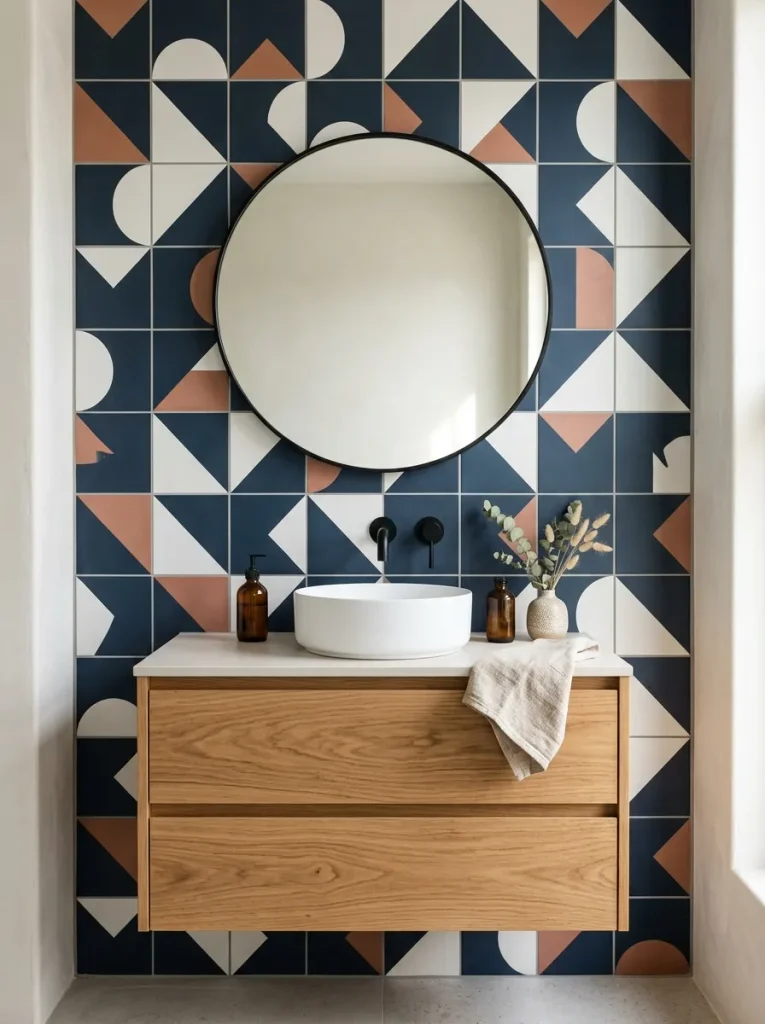
Geometric tiles bring instant personality to a bathroom without requiring extra decorations. Sharp lines, repeating shapes and contrasting colors create a striking focal point behind a vanity or above a bathtub. For a balanced look, keep surrounding walls simple and let the pattern command attention.
Choose hexagons, diamonds, or angular shapes based on your preferred style. Navy and white feel crisp, while terracotta and cream add warmth. Before buying, lay out a few tile samples together to see how the pattern looks under your bathroom’s lighting.
Dramatic Black Walls
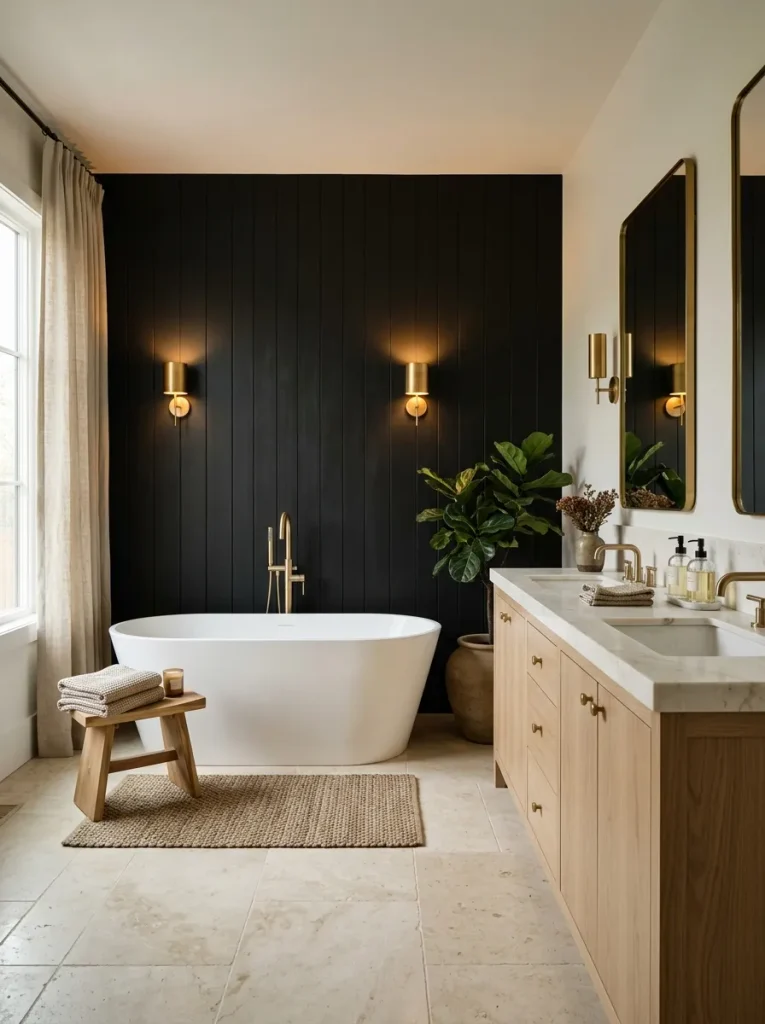
Black walls create striking contrast and give a bathroom a polished, architectural feel. The secret is balancing the dark surface with lighter finishes so the room still feels welcoming. White ceramics, pale wood and warm metallic details keep the design from looking too heavy.
- Choose the right finish: Matte or satin paint creates a refined look and helps limit distracting reflections.
- Focus on one wall: Highlight the vanity, bathtub, or shower area rather than darkening every surface.
- Add warm lighting: Brass sconces or warm white bulbs soften the dramatic color.
- Include lighter materials: White countertops, cream towels and natural wood provide visual relief.
- Check moisture suitability: Select bathroom rated paint and prepare the surface properly, especially in humid areas.
A black accent wall works particularly well in bathrooms with good lighting and a few reflective surfaces. If your room is small, keep the ceiling and remaining walls light to preserve a sense of openness.
Botanical Wallpaper
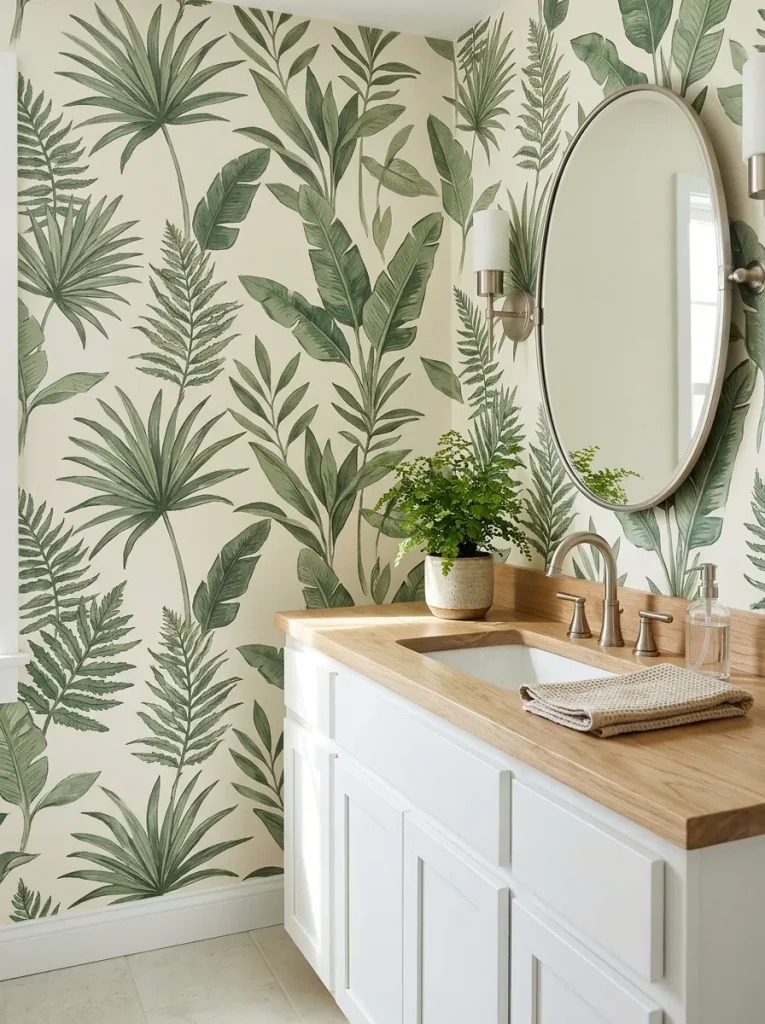
Bring a garden inspired feeling indoors with leafy wallpaper that turns an ordinary bathroom wall into a vibrant focal point. Oversized tropical leaves create drama, while delicate branches or small botanical prints offer a quieter look. The pattern adds color and detail without taking up valuable counter space.
Quick Tip:
Choose wallpaper specifically rated for humid interiors and check the manufacturer’s guidance for suitable placement. Keep it away from direct water spray unless the product is approved for that exposure. Good ventilation helps protect the finish over time.
For a cohesive design, pull one or two colors from the wallpaper into your towels, bath mat, or accessories. A simple vanity and understated mirror allow the foliage to stand out. Botanical prints pair especially well with natural wood, white ceramics and green plants.
Read More: 30 Kitchen Makeover Ideas That Feel Brand-New Again
Textured Stone Slabs

BEFORE: A plain bathroom wall can make an otherwise stylish vanity or bathtub feel unfinished. Small decorative objects may add interest, but they rarely create the same visual impact as a substantial surface treatment.
AFTER: Large stone slabs introduce natural variation, depth and a sophisticated focal point. The continuous surface also creates fewer visible grout lines than many smaller tiles, giving the wall a cleaner appearance.
Travertine, marble and stone look porcelain each offer a different finish and maintenance level. Natural stone may need sealing and specific cleaning products, while porcelain often requires less upkeep. Choose a surface suitable for the location, especially around showers and bathtubs, and confirm installation requirements before purchasing.
Vertical Wood Slats

Vertical wood slats add warmth and structure while drawing the eye upward, which can make a low ceilinged bathroom feel taller. Their repeating lines create a striking backdrop for a mirror, vanity, or freestanding bathtub without relying on a busy color scheme.
- Choose moisture appropriate materials: Look for suitable wood, treated finishes, or bathroom rated slat panels.
- Measure the wall: Calculate the height and width before deciding on slat spacing.
- Plan around fixtures: Mark mirror edges, outlets, taps and wall lights before installation.
- Use a consistent finish: Natural oak feels airy, while walnut creates a deeper, richer effect.
Keep the surrounding surfaces simple so the wood grain remains noticeable. In bathrooms with frequent steam or splashes, confirm that the material and installation system can handle the conditions. Proper ventilation and suitable sealing help preserve the finish.
Colorful Mosaic Patterns
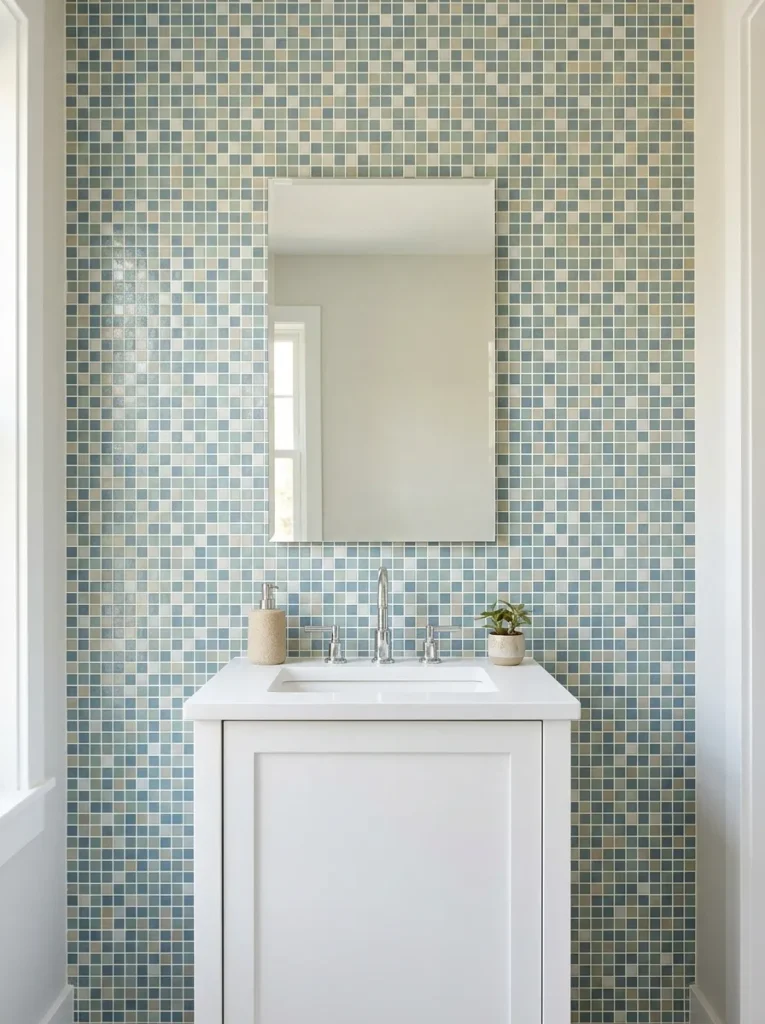
| Design Choice | Option A | Option B |
| Color palette | Blue and white | Green and sand |
| Visual effect | Crisp and coastal | Soft and earthy |
| Best placement | Vanity backsplash | Bathtub feature wall |
| Grout choice | Pale gray | Warm beige |
| Overall mood | Fresh and lively | Calm and natural |
Mosaic tiles offer a way to introduce several colors without covering the bathroom in a single bold shade. Small pieces create movement and intricate detail, especially when the palette includes related tones. Use a simpler finish on nearby walls to prevent competing patterns from making the room feel busy.
Before committing, view a full tile sheet rather than judging a tiny sample. Grout color can change the overall effect, making individual shapes stand out or blend together. Choose a grout suitable for the installation area and follow the tile manufacturer’s cleaning recommendations.
Oversized Floral Prints
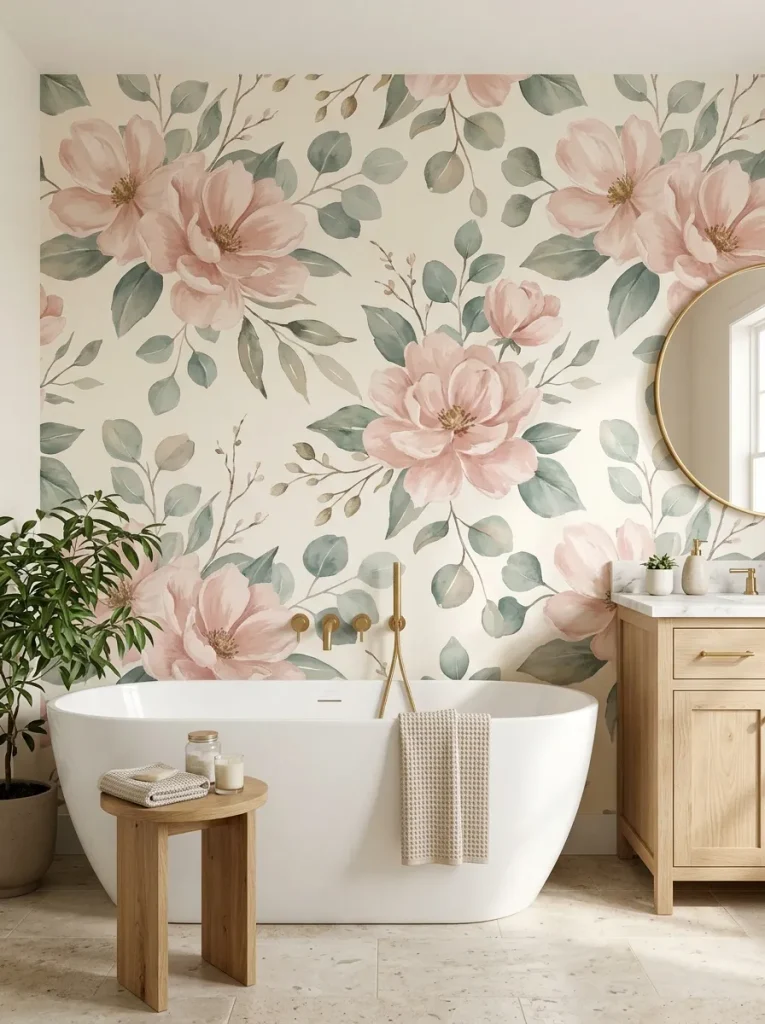
DO
- Choose large-scale flowers for a dramatic focal point behind the vanity or bathtub.
- Repeat one floral color in towels or a small accessory for a coordinated finish.
- Select moisture-appropriate wallpaper and follow the manufacturer’s installation guidance.
- Keep nearby surfaces simple so the floral pattern remains the main attraction.
DON’T
- Mix several competing floral prints in one small bathroom.
- Use ordinary wallpaper in areas exposed to direct water unless approved for that use.
- Choose a pattern without checking how its scale looks across the entire wall.
- Block the print with oversized mirrors or crowded shelving.
Large floral designs bring softness and personality to bathrooms that feel plain or overly neutral. Blush, cream, and sage create a gentle palette, while darker flowers on a deep background deliver more drama. For a balanced result, pair the pattern with simple fixtures and understated accessories.
Terrazzo Feature Walls

Cost: Varies by material, finish and installation.
Best For: Vanity backdrops and selected dry wall areas.
Style: Modern, playful and subtly textured.
Color Pairing: Cream, muted green, warm gray, or natural oak.
Terrazzo adds visual interest through its distinctive mix of colorful flecks, making a bathroom wall feel decorative without relying on a repeating print. Large terrazzo tiles or porcelain panels can create a similar look with different maintenance needs. Compare samples in your own lighting before choosing a dominant color.
Deep Green Paint

Deep green paint gives a bathroom a grounded, sophisticated look while adding color without a busy pattern. Forest, olive, and emerald shades each create a different mood, from earthy and relaxed to rich and dramatic. The finish works especially well behind a vanity where the mirror and fixtures break up the color.
For a harmonious palette, combine green with warm wood, creamy white, or brushed brass. Use bathroom suitable paint and prepare the wall carefully for an even finish. If the room has limited natural light, test a sample at different times of day before painting the entire accent wall.
Checkerboard Tile Walls

- Pick your scale: Large squares create a bold, graphic look, while smaller tiles feel more traditional.
- Choose a palette: Black and white offer strong contrast, while beige and brown feel warmer.
- Plan the layout: Align grout lines with the vanity or mirror for a more intentional finish.
- Balance the pattern: Keep towels, flooring, and nearby walls relatively simple.
- Check tile suitability: Select materials appropriate for the wall location and moisture exposure.
Checkerboard tiles turn a plain wall into a clear design feature without requiring extra decoration. The repeating pattern works well behind a vanity or beside a bathtub, especially when the remaining finishes are understated. For a softer result, choose muted colors and a matte surface rather than high-gloss black and white.
Limewash Wall Finishes

Quick Tip:
Test a limewash sample on the actual wall before committing. The finish often looks different as light shifts throughout the day and the number of coats can affect the final depth and variation.
Limewash creates a softly mottled surface that adds character without the strong pattern of wallpaper or tile. Shades such as warm white, sand, mushroom and muted clay suit many bathroom styles. Check that the product is compatible with your wall and humidity conditions and use any recommended protective finish where appropriate.
Mirrored Accent Panels

BEFORE: A narrow bathroom with a solid, dark wall can feel enclosed, particularly when the vanity and storage already take up much of the visual space. A single small mirror may not reflect enough light to change that impression.
AFTER: Mirrored panels reflect light and surrounding details, creating a sense of greater depth. Antique finishes add warmth and character, while clear panels deliver a brighter, more contemporary appearance.
Choose mirror panels designed for interior wall use, and plan their placement around taps, outlets, and wall lights. Reflections look most attractive when they capture a tidy part of the room rather than clutter. Use suitable moisture resistant installation materials and allow for professional fitting when panels are heavy or complex.
Painted Arch Motifs
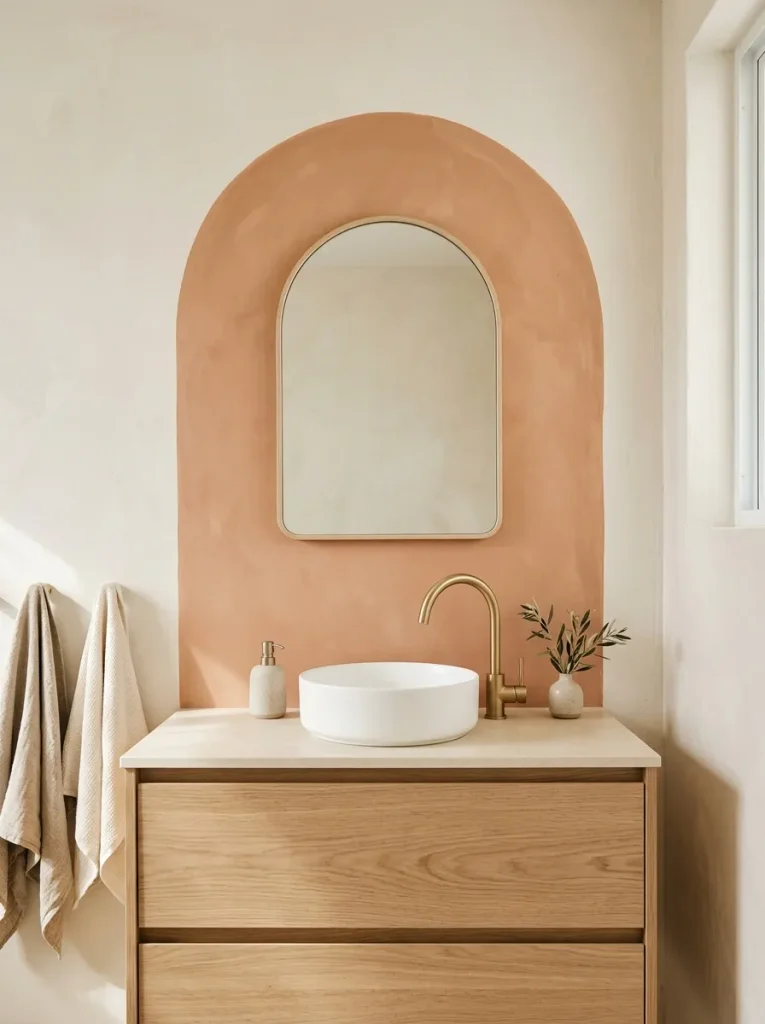
- Choose the location: Center the arch behind a vanity mirror or use it to frame a small wall shelf.
- Select a color: Try dusty rose, sage green, muted blue, or warm terracotta.
- Mark the shape: Use a level, pencil, and string or a suitable template to create an even curve.
- Apply painter’s tape: Protect nearby surfaces and define the straight edges before painting.
- Paint carefully: Use bathroom suitable paint and allow it to dry according to the manufacturer’s instructions.
A painted arch creates a custom looking feature without the expense of tile or wall panels. It works particularly well in rental-friendly refreshes where repainting is permitted. Keep accessories simple and choose a mirror shape that complements the curve instead of competing with it.
Marble Vein Patterns
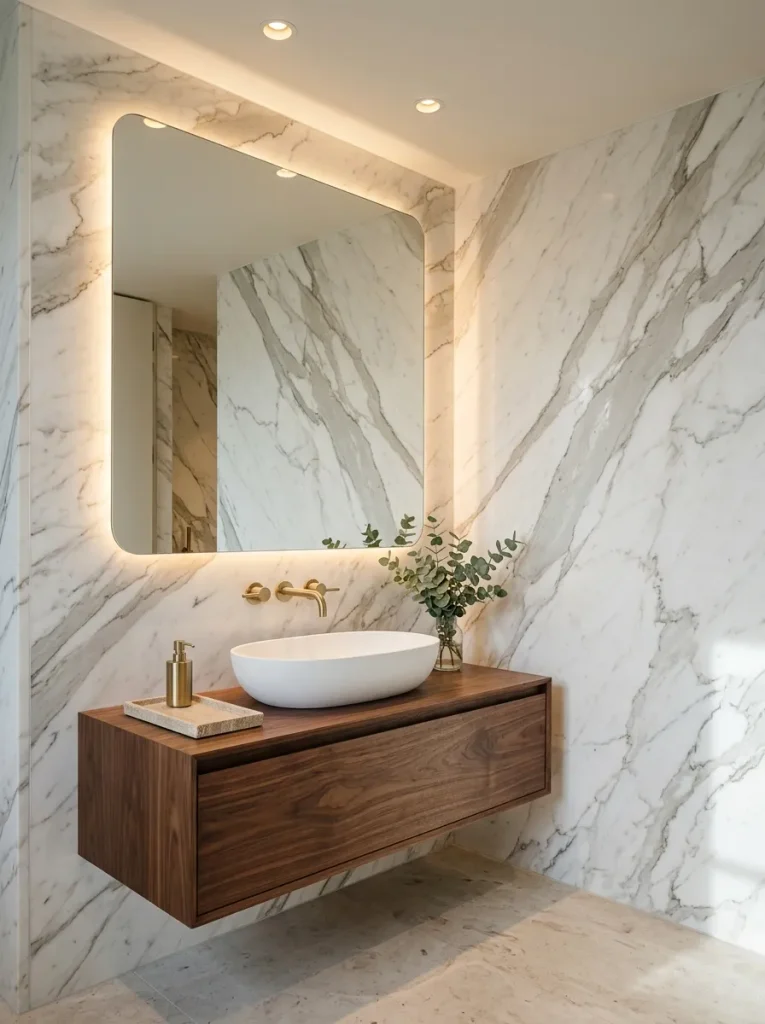
| Design Detail | Option A | Option B |
| Material | Natural marble | Marble look porcelain |
| Appearance | Unique natural veining | More consistent pattern |
| Maintenance | May require sealing | Usually lower maintenance |
| Budget | Often higher | Available across price ranges |
| Best feature | Authentic stone variation | Practical decorative versatility |
Marble brings movement and elegance to a bathroom, with each vein creating a distinctive visual detail. Natural stone offers individual variation, while porcelain can reproduce a similar appearance with different care requirements. Compare full slabs or large samples so you can see how the veining flows across the wall.
For a cohesive result, pair expressive marble with simple cabinetry and restrained accessories. Warm brass and walnut bring out taupe undertones, while chrome and white create a cooler finish. Before installation, confirm that the material, adhesive, and wall structure are suitable for the intended bathroom location.
Two Tone Painted Walls

DO
- Use a level to mark a crisp, consistent dividing line.
- Choose two shades that share a similar undertone for a coordinated appearance.
- Position the color division in relation to the vanity, mirror or wall fittings.
- Test both paint colors together before starting the full wall.
DON’T
- Divide the wall at an awkward height that clashes with nearby fixtures.
- Combine too many strong colors in a small bathroom.
- Skip primer or surface preparation when the existing wall requires it.
- Assume ordinary paint is suitable for areas exposed to frequent splashes.
Two tone paint adds structure and color without introducing another material. A darker lower section can ground the room, while a lighter upper half keeps the wall feeling open. Try sage and cream for a natural palette or navy and white for a sharper contrast that suits modern fixtures.
Fluted Wall Panels

Cost: Depends on panel material, wall size, and installation.
Time: Usually one to several days, depending on preparation and complexity.
Skill Level: Beginner to intermediate for suitable DIY panel systems.
Best For: Vanity walls and decorative areas away from direct water exposure.
Fluted panels add dimension through repeated vertical grooves that catch light and create soft shadows. Choose moisture appropriate products and confirm their suitability for your specific wall location. Cream panels feel subtle and calming, while deep green or charcoal makes the texture more dramatic. Keep nearby surfaces smooth to emphasize the ridged finish.
Dramatic Blue Tiles

Rich blue tiles can turn a simple bathroom wall into a bold focal point. Cobalt feels energetic, navy looks classic and midnight blue creates a more intimate atmosphere. Glossy surfaces reflect light, while matte finishes deliver a quieter, more understated effect.
For a coordinated look, pair blue tiles with white fixtures and pale stone. Brushed nickel and chrome suit cooler blues, while warm brass adds contrast. Before installation, decide whether you prefer stacked tile lines for a modern appearance or an offset layout for a more traditional finish.
Natural Pebble Walls
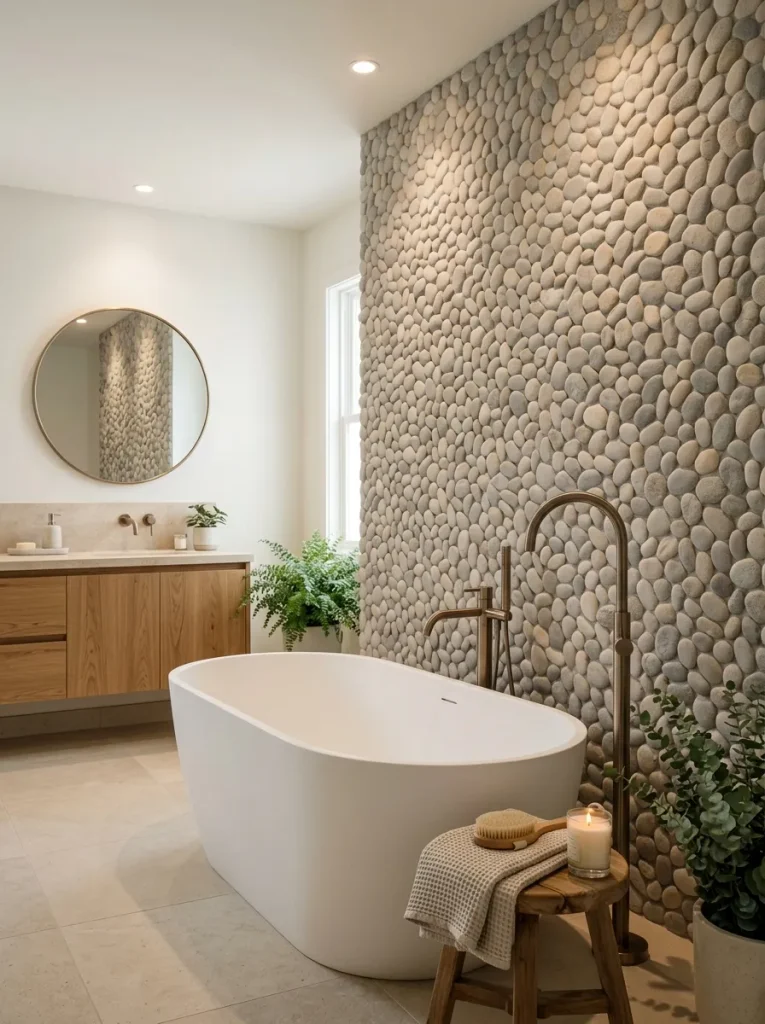
Fact: Pebble surfaces create tactile texture and an organic, nature inspired appearance.
Best Placement: Decorative vanity walls or selected shower walls when the product is approved for wet areas.
Color Palette: Gray, sand, cream and earthy brown.
Maintenance: Uneven surfaces may need more careful cleaning than smooth tile.
Pebble walls bring a natural, spa like quality to bathroom interiors. Their varied shapes create visual movement, especially when paired with smooth stone, plain paint and simple fixtures. For wet zones, choose a suitable installation system and ensure proper waterproofing. A flatter pebble finish may be easier to clean than deeply textured surfaces.
Terracotta Accent Tiles

Terracotta tiles bring warmth and earthy character to a bathroom that feels too cool or plain. Their natural color variation creates interest, while handmade style surfaces add a relaxed, artisanal touch. Use them behind the vanity or around a designated bathtub feature wall to introduce color without overwhelming the room.
Pair terracotta with creamy white, pale oak, or muted sage for a balanced palette. If you prefer a modern finish, choose clean tile lines and simple fixtures. For a more rustic look, select irregular edges and varied shades, while making sure the chosen tile is suitable for its intended location.
Subtle Striped Wallpaper
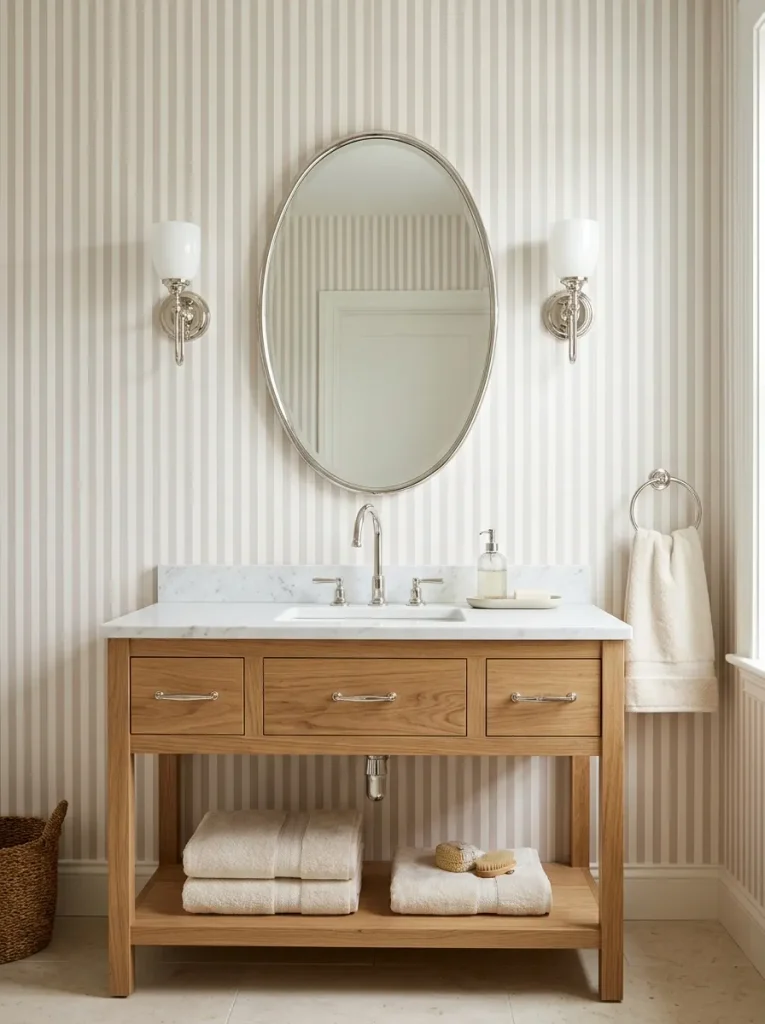
- Choose vertical stripes: They draw the eye upward and can make a low ceiling feel taller.
- Keep contrast gentle: Cream and beige create a softer effect than stark black and white.
- Coordinate the scale: Narrow stripes suit understated interiors, while wider bands feel more graphic.
- Check moisture ratings: Select wallpaper intended for humid rooms and follow the manufacturer’s placement guidance.
- Repeat one color: Echo a stripe shade in towels or accessories for a connected look.
Striped wallpaper adds order and visual height without the complexity of a detailed print. It works especially well behind a vanity with a simple mirror and minimal accessories. For a small bathroom, restrained colors keep the pattern from feeling overpowering, while adequate ventilation helps maintain the wall finish.
Textured Concrete Walls

BEFORE: A smooth painted wall can feel flat beside natural stone, wood cabinetry and sculptural bathroom fixtures. Adding more decorative objects may create clutter without giving the room a stronger focal point.
AFTER: A concrete effect finish introduces depth through gentle tonal changes and a tactile, architectural appearance. The wall becomes a feature while the rest of the room can remain simple and functional.
Concrete look porcelain panels, microcement systems and decorative coatings offer different appearances and installation requirements. Choose a finish designed for the bathroom’s moisture conditions, especially near showers or bathtubs. Pair gray surfaces with warm wood and soft lighting to avoid an overly cold result and confirm whether professional preparation or sealing is required.
Herringbone Tile Layout
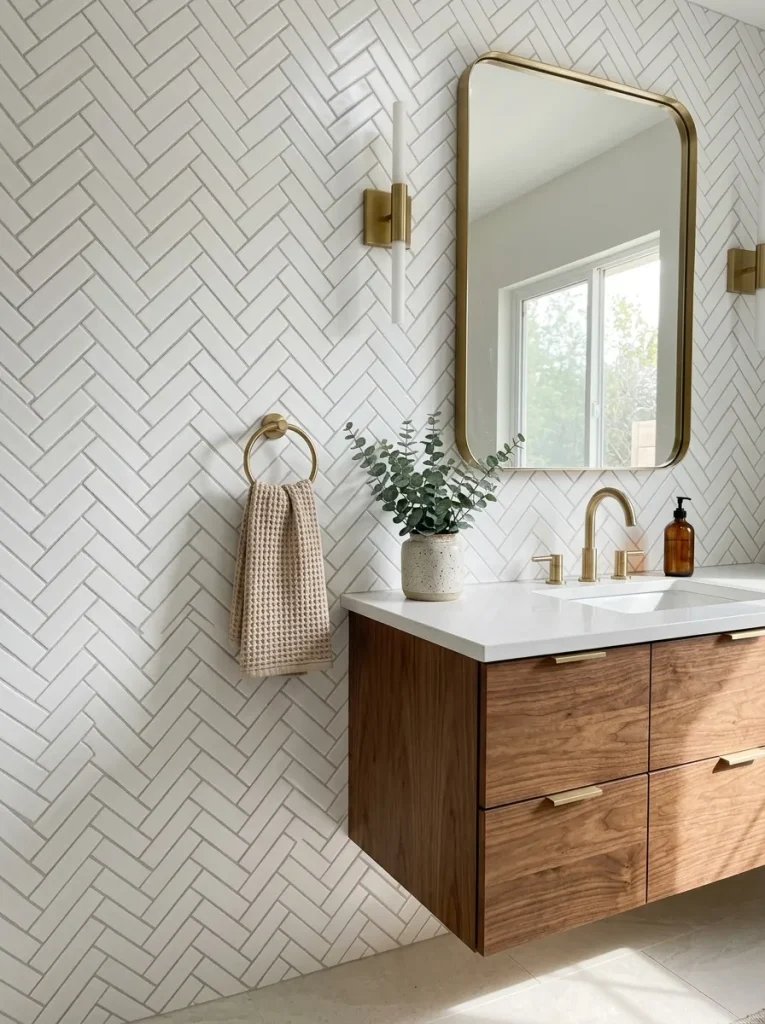
- Select your tile: Rectangular ceramic or porcelain tiles create a clear herringbone pattern.
- Choose the direction: Vertical arrangements draw the eye upward, while horizontal layouts emphasize wall width.
- Plan the centerline: Dry-lay a section to check spacing and avoid awkward cuts at the edges.
- Coordinate the grout: Matching grout creates a subtle effect, while contrasting grout emphasizes each tile.
- Finish the edges: Use suitable trim for a neat transition to painted walls or adjacent surfaces.
Herringbone adds movement without requiring multiple tile colors or elaborate decoration. White tiles feel fresh and timeless, while sage, charcoal, or dusty blue create a stronger statement. Careful layout planning matters because uneven alignment becomes noticeable across the repeated zigzag pattern.
Warm Clay Plaster

| Design Feature | Option A | Option B |
| Finish | Matte clay plaster | Smooth clay effect coating |
| Texture | Naturally varied | More uniform |
| Visual mood | Rustic and organic | Minimal and refined |
| Maintenance | Depends on sealer and product | Depends on coating specifications |
| Best setting | Warm, natural interiors | Contemporary neutral bathrooms |
Clay-inspired finishes create depth through subtle color shifts rather than strong patterns. Their earthy tones work beautifully with natural wood, linen shades and cream ceramics. Some mineral finishes are sensitive to moisture, so check the product specifications and avoid using an unprotected decorative coating in areas exposed to direct splashes.
For a coordinated palette, repeat the wall’s warm undertone in the vanity, towels, or accessories. A simple mirror and understated faucet help the finish remain the main feature. Test a sample under both daylight and bathroom lighting before choosing the final shade.
Black Vertical Tiles
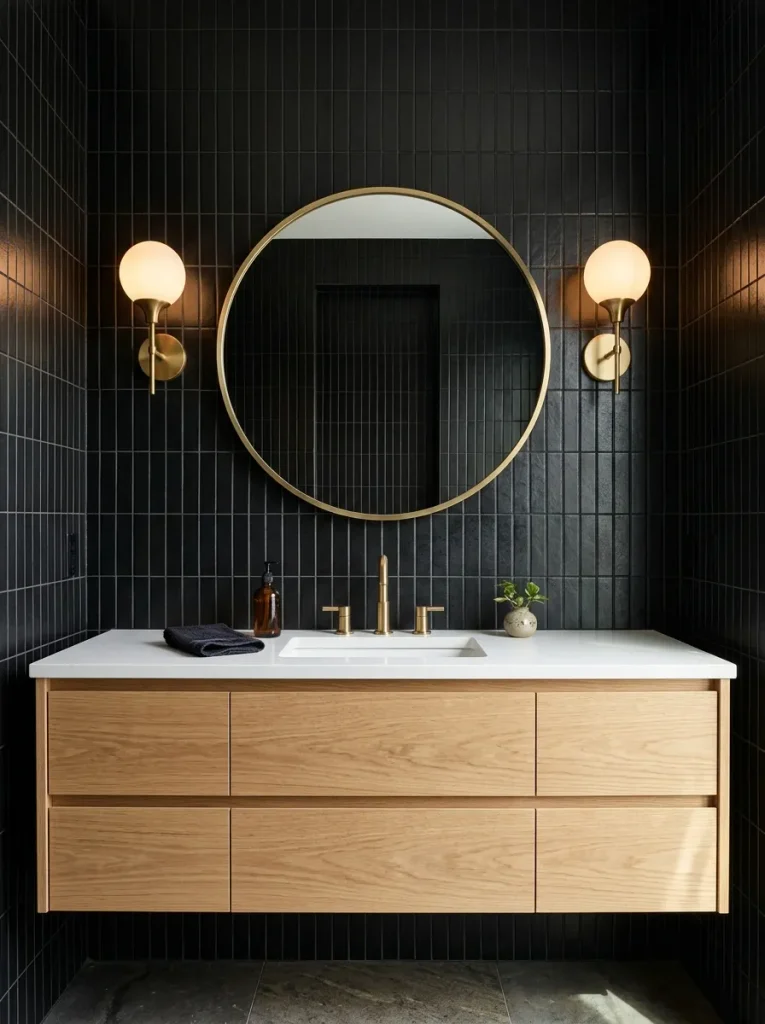
Black vertical tiles combine a bold color with a directional layout that draws the eye upward. The narrow format creates rhythm, while the dark surface gives white fixtures and warm metallic details extra contrast. This treatment works especially well behind a vanity where the mirror can break up the tiled expanse.
Choose matte tiles for a restrained look or glossy ones to reflect more light. Pale grout highlights the vertical pattern, while dark grout creates a quieter surface. Keep the ceiling and adjacent walls lighter if the bathroom is compact, and plan tile cuts carefully around mirrors and wall mounted fittings.
Artistic Wall Murals

- Choose a focal wall: Place the mural behind the vanity or on a wall visible from the doorway.
- Set a color palette: Pick two or three shades that coordinate with your tiles, vanity and towels.
- Select the medium: Consider bathroom-suitable wallpaper murals, approved wall coatings, or artwork protected appropriately for the environment.
- Keep fixtures simple: Use an understated mirror and minimal accessories so the mural remains prominent.
An artistic mural gives a bathroom a distinctive focal point without relying on repeated patterns. Abstract curves feel modern, botanical scenes bring a natural mood and soft landscapes create a quieter atmosphere. Check moisture suitability before installation, especially near showers and keep the rest of the room restrained for a balanced result.
Metallic Accent Tiles

Cost: Varies by tile material, finish, and installation.
Best For: Vanity feature walls and decorative areas away from direct water exposure unless the product is rated for wet zones.
Color Pairings: Bronze with walnut, champagne gold with cream, or brushed silver with cool gray.
Visual Effect: Reflective highlights add depth and a refined focal point.
Metallic tiles catch light and introduce a touch of glamour without needing ornate fixtures or extra decoration. For a sophisticated finish, use them on one defined wall section and pair them with matte surfaces that balance the shine. Always check cleaning instructions and confirm the tile’s suitability for the intended bathroom location.
CONCLUSION
A striking accent wall can give your bathroom a fresh identity without requiring a complete makeover. From colorful mosaics and geometric tiles to soft plaster finishes and artistic murals, these Bathroom Accent Wall Ideas offer inspiration for a range of styles and budgets.
Start with one feature that catches your eye, then consider how its colors, texture and materials will work with your existing fixtures. I’ve found that thoughtful choices and a clear focal point can make a room feel much more cohesive. Save this article on Pinterest, try an idea that suits your space and share it with someone planning a bathroom refresh. Your next beautiful design could begin with one wall!



One Comment