
Living Room Makeover Ideas: 28 Jaw-Dropping Changes
A tired living room does not always need new furniture or a major renovation to feel fresh again. Sometimes, a better layout, warmer lighting or a few carefully chosen details can change the entire mood.
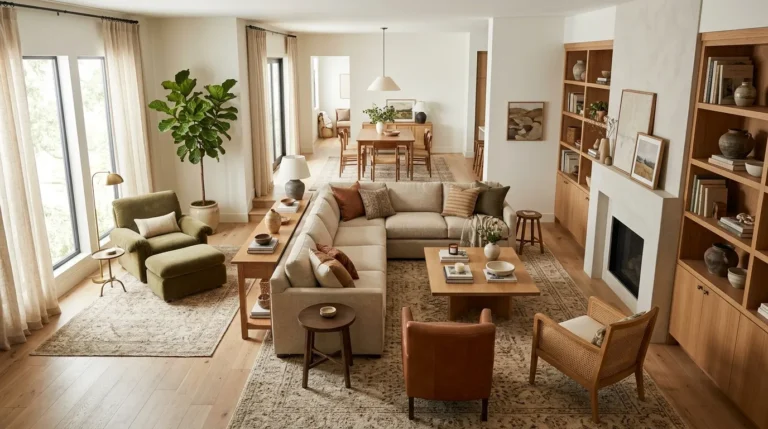
These Living Room Makeover Ideas are designed to help you create a space that feels more comfortable, stylish and personal without making the process overwhelming. From statement walls and layered textiles to smarter storage, natural greenery and simple furniture changes, each idea offers a practical way to refresh your room.
In my experience, the biggest improvements often come from small adjustments that solve real problems, such as poor lighting, clutter, awkward furniture placement or a room that simply feels unfinished. Whether you’re working with a small apartment or a spacious family room, you’ll find inspiration you can adapt to your own style, budget and everyday needs.
Statement Wall

A bold wall can change the character of a living room without replacing the furniture. Choose one strong shade such as olive green, warm terracotta, muted navy or rich charcoal, then keep nearby pieces lighter so the wall remains the focal point.
I’ve noticed that a single painted wall often feels more intentional than covering every surface in color. Use the accent behind the sofa or television and repeat a small touch of that shade in cushions, artwork, or a throw for a connected look.
Layered Textiles
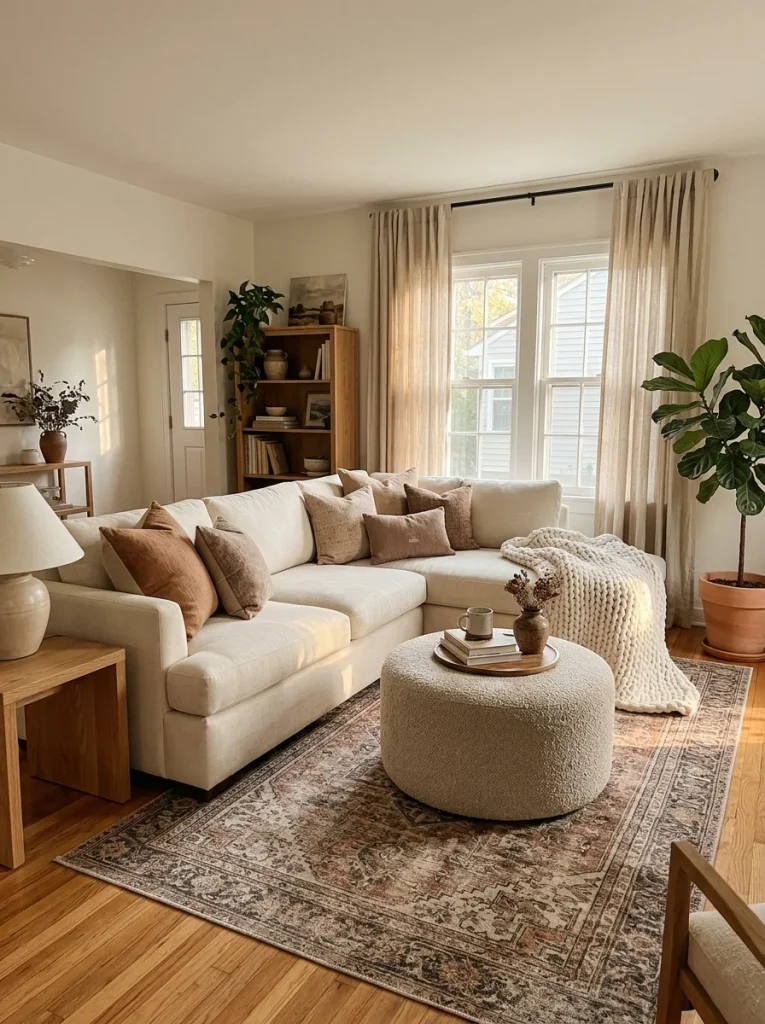
- Choose cushions in different sizes to create visual depth.
- Combine linen, cotton, boucle and woven textures rather than matching every fabric.
- Place a soft throw over one sofa corner for a relaxed finish.
- Add a patterned rug with colors already present in the room.
- Keep the largest textile neutral so smaller accents do not compete.
Layered fabrics make a room feel finished without requiring major furniture changes. Start with the rug, then build upward with cushions and throws. For a balanced result, mix solid colors with one subtle pattern. This approach works especially well in neutral rooms that feel clean but slightly flat.
Statement Lighting

Quick Tip:
Choose lighting that adds both function and personality. Place a floor lamp near a reading chair or sofa corner, then use a table lamp on a side table to create softer evening light.
A striking fixture can become the visual anchor of the room while improving everyday comfort. Look for warm bulbs around 2700K to create a cozy atmosphere, especially in rooms with neutral walls. Keep the main fixture proportional to the room so it feels intentional rather than oversized.
Absolutely. I’ll continue from Idea 4 through Idea 28, keeping the same structure, image descriptions, format rotation, SEO rules and no repeated exact primary keyword except where natural.
Read More: 25 Living Room Organization Ideas for a Serene Home
Floating Furniture
BEFORE
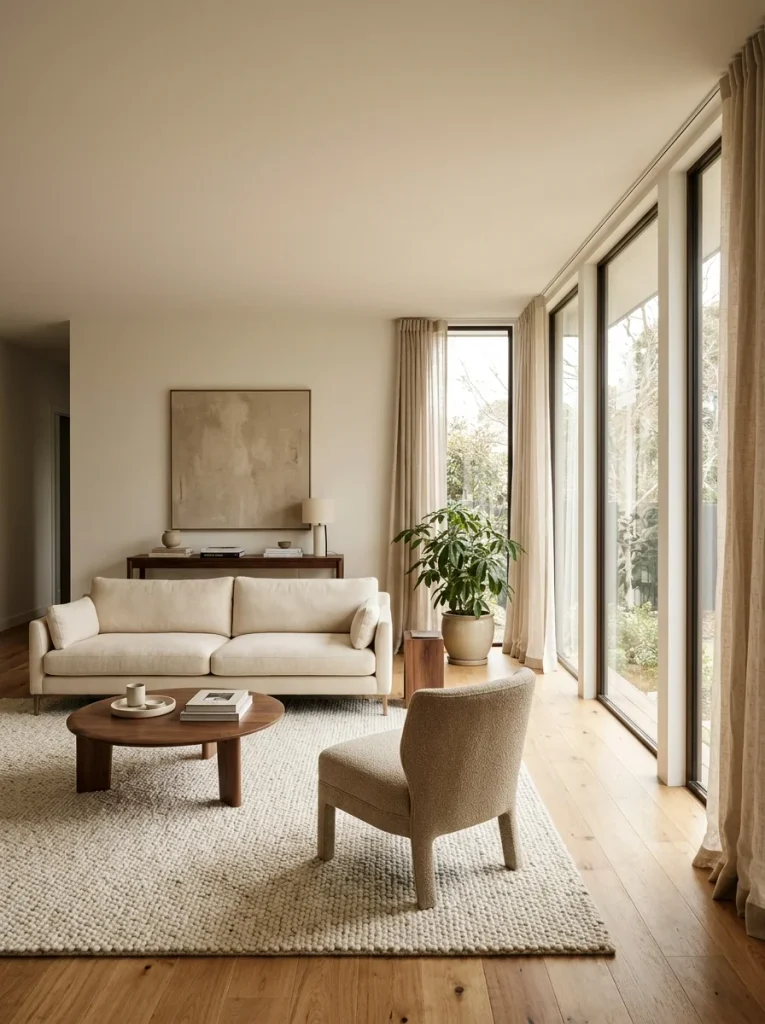
Furniture pushed tightly against every wall makes the center of the room feel crowded. Walking paths become narrow and the seating arrangement can look disconnected.
AFTER
Pull the sofa slightly forward and create a defined conversation area. Add a slim console behind it if space allows, leaving clear pathways around the furniture.
Moving furniture away from the walls can make even a modest room feel more intentional. Keep roughly 30 to 36 inches for comfortable walking paths where possible. I’ve seen this simple adjustment make a room feel larger without adding a single new decorative item.
Oversized Area Rug
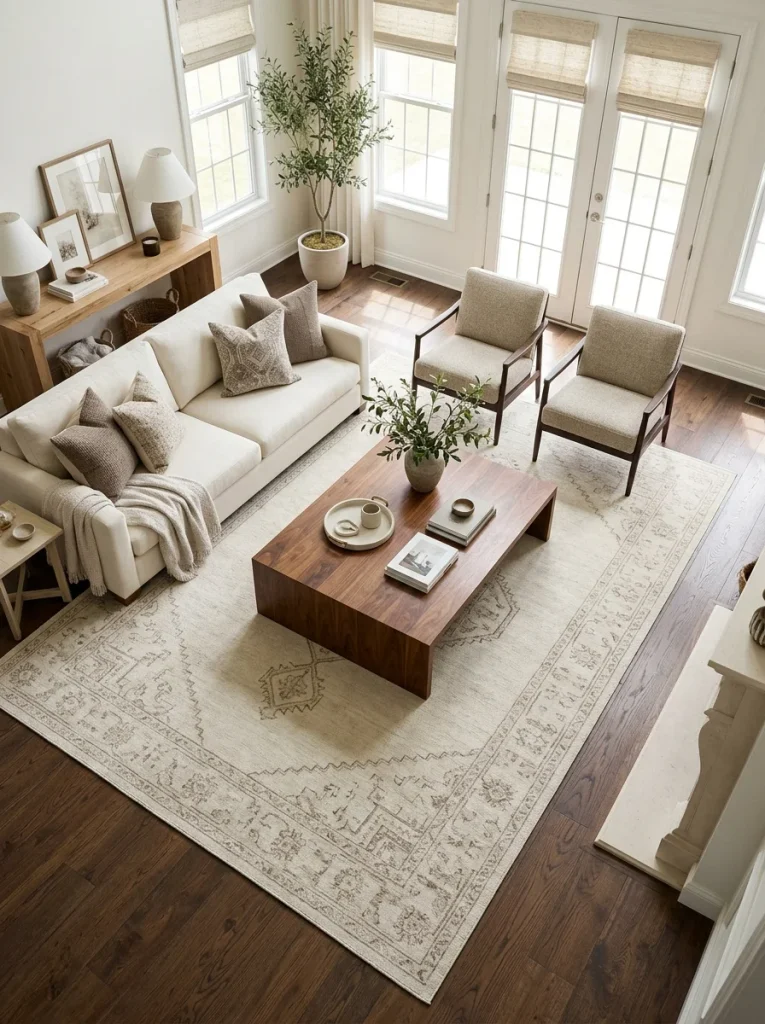
- Measure the seating zone before shopping for a rug.
- Choose a size large enough for the front legs of the main seating pieces to rest on it.
- Center the rug around the coffee table and primary seating.
- Leave a consistent border of visible flooring around the room.
A properly sized rug connects separate furniture pieces into one cohesive arrangement. Small rugs floating in the center can make furniture appear scattered. For many living rooms, sizing up creates a more grounded appearance and gives the entire seating area a stronger visual foundation.
Built-In Shelving
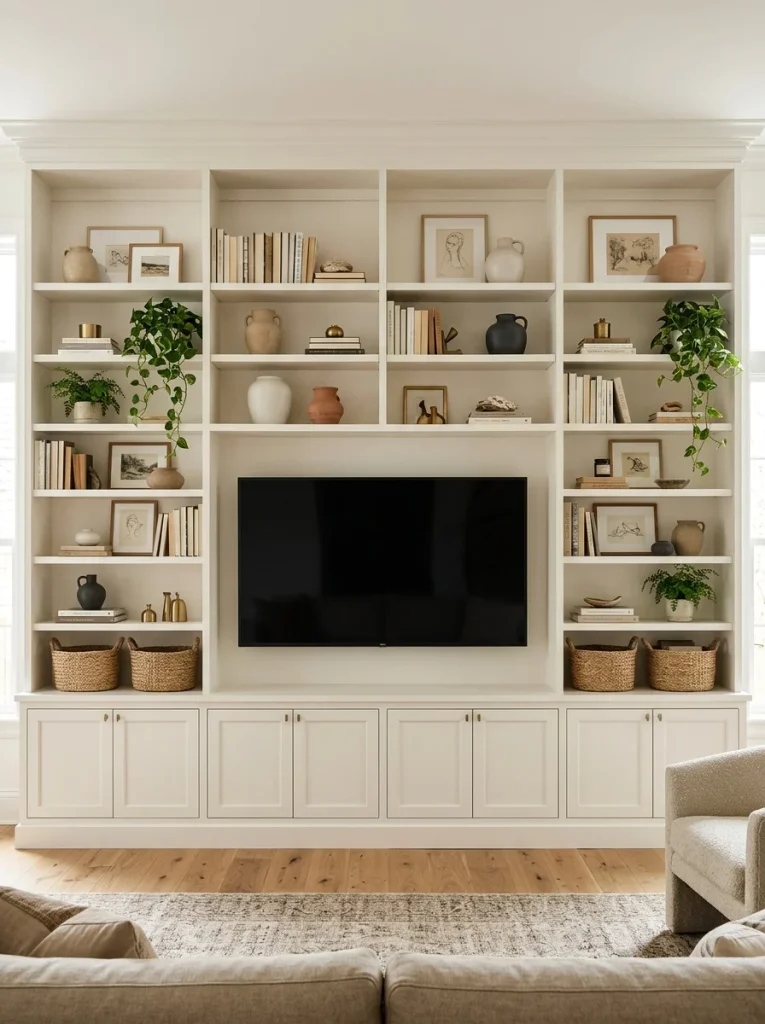
| Feature | Open Shelves | Built-In Shelves |
|---|---|---|
| Storage | Moderate | High |
| Visual impact | Light and airy | Architectural |
| Installation | Easier | More involved |
| Best for | Small collections | Larger storage needs |
Built-in storage gives everyday items a designated home while adding architectural interest. Balance decorative objects with closed cabinets or baskets so the shelves do not become visually crowded. Leave some open space between groupings to keep the arrangement calm and intentional.
Curved Seating

- Choose a curved sofa when the room has enough open floor space.
- Pair rounded seating with a circular or oval coffee table.
- Repeat soft curves through lamps, mirrors or decorative objects.
- Keep surrounding furniture simple to highlight the main silhouette.
Curved furniture softens rooms filled with straight lines and sharp corners. A rounded sofa can also encourage conversation by naturally facing chairs and tables toward the center. I’ve noticed that repeating two or three curved details prevents the sofa from feeling like an isolated statement piece.
DON’T
- Do not block major walking paths with oversized seating.
- Do not combine too many competing sculptural shapes.
- Do not place a tiny table beside a large curved sofa.
- Do not overcrowd the room with accessories.
A curved seating arrangement works best when the surrounding floor area remains open. Give the sofa enough breathing room and select tables with proportions that match its scale. The result feels softer while still maintaining a practical layout for everyday conversations, relaxing and entertaining.
Gallery Wall

Cost: Low to moderate | Time: 1 to 3 hours | Skill Level: Beginner | Best For: Blank walls
A gallery wall adds personality without requiring a complete room redesign. Start by choosing artwork with two or three repeating colors, then arrange the frames on the floor before hanging them. Keeping similar spacing between pieces makes the collection look deliberate rather than randomly assembled.
Natural Wood Accents
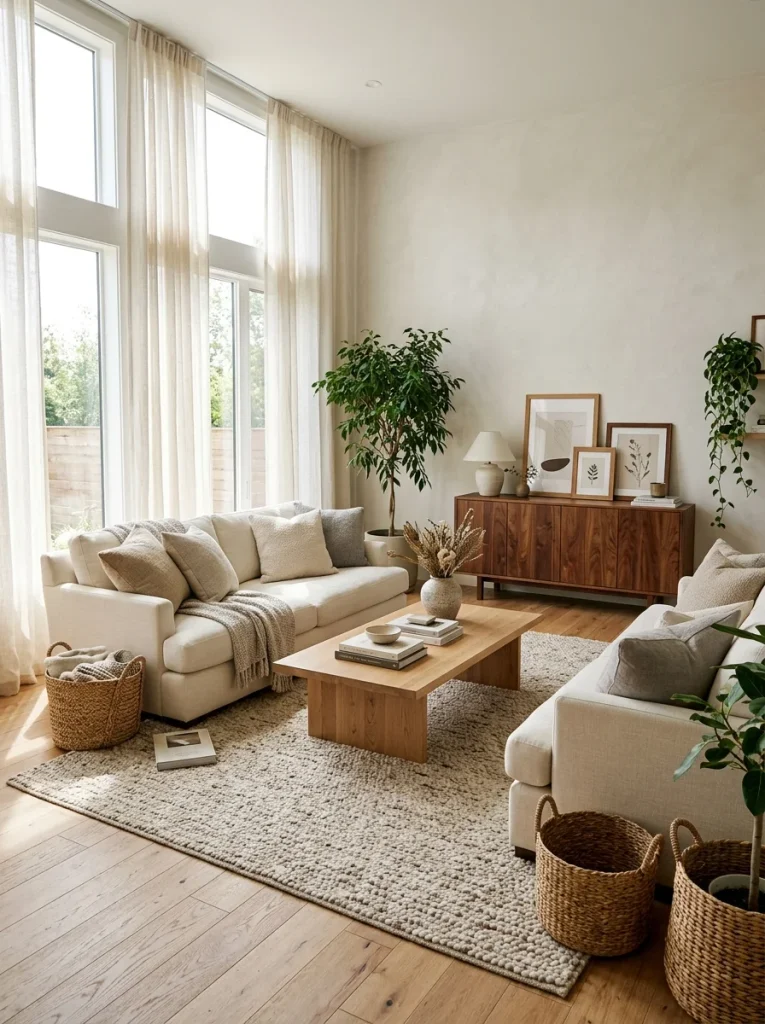
Natural wood can instantly warm a room dominated by cool whites, gray upholstery, or hard surfaces. Choose one main wood tone for larger furniture and use smaller pieces to introduce complementary shades. A wooden tray, stool, frame or side table can provide warmth without requiring expensive furniture replacement.
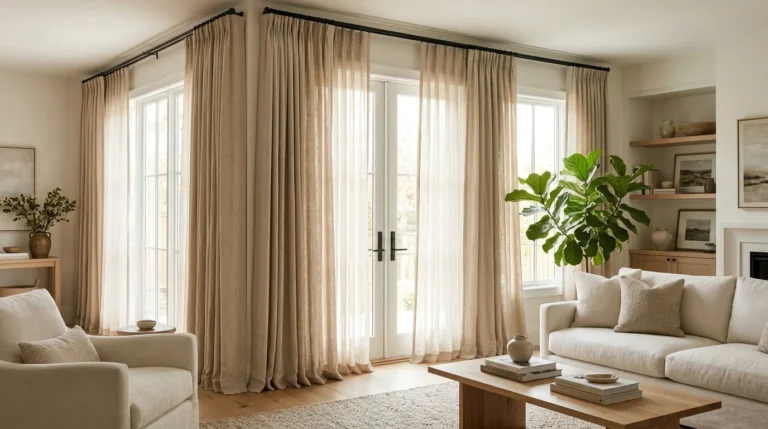
Layered Window Treatments
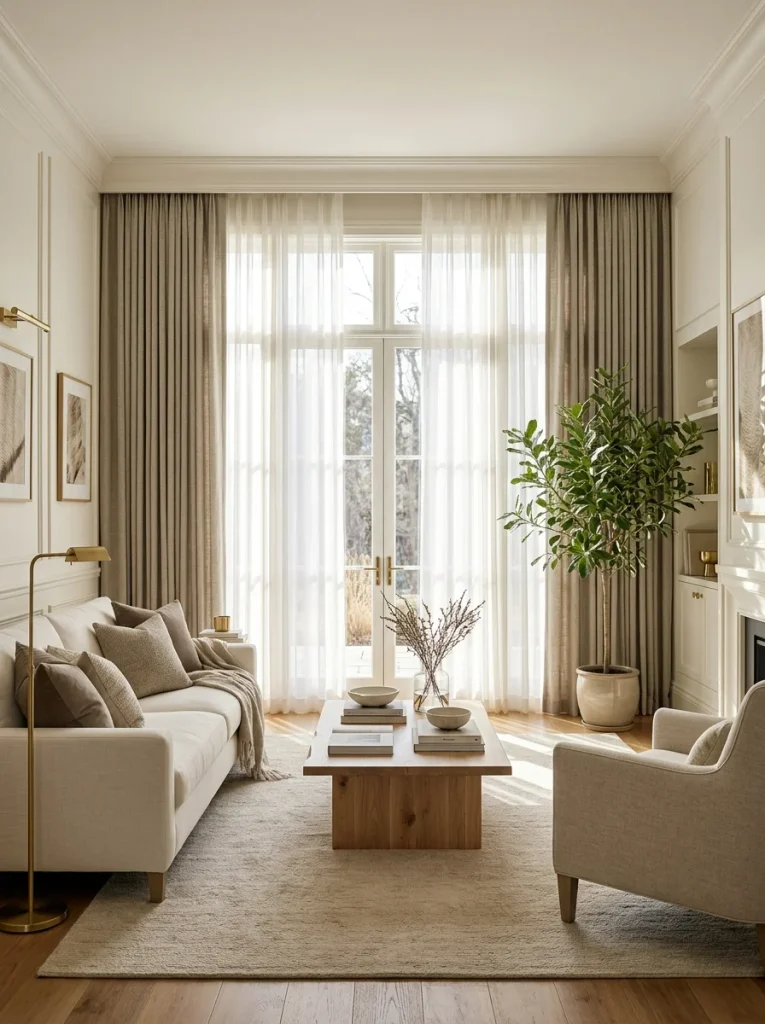
- Hang the curtain rod several inches above the window frame.
- Extend the rod beyond both sides of the window when possible.
- Install sheer curtains for filtered daytime light.
- Add heavier panels for privacy and evening warmth.
- Let the fabric reach close to the floor for a polished finish.
Layered curtains add softness while giving you better control over privacy and natural light. Choose fabrics that complement the room’s existing colors rather than introducing an unrelated shade. Floor-length panels can also make windows appear taller, especially when the rod is positioned higher than the frame.
Sculptural Coffee Table

| Traditional Table | Sculptural Table |
|---|---|
| Rectangular silhouette | Rounded or organic shape |
| More formal appearance | More artistic appearance |
| Strong straight lines | Softer visual flow |
| Works with angular furniture | Works well with curved seating |
A sculptural coffee table can make a familiar seating arrangement feel newly designed. Keep the tabletop relatively simple so its shape remains visible. If the table has a bold base, pair it with understated accessories such as one tray, a small vase, or a single stack of books.
Coordinated Accent Chairs
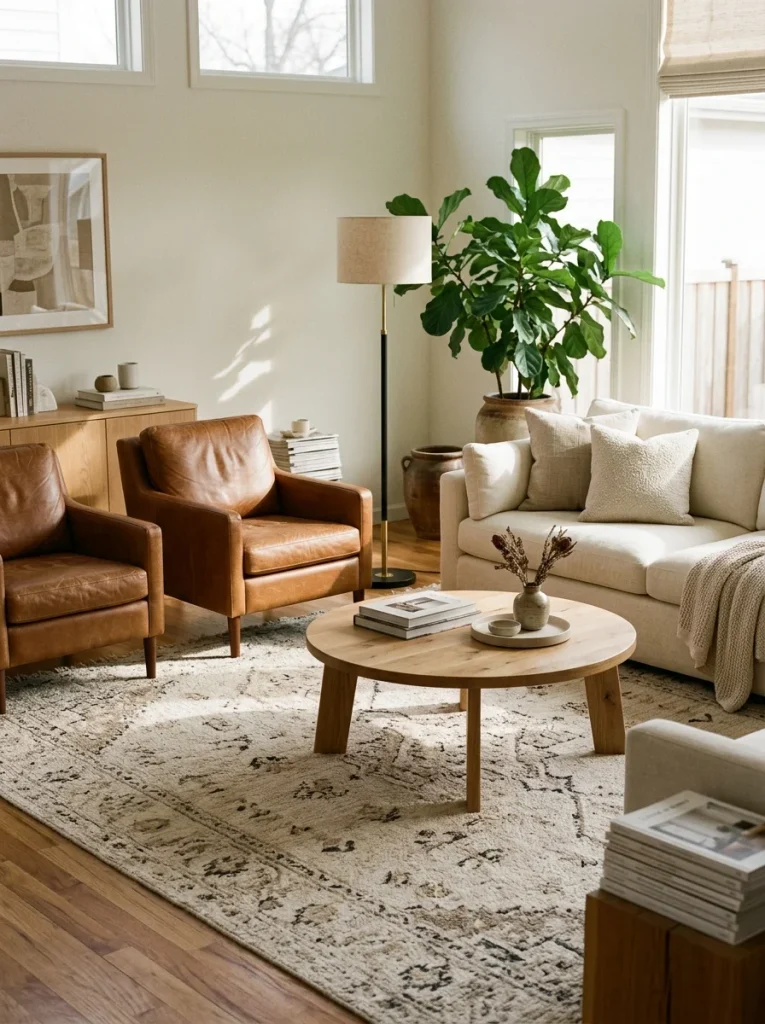
DO
- Choose chairs that complement the sofa’s color family.
- Angle chairs slightly toward the conversation area.
- Match their scale to the existing seating.
- Repeat their color in a small accessory.
DON’T
- Do not choose chairs that completely overpower the sofa.
- Do not block windows or major pathways.
- Do not mix too many unrelated upholstery patterns.
- Do not push every seat directly against a wall.
Matching accent chairs create balance without making the entire room look overly coordinated. Position them to encourage conversation rather than simply filling empty corners. A pair works especially well in larger rooms where one sofa alone leaves too much unused floor space.
Warm Neutral Palette
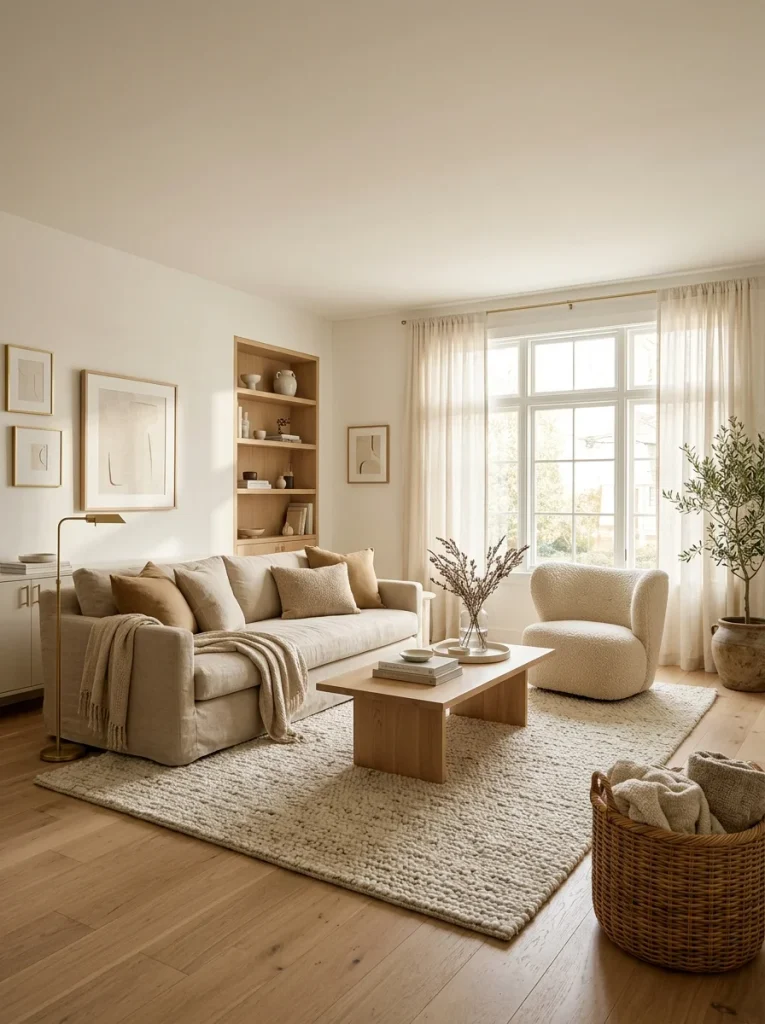
Cost: Flexible | Time: 1 weekend | Skill Level: Beginner | Best For: Calm interiors
Warm neutrals create a comfortable foundation that can easily adapt to seasonal accessories. Mix cream, oatmeal, camel, tan, and soft brown instead of relying on one beige shade. The key is texture: woven baskets, linen cushions, wool rugs and wood surfaces keep neutral rooms from appearing flat.
Wall-Mounted Television
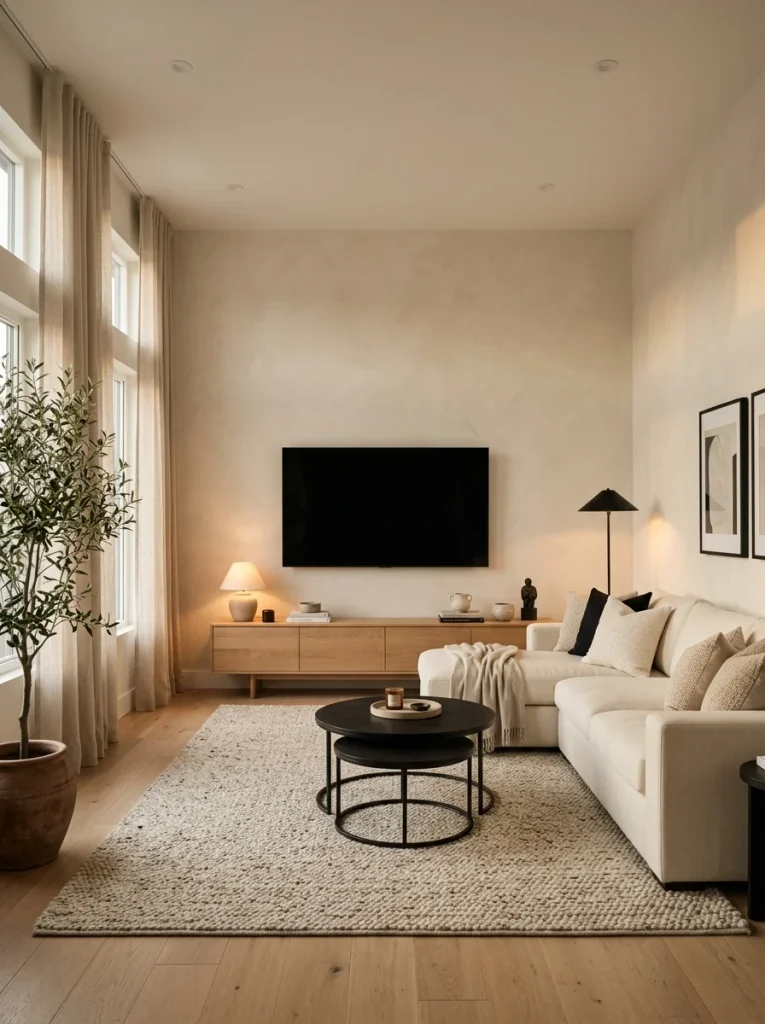
Mounting the television can free valuable floor space and create a cleaner focal point. Before drilling, check the viewing height from the primary sofa and plan cable management carefully. A slim console underneath can hold devices while maintaining enough visual space around the screen.
Textured Accent Wall

- Select one wall that naturally attracts attention.
- Choose a texture that complements existing furniture.
- Keep the surrounding colors restrained.
- Test a small sample before committing.
- Repeat the material subtly elsewhere if appropriate.
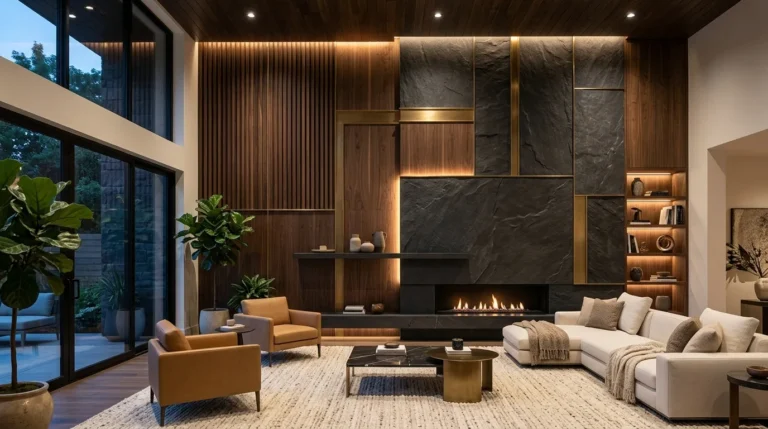
Texture adds dimension without relying on a dramatic color change. Vertical wood slats can emphasize height, while limewash-style finishes create softer movement. For renters, removable textured panels or temporary wallpaper can provide a similar visual effect without permanent construction.
Minimal Media Console
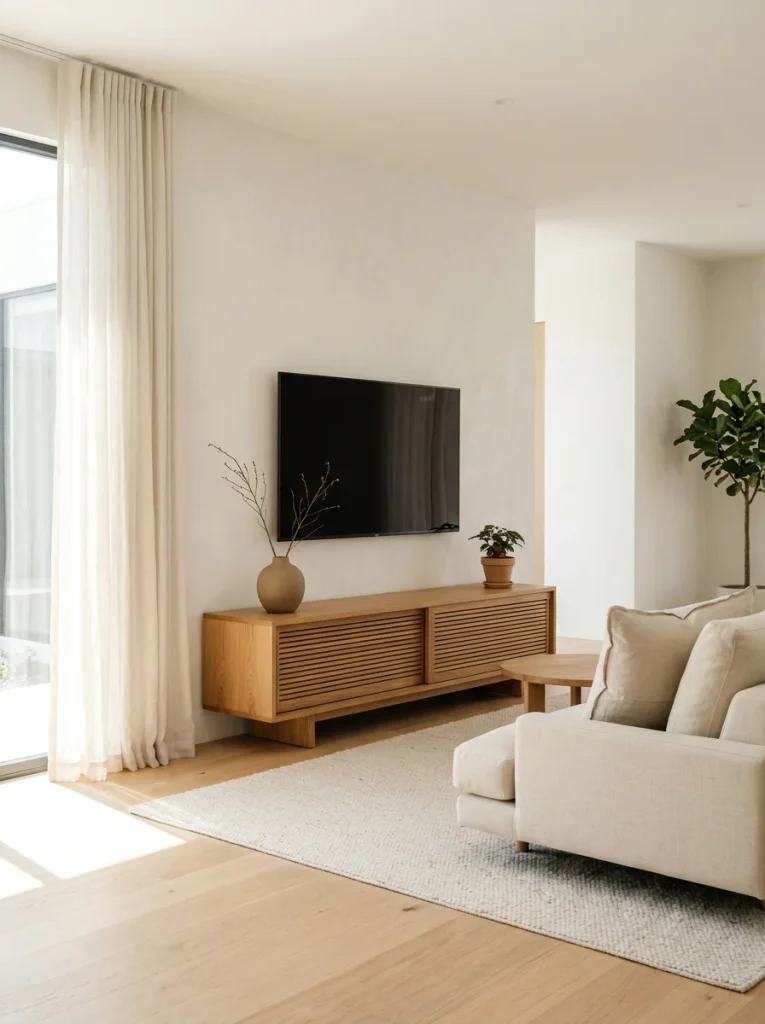
| Cluttered Setup | Minimal Setup |
|---|---|
| Many visible devices | Cables and devices concealed |
| Crowded console | Few intentional objects |
| Mixed storage | Closed storage |
| Busy visual focus | Clear focal point |
A streamlined media console can instantly make the television wall look more organized. Use closed compartments for remotes, gaming accessories and cables, then keep only a few decorative pieces visible. The less visual noise around the screen, the calmer the entire seating area tends to feel.
Oversized Mirror
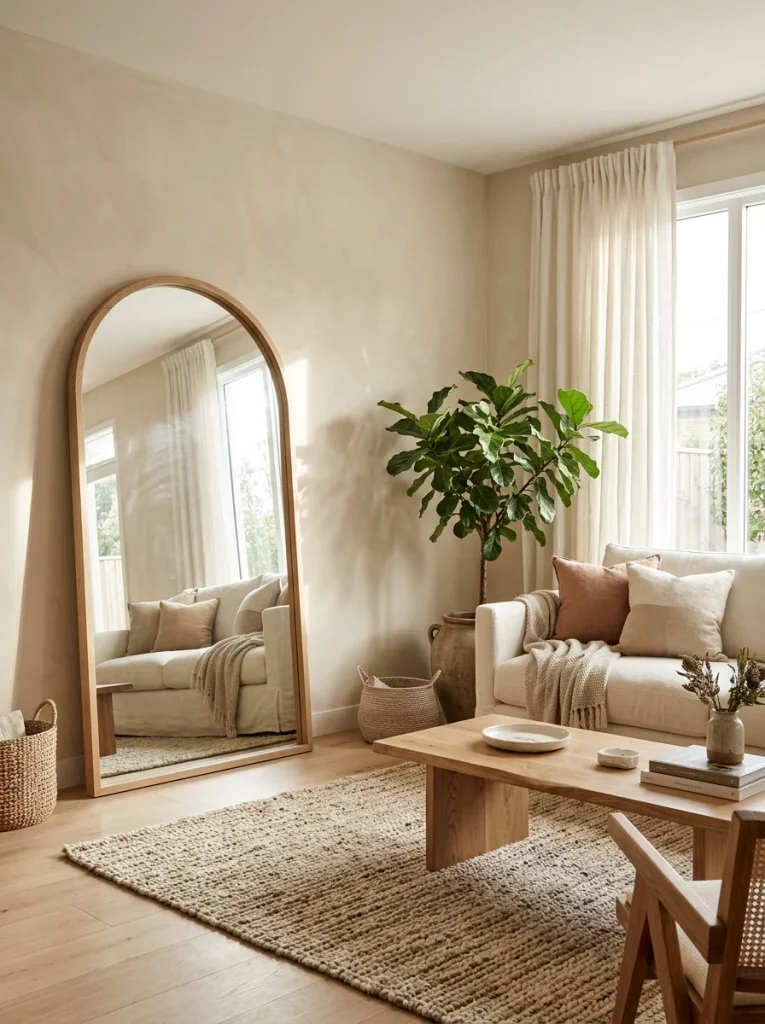
A large mirror can reflect daylight and make a compact room feel more open. Position it opposite a window when possible, but avoid reflecting clutter or an unattractive wall. Leaning a tall mirror against the wall creates a relaxed look, while mounting it provides a more secure permanent arrangement.
Indoor Greenery
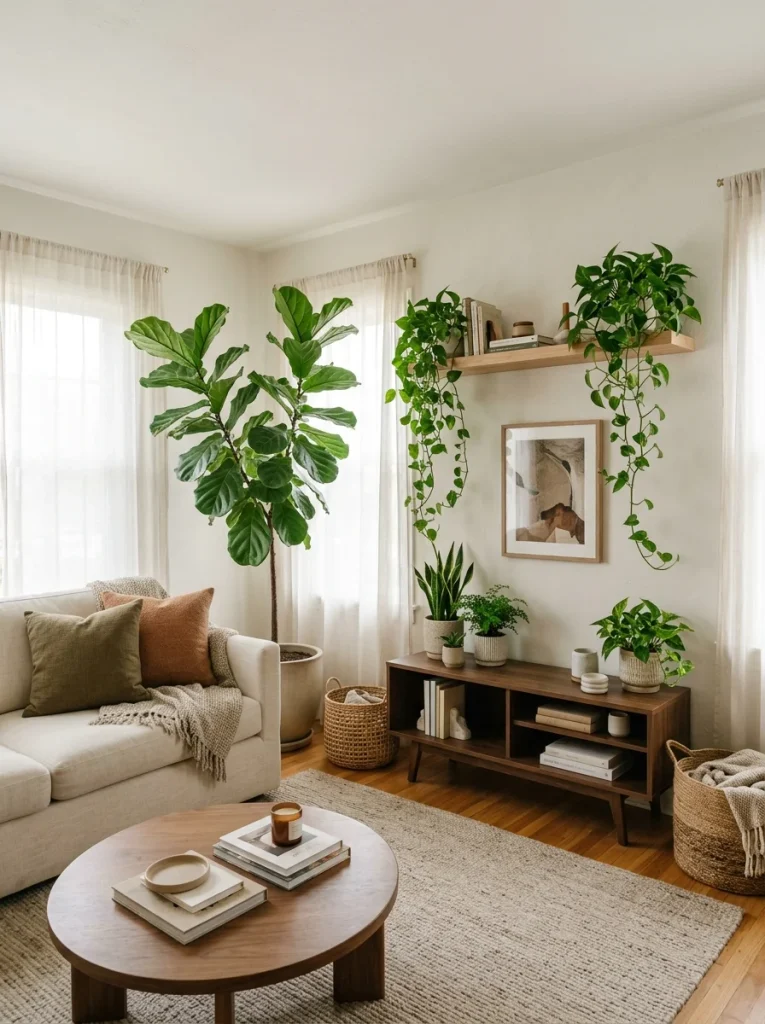
DO
- Choose plants that match the available natural light.
- Use different heights for visual variety.
- Place tall plants in empty corners.
- Use ceramic or woven planters that complement the decor.
DON’T
- Do not place light-sensitive plants in dark corners.
- Do not overcrowd every surface with greenery.
- Do not ignore watering and drainage needs.
- Do not use too many different planter styles.
Plants bring color and organic texture into neutral interiors. Even one substantial plant can soften a rigid furniture arrangement. For beginners, start with a hardy variety suited to the room’s light conditions rather than choosing a plant solely because it looks attractive in a photograph.
Mixed Material Decor

Cost: Low to moderate | Time: 2 to 4 hours | Skill Level: Beginner | Best For: Flat interiors
Rooms become more interesting when smooth, rough, soft and reflective materials appear together. Pair wood with metal, linen with boucle, and ceramic with glass rather than buying everything from one material family. A few contrasting textures can make simple furniture feel considerably more intentional.
Rearranged Conversation Zone

- Identify the room’s natural focal point.
- Position the main sofa facing that focal area.
- Angle additional chairs toward the sofa.
- Place the coffee table within easy reach.
- Check walking paths from every entrance.
A better furniture arrangement can change how the room functions without spending money. Keep seating close enough for comfortable conversation while preserving clear paths through the space. In my experience, testing several layouts with lightweight furniture first prevents expensive mistakes and often reveals a better arrangement than the original setup.
Layered Wall Art

| Single Large Artwork | Layered Art Arrangement |
|---|---|
| Simple focal point | More visual depth |
| Minimal planning | Requires spacing |
| Formal appearance | Personal appearance |
| Works with bold art | Works with collections |
Layering artwork gives a blank wall more personality while allowing different pieces to tell a visual story. Keep a common thread through color, frame finish or subject matter. Arrange larger pieces first, then fill smaller spaces without making the overall composition too dense.
Hidden Storage
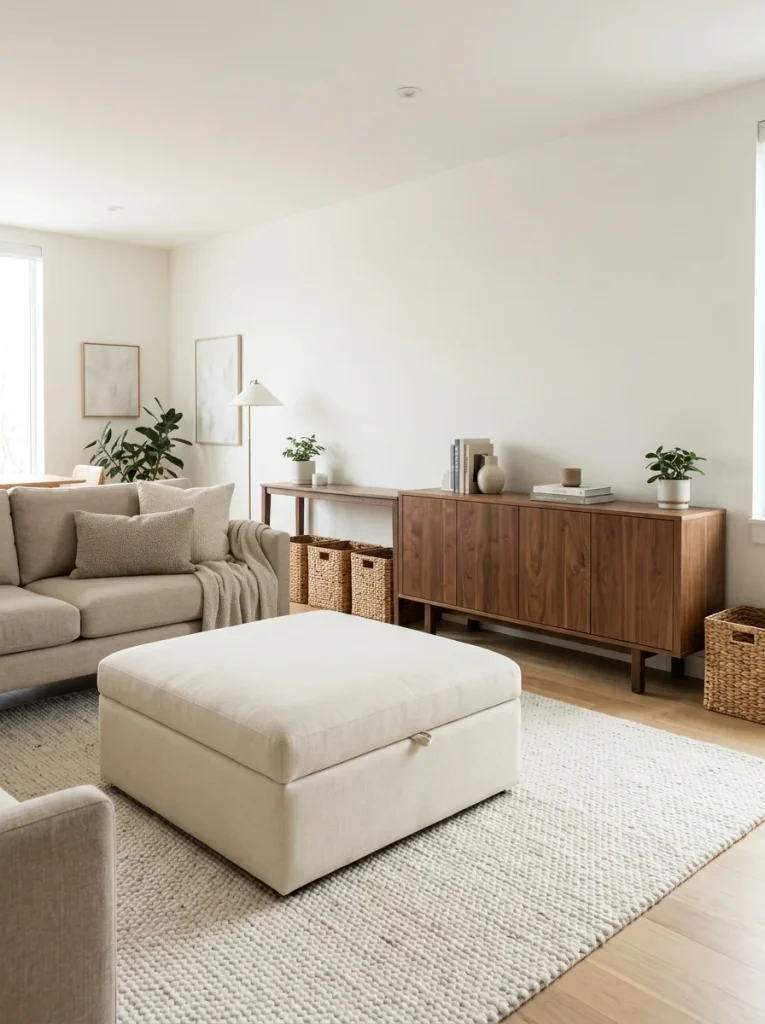
DO
- Use storage ottomans for blankets and pillows.
- Add baskets for small everyday items.
- Choose closed cabinets for visually distracting objects.
- Keep frequently used items within easy reach.
DON’T
- Do not fill every basket to overflowing.
- Do not choose storage pieces that block pathways.
- Do not mix too many finishes.
- Do not sacrifice comfort for storage capacity.
Hidden storage keeps everyday clutter from taking over the visual character of the room. Prioritize storage for items that are used regularly, such as blankets, remotes, toys and books. A tidy surface gives decorative pieces more impact and makes daily cleanup much faster.
Soft Curved Mirror
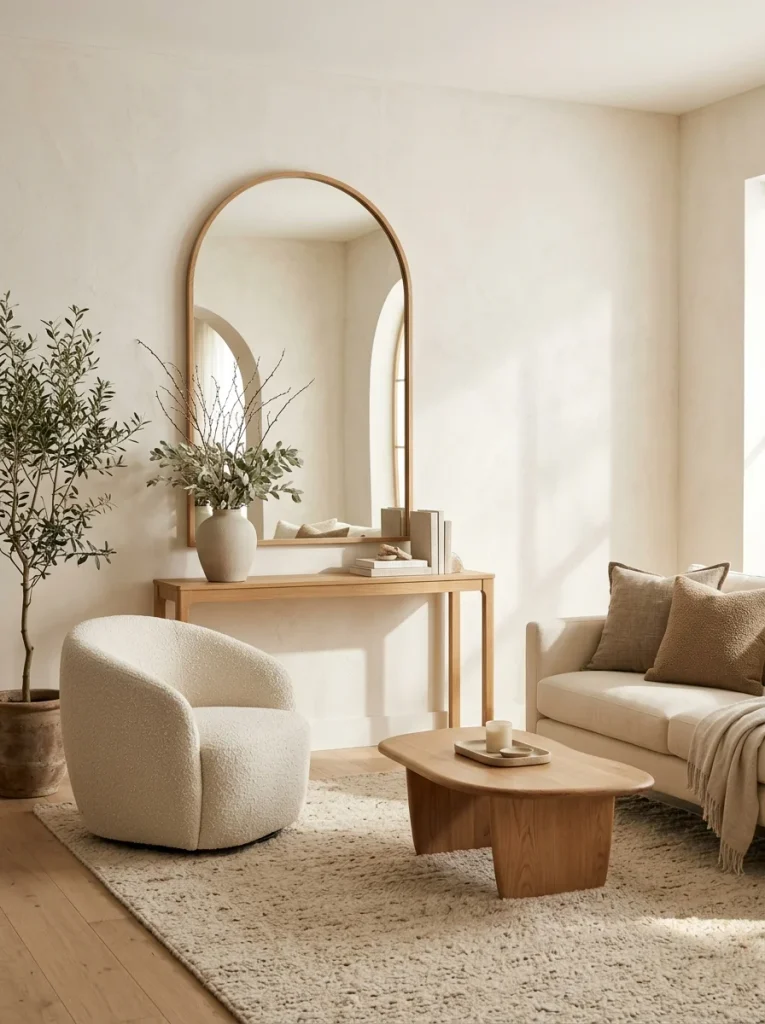
Cost: Low to moderate | Time: 1 afternoon | Skill Level: Beginner | Best For: Empty wall areas
Rounded mirrors introduce softness while reflecting light around the room. Choose an arched, oval, or organically shaped frame when the existing furniture contains many straight edges. Keep the area beneath the mirror lightly styled so the reflection remains clean rather than competing with excessive decor.
Statement Curtains
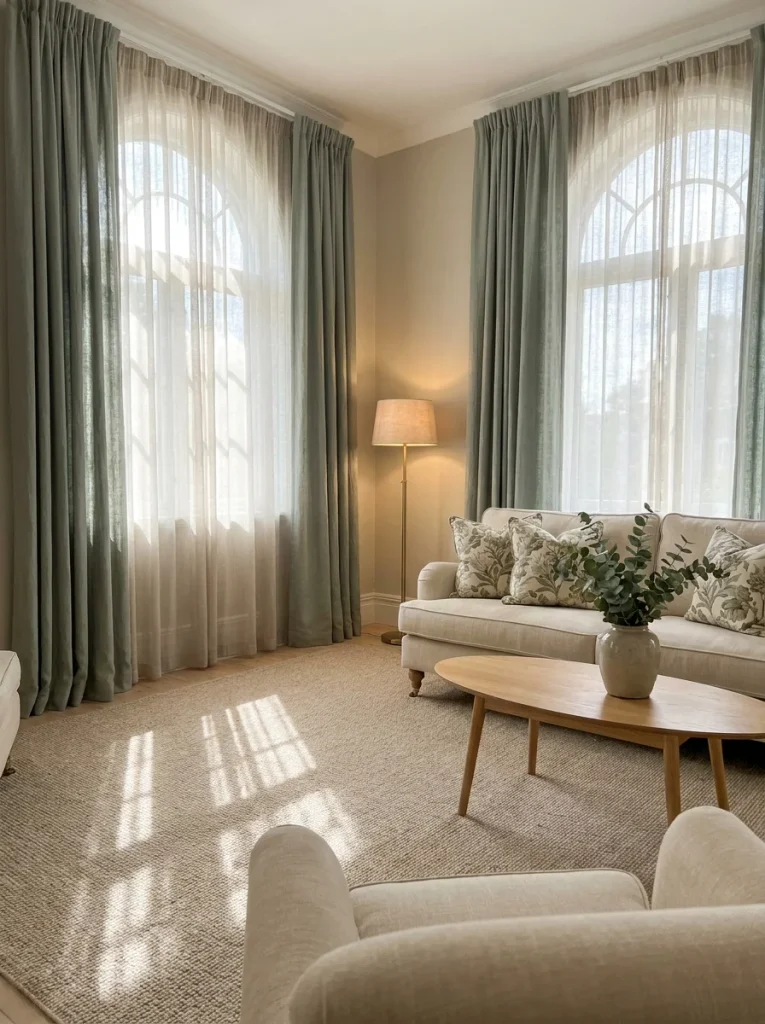
Long curtains can add height and color without changing the main furniture. Choose a shade that appears elsewhere in small amounts, such as sage in a cushion or artwork. Mount the rod higher and wider than the window when practical, then allow the fabric to fall close to the floor.
Decorative Console

- Select a console narrower than the sofa depth.
- Center it behind the main seating piece.
- Add one lamp for practical lighting.
- Group two or three decorative objects.
- Leave some surface visible for breathing room.
A console behind the sofa can turn unused space into a useful styling zone. Keep the arrangement low enough that it does not interfere with the sofa or obstruct views across the room. One lamp, one vertical object and one low accessory usually provide enough visual interest.
Cozy Reading Corner
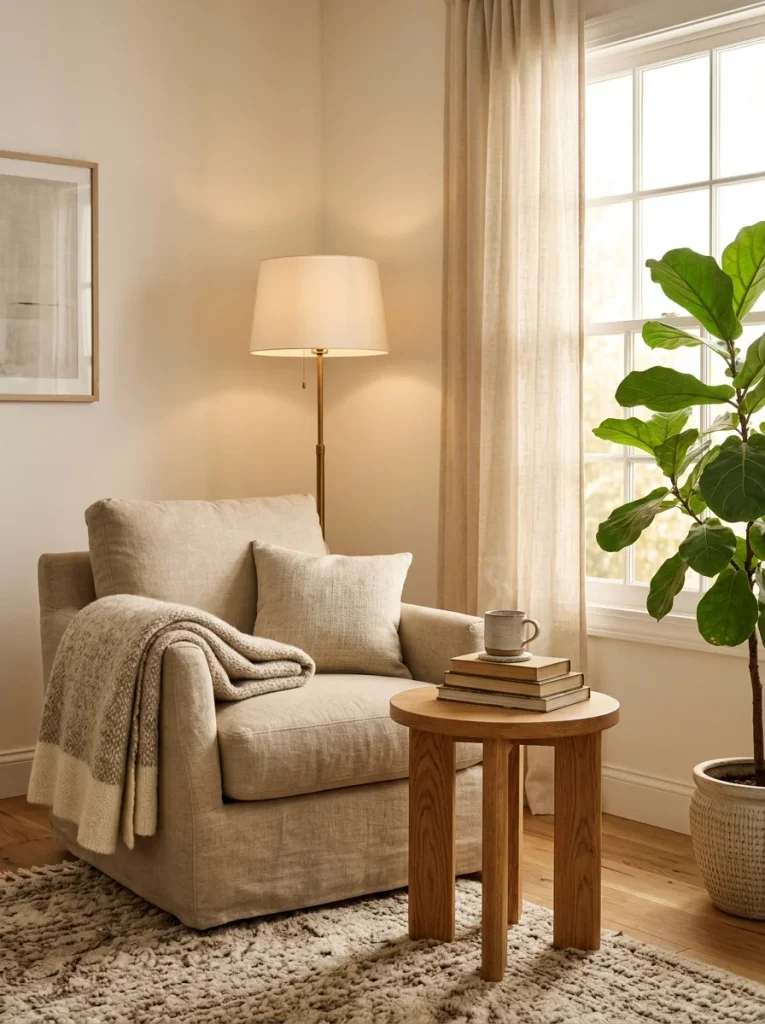
| Basic Corner | Reading Nook |
|---|---|
| Empty chair | Comfortable dedicated seat |
| No task lighting | Focused warm lighting |
| Little storage | Small side table |
| Unused floor space | Functional relaxation zone |
A quiet corner can become one of the most useful parts of a living room. Place a comfortable chair near natural light, add a small table for books or drinks, and provide focused lighting for evenings. This arrangement works especially well in rooms with awkward corners that are difficult to decorate.
Black Accent Details
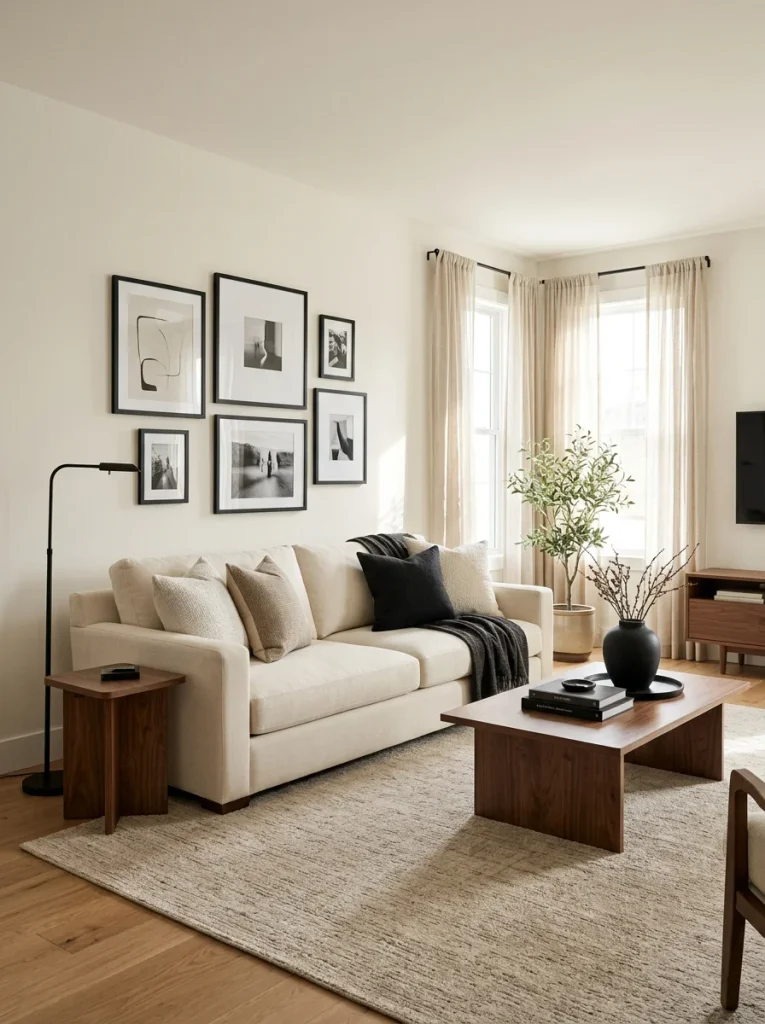
Black accents can sharpen a soft neutral palette and create visual definition. Instead of introducing large black furniture, start with smaller details such as frames, lamps, hardware, trays or ceramics. Repeating the dark tone in three or four places helps the room feel balanced rather than randomly decorated.
Fresh Cushion Covers
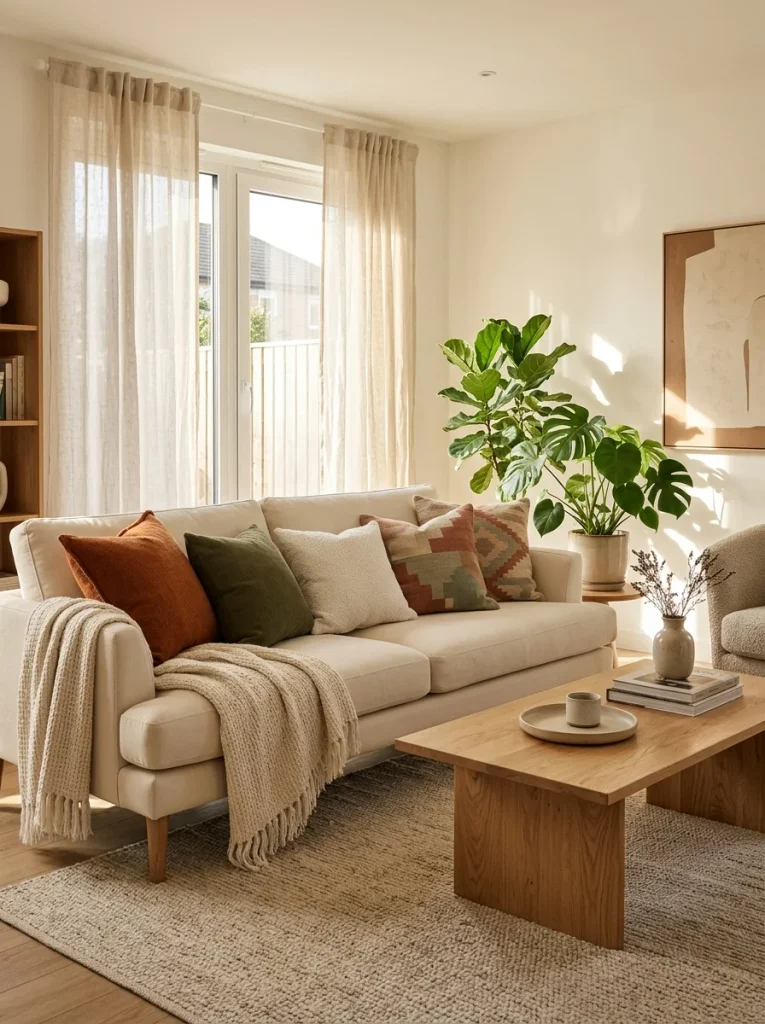
Cost: Low | Time: 30 minutes | Skill Level: Beginner | Best For: Quick updates
Changing cushion covers is one of the fastest ways to refresh a familiar seating area. Select two solid shades and one subtle pattern, then repeat those colors elsewhere through artwork or small accessories. Store seasonal covers in a labeled container so future updates take only a few minutes.
Styled Coffee Table
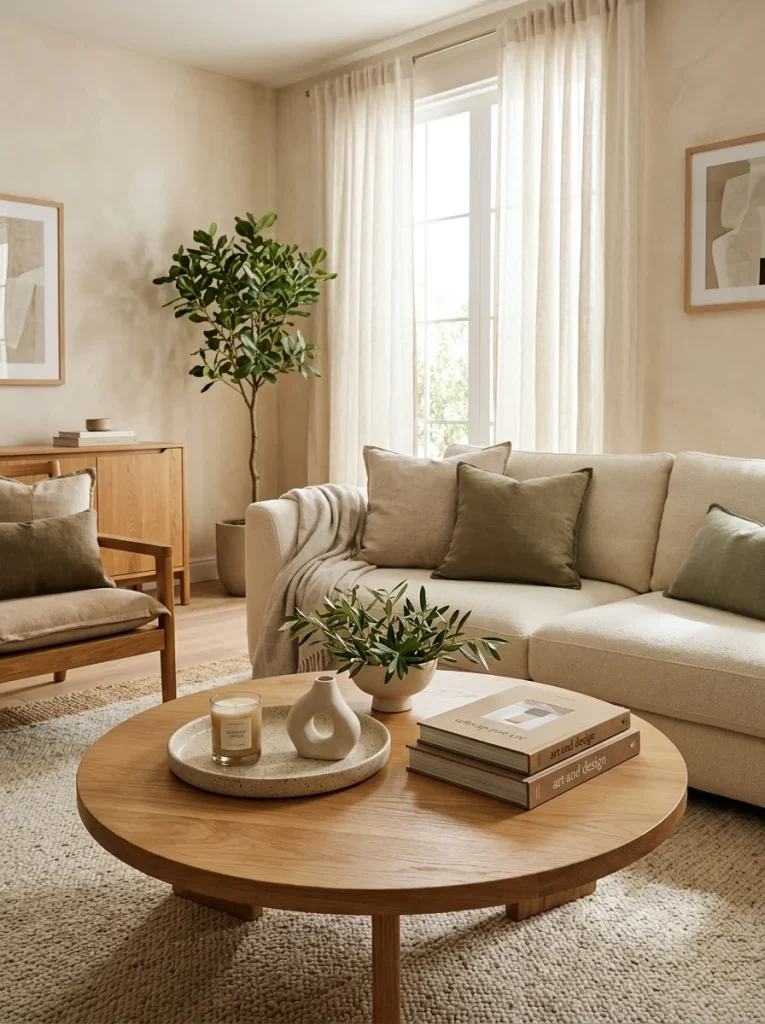
DO
- Start with one tray to organize small objects.
- Add books at different heights.
- Include one natural element such as greenery.
- Leave enough empty surface for everyday use.
DON’T
- Do not cover the entire tabletop.
- Do not use too many tiny decorative objects.
- Do not mix several unrelated colors.
- Do not place fragile items where they can easily be knocked over.
A styled coffee table should remain functional, not become a display that nobody can use. Grouping objects into a tray creates order while leaving clear space around it. Rotate books, flowers and small decor seasonally so the arrangement stays fresh without requiring new purchases.
Natural Light Focus
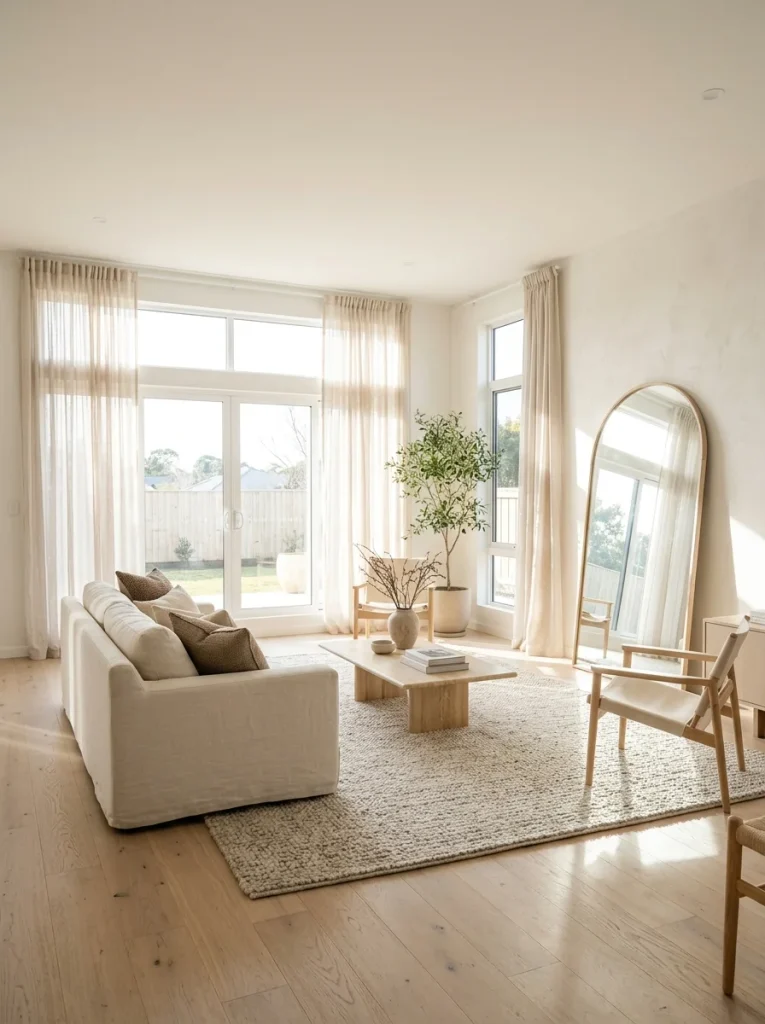
Natural light can make colors appear cleaner and spaces feel more open. Keep the area around windows relatively uncluttered and use sheer curtains when privacy is needed without blocking daylight. A mirror positioned carefully across from or beside a window can help distribute available light through the room.
Personalized Decor

Your living room feels more complete when the decor reflects the people who actually use it. Display a few favorite photographs, travel pieces, handmade objects or books instead of filling every surface with generic accessories. Keep meaningful items grouped thoughtfully so personality adds warmth without creating visual clutter.
Fresh Layout
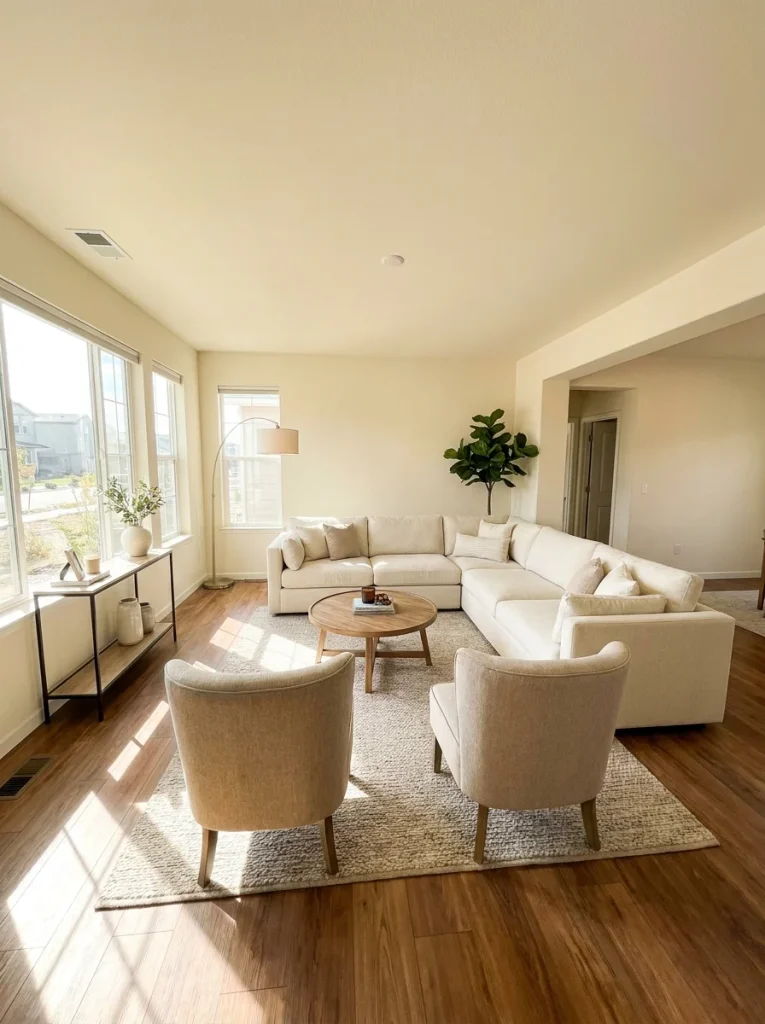
BEFORE
The furniture arrangement feels cramped, with chairs pushed into corners and the main seating facing away from the room’s strongest feature. Open floor space is limited.
AFTER
The seating faces inward around a central table, while the furniture leaves clear pathways between the main entry points. The room feels more balanced and easier to use.
A layout change can deliver one of the biggest visual improvements without buying anything. Measure major furniture first, then test new positions while keeping doors, windows, outlets, and walking routes accessible. Even moving the sofa a few feet can completely change how the room functions.
CONCLUSION
A beautiful living room does not require a complete renovation. The right combination of layout, texture, lighting, color, storage and personal details can make the space feel noticeably different. These Living Room Makeover Ideas give you plenty of practical starting points, whether you want a quick refresh or a more noticeable update.
I’ve seen how small changes can completely shift the way a room feels and functions. Pick one idea that fits your space, try it this week, and build from there. Save this post on Pinterest for your next decorating project and share it with someone who could use fresh living room inspiration.


One Comment