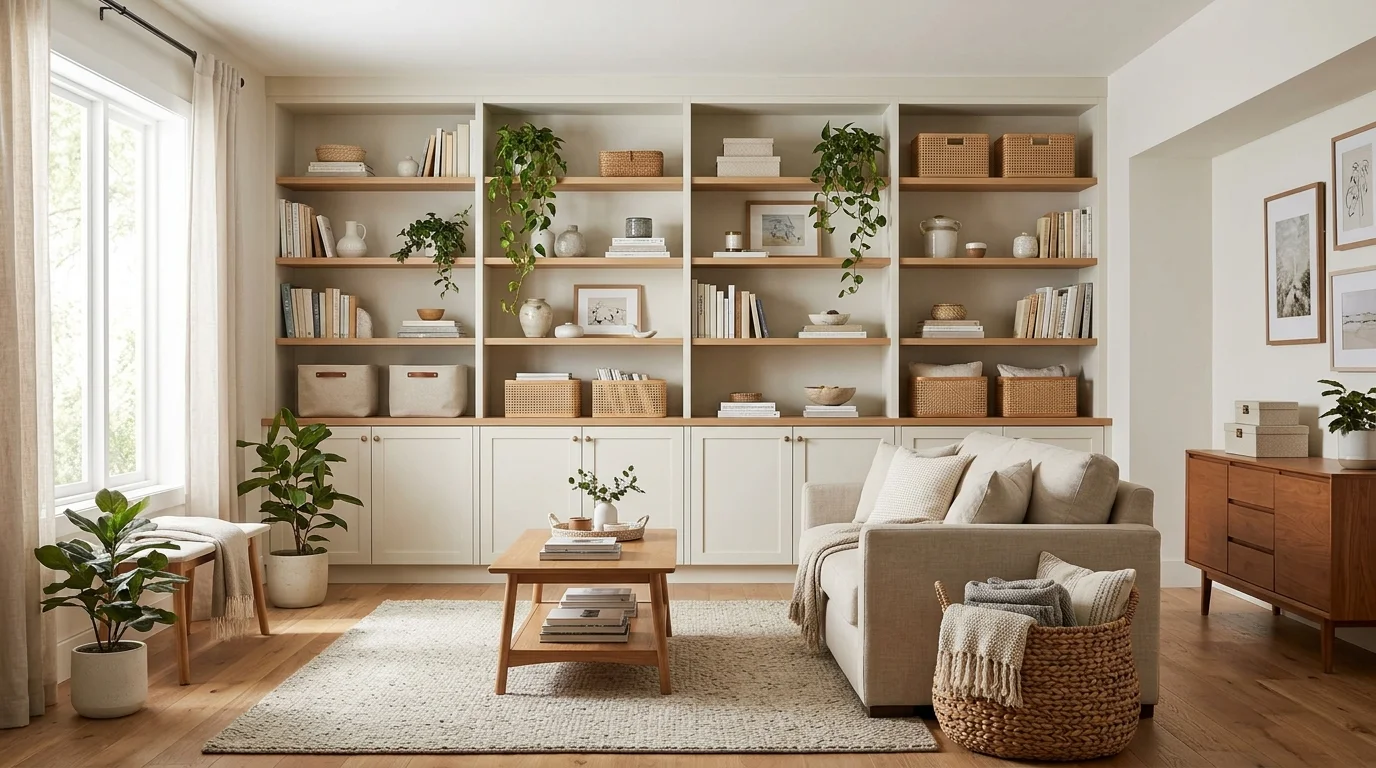
Living Room Storage Ideas: 27 Clever Ways to Stash It
Clutter can make even the coziest living room feel crowded, messy, and difficult to enjoy. The secret to a more peaceful home isn’t always having less stuff. Sometimes, it’s simply finding smarter places to put it.
These Living Room Storage Ideas will help you make the most of your available space while keeping your home stylish, comfortable, and organized. From hidden storage ottomans and floating shelves to clever corner cabinets and multifunctional furniture, you’ll discover practical solutions for different room sizes, budgets and everyday needs.
If blankets pile up beside the sofa, toys spread across the floor or remote controls disappear into crowded drawers, small changes can make a noticeable difference. In my experience, giving frequently used belongings a specific place makes daily tidying much easier to maintain.
Whether you’re organizing a compact apartment or refreshing a spacious family room, these ideas will help you reduce visual clutter without sacrificing personality. Explore the options, choose what suits your home and create a living room that feels welcoming, functional and beautifully put together.
Hidden Storage Ottomans

A storage ottoman earns its place in the living room by offering two useful features in one compact piece of furniture. Lift the lid, and there’s room for spare blankets, board games, magazines, or children’s toys. Close it and the room looks instantly tidier without adding another bulky cabinet.
Choose an ottoman that complements your sofa rather than competing with it. Neutral upholstery blends easily with existing furniture, while a wooden or woven design adds texture. For everyday convenience, keep frequently used items near the top and seasonal accessories underneath. A firm, flat lid also provides a practical surface for a tray, drinks or books.
Floating Wall Shelves
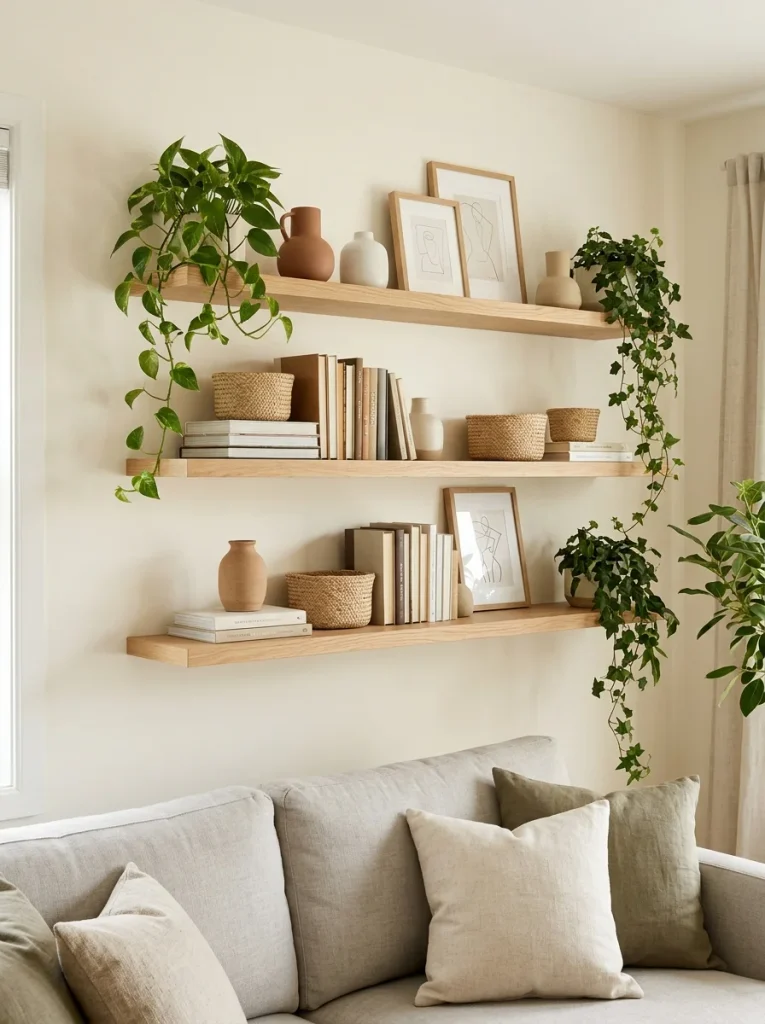
- Use vertical space. Install shelves above a sofa or beside the television to free up valuable floor space.
- Mix practical storage with decor. Combine upright books, small baskets and a few decorative objects for an organized appearance.
- Choose the right depth. Shallow shelves suit picture frames and small accessories, while deeper shelves accommodate baskets and larger books.
- Secure shelves properly. Use suitable wall anchors or attach brackets to studs, following the manufacturer’s weight limits.
- Leave breathing room. Avoid filling every inch, which can make the wall feel crowded.
Floating shelves are especially helpful in small living rooms where floor space is limited. Store lightweight everyday items in attractive baskets and keep heavier objects on properly supported shelves. For a cohesive finish, repeat two or three colors already present in your furniture, cushions or curtains.
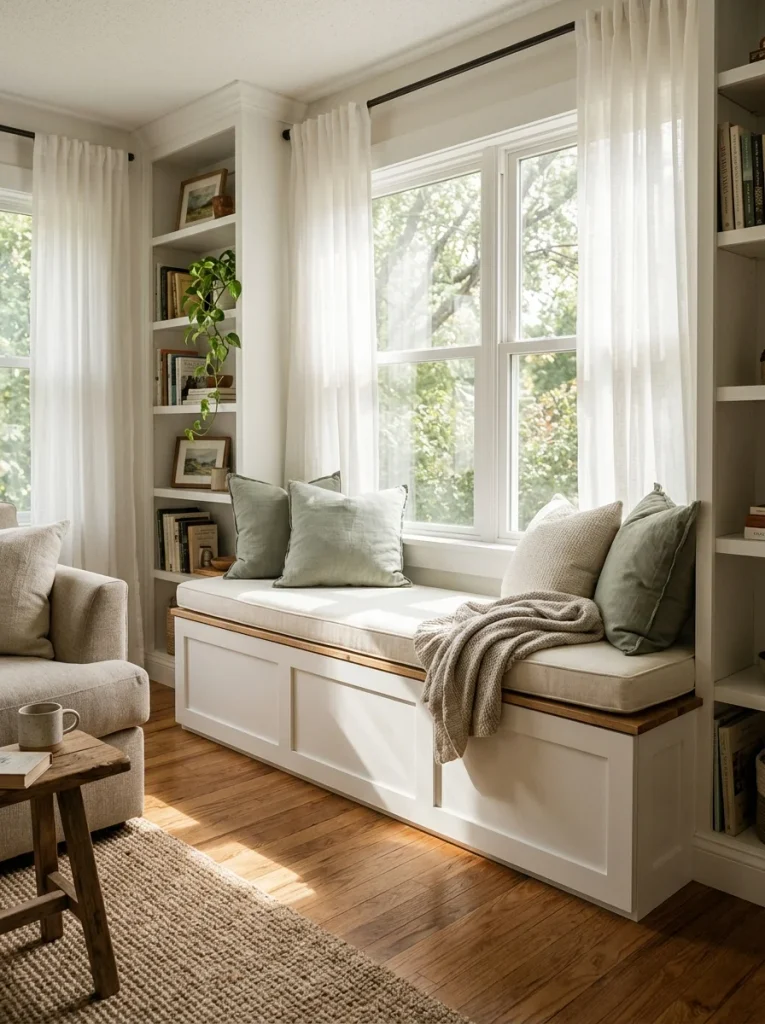
Built-In Window Seating
Quick Tip:
Measure the available window area before choosing a bench design. A hinged seat offers generous hidden storage, while pull-out drawers provide easier access when the bench sits close to a wall or underneath low windows.
A window seat can turn an underused corner into a comfortable reading spot while keeping extra belongings out of sight. Store seasonal cushions, spare linens or children’s books inside, using small containers to separate different items. Add a supportive cushion on top, but make sure the seat remains easy to open whenever you need something stored underneath.
Red More: 26 Living Room Lighting Ideas That Set the Perfect Mood
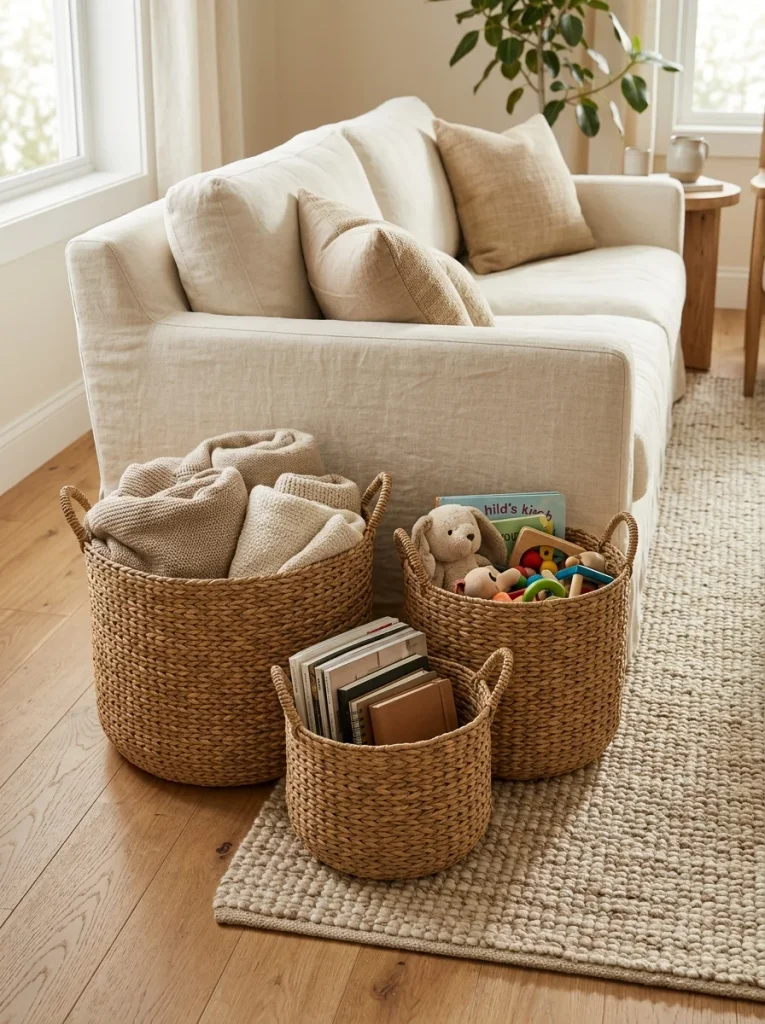
Woven Storage Baskets
BEFORE
Loose blankets cover the sofa, magazines pile up on the coffee table and children’s toys scatter across the floor. Everyday essentials have no designated home, making the living room feel cluttered even after a quick tidy.
AFTER
Matching woven baskets gather these belongings into attractive, accessible containers. The floor becomes clearer, the sofa looks inviting and frequently used items remain within easy reach.
Choose baskets in different sizes to accommodate everything from bulky throws to small remote controls. Place a large basket beside the sofa and smaller ones underneath a console table. In my experience, assigning each basket a specific purpose makes daily tidying easier because everyone knows where things belong. Look for sturdy handles and a washable liner if you plan to store toys or frequently handled items.
Under-Sofa Storage Drawers

How to create this storage solution
- Measure the clearance. Check the gap beneath your sofa, including its legs and any crossbars, before purchasing storage drawers.
- Choose suitable containers. Use shallow rolling bins or purpose-built drawers that slide smoothly without scratching the floor.
- Sort belongings. Store flat items such as board games, spare cushion covers and seasonal throws in separate containers.
- Label the contents. Add discreet labels so family members can find what they need without pulling out every drawer.
Under-sofa storage makes use of space that often goes unnoticed. It works particularly well in apartments where adding another cabinet would restrict movement. Keep heavier items in sturdy containers and leave enough clearance for ventilation and easy access. Before buying, check that the drawers can slide fully out without catching on the rug or sofa frame.
Storage Coffee Tables
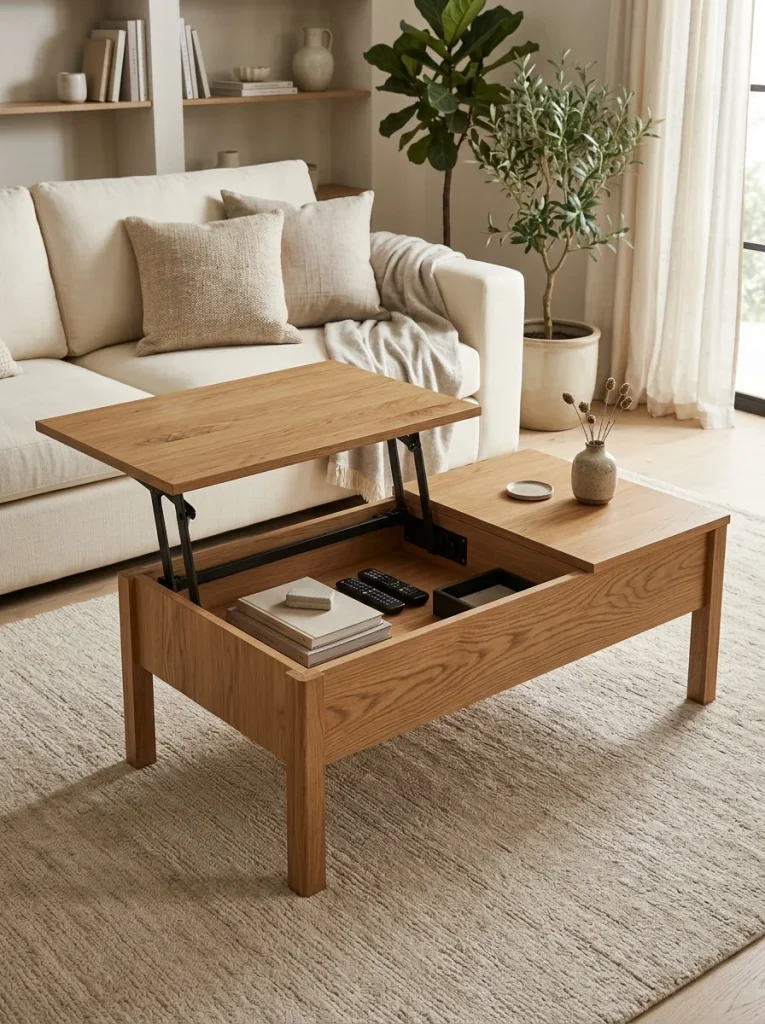
| Feature | Open-Shelf Table | Hidden-Storage Table |
|---|---|---|
| Best for | Books and decorative baskets | Remotes, games, and small accessories |
| Appearance | Displays selected belongings | Keeps clutter out of sight |
| Accessibility | Items are visible and easy to grab | Items stay protected behind a lid or drawer |
| Maintenance | Requires regular visual tidying | Needs occasional compartment cleaning |
A coffee table with built-in storage can reduce clutter without taking up additional floor space. Choose an open shelf if you enjoy displaying books and baskets or select a lift-top model to conceal everyday essentials. Measure the table against your sofa height and leave enough room to walk around it comfortably. A divided interior helps prevent small objects from becoming a messy pile.
Storage Benches

Storage benches provide a convenient place to sit while concealing belongings that would otherwise occupy shelves or sofas. Position one against an empty wall, beneath a large artwork or near the entrance to your living room. The hidden compartment can hold extra pillows, board games and seasonal accessories without making the room look crowded.
Choose a bench with a sturdy lid and enough interior depth for the items you plan to store. If the bench will double as seating, check its weight capacity and select a comfortable upholstered top. A model with baskets underneath can provide additional organization for smaller objects that need frequent access.
Vertical Bookcases
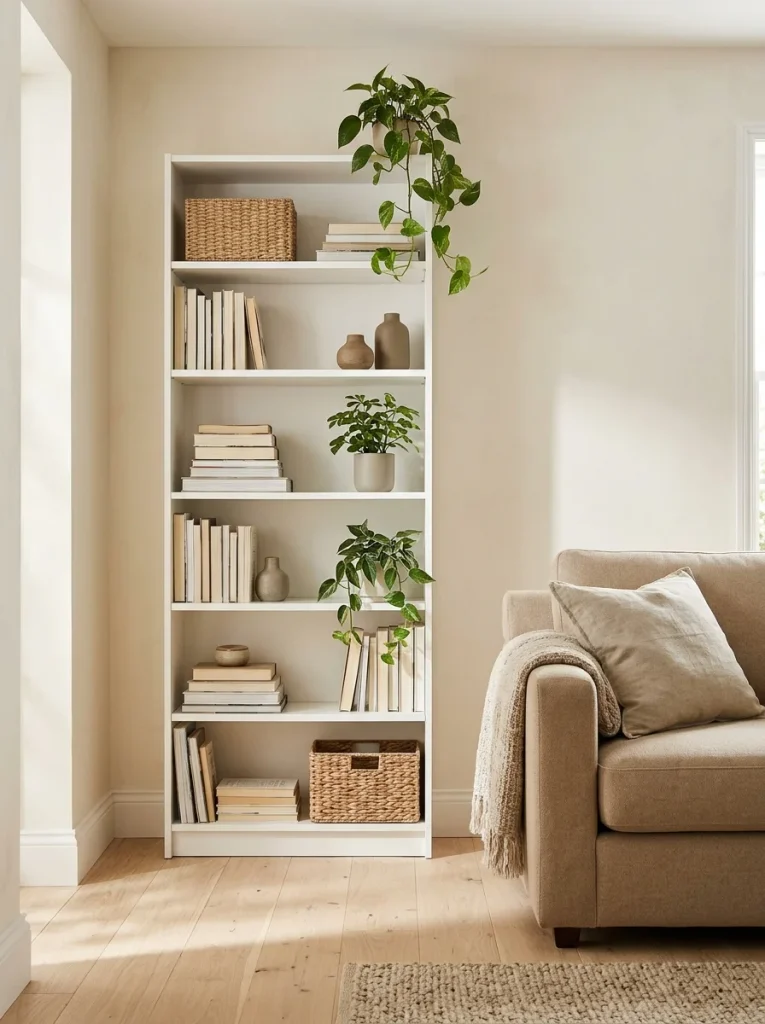
A tall bookcase can hold far more than novels. Use its shelves to organize photo albums, board games, baskets, magazines and decorative accessories while keeping the floor clear. A narrow design is particularly useful in smaller rooms where a wide cabinet would block walkways or make furniture arrangements feel cramped.
Group similar items together instead of filling every shelf randomly. Keep heavier books on lower shelves, place small belongings in matching boxes and leave a little open space between decorative objects. Secure tall bookcases to the wall according to the manufacturer’s instructions, especially in homes with children or pets.
Console Table Drawers

A console table with drawers gives everyday clutter a dedicated home without requiring a bulky storage cabinet. Place it behind a sofa, along an empty wall or beside the television to collect smaller items that tend to migrate around the room.
Use drawer dividers to separate batteries, charging accessories, pens, remotes and instruction manuals. Keep the top surface simple with a lamp and one or two decorative objects. Before purchasing, measure the available depth and walking space so the table does not interfere with doors, seating or circulation.
Built-In Media Cabinets

A built-in media cabinet can organize the many small items that gather around a television. Streaming devices, gaming controllers, spare cables, DVDs and remote controls can all have separate compartments rather than remaining scattered across a console.
Choose a combination of closed cupboards and open niches. Keep decorative objects in the visible sections and move less attractive accessories behind doors. Make sure the cabinet allows appropriate ventilation for electronic equipment and provides safe cable access. For a balanced appearance, select a finish that complements the flooring or other major furniture pieces.
Decorative Storage Trunks

A decorative trunk can store bulky belongings while contributing character to your living room. Use it for spare blankets, seasonal cushions, board games or keepsakes that do not need daily access. Its solid surface can also hold a tray with books or a carefully arranged decorative display.
Measure the trunk before placing it near a sofa or wall, leaving enough room to open the lid fully. Heavy trunks may be difficult to move, so choose a stable location and avoid storing items you need several times a day. If children use the room, look for a lid designed to prevent accidental slamming.
Corner Storage Cabinets
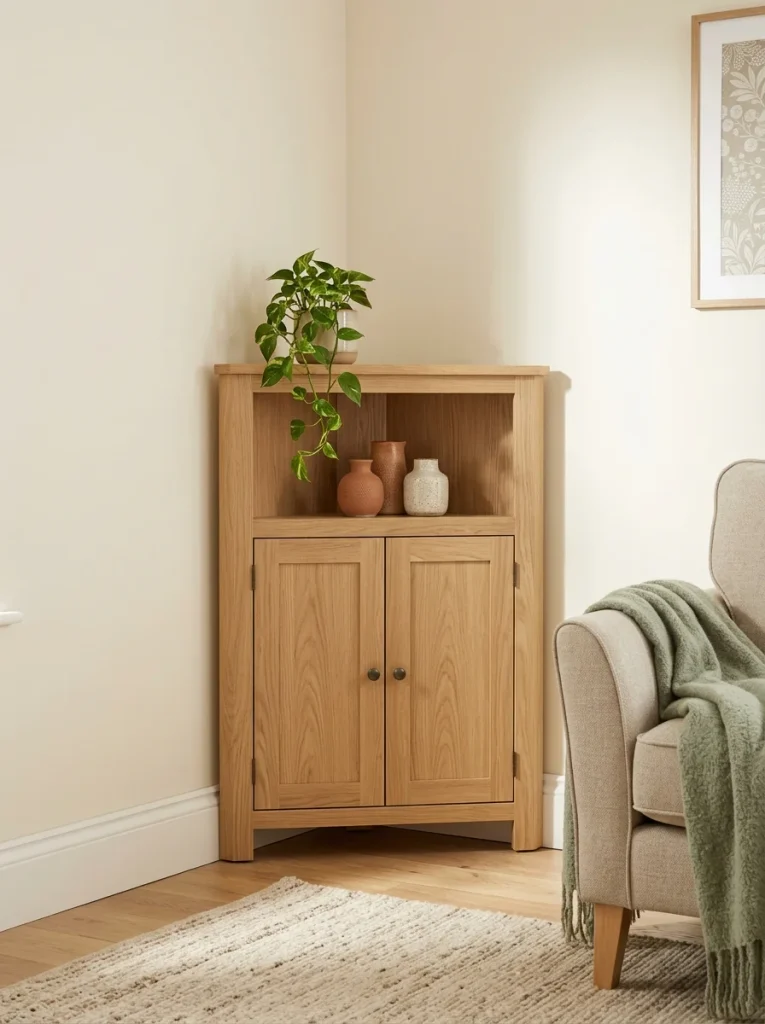
Corners often become neglected spaces where clutter gathers without a clear purpose. A corner cabinet uses that area for storage while keeping the center of the room open for seating and movement.
Choose a cabinet with adjustable shelves if you plan to store items of different sizes. Closed doors are useful for hiding miscellaneous belongings, while open shelving works well for books and decorative baskets. Measure both walls carefully before buying and check that the cabinet doors can open without hitting nearby furniture.
Window-Side Cabinets

The space beneath a window can accommodate low cabinets that provide useful storage without blocking the view. This arrangement works especially well in rooms with wide windows and otherwise unused wall space.
Choose cabinets low enough to preserve natural light and access to window handles. Store books, toys or folded linens inside, and use the top for a few plants or decorative objects. Avoid covering radiators or blocking ventilation and make sure the cabinet does not interfere with curtains or window operation.
Ladder Storage Shelves
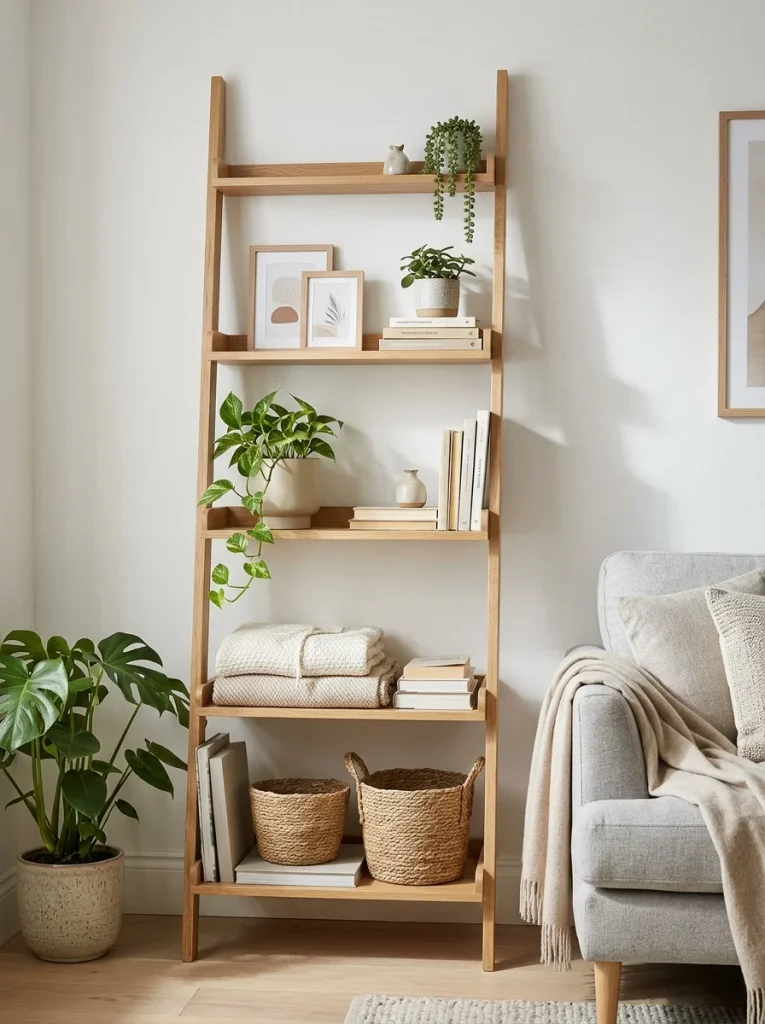
Ladder shelves provide vertical storage without the visual weight of a large bookcase. Their graduated design creates space for books, small baskets, folded throws and selected decorative pieces while using relatively little floor area.
Place heavier objects on lower shelves and lighter accessories near the top. Use baskets to keep small belongings organized and avoid overcrowding the narrow upper levels. If the shelf leans against the wall, follow the manufacturer’s setup instructions and use the recommended safety restraints to prevent slipping or tipping.
Storage Side Tables

Side tables can do more than support a lamp or cup of tea. A design with a drawer or lower shelf gives small belongings a convenient home beside the sofa or favorite reading chair.
Keep frequently used items in the drawer, including reading glasses, charging cables and remotes. Reserve the lower shelf for books or a small basket. Choose a table that is close to the height of your seating arm so objects remain easy to reach without creating an awkward or crowded arrangement.
Wall-Mounted Cabinets
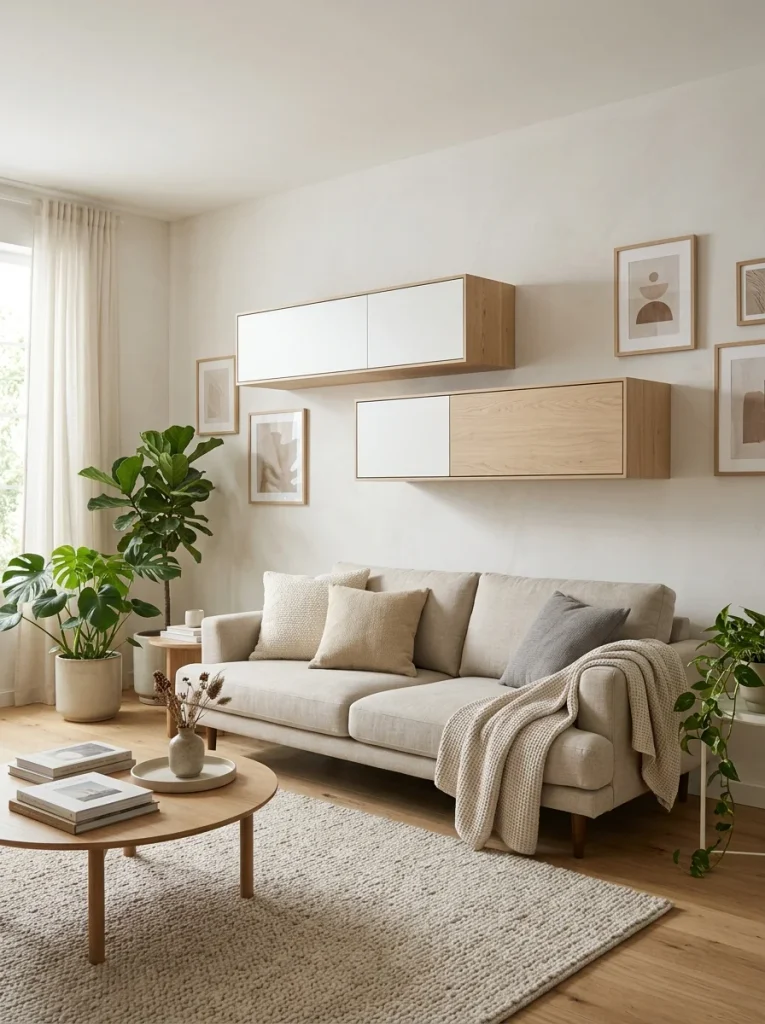
Wall-mounted cabinets provide concealed storage while leaving the floor visible underneath. This can make a small living room feel more open, especially when the cabinets replace a bulky freestanding unit.
Use them for items that benefit from being hidden, such as cables, paperwork, games and spare accessories. Before installation, confirm that the wall can support the cabinet and its contents. Choose suitable fixings, follow the manufacturer’s weight limits and position the unit at a height that allows comfortable access without creating a hazard above seating.
Modular Cube Organizers
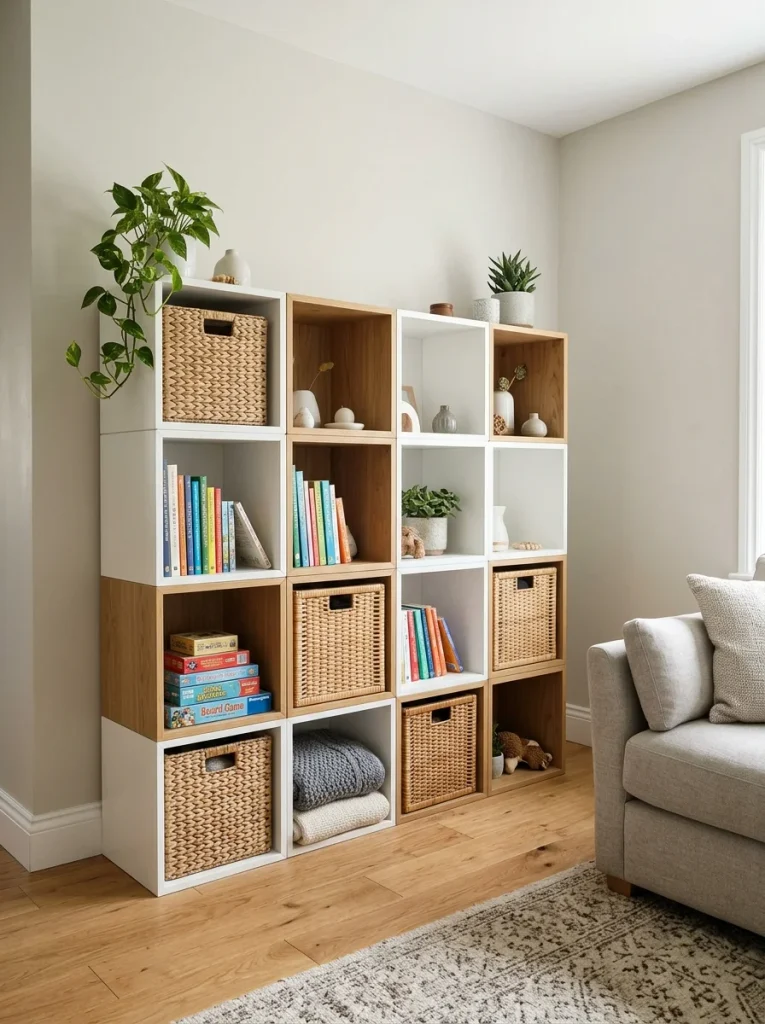
Cube organizers make it easier to divide a large collection of belongings into manageable categories. Each compartment can serve a specific purpose, from children’s toys and craft supplies to books, electronics and spare cushions.
Use fabric bins or woven baskets in compartments holding small objects. Leave a few cubes open for items you want to display, and place heavier belongings in lower sections. Modular units can be expanded or rearranged as storage needs change, but taller configurations should be secured according to the manufacturer’s instructions.
Under-Stair Storage

The area beneath a staircase can become valuable storage instead of collecting forgotten bags and miscellaneous belongings. Custom cupboards, pull out drawers or fitted shelving can use the awkward angles while maintaining a neat appearance.
Store less frequently used items in deeper compartments and reserve accessible drawers for things needed regularly. Measure the sloping ceiling and staircase supports carefully before planning the layout. If the area contains electrical equipment, heating components or access panels, keep them accessible and follow relevant installation and safety requirements.
Toy Storage Cabinets
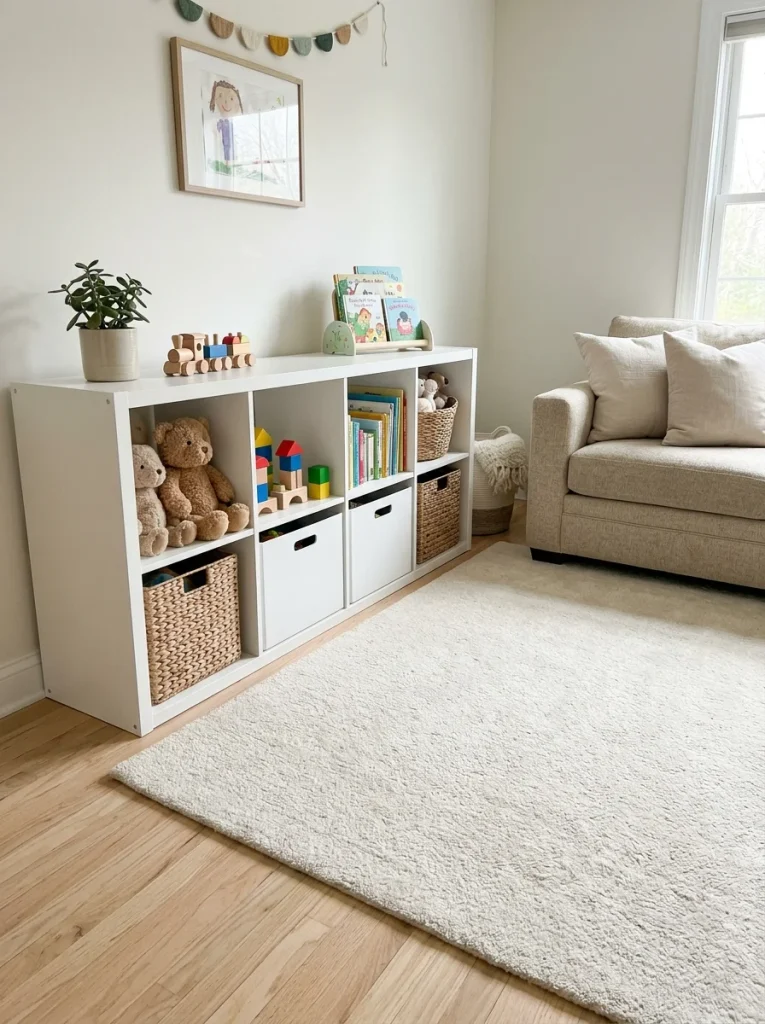
Children’s belongings can quickly take over a shared living room unless there is a simple place to put them away. A low storage cabinet makes toys accessible to children while keeping the rest of the room organized.
Separate toys by type, using bins for building blocks, books for reading materials and larger drawers for plush toys. Choose sturdy furniture with rounded edges where possible and secure tall units to the wall. Avoid placing heavy objects on top and select containers that children can open safely without trapping fingers.
Rolling Storage Carts

A rolling cart offers flexible storage for items that move between different parts of the living room. It can hold craft supplies, books, gaming accessories or everyday essentials and can be moved aside when more floor space is needed.
Assign each tier a specific category so the cart does not become a collection point for unrelated objects. Choose locking wheels if the cart needs to remain in place, and check its weight capacity before loading it. Slim designs are especially useful beside desks, sofas or entertainment units where a permanent cabinet may not fit.
Drawer Dividers

Even a spacious drawer becomes difficult to use when everything is mixed together. Drawer dividers create separate sections for small belongings, making it easier to find items without emptying the entire compartment.
Measure the drawer’s interior before purchasing adjustable or fixed dividers. Group similar objects together, coil cables neatly and place frequently used items toward the front. Avoid overfilling compartments because crowded dividers can make objects difficult to remove. This inexpensive improvement works particularly well in media consoles, sideboards and coffee tables.
Behind-Sofa Shelving

The narrow space behind a sofa can offer useful storage without requiring another full-size cabinet. A slim console shelf can hold books, remotes, charging accessories and decorative pieces while providing a convenient surface for a lamp.
Measure the gap between the sofa and wall before selecting the furniture. Leave enough room to move around the sofa comfortably and choose a design that does not obstruct outlets or walking paths. Use baskets for smaller belongings and keep the tabletop relatively clear so it remains practical rather than becoming another cluttered surface.
Storage Armchairs

Storage armchairs combine comfortable seating with a hidden place for small household essentials. They are useful in compact living rooms where every furniture piece needs to serve more than one purpose.
Look for a chair with a seat compartment that opens easily and has enough room for your intended belongings. Spare throws, magazines and small cushions are suitable choices. Check the seat height, cushioning and overall dimensions before purchasing, since storage should not come at the expense of comfort.
Decorative Storage Boxes
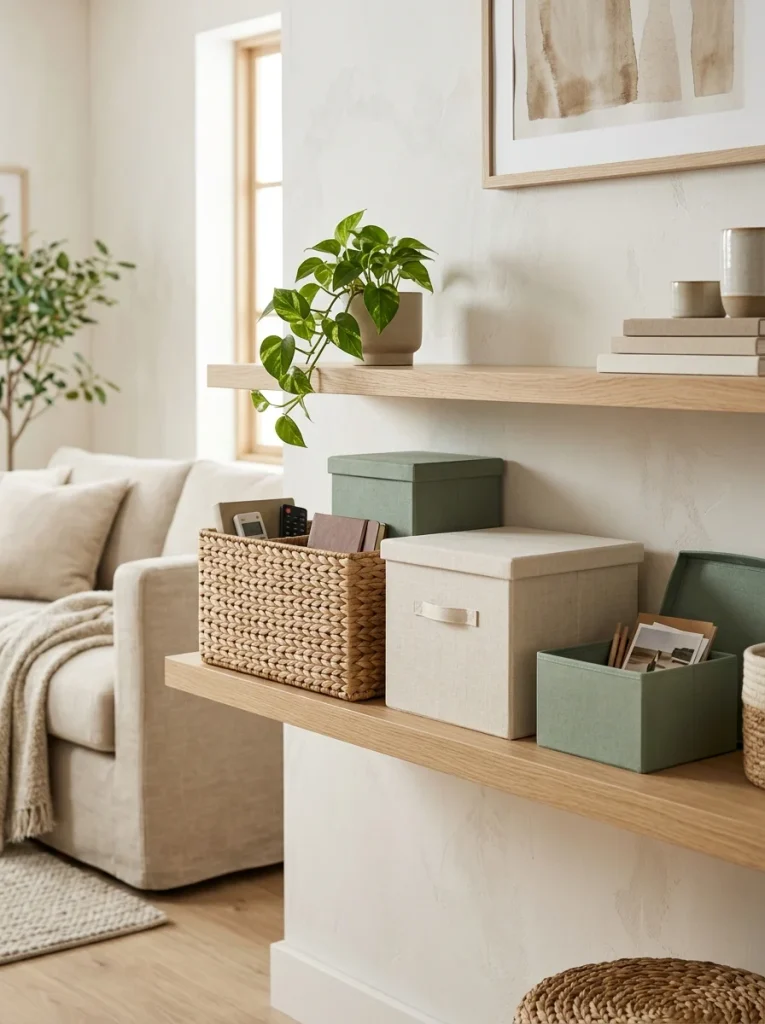
Decorative boxes help conceal the small items that can make shelves and tabletops look messy. They are especially useful for charging accessories, stationery, photographs and other belongings that do not need to remain visible.
Choose boxes that fit the shelf dimensions and use a consistent color palette for a cohesive appearance. Label the inside or underside if the contents are difficult to identify. Keep frequently used objects in the most accessible boxes and place occasional use items higher up or in less accessible compartments.
Furniture With Hidden Compartments
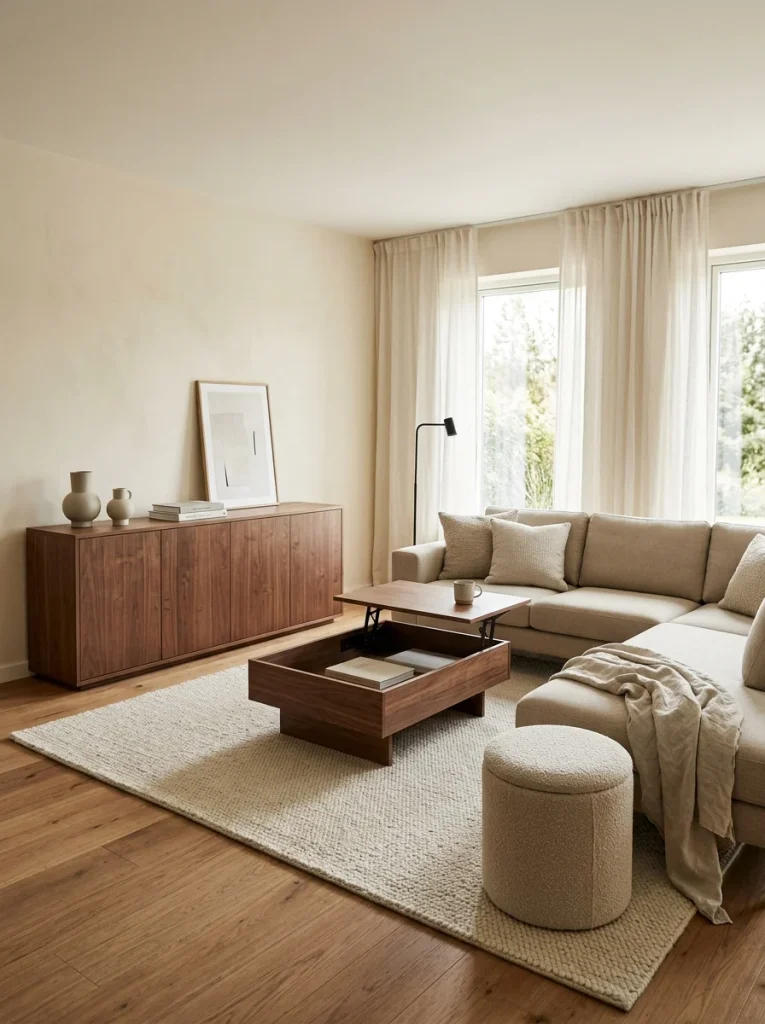
Furniture with hidden compartments keeps everyday necessities close while reducing visual clutter. A sideboard can conceal paperwork, a lift-top table can hold remotes and board games, and a storage stool can accommodate spare cushions or blankets.
Start by identifying the belongings that repeatedly end up on visible surfaces. Select furniture with compartments sized for those specific items rather than buying extra storage without a plan. Check how each compartment opens, how much weight it supports and whether the mechanism is convenient for daily use.
Over-Door Organizers
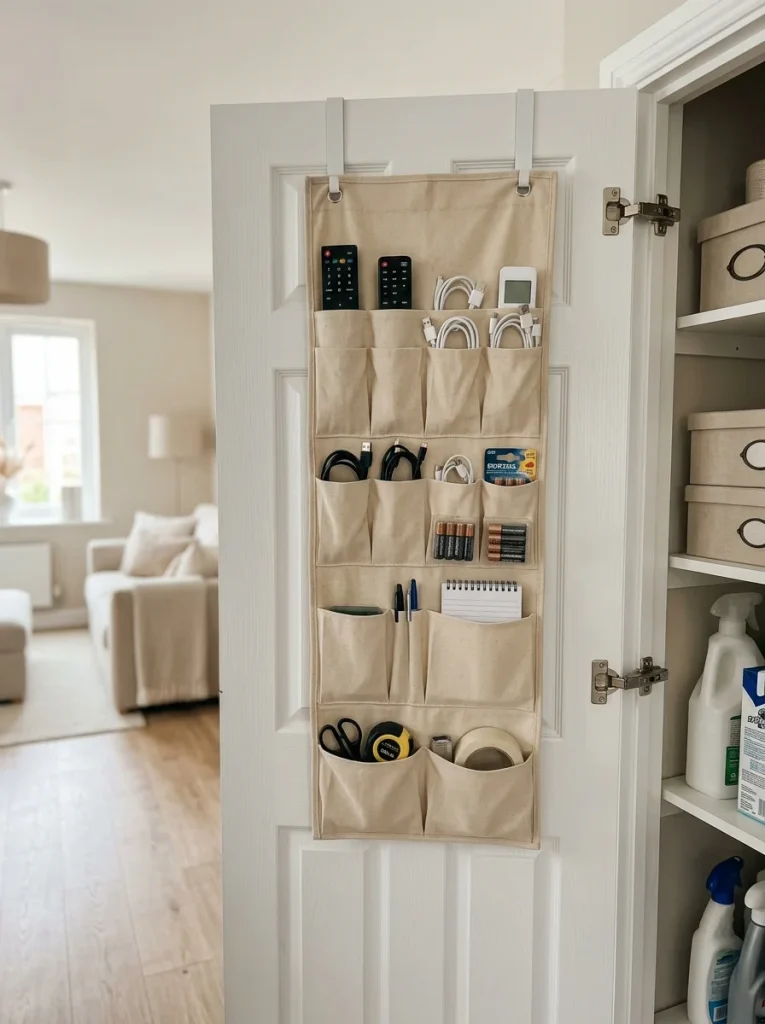
An over-door organizer can turn the inside of a suitable cupboard door into useful storage. It works well for lightweight items that otherwise occupy drawers or gather on shelves, particularly in homes with limited cabinet space.
Check the door thickness, available clearance and organizer dimensions before buying. Distribute the weight evenly and keep the pockets within easy reach. Avoid overloading the door or using the organizer where it could prevent the door from closing properly. It is best suited to lightweight accessories rather than heavy books or electronic equipment.
Repurposed Vintage Cabinets

A vintage cabinet can provide substantial storage while adding personality to a living room. An older sideboard, cupboard, or small wardrobe may hold books, games, linens and electronics without looking like a purely functional storage unit.
Measure the interior shelves and check the cabinet’s structural condition before using it. Clean and repair the furniture as needed, and secure unstable or tall pieces appropriately. If repainting, choose a finish suitable for the material and allow it to cure according to the product instructions before placing belongings inside.
CONCLUSION
A well-organized living room doesn’t require expensive renovations or perfectly matching furniture. Sometimes, a storage basket, a clever cabinet or a multifunctional coffee table is all you need to make everyday life easier. These Living Room Storage Ideas offer practical ways to reclaim unused space, keep essentials accessible, and create a calmer atmosphere for relaxing with family and friends.
Start with one area that needs attention, then build on your progress at your own pace. Save this article on Pinterest for inspiration, try your favorite ideas, and share it with someone who could use a little extra space. Your more organized, comfortable living room starts with one simple change!





One Comment