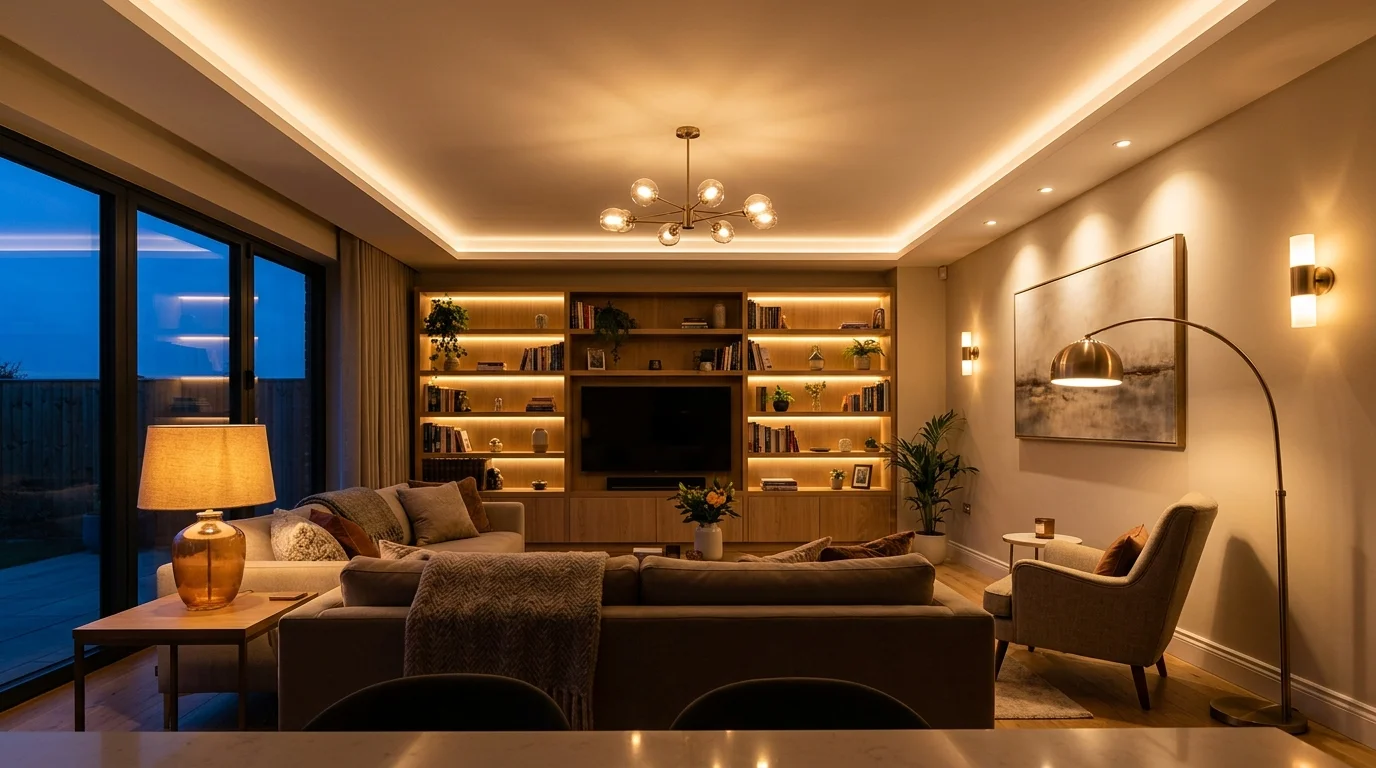
26 Living Room Lighting Ideas That Set the Perfect Mood
The right lighting can make an ordinary living room feel warm, inviting, and beautifully put together. Sometimes, all it takes is a softer glow or a thoughtfully placed lamp to change the entire atmosphere.
These Living Room Lighting Ideas will help you create a space that feels comfortable during quiet evenings, bright enough for everyday activities and stylish enough to inspire your next home makeover. From elegant pendant lights and cozy floor lamps to hidden LED strips and statement chandeliers, there are plenty of ways to make your living room feel more balanced and welcoming.
Good lighting is about more than choosing attractive fixtures. It also means knowing where to place them, how to layer different light sources and which bulbs create the mood you want. I’ve noticed that even small adjustments, such as adding a table lamp to a dark corner or installing a dimmer, can make a room feel more thoughtfully designed.
Whether you’re decorating a small apartment, refreshing an older space or finishing a modern home, these ideas offer practical inspiration for different styles and budgets. Explore the options, save your favorite looks on Pinterest and discover which lighting details will make your living room feel more like home.
Soft Layered Lighting

The secret to a welcoming living room is not a single bright ceiling light. It is a thoughtful mix of lighting sources that work together. Combine overhead lighting with floor lamps and table lamps to create depth, balance and flexibility throughout the day.
Start with warm white bulbs between 2700K and 3000K for a relaxed atmosphere. Keep the ceiling lights slightly dimmer during evenings, then let smaller lamps provide a gentle glow around seating areas. The layered effect makes the room feel more comfortable without requiring expensive renovations.
Elegant Pendant Lights
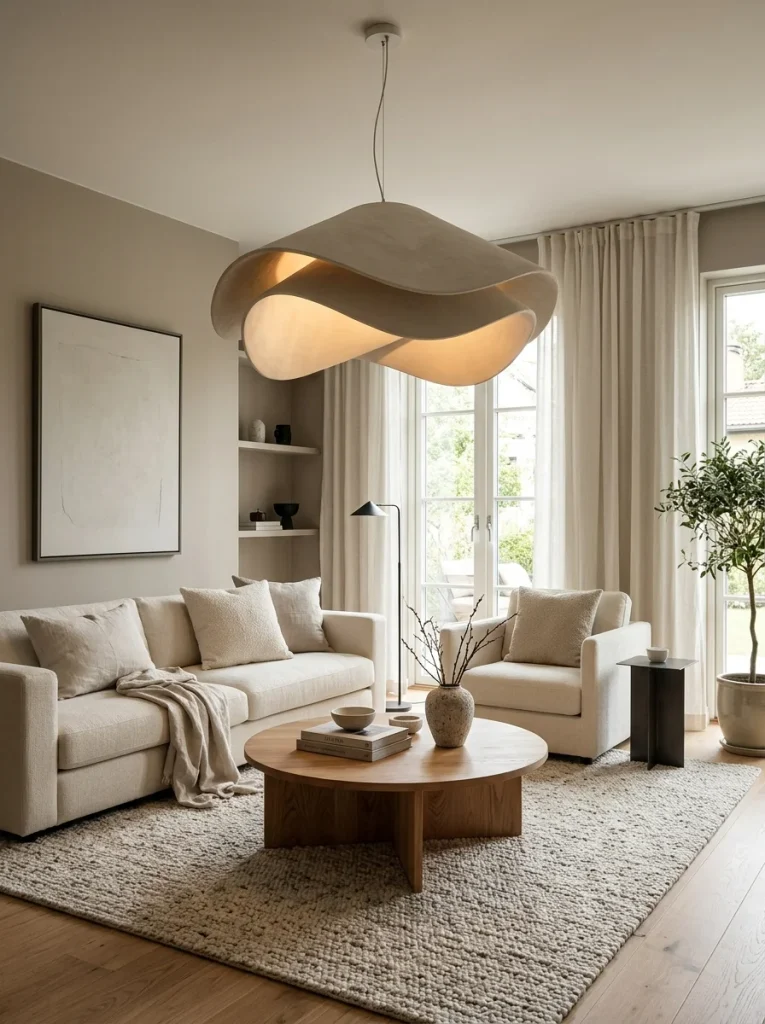
- Choose the right size. Select a pendant that suits the room’s proportions without overwhelming the furniture.
- Create a focal point. Hang the fixture above a central seating arrangement or coffee table where it naturally draws attention.
- Match your finishes. Brass, matte black, glass and woven materials each create a different decorative effect.
- Check the hanging height. Keep the fixture high enough to maintain clear sightlines and comfortable movement.
- Use a dimmer. Adjustable brightness helps the same pendant work for everyday activities and relaxed evenings.
A pendant light adds personality while providing useful illumination. For a living room with high ceilings, a larger sculptural design can fill vertical space beautifully. In smaller rooms, choose a compact fixture with an open shape so the ceiling feels airy rather than crowded.
Warm Corner Floor Lamps
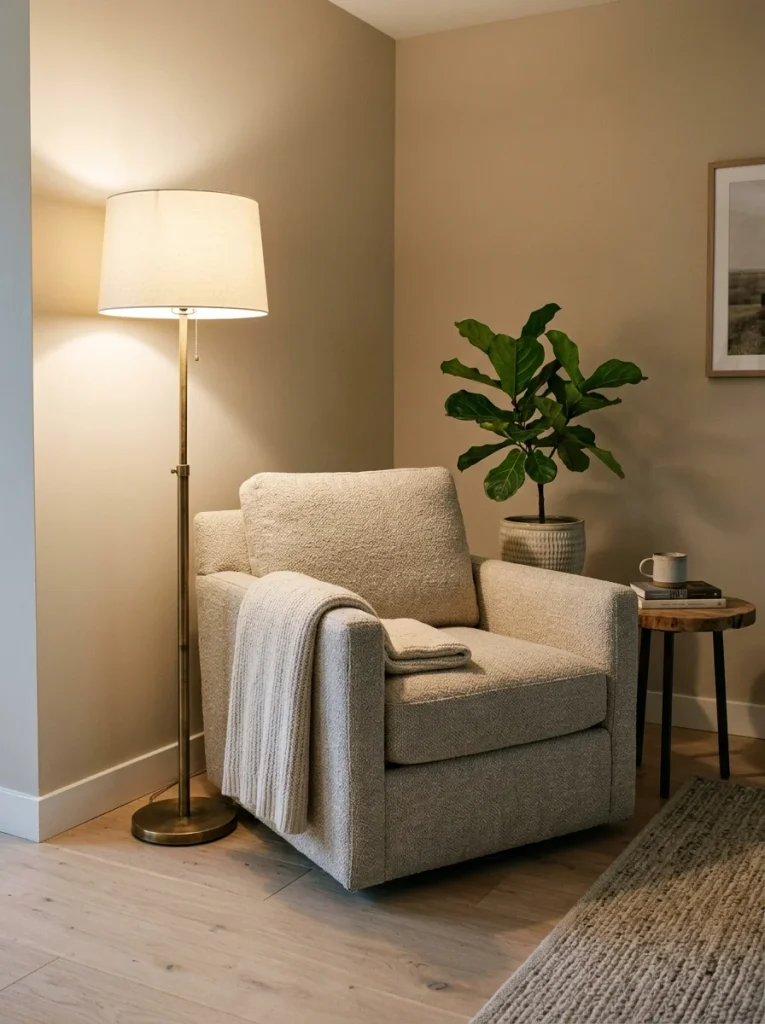
Quick Tip:
Place a floor lamp beside an armchair or at the darker end of your sofa to brighten neglected corners. Choose a shade that directs light upward or outward for a softer effect and use a warm white bulb to maintain a relaxing atmosphere.
A well-placed floor lamp can make an empty corner feel intentional while improving the room’s overall lighting balance. Look for an adjustable or angled design if you enjoy reading in the evening. Before buying, check the lamp’s footprint and position nearby furniture so the base does not obstruct walking paths.
Read More: 29 Living Room Shelf Decor Ideas Designers Swear By
Recessed Ceiling Lights

BEFORE
A single central ceiling light can leave the edges of a living room looking dim. Furniture corners may disappear into shadows and the space can feel less balanced after sunset.
AFTER
Recessed lights distribute illumination across the ceiling and seating area. The room feels brighter and more open without adding bulky fixtures that compete with the decor.
Install recessed lights strategically rather than placing them randomly. Position them to illuminate walking paths, artwork and seating zones. Choose dimmable warm white bulbs for greater flexibility and avoid excessive brightness that creates glare on televisions or glossy surfaces. If you’re renovating, ask a qualified electrician to confirm suitable spacing and installation requirements.
Brass Wall Sconces
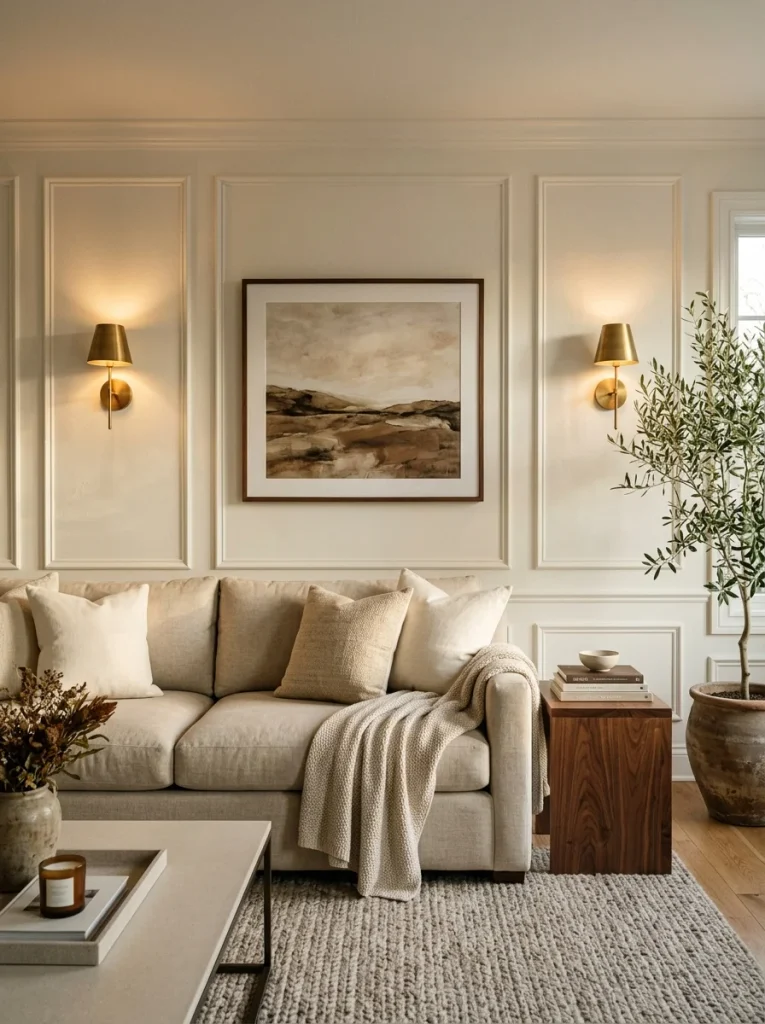
- Choose the placement. Mount sconces beside artwork, near a fireplace or along a seating wall where extra light is useful.
- Check the height. Position the light source to reduce direct glare while keeping the fixtures visually connected to nearby furniture.
- Coordinate the finish. Pair brushed brass with warm wood, cream fabrics and other understated metallic details.
- Select the bulb. Use a warm white bulb for a softer evening atmosphere.
- Consider installation. Hardwired sconces may require an electrician, while plug-in versions offer a simpler alternative.
Brass sconces provide both practical illumination and decorative detail. They are particularly useful when floor space is limited or when you want to frame a sofa or artwork. Choose fixtures with shades that diffuse the light instead of exposing a bright bulb directly to the room.
Dimmable Ambient Lighting

| Lighting setup | Best use |
|---|---|
| Brighter setting | Cleaning, organizing and daytime activities |
| Medium setting | Conversation, hobbies and casual gatherings |
| Low setting | Relaxing, watching television and quiet evenings |
Dimmable lighting gives one room several useful moods without requiring separate fixtures for every activity. Choose compatible dimmer switches and bulbs, since not all LED bulbs work with every dimmer. Start with moderate brightness, then lower it until the room feels comfortable. This approach is especially useful in open-plan living rooms that serve several purposes.
Statement Chandeliers
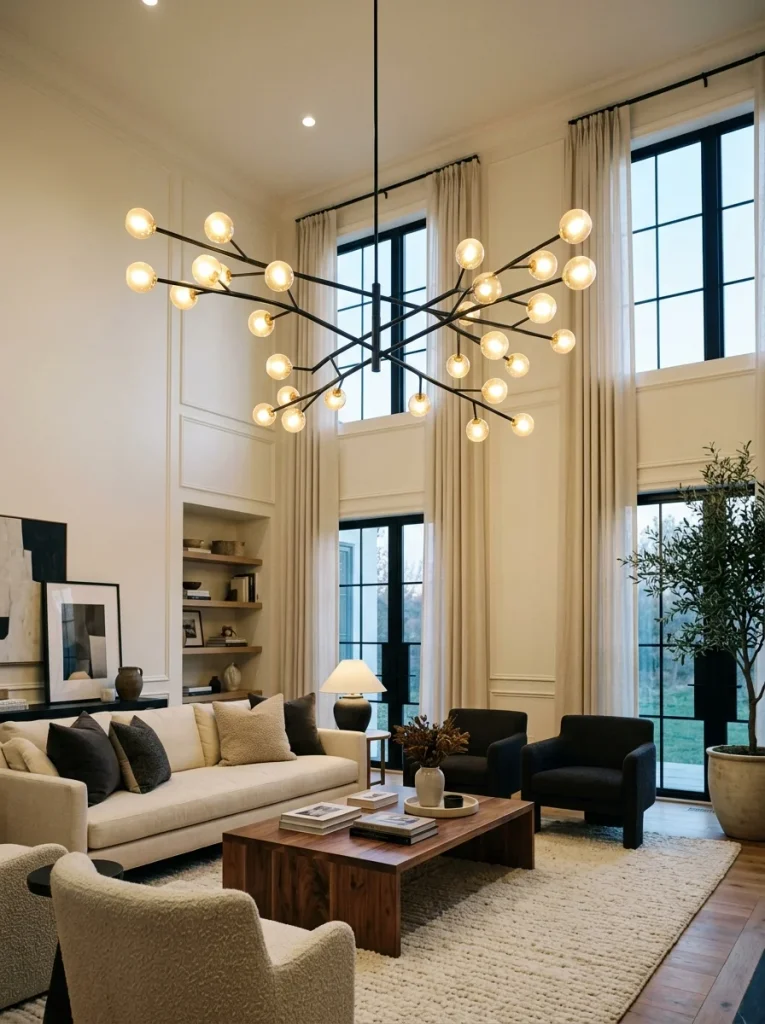
- Do choose a proportional fixture. Match the chandelier’s size to the room and the furniture beneath it.
- Do check ceiling height. Ensure the fixture does not interfere with movement or sightlines.
- Do coordinate materials. Repeat a metal finish elsewhere in the room for a cohesive appearance.
- Don’t choose brightness based on appearance alone. Check the actual light output and bulb compatibility.
- Don’t overcrowd the ceiling. Allow the chandelier to remain the main visual feature.
- Don’t ignore maintenance. Intricate fixtures may need more frequent dusting and bulb replacement.
A chandelier can anchor the entire living room, particularly in spaces with high ceilings or a clearly defined central seating arrangement. For a more relaxed result, choose a design with diffused bulbs and dimming capability. In a smaller room, an airy silhouette can deliver visual interest without feeling oversized.
LED Cove Lighting

- Plan the cove. Identify a ceiling recess or suitable perimeter detail where the strip can remain hidden.
- Choose the color temperature. Warm white lighting generally suits a comfortable residential living room.
- Hide the light source. Position the LED strip so viewers see the reflected glow rather than individual bright points.
- Use compatible controls. Select a dimmable driver and controller if you want adjustable brightness.
- Test before finishing. Check the light distribution before permanently closing or decorating the installation.
Cove lighting creates a gentle glow that makes the ceiling appear visually lighter. It works particularly well with clean-lined interiors and layered lighting schemes. Keep the strip concealed and avoid overly cool LEDs if you want a warm atmosphere. Professional installation may be needed when wiring or ceiling modifications are involved.
Glass Globe Lamps
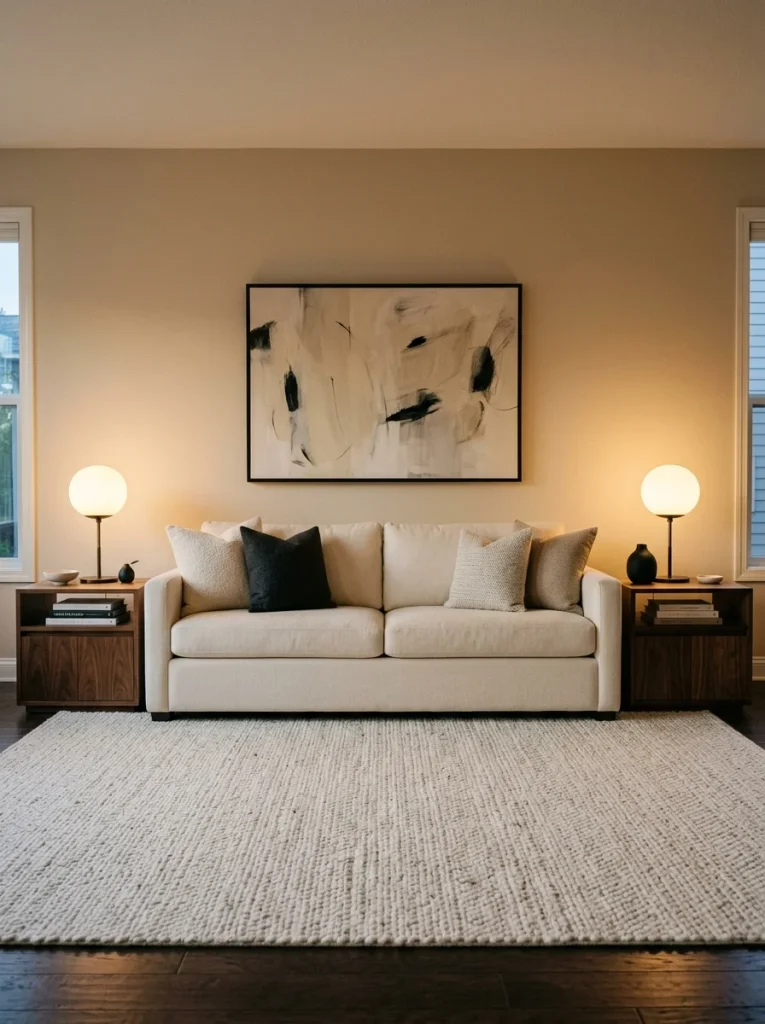
| Feature | Opal glass globe | Clear glass globe |
|---|---|---|
| Light quality | Softer, diffused illumination | More direct, visible bulb glow |
| Visual effect | Subtle and understated | Airy and decorative |
| Best placement | Beside seating or on side tables | Accent corners and layered arrangements |
| Bulb choice | Warm white LED | Decorative, low glare LED |
Glass globe lamps offer a rounded shape that softens angular furniture and modern architectural details. Opal glass is especially helpful when you prefer diffused light, while clear glass can highlight an attractive decorative bulb. Check whether the bulb is visible from your usual seating position to prevent uncomfortable glare during evenings.
Picture Light Accents
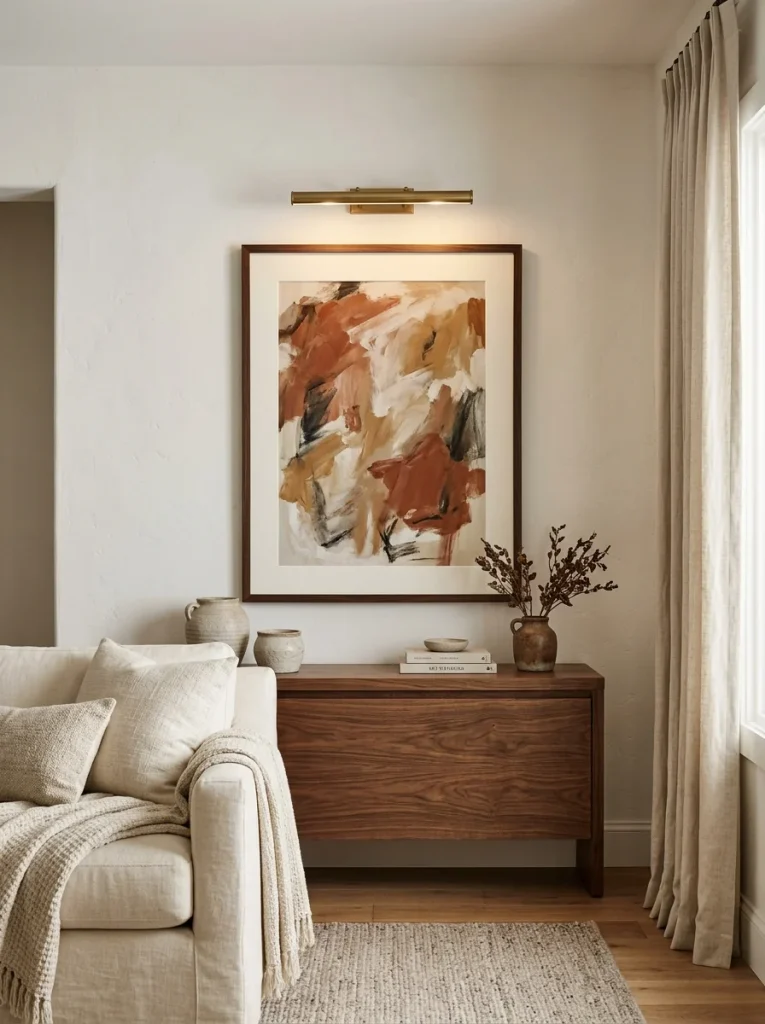
DO
- Position the picture light to illuminate the artwork evenly.
- Select a fixture width that suits the frame.
- Use a warm, color accurate bulb to preserve the artwork’s appearance.
- Choose adjustable lighting when the artwork’s size or position requires it.
DON’T
- Aim the beam directly into viewers’ eyes.
- Use excessive brightness that creates reflections on glass.
- Place heat-producing bulbs too close to delicate artwork.
- Assume every painting needs the same lighting angle.
Picture lights add a gallery-inspired detail while helping artwork become a more noticeable part of the room. They work well above framed prints, photographs or a carefully arranged picture wall. Choose low heat LED lighting and follow any conservation guidance for valuable or light sensitive pieces.
Table Lamps for Reading

Best For: Reading corners and sofa side tables
Cost: Low to moderate, depending on the lamp and bulb
Skill Level: Beginner
Light Quality: Warm, focused illumination
Placement: Near the reader’s shoulder or beside the seating area
A reading lamp should make pages easy to see without illuminating the entire room too harshly. Choose an adjustable shade or a lamp with a directed beam if you read frequently. Check that the table is stable and large enough for the lamp, book, and other everyday items. A dimmable bulb provides extra flexibility.
Recessed Wall Washers

Wall washing lights can make a plain wall look more architectural by spreading light evenly across its surface. They are especially effective on textured plaster, subtle stone finishes or carefully chosen feature walls.
For the best result, plan the light position according to the wall’s height and the fixture’s beam angle. Test the effect before final installation if possible. Uneven spacing can create distracting bright spots, while a well-planned layout produces a calmer, more consistent finish. Avoid washing light across surfaces that reveal imperfections you would rather keep subtle.
Cozy Fireplace Lighting
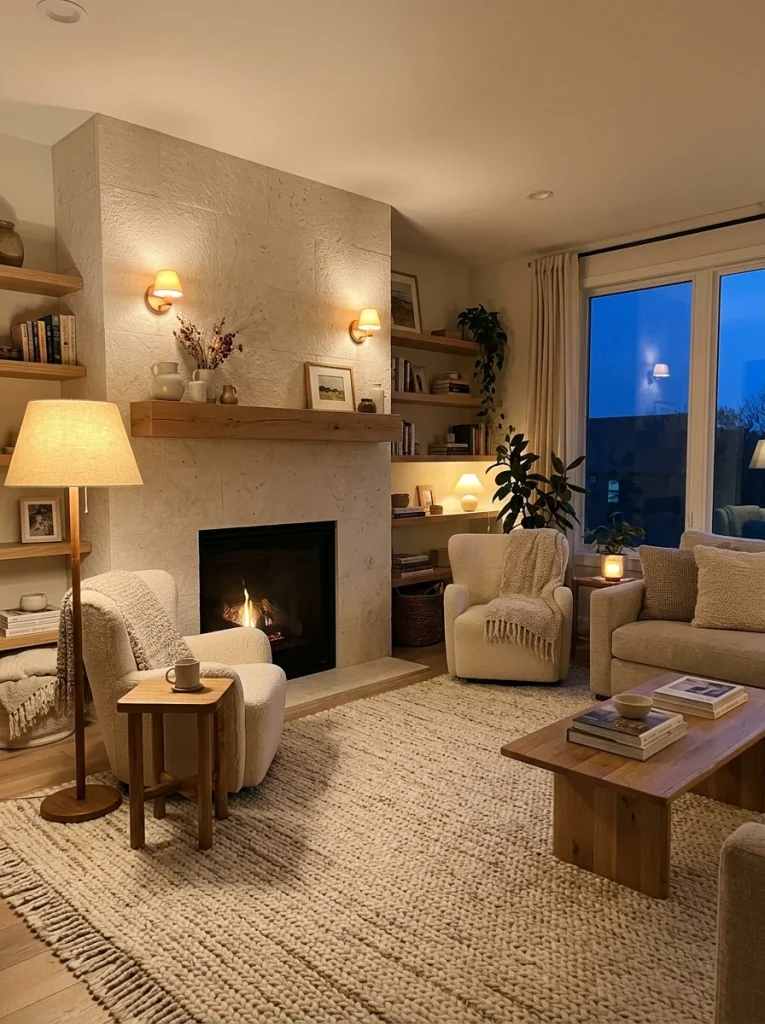
BEFORE
A fireplace can become a dark visual feature after sunset, especially when the surrounding wall receives little illumination. The seating area may also feel disconnected from the rest of the room.
AFTER
Gentle lighting around the mantel and nearby seating creates a more balanced focal point. The fireplace remains visually prominent without relying on a single harsh ceiling light.
Use wall sconces or a nearby table lamp to illuminate the surrounding area. Keep all electrical fixtures and cords away from heat sources and follow the fireplace manufacturer’s clearance instructions. If the fireplace is decorative rather than functional, low level accent lighting can still emphasize its materials and architectural shape.
Arched Floor Lamps
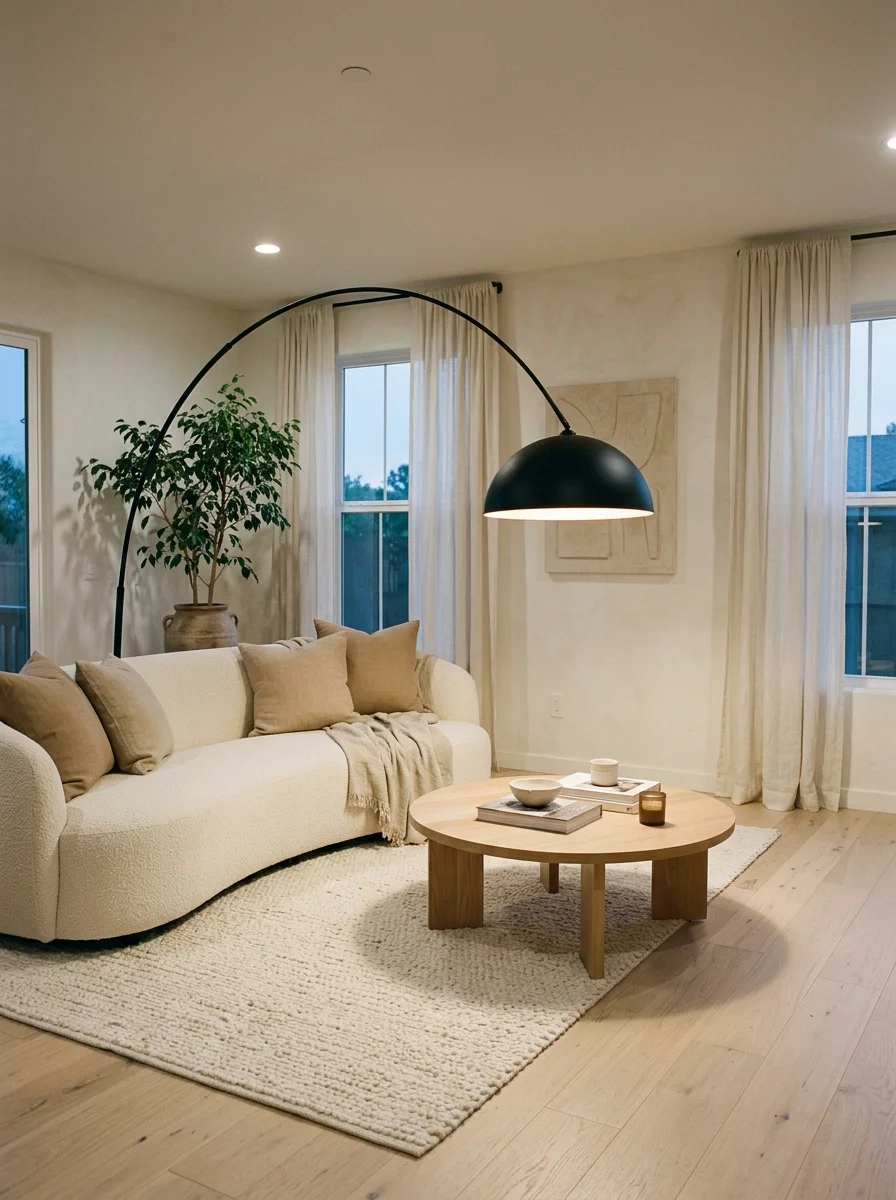
- Measure the seating area. Check the distance between the lamp base, sofa and coffee table.
- Check the arc. Ensure the shade reaches the intended surface without obstructing walking paths.
- Choose a stable base. A heavier base helps support the extended arm.
- Select a diffused shade. Avoid exposed bulbs that create glare when you sit down.
- Coordinate the finish. Match the lamp to your furniture hardware or other metal accents.
An arched lamp can illuminate a coffee table or seating area without requiring a ceiling fixture directly overhead. Its curved shape also adds height and movement to a room filled with low furniture. This design is particularly useful for renters who want a dramatic lighting feature without modifying the ceiling.
Hidden LED Shelving

Hidden shelf lighting works best when it reveals objects without making the LEDs themselves visible. Install strips beneath the front edge of each shelf or inside a recessed channel with a diffuser.
Use warm white lighting to complement wooden cabinetry and ceramic accessories. Keep the arrangement selective so illuminated objects remain easy to distinguish. Too many decorative pieces can create visual clutter, especially when every shelf is brightly lit. If you are installing new wiring, choose an accessible driver location for future maintenance and use components rated for the installation.
Sculptural Table Lamps

| Styling choice | Visual result |
|---|---|
| Rounded ceramic base | Softens straight furniture lines |
| Dark sculptural base | Adds contrast to pale interiors |
| Linen shade | Creates a warm, diffused glow |
| Textured stone finish | Adds tactile interest |
| Oversized silhouette | Makes the lamp a decorative focal point |
A sculptural table lamp can function as both a lighting source and a small piece of art. Place it on a console, side table or sturdy cabinet where its shape remains visible. Keep the surrounding accessories simple and choose a shade that conceals the bulb enough to prevent glare during everyday use.
Smart Color Lighting

Quick Tip:
Set a warm white default for everyday use and save brighter or colored settings for specific activities. Test color scenes at night before relying on them, since a color that looks subtle on a phone may appear much stronger on a wall.
Smart bulbs and LED strips allow you to adjust brightness and, with compatible products, color temperature or hue. Create separate settings for reading, entertainin and watching television rather than changing every light manually. Check bulb compatibility with existing switches and smart home systems before purchasing. A restrained palette usually works better than saturating the whole room with intense colors.
Sofa Backlighting
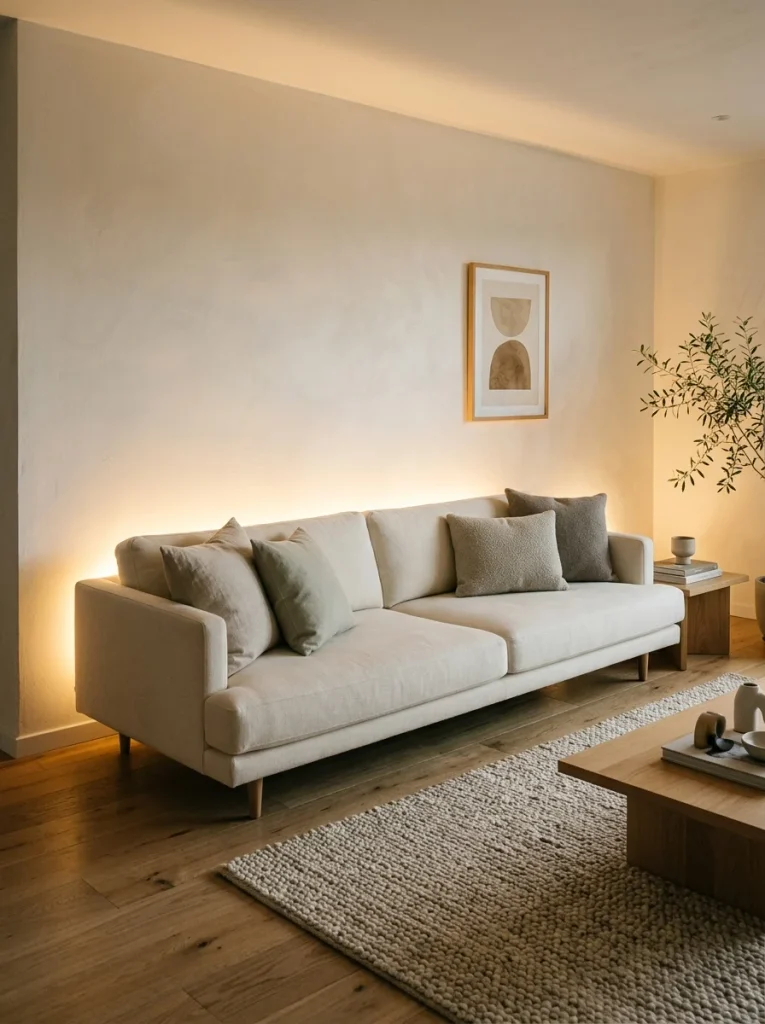
BEFORE
A sofa placed against a plain wall can create a heavy visual block, particularly in an evening setting. The wall behind it may remain dark while other areas receive too much direct light.
AFTER
A hidden LED strip creates a subtle halo behind the sofa, separating the furniture visually from the wall. The result adds depth without introducing another visible lamp or bulky fixture.
Mount the strip so the light reflects onto the wall rather than shining directly into the room. Use a diffuser when needed to reduce visible LED dots and keep the wiring concealed safely. This technique works especially well with floating consoles and low-profile sofas, but it should complement rather than replace practical room lighting.
Natural Rattan Pendants
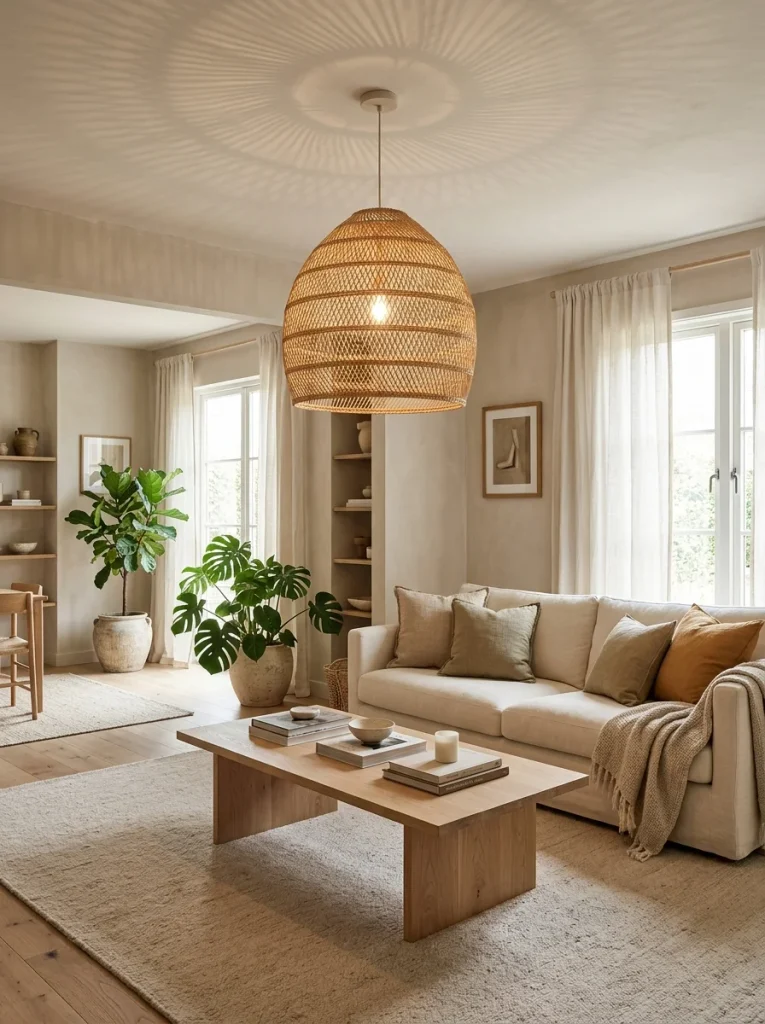
- Choose an open weave. A more open design creates decorative light patterns, while a tighter weave produces a softer effect.
- Match the materials. Combine rattan with wood, linen, jute and other natural textures.
- Select the right bulb. A warm LED bulb supports a comfortable atmosphere.
- Check the shadows. Test how the woven shade projects light onto nearby walls and furniture.
- Keep the scale balanced. Use a pendant size that suits the room without overwhelming the seating area.
Rattan pendants introduce natural texture and a relaxed, organic style. They work particularly well in bohemian, coastal, Scandinavian and casual contemporary interiors. Because open weaving can produce patterned shadows, consider how the effect will look after dark. Check the fixture’s safety rating and follow the manufacturer’s guidance for bulb wattage and installation.
Track Lighting Systems
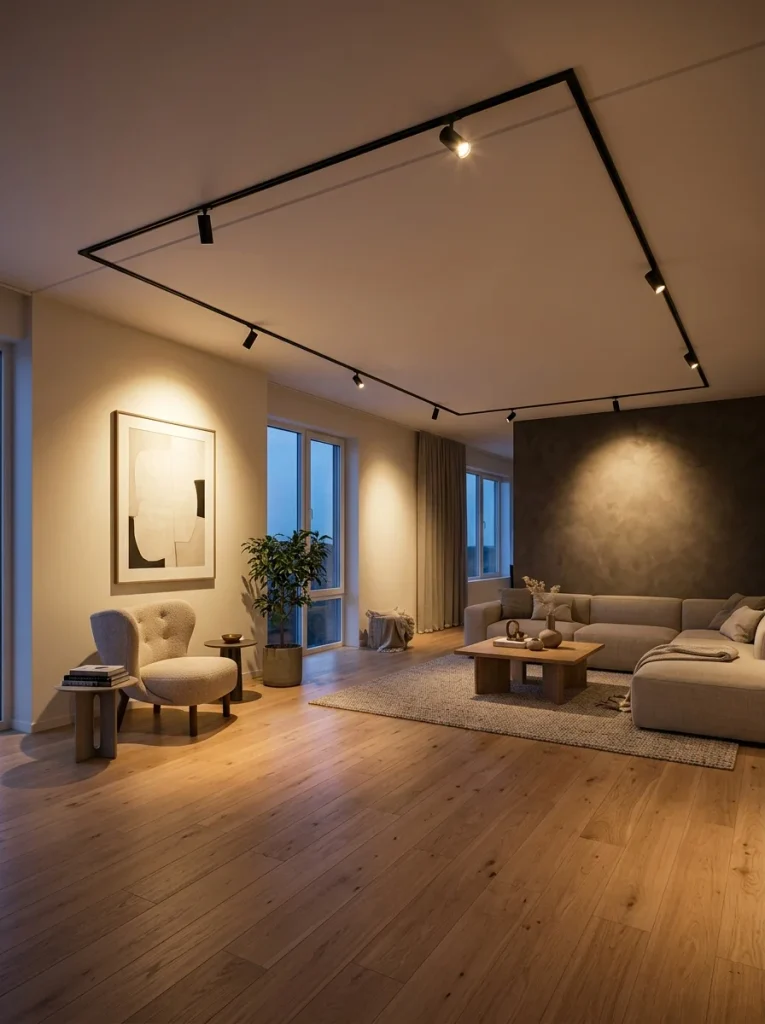
| Setup | Main advantage |
|---|---|
| Straight track | Simple, organized lighting layout |
| L-shaped track | Covers two connected areas |
| Adjustable spot heads | Directs light where it is needed |
| Dimmable compatible system | Supports multiple brightness levels |
Track lighting is useful when one ceiling connection needs to serve several different areas. Aim individual heads toward artwork, a reading corner or decorative surfaces rather than pointing every beam at the floor. Check beam angles and glare before choosing the fixtures. Track systems can look particularly polished in contemporary rooms with clean architectural lines.
Soft Bedside-Style Sconces

DO
- Position each sconce at a comfortable height relative to the sofa.
- Choose fabric or frosted shades for diffused light.
- Match the fixtures to the room’s hardware and furniture finishes.
- Use dimmable bulbs if the fixtures support them.
DON’T
- Place a bright bulb directly at eye level.
- Space the fixtures too far apart without considering the seating layout.
- Combine too many competing decorative finishes.
- Assume a decorative sconce will provide enough light for reading.
Fabric-shaded sconces create a softer effect than many exposed-bulb designs. They are useful in rooms where table surfaces are already occupied or where floor space is limited. For balanced styling, align the fixtures with the sofa or wall artwork and consider their relationship to nearby lamps.
Oversized Floor Lamps

Best For: Large seating areas and open-plan rooms
Cost: Moderate to high, depending on size and materials
Skill Level: Beginner
Main Benefit: Broad illumination and strong visual presence
Placement: Beside a sectional or near the edge of a conversation area
A larger floor lamp can balance substantial furniture that might make a small fixture look insignificant. Choose a shade wide enough to distribute light comfortably, but make sure the base does not interfere with movement. Check the overall height against the ceiling and nearby artwork. In smaller rooms, a tall, slim design often provides a better balance.
Candlelight Accent Lamps

Electric candle-style lamps provide a gentle decorative glow without the open flame of traditional candles. They are useful on consoles, side tables and shelves where you want a small point of warm light.
Choose models with a stable base and an appropriate brightness for the intended surface. Combine them with a floor lamp or overhead lighting rather than relying on them to illuminate the entire room. If you prefer actual candles, keep them away from curtains, upholstery, children and pets and never leave a burning candle unattended.
Minimalist Linear Lighting
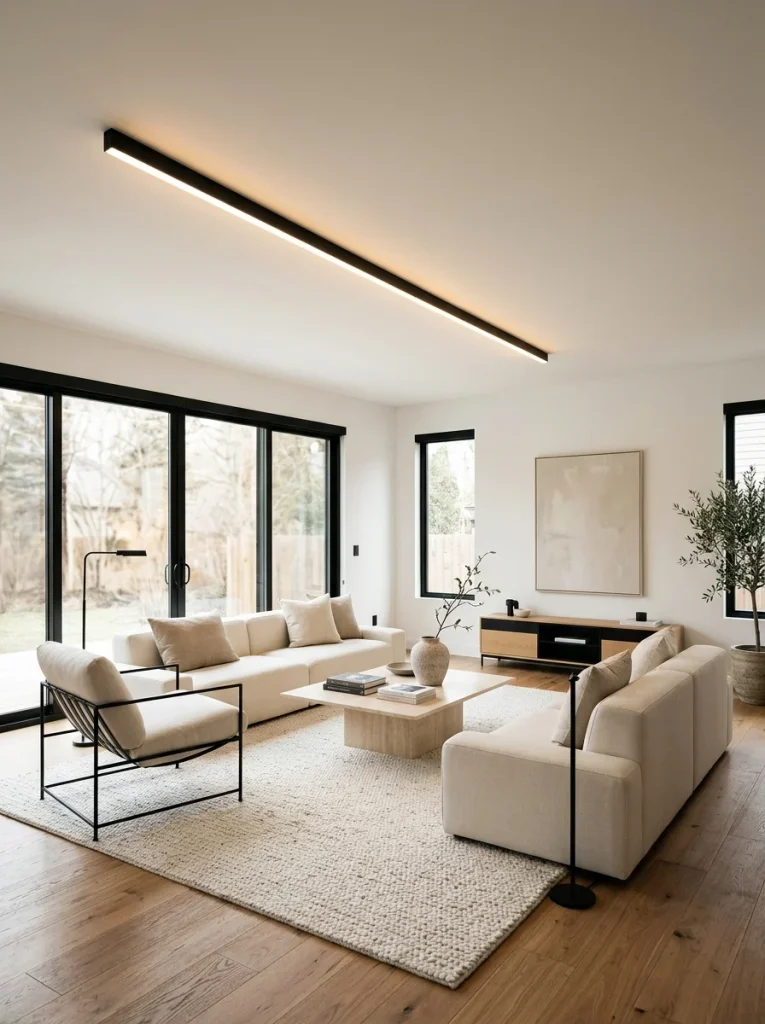
Quick Tip:
Align a linear fixture with the main furniture arrangement or the room’s architectural lines. Before installation, confirm the fixture’s length, ceiling height and light distribution so it illuminates the intended area without creating glare.
Linear lighting suits modern interiors because its simple geometry complements streamlined furniture and uncluttered walls. A suspended fixture can help define a seating zone in an open plan room, while a flush mounted version works where ceiling height is limited. Choose a dimmable model with a comfortable color temperature and ensure the light reaches the seating area evenly.
Backlit Wall Panels

- Choose the feature wall. Select the wall behind a sofa, console or media unit.
- Select a finish. Fluted wood, textured panels, and suitable stone look materials each create a distinct effect.
- Plan the light gap. Allow enough concealed space for a consistent glow behind the panel.
- Diffuse the illumination. Use suitable channels and diffusers to minimize bright spots.
- Coordinate the brightness. Keep the backlighting subtle enough to complement other fixtures.
Backlit panels introduce architectural interest without requiring decorative objects on every surface. The concealed light emphasizes depth and texture, making the wall a focal point in a modern living room. Choose materials and lighting components designed for the intended installation and use a qualified professional when mounting panels involves electrical work or substantial wall modifications.
Layered Lamp Styling
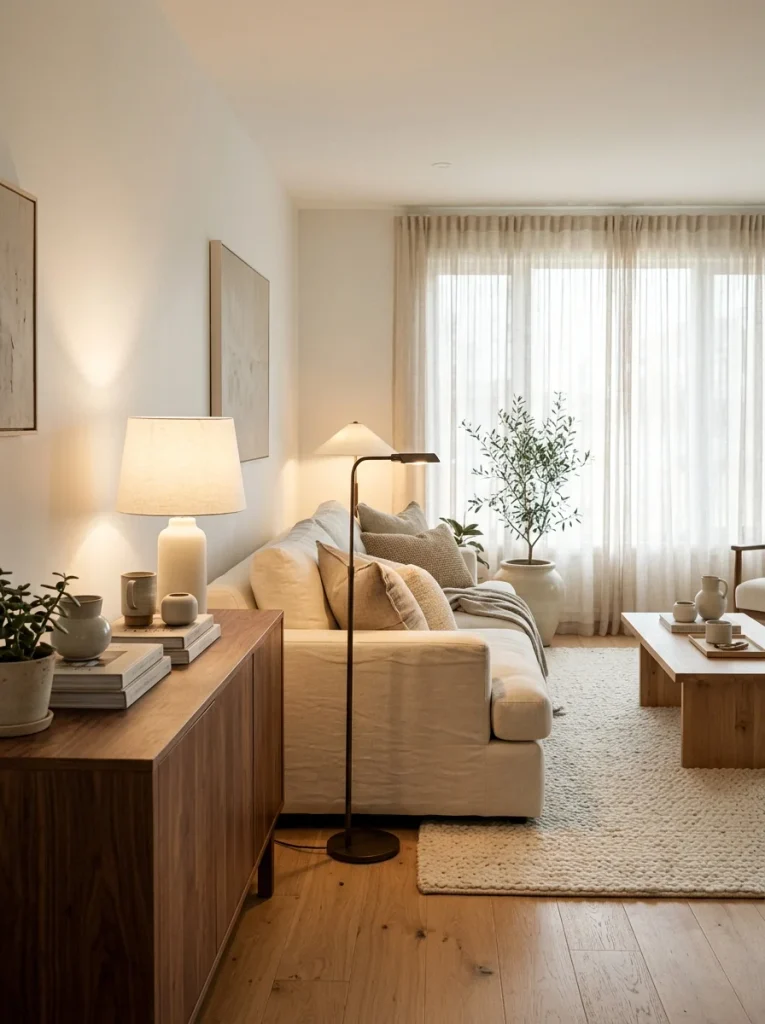
| Styling approach | Result |
|---|---|
| Lamps at different heights | Creates visual depth |
| Matching warm bulbs | Keeps the atmosphere consistent |
| One statement lamp | Establishes a focal point |
| Simple surrounding decor | Prevents visual clutter |
Layering lamps is one of the most flexible ways to improve a living room without major renovations. Combine a table lamp for localized illumination with a floor lamp for a darker corner, then use ceiling lighting when brighter visibility is needed. Keep bulb color temperatures reasonably consistent and position shades to prevent direct glare from the sofa.
CONCLUSION
Beautiful lighting can make your living room feel more comfortable, functional, and inviting without requiring a complete renovation. From sculptural pendants to subtle accent lights, these Living Room Lighting Ideas offer inspiration for creating a space that suits your lifestyle and personal taste.
Start with one simple change, such as adding a warm floor lamp, adjusting your bulb color, or layering light around your seating area. Notice how the room feels, then build on what works best for you.
Save this article on Pinterest for your next decorating project, and share it with someone looking for fresh home inspiration. Your perfect living room atmosphere can begin with one thoughtful lighting choice.



One Comment