Tiny Bathroom? 28 Bathroom Storage Ideas You’ll Be Obsessed With
A tiny bathroom can feel crowded before your day even begins. When towels, toiletries and everyday essentials compete for limited space, keeping everything organized can feel like a constant challenge.
These Bathroom Storage Ideas will help you make the most of every corner, shelf and overlooked space without sacrificing style. From clever over the toilet shelving and hidden cabinet organizers to space saving baskets and wall mounted storage, you’ll find practical ways to create a bathroom that feels calmer, brighter and easier to use.
I’ve noticed that small changes often make the biggest difference in compact rooms. Sometimes, adding one simple organizer or moving everyday products off the countertop can completely change how a bathroom feels. Whether you’re renting, working with a tight budget or planning a small makeover, these ideas offer inspiration you can adapt to your space. Get ready to discover practical solutions that make your bathroom feel more organized without requiring a major renovation.
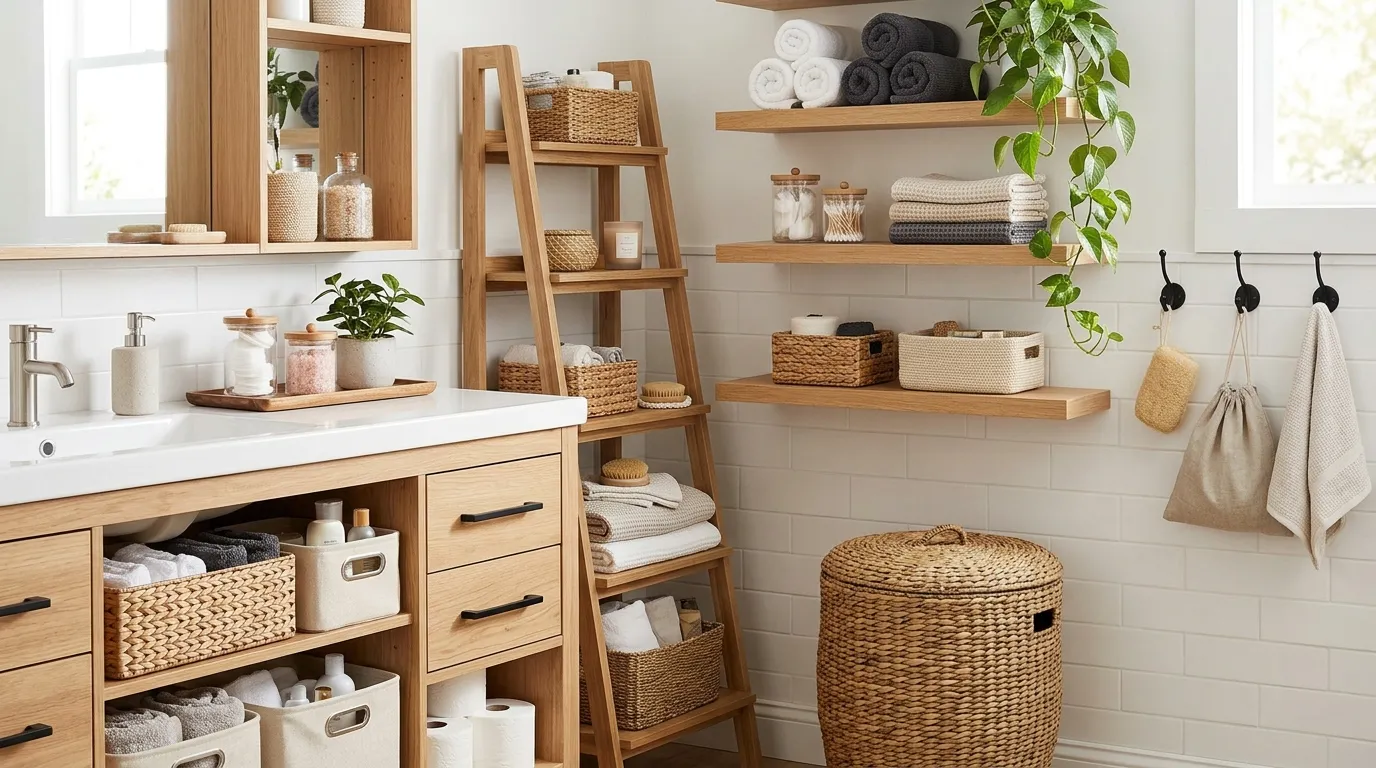
Woven Storage Baskets

BEFORE
Loose toilet rolls, extra towels and backup toiletries can make open shelves look messy, even when there is enough room to store everything. Different package shapes and colors can also make a small bathroom feel visually crowded.
AFTER
Matching baskets group similar items into tidy sections, giving open shelves a more cohesive appearance. Handles make supplies easy to pull out, while different basket sizes help you use narrow gaps and wider compartments efficiently.
Measure each shelf before buying baskets and choose sizes that leave enough room to slide them out comfortably. Woven materials add texture, but natural fibers should stay away from persistent splashes and damp floors. For areas that get wet, consider washable plastic or water-resistant baskets with a similar woven appearance.
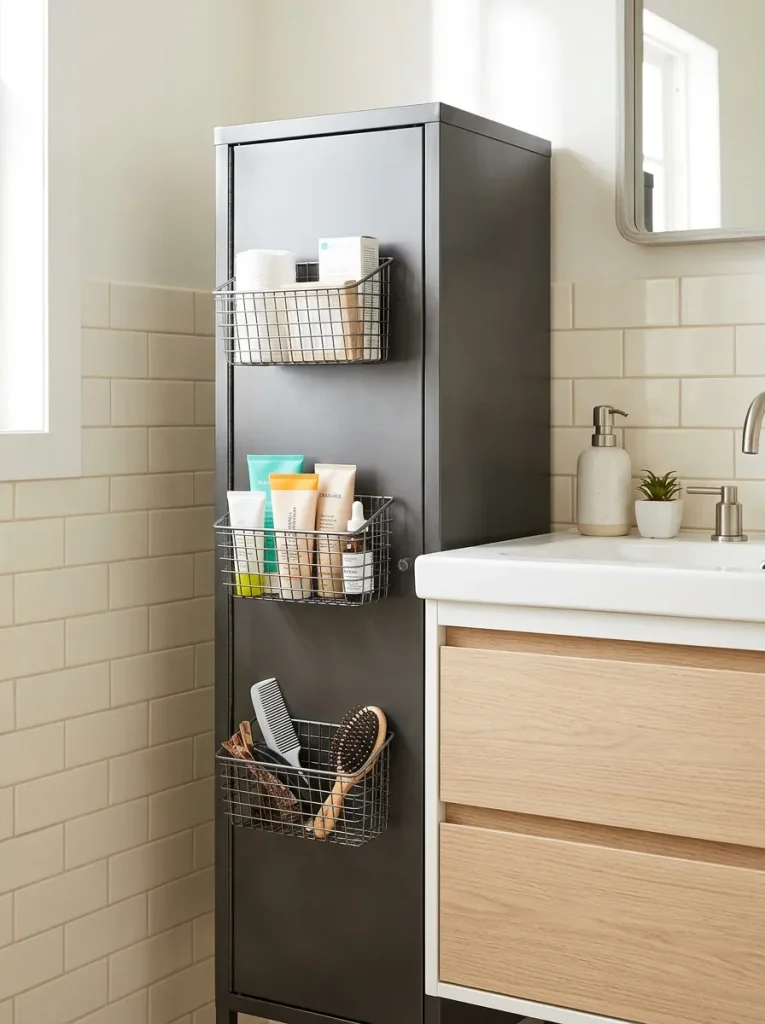
Magnetic Cabinet Baskets
DO
- Check whether the cabinet surface is magnetic before purchasing.
- Choose baskets with secure magnets and smooth edges.
- Store lightweight products that you use regularly.
- Arrange baskets at a comfortable height for easy access.
DON’T
- Attach baskets to surfaces that cannot support their weight.
- Store heavy glass bottles in baskets that may slide.
- Place items where cabinet doors cannot open fully.
- Ignore moisture buildup behind the baskets.
Magnetic baskets can turn the side of a metal cabinet into useful storage without taking up shelf or floor space. They are especially handy for small toiletries, hair accessories and spare grooming items. Keep the contents light, check the magnets periodically and remove the baskets occasionally to wipe away dust and moisture.
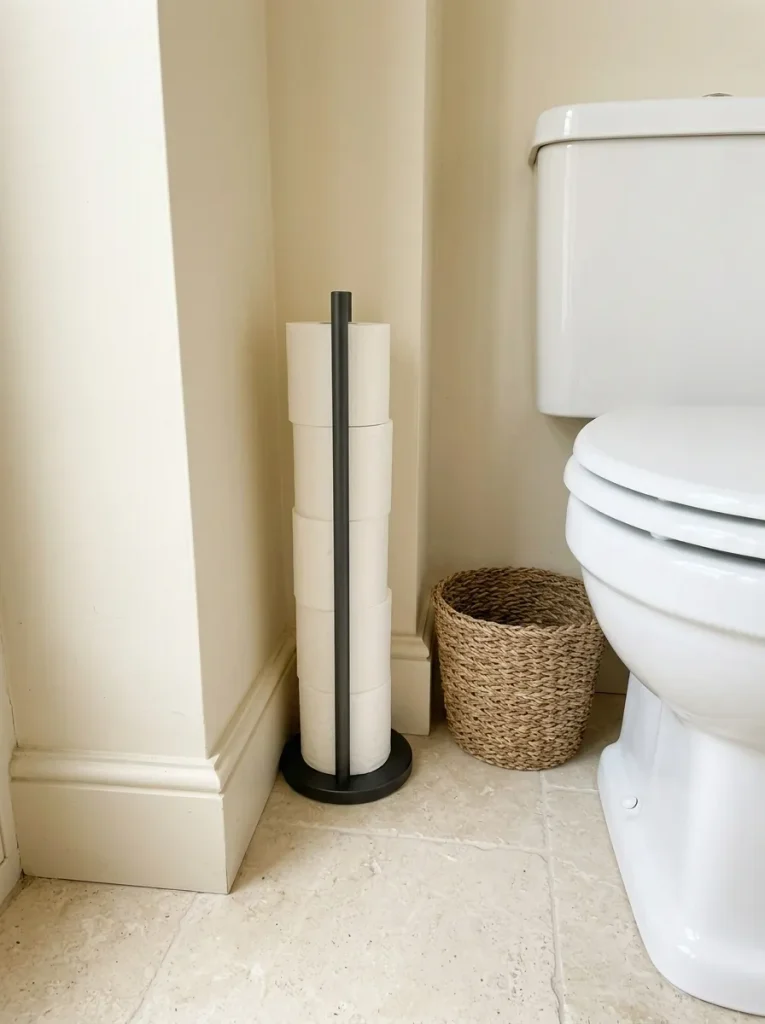
Toilet Paper Storage
What to Check
- Available width: Measure the gap beside the toilet before selecting a stand or container.
- Roll capacity: Choose enough space for your household’s usual supply without crowding the room.
- Moisture protection: Use a covered holder if the storage area is exposed to shower spray.
- Stability: Look for a sturdy base that will not tip when you remove a roll.
How to Organize It
Keep one or two rolls within easy reach and store the remaining supply in a slim stand, lidded basket or wall-mounted holder. If you prefer a hidden look, use an existing cabinet shelf or a narrow container that fits beside the vanity. Avoid placing paper where it can become damp or obstruct the toilet area.
Thoughtful toilet paper storage prevents last-minute searches and helps keep bathroom supplies off the floor. A vertical holder is particularly useful in a tiny room because it makes use of height instead of spreading items across the available floor space.
Read More: 26 Bathroom Lighting Ideas That Make Mornings Brighter
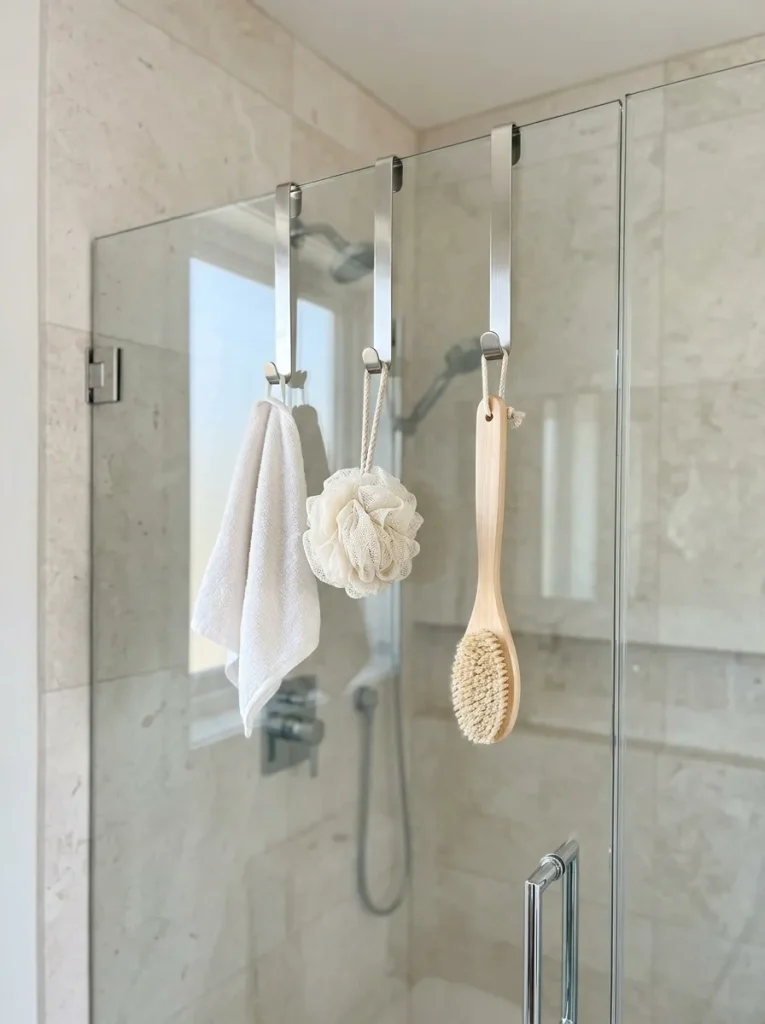
Shower Door Hooks
BEFORE
Bath accessories often end up draped over the shower rail, piled on a ledge, or left on the floor to dry. These scattered items can make a compact shower look untidy and may stay damp longer than necessary.
AFTER
Over-door hooks provide designated spots for lightweight accessories, keeping them off the floor and easier to reach. Since they use the door edge, they can add a little organization without drilling into tiled walls.
Measure the shower door thickness and check the manufacturer’s compatibility guidance before buying hooks. Add protective padding if recommended to prevent scratches and confirm that the door still opens and closes freely. Hang only lightweight items, allow washcloths and sponges to dry between uses and clean the hooks regularly to remove soap residue.
Pull Out Cabinet Baskets

DO
- Measure the cabinet opening, interior depth and available height.
- Choose a pull-out unit that fits around existing plumbing.
- Group similar supplies in small containers inside the basket.
- Keep frequently used products near the front.
DON’T
- Buy a basket without checking pipe and hinge clearance.
- Store heavy bottles in a unit with a low weight rating.
- Force the basket if it catches on cabinet hardware.
- Leave leaks or damp cleaning cloths hidden underneath the sink.
Pull-out baskets make deep cabinets more practical because you can bring stored items toward you instead of reaching blindly into the back. They are especially helpful beneath a vanity, where pipes often make the available space awkward. Measure carefully before buying and choose a removable design that allows you to clean around plumbing and cabinet corners.
Bath Toy Organizers

Problem: Bath toys often collect along the tub edge or end up scattered across the floor. When water remains trapped inside toys or storage containers, the area can become difficult to keep clean.
Solution: Use a breathable mesh organizer or a water-resistant basket designed for bathroom use. Choose one with drainage openings and enough room for toys to dry without being packed tightly together. Place it within an adult’s reach for easy cleanup, but keep cords and attachments away from children’s necks and reach when unsupervised.
Result: Toys have a consistent home, the tub edge stays clearer and cleanup after bath time becomes simpler. Empty the organizer regularly, rinse away soap residue and allow toys to dry thoroughly. Check the attachment often, especially in a humid bathroom and discard toys that develop persistent mold or cannot be cleaned properly.
Wall Mounted Soap Dispensers

BEFORE
Multiple shampoo, conditioner and body wash bottles take up shelf space and often leave sticky rings around their bases. In a tiny shower, these containers can make it harder to reach everyday products or wipe down surfaces.
AFTER
Wall-mounted dispensers keep regular-use products in one convenient spot and free up space on shower shelves. Refillable containers also create a more consistent appearance, especially when each dispenser is clearly labeled.
Before installing a dispenser, confirm that the mounting method suits your tile or wall surface and follow the manufacturer’s instructions. Choose a model that opens easily for refilling and cleaning, and label each container to avoid confusion. Check that the pump works with your chosen products and position the dispensers where everyone can reach them safely without stretching across the shower.
Overhead Cabinet Storage
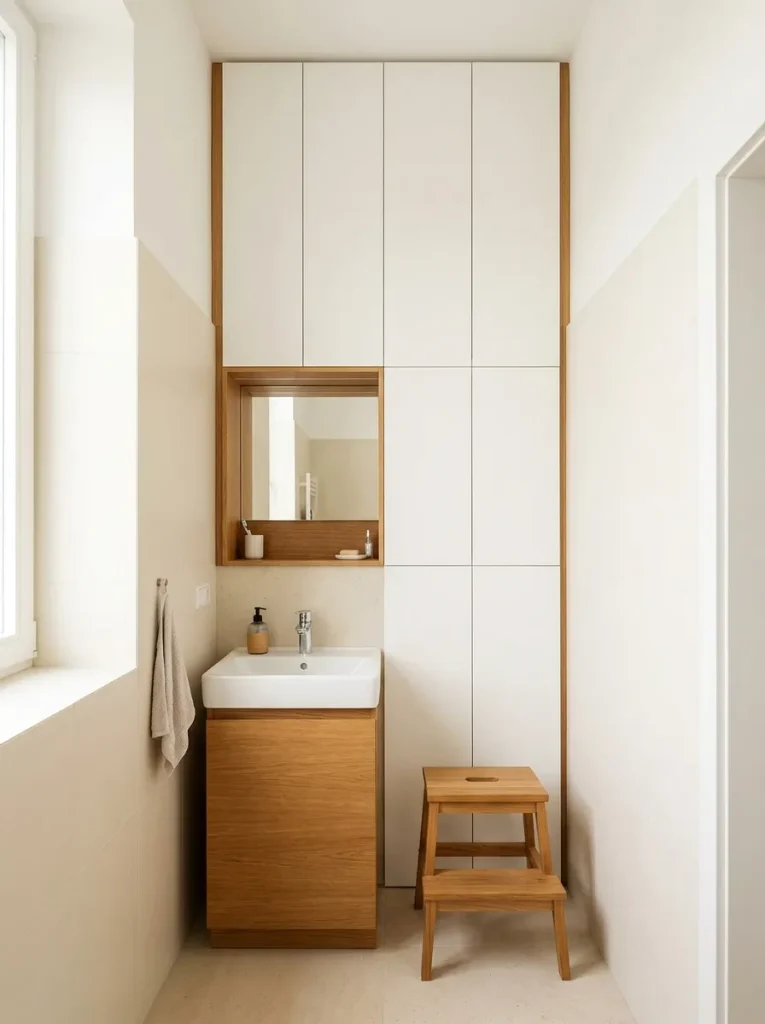
DO
- Use upper shelves for backup products and seasonal items.
- Store lightweight supplies in labeled containers.
- Keep everyday essentials on shelves you can reach comfortably.
- Measure ceiling height and door clearance before choosing a tall unit.
DON’T
- Store heavy glass bottles on hard-to-reach shelves.
- Place a cabinet where it blocks ventilation or lighting.
- Climb on the toilet or vanity to reach high items.
- Overfill shelves beyond their weight limits.
Using the space near the ceiling can free up lower cabinets for the items you use every day. A tall storage unit or an extra shelf above an existing cabinet works well for spare toilet paper, extra towels, and unopened toiletries. Keep the arrangement simple and use a stable step stool when you need to reach higher shelves.
Vanity Side Organizers

What to Check
- Cabinet shape: Confirm that the organizer fits the side panel without blocking drawers or doors.
- Attachment method: Choose a secure hook, clamp or approved adhesive suited to the cabinet material.
- Pocket depth: Make sure bottles and tools sit securely without tipping out.
- Moisture exposure: Select a material that can be wiped clean and dried easily.
How to Arrange It
Keep lightweight items you reach for daily in the upper pockets, with larger accessories lower down. Group similar products together so the organizer does not become a catchall for random clutter. If the cabinet side faces a shower, choose a water-resistant material and check it regularly for moisture or adhesive wear.
This small addition can make an awkward gap useful without requiring a new cabinet or a major renovation. It is especially handy for renters who want more accessible storage while keeping changes to the bathroom minimal.
Under Shelf Baskets

BEFORE
Bathroom shelves often have unused space underneath them, even when the shelf above is packed with towels and supplies. Small items may get pushed into corners, while the available vertical room goes to waste.
AFTER
An under-shelf basket slides or hooks beneath a sturdy shelf to create an extra compartment. It can hold lightweight items such as washcloths, spare tissues, or unopened toiletry packets, keeping them separated from the supplies above.
Measure the shelf thickness and depth before choosing a basket, and check that the shelf can support the additional load. Leave enough clearance for items to slide in and out without catching. Avoid placing baskets where they obstruct cabinet doors or interfere with plumbing, and remove them periodically to clean away dust and moisture.
Corner Shower Shelves
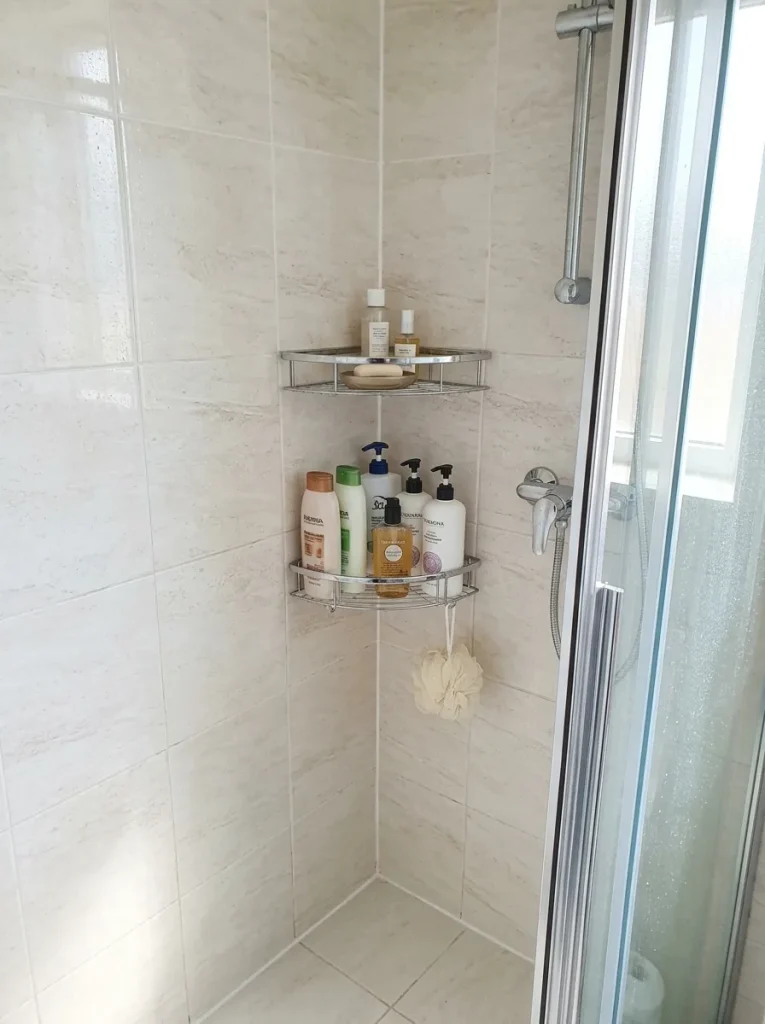
DO
- Measure the corner before choosing a shelf size.
- Select rust-resistant materials suited to wet environments.
- Keep heavier bottles on sturdy, lower shelves.
- Choose shelves with drainage openings to reduce standing water.
DON’T
- Drill into tiles without checking for pipes or wiring.
- Install shelves where they obstruct shower controls.
- Overload adhesive shelves beyond their stated weight limit.
- Allow soap residue to build up around mounting points.
Corner shelves make use of space that often goes unused in a small shower. Depending on your wall surface and rental restrictions, you can choose a drilled shelf, a tension-mounted unit, or a suitable adhesive design. Arrange products by how often you use them, and wipe the shelves regularly to prevent buildup and keep bottles stable.
Labeled Storage Jars

What to Check
- Jar size: Choose containers that fit the shelf depth and hold the amount you actually use.
- Lid design: Use secure lids for items that need protection from bathroom moisture.
- Material: Lightweight acrylic can be safer than glass on narrow or elevated shelves.
- Labels: Keep wording short and easy to read at a glance.
How to Arrange Them
Group small everyday essentials into separate containers instead of leaving open packets on the vanity. Place the most frequently used jars near the front and keep extras in a cabinet to avoid overcrowding the shelf. Wash and dry each container thoroughly before refilling it, especially after storing cotton products or other items that should remain clean and dry.
Matching jars can make open storage look more orderly while helping you see when supplies are running low. Keep them away from direct splashes and avoid storing medications or products that require special packaging in decorative containers.
Behind the Toilet Cabinet
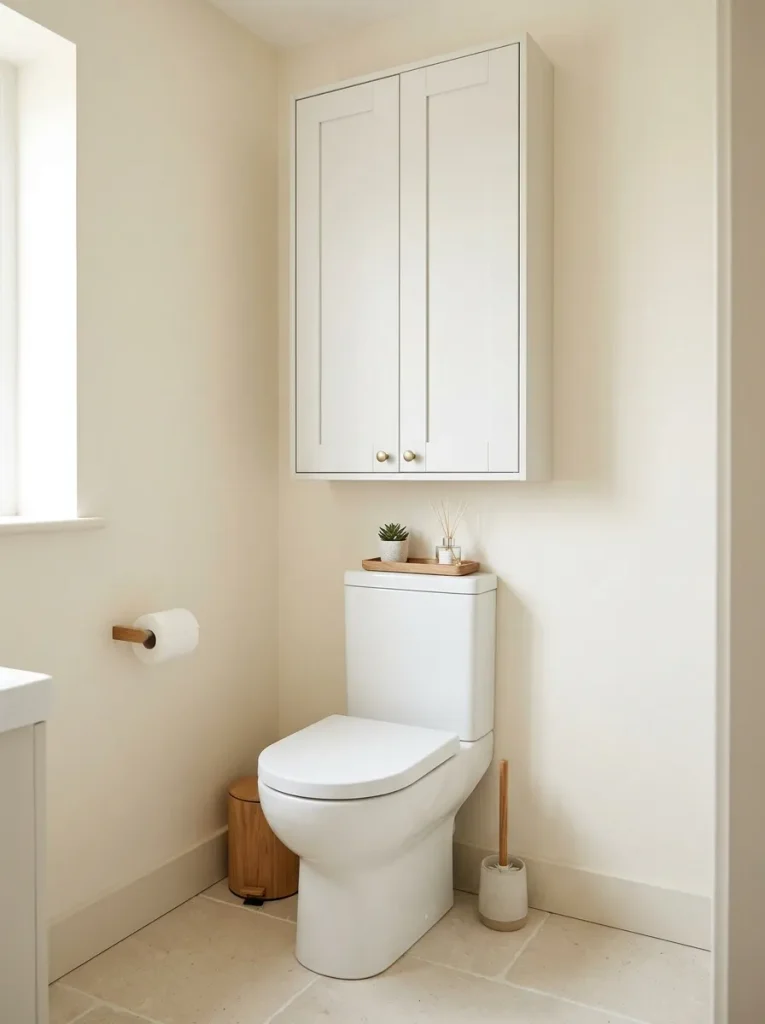
BEFORE
The wall above the toilet often remains empty, even in bathrooms where every cabinet and drawer is full. Spare rolls, cleaning products, and extra toiletries may end up on the floor or spread across the vanity.
AFTER
A purpose-built over-toilet cabinet adds enclosed storage in this often-unused area. Adjustable shelves help separate everyday essentials from backup supplies, while doors keep packaging out of sight and create a tidier appearance.
Measure the toilet height, tank depth and available wall space before purchasing a unit. Choose a stable design that fits securely and does not interfere with the toilet lid or plumbing access. If you rent, check whether the cabinet requires drilling or whether a freestanding option is suitable for your layout. Store heavier items on lower shelves and keep cleaning products safely away from children.
Compact Vanity Trays
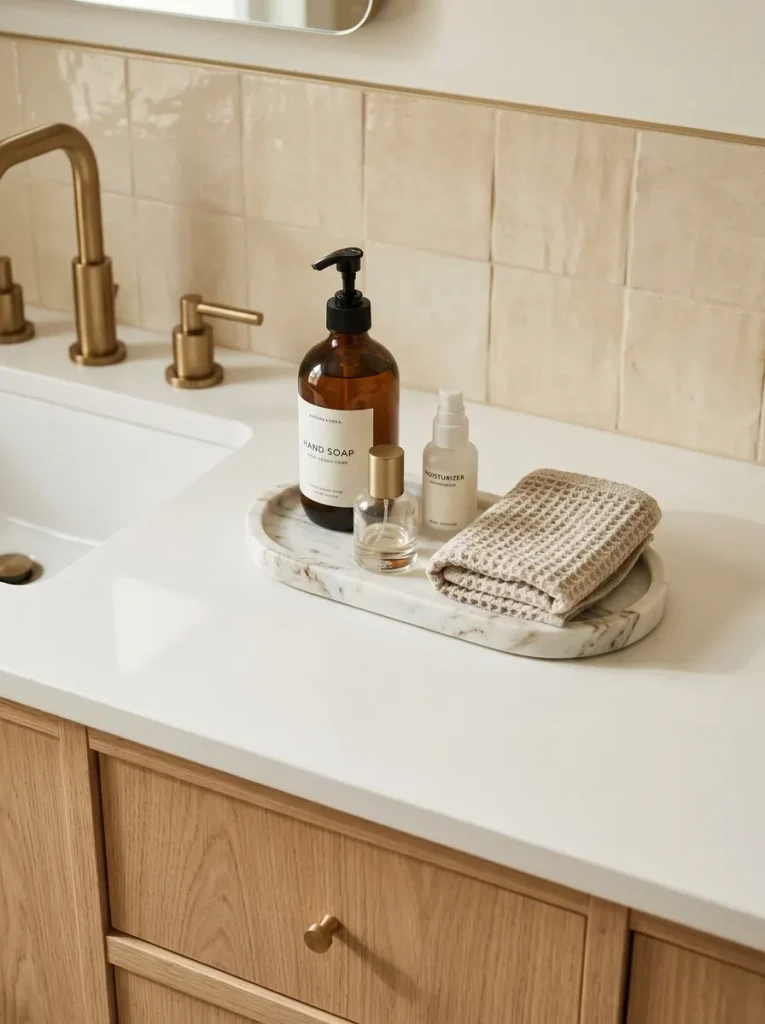
DO
- Choose a tray that fits comfortably beside the sink.
- Group only the products you use most often.
- Pick a washable material that tolerates occasional splashes.
- Lift the tray regularly to wipe away water and residue.
DON’T
- Cover the entire countertop with a large tray.
- Place delicate items where they could fall into the sink.
- Let water collect underneath the tray.
- Use the tray as a dumping spot for unrelated items.
A compact tray creates a clear home for everyday products and helps a small vanity feel less cluttered. Choose a shape that works with your sink, leaving room for handwashing and cleaning. A raised edge can keep bottles from sliding, while a lightweight design makes it easy to move everything when you need to wipe down the countertop.
Narrow Wall Cabinets
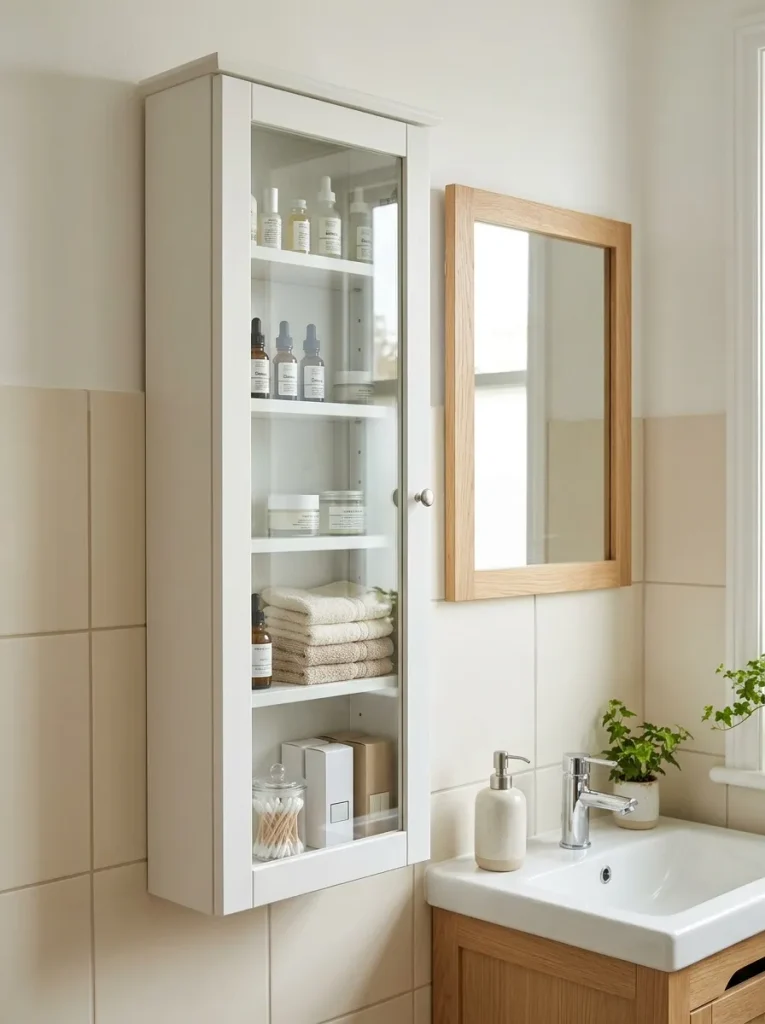
What to Check
- Depth: Choose a cabinet that does not crowd the sink or walkway.
- Door swing: Confirm that the door opens fully without hitting the mirror or shower screen.
- Mounting: Check the wall type and use suitable fixings for the cabinet’s weight.
- Shelf spacing: Look for adjustable shelves if you store bottles of different heights.
How to Organize It
Keep daily skincare and dental products at eye level, with backup supplies higher up or in less accessible sections. Use small bins to prevent tiny items from falling behind larger bottles. Leave a little breathing room on each shelf so products can be removed easily without knocking over their neighbors.
A shallow wall cabinet offers the convenience of closed storage without the footprint of a floor-standing unit. It can be particularly useful above a narrow vanity or beside the mirror, provided the placement leaves enough clearance for daily routines and does not interfere with lighting or ventilation.
Fold Down Bathroom Shelves
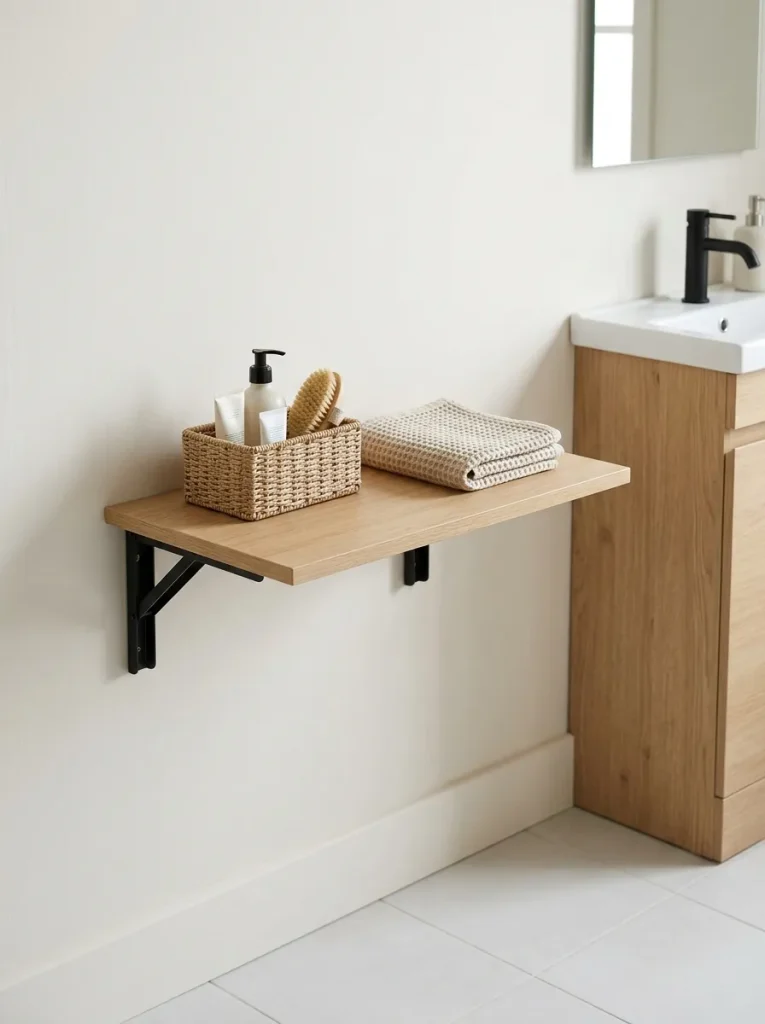
BEFORE
In a very small bathroom, even a shallow shelf can project into the walkway or make it harder to open a door. You may avoid adding useful storage because there simply is not enough room for another fixed surface.
AFTER
A fold-down shelf provides a temporary surface when needed and folds flat against the wall afterward. It can hold a small basket of toiletries, spare hand towels, or items used during a daily routine, depending on the shelf’s design and weight rating.
Choose a model intended for bathroom conditions and install it with fixings suited to the wall material. Check the open and folded dimensions before mounting and keep the shelf away from door swings and narrow passageways. Use it only within the manufacturer’s weight limit, and avoid placing heavy or breakable items on a surface that moves.
Drawer Front Organizers

DO
- Measure the inside of the drawer front before choosing an organizer.
- Store lightweight grooming tools and small accessories.
- Check that the drawer closes fully with the organizer attached.
- Choose removable compartments that are easy to clean.
DON’T
- Place bulky items where they could catch on the cabinet frame.
- Use adhesive that is unsuitable for the drawer material.
- Store wet tools in enclosed compartments.
- Overfill pockets until items become difficult to remove.
The inside of a drawer front can provide extra storage without taking up another shelf or countertop area. Small compartments work well for items that usually get lost among larger products. Test the drawer with a few items before filling every section, and keep sharp tools protected so they do not damage the organizer or your fingers.
Towel Ladder Racks

What to Check
- Width: Choose a narrow frame that does not interfere with the toilet, sink, or shower entrance.
- Height: Make sure the ladder fits beneath the ceiling and any wall fixtures.
- Stability: Look for secure feet and a design suited to bathroom flooring.
- Material: Select a finish that can handle humidity and occasional splashes.
How to Arrange It
Place frequently used towels on the easiest rungs to reach, leaving enough space between fabrics for air circulation. Use the lower rungs for hand towels and the upper ones for lighter items if the design allows. Keep the ladder away from direct shower spray, and follow the manufacturer’s instructions if the rack needs to be secured to the wall.
A towel ladder can provide several hanging levels without requiring a wide towel bar. It is a useful option when wall space is limited, although a wall-mounted ladder may be safer in especially narrow bathrooms where a freestanding frame could be knocked over.
Window Sill Storage
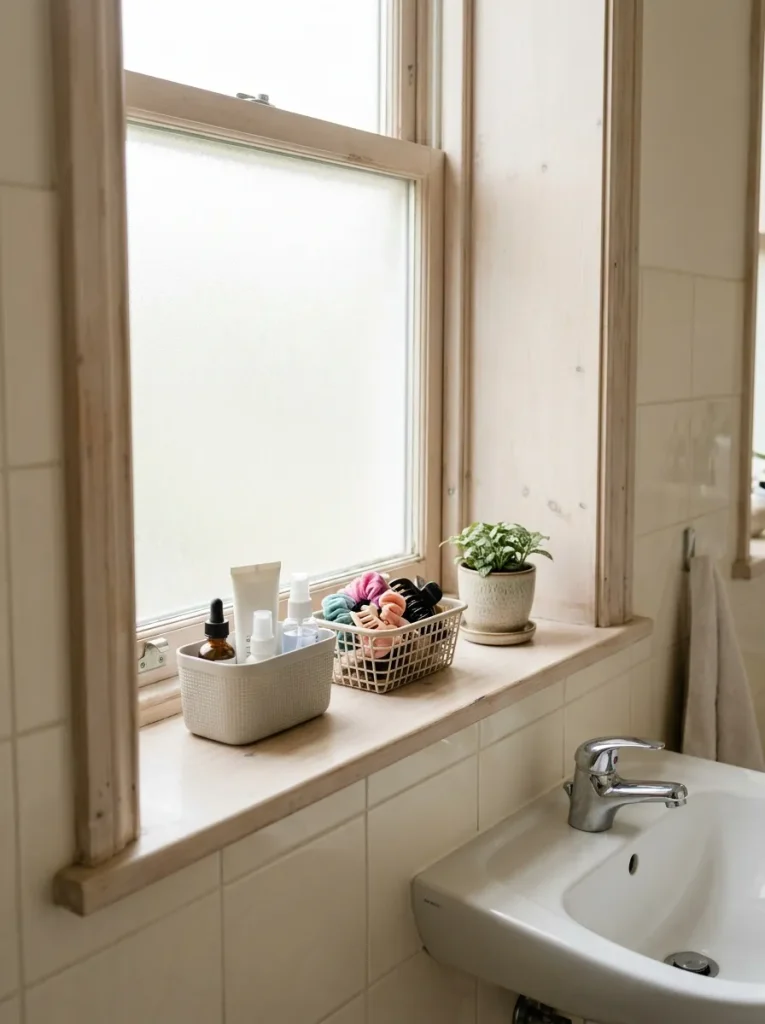
BEFORE
A bathroom windowsill can become a random collection of bottles, empty containers and decorative objects. Meanwhile, the vanity remains crowded, even though the ledge offers a little extra surface area.
AFTER
A few carefully chosen containers can turn the sill into a useful storage spot for lightweight, frequently used items. Grouping similar products keeps the ledge tidy and leaves room for natural light to enter the room.
Check that the sill stays dry enough for the products you plan to store there and avoid placing items where condensation or direct water could damage them. Keep the window handle accessible, do not block ventilation and use containers that will not slide when the window opens. If the sill is narrow, choose only a couple of essentials rather than filling the entire ledge.
Toiletry Travel Pouches

DO
- Sort products into pouches by category or routine.
- Choose washable materials that can handle occasional spills.
- Use transparent sections or simple labels for quick identification.
- Keep everyday essentials in the easiest-to-reach pouch.
DON’T
- Store damp toothbrushes or wet cloths in sealed pouches.
- Overfill bags until zippers strain or products leak.
- Keep expired toiletries mixed with current products.
- Use every pouch for random items without a clear purpose.
Travel pouches are useful beyond holidays because they keep small products grouped together inside drawers and cabinets. They can hold spare toiletries, hair accessories, skincare samples, or products used only occasionally. Choose flexible sizes that fit your available space and keep only the pouches you genuinely need so they do not become another source of clutter.
Sink Skirt Storage
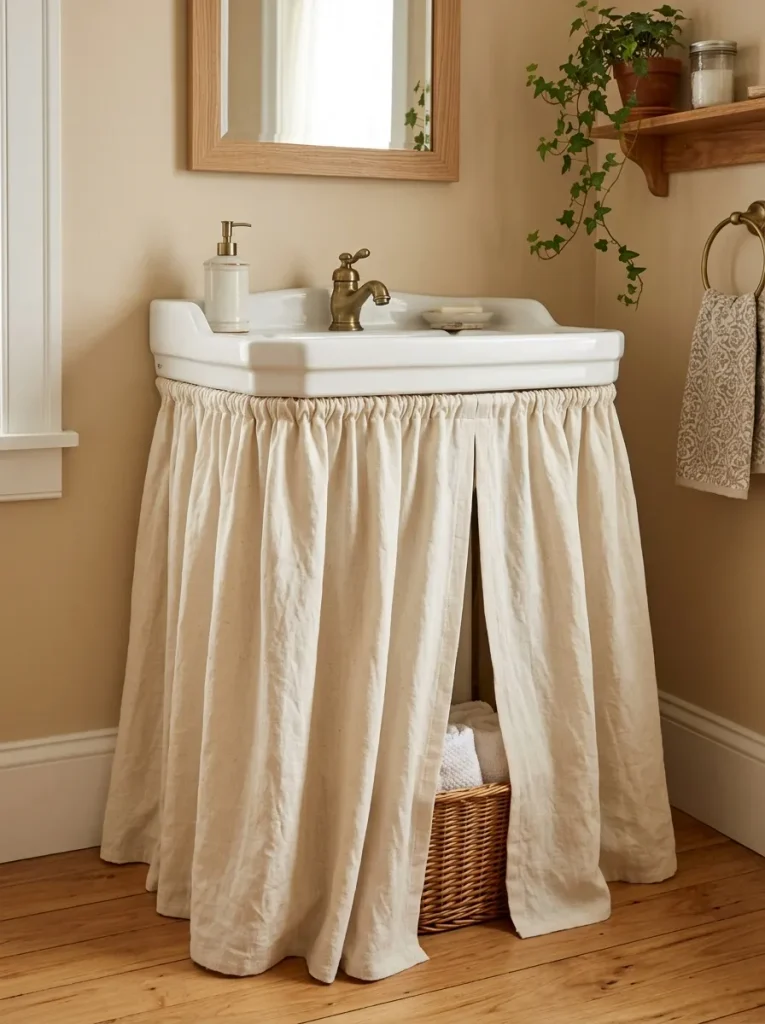
What to Check
- Sink clearance: Measure the space beneath the basin and around the plumbing.
- Fabric choice: Select washable fabric that dries readily and suits a humid room.
- Attachment method: Use a secure system designed for the sink or vanity structure.
- Storage access: Make sure the skirt can be opened easily when you need supplies.
How to Organize It
Place matching baskets under the sink for toilet paper, spare towels, or backup toiletries, keeping items away from pipes and any possible leaks. Leave enough room to access plumbing connections and avoid storing anything that could be damaged by moisture. Wash the skirt regularly and allow the area underneath to dry fully.
A sink skirt can add hidden storage when a pedestal sink has no cabinet and the bathroom cannot accommodate another piece of furniture. It also softens the look of the room, but the fabric should never obstruct ventilation or hide leaks that need attention.
Recessed Medicine Cabinets
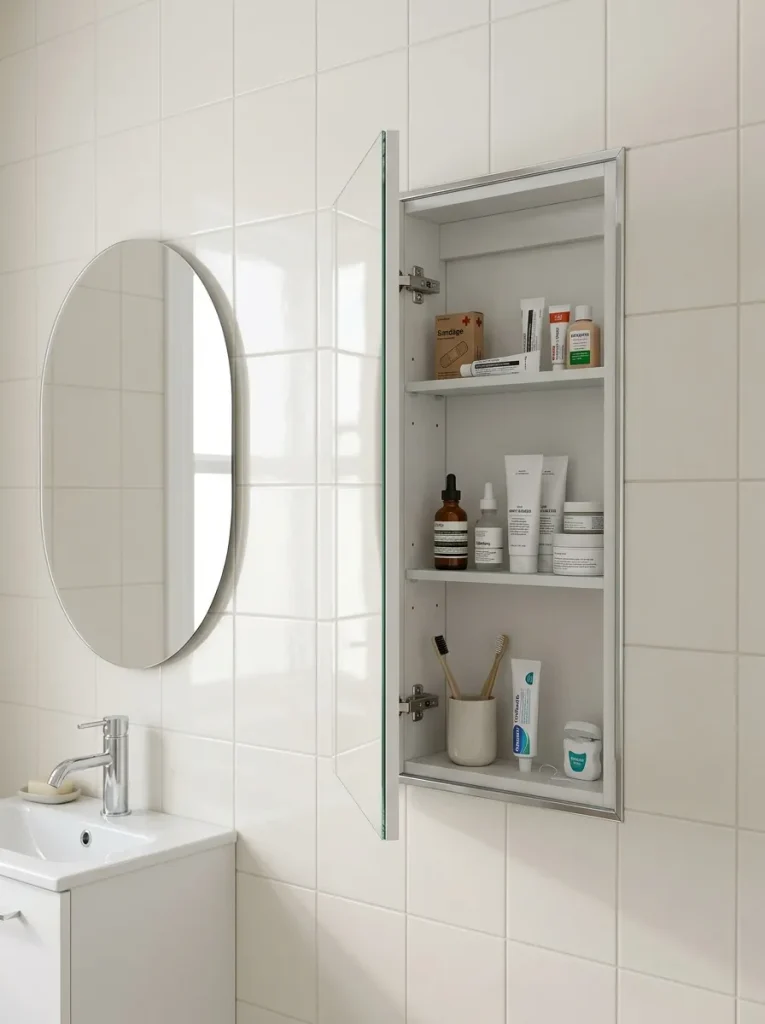
BEFORE
A surface-mounted cabinet can project into a narrow bathroom, making the area around the sink feel tighter. Countertops may also become crowded when medicines, dental products, and daily skincare have nowhere else to go.
AFTER
A recessed cabinet sits partly inside the wall cavity, creating useful enclosed storage with less projection into the room. The mirrored front can serve as both a cabinet door and a bathroom mirror, helping preserve a clean, uncluttered appearance.
Before choosing this option, confirm that the wall can safely accommodate a recess and that there are no pipes, wiring, or structural elements in the way. Installation may require professional help, especially in tiled walls. Store medicines according to their packaging instructions and keep them away from children, heat and moisture. If a recessed cabinet is not practical, a shallow surface-mounted version can offer similar organization with simpler installation.
Freestanding Storage Towers

DO
- Measure the gap between fixtures before choosing a tower.
- Use lower shelves for heavier baskets and supplies.
- Group small products in matching containers.
- Select moisture-resistant materials suitable for bathroom conditions.
DON’T
- Block access to the toilet, sink, or shower.
- Choose a unit that wobbles on uneven flooring.
- Store heavy items on narrow upper shelves.
- Fill every shelf if doing so makes items difficult to reach.
A slim storage tower adds several levels of storage in a relatively small footprint. It works well for towels, toiletries and backup supplies when existing cabinets are full. Look for a unit with a stable base and shelves that match your needs, then keep frequently used products between waist and eye level for easy access.
Adhesive Wall Pockets

What to Check
- Wall finish: Confirm that the adhesive is compatible with your tiles or other mounting surface.
- Weight limit: Keep contents within the manufacturer’s stated capacity.
- Pocket depth: Choose compartments deep enough to hold items securely.
- Moisture resistance: Select a product intended for the bathroom environment.
How to Use Them
Clean and dry the wall according to the mounting instructions before attaching each pocket. Allow the adhesive to set for the recommended period, then add lightweight products gradually. Keep the pockets away from direct shower spray and avoid storing glass bottles or anything that could cause injury if it falls.
Adhesive pockets can help renters organize small bathroom essentials without drilling holes. They are particularly useful beside a mirror or inside a cabinet door, where small items are easy to reach. Check the fittings regularly and remove residue using a method suitable for the wall surface.
Rolling Storage Drawers

BEFORE
Small bathroom supplies often become scattered across cabinets, drawers and countertop corners. Items stored at the back can be difficult to reach and a fixed storage unit may not fit the narrow gaps left between fixtures.
AFTER
A slim rolling drawer unit can slide into an unused gap and move out when you need something. Separate drawers make it easier to group toiletries, cleaning cloths and backup supplies without mixing everything together.
Measure the full space, including the room needed to pull the unit out, and check that its wheels work well on your flooring. Choose drawers that are easy to wipe clean and keep heavier products in the bottom section for stability. Avoid storing items where leaks or standing water could damage them, and make sure the unit never blocks access to plumbing.
Overhead Shower Baskets

DO
- Choose a basket designed for bathroom humidity.
- Check that the hanging point can safely support its weight.
- Keep heavier bottles low and securely positioned.
- Select a design with drainage holes for easier drying.
DON’T
- Hang the basket from an unstable shower fitting.
- Place it where it could swing into someone using the shower.
- Overload it with large refill bottles.
- Ignore rust, loose hooks, or other signs of wear.
An overhead basket can keep frequently used products together without taking up a shower ledge or floor corner. It works best when the attachment point is sturdy and the basket stays clear of the showerhead and controls. Choose a size that fits your usual products, and remove the basket occasionally to clean away soap residue and moisture.
Storage Behind Cabinet Doors
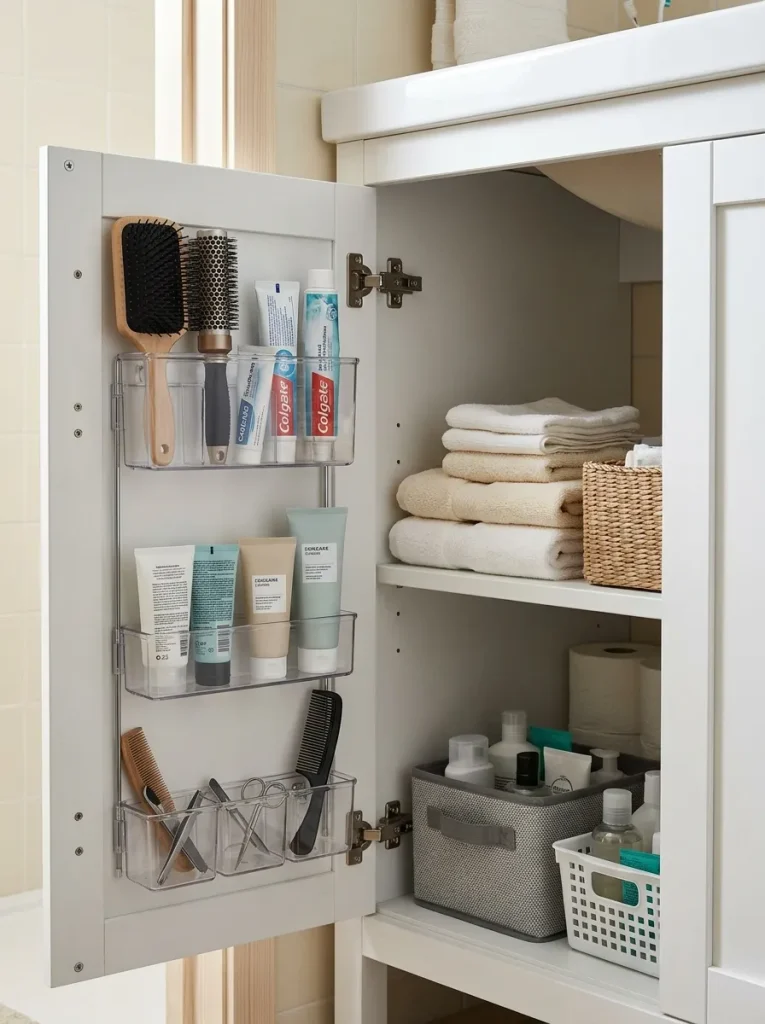
What to Check
- Door clearance: Make sure organizers do not hit shelves, hinges, or plumbing when the door closes.
- Mounting style: Choose suitable hooks, adhesive fittings, or screw-mounted holders for the cabinet material.
- Item size: Reserve door storage for lightweight products that fit securely.
- Humidity: Use washable organizers that can be dried easily.
How to Arrange Them
Put small, frequently used items in the door organizer so they are easy to find when the cabinet opens. Keep heavier bottles on the main shelves and avoid filling the door with items that might swing or fall. Test the door several times before loading the organizer fully, then check that everything remains secure.
The inside of a cabinet door offers storage without taking up extra floor or countertop space. It is especially useful for small grooming accessories and everyday toiletries that otherwise get lost among larger containers. A little planning helps you use this hidden area while keeping the cabinet functional and easy to clean.
Compact Corner Cabinets

BEFORE
Bathroom corners can become wasted gaps where cleaning supplies or spare toiletries collect in an untidy pile. A standard rectangular cabinet may be too wide for the available space, leaving the corner difficult to use.
AFTER
A compact corner cabinet turns that overlooked area into organized storage. Its angled shape can fit beside a vanity or in a suitable open corner, creating room for toiletries, spare towels, or small baskets without spreading into the center of the room.
Measure the corner carefully, including nearby doors, drawers and plumbing access. Choose a moisture-resistant unit with a stable base, and keep heavier items on lower shelves. If the cabinet has doors, confirm that they open fully without hitting nearby fixtures. A well-sized corner unit can add useful capacity while preserving a clear path through the bathroom.
CONCLUSION
A small bathroom doesn’t have to feel cluttered or lack personality. With thoughtful storage, smart use of vertical space and a few practical organizing tricks, you can create a room that feels more spacious and works better for your daily routine.
These Bathroom Storage Ideas are a starting point for making your space feel more comfortable, functional and inviting. Choose one or two changes that suit your needs, then build from there. Save this article on Pinterest for inspiration, try your favorite ideas and share it with someone who could use a little extra bathroom space. Small changes can make a wonderful difference!



One Comment