
Bedroom Storage Ideas: 29 Smart Ways to Hide Clutter
Clutter can make even a beautiful bedroom feel crowded, stressful and difficult to relax in. The secret to a tidier space is finding smart places to store the things you need every day.
These Bedroom Storage Ideas will help you make better use of your space, hide everyday mess and create a bedroom that feels calm organized and inviting. From hidden under bed storage and stylish woven baskets to clever wardrobe organizers and multifunctional furniture, there are practical solutions for different room sizes and budgets.
I’ve noticed that small changes, such as giving accessories a dedicated drawer or storing extra blankets inside an ottoman, can make everyday tidying much easier. You don’t need a complete bedroom makeover to get started. Explore these 29 creative ideas, find the solutions that suit your home and choose a few simple changes that make your space work better for you.
Under Bed Storage Bins

The space beneath your bed can hide more clutter than you might expect. Slide shallow storage bins underneath to organize seasonal clothing, spare sheets, blankets and shoes without taking up valuable floor space. Choose containers with lids to protect belongings from dust.
For everyday convenience, use clear bins so you can see what’s inside or choose fabric containers for a softer appearance. Measure the clearance beneath your bed before buying anything. Low profile bins with handles make retrieving stored items easier, especially in smaller bedrooms where a separate storage cabinet may not fit.
Woven Storage Baskets
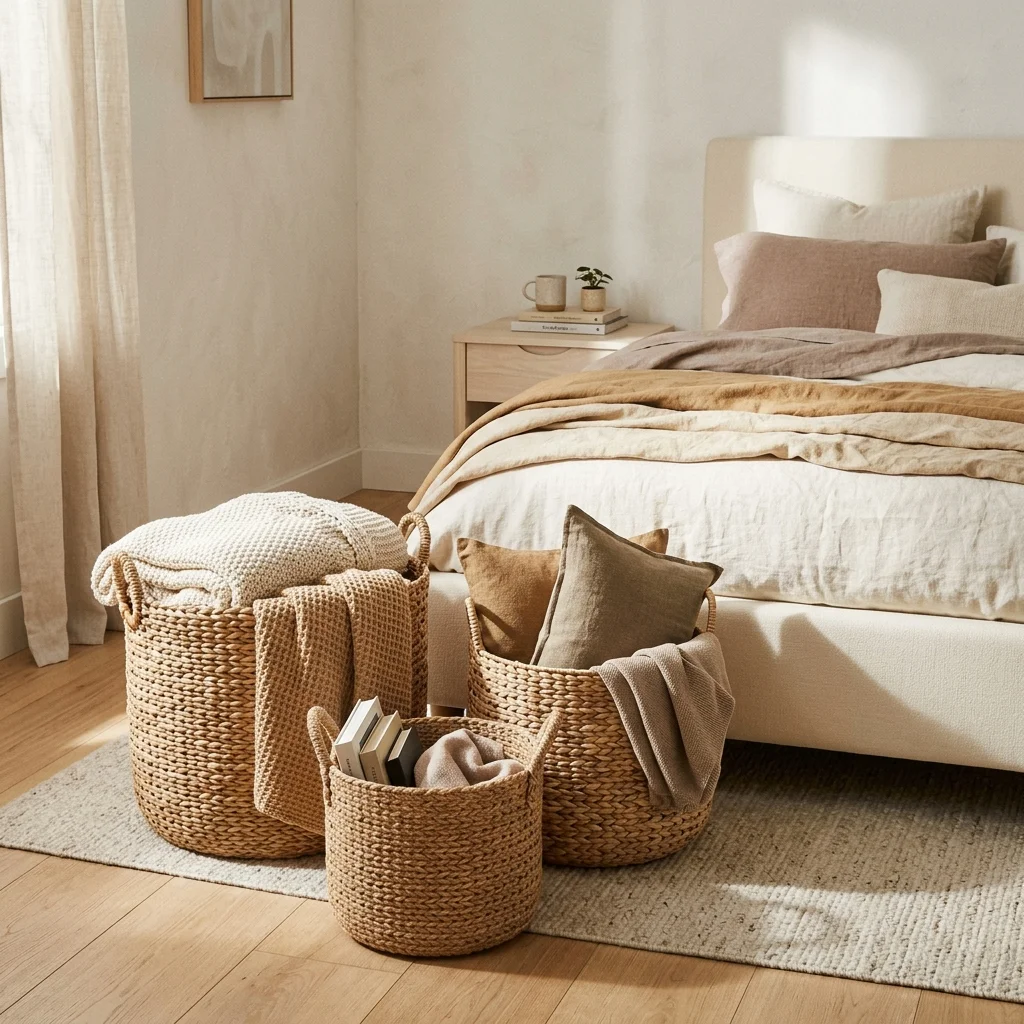
- Choose matching baskets: Natural wicker or seagrass baskets create a coordinated look beside the bed or beneath a console.
- Use different sizes: Large baskets hold extra blankets, while smaller ones organize accessories and everyday essentials.
- Add lids: Covered baskets keep visible belongings contained and reduce the appearance of clutter.
- Label hidden contents: Small discreet labels help everyone find stored items quickly.
- Place them strategically: Position baskets beside wardrobes, under benches or in unused corners.
Woven baskets combine practical storage with natural texture, making them especially useful in bedrooms that feel crowded by plastic containers or mismatched organizers. Keep frequently used items in accessible baskets and reserve higher shelves for occasional necessities. Leave a little empty space inside each basket so putting things away stays quick and simple.
Storage Ottoman Bench
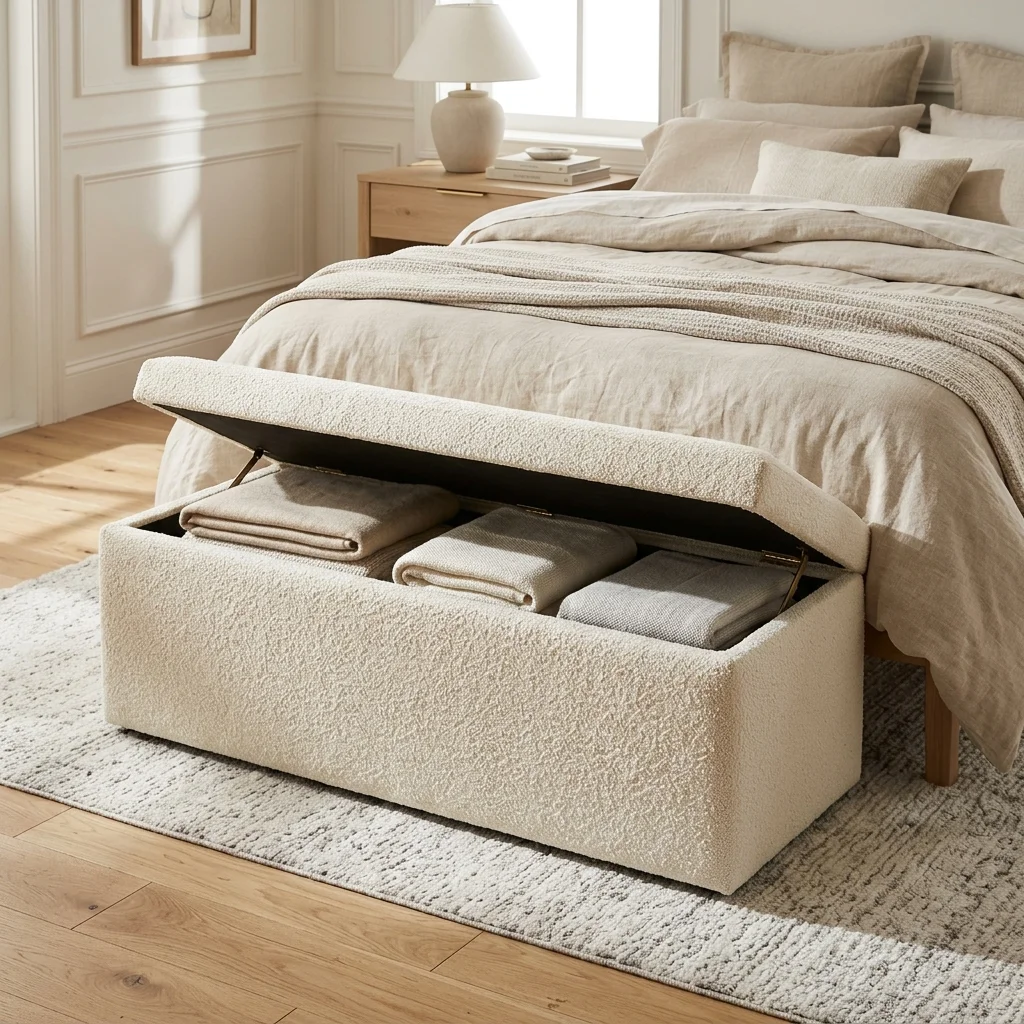
Quick Tip:
Choose an ottoman with a hinged lid and enough interior depth for bulky bedding, spare pillows or seasonal accessories. Before purchasing, measure the space at the foot of your bed and leave enough room to open the lid comfortably.
A storage bench gives your bedroom a tidy finishing touch while concealing items that otherwise end up on chairs or across the bed. Upholstered designs soften the room, while wooden versions suit rustic or Scandinavian interiors. For the most useful setup, store heavier blankets inside and keep a small tray nearby for items you use every day.
Read More: 27 Cozy Bedroom Lighting Ideas You’ll Absolutely Adore
Built In Wardrobe Shelves

BEFORE
Clothes pile up on shelves, accessories get lost behind hanging outfits and unused vertical space collects random belongings. The wardrobe feels full even when its storage capacity is not being used efficiently.
AFTER
Adjustable shelves divide the wardrobe into clear zones for clothing, bags, shoes and accessories. Matching containers keep smaller belongings together, while upper shelves provide space for seasonal items.
Built in shelving helps you use every available inch without adding another piece of furniture. Group similar items together and keep daily essentials at eye level. If a custom wardrobe is outside your budget, freestanding shelves and stackable organizers can achieve a similar result. Secure tall furniture properly and avoid overloading shelves beyond their rated capacity.
Floating Bedside Shelves

- Choose the location: Measure the available wall space beside the bed and identify a comfortable height.
- Select a shelf: Pick a design wide enough for essentials but small enough to keep the bedside area open.
- Mount securely: Use suitable fixings for the wall type and check for hidden wiring before drilling.
- Organize essentials: Keep a lamp, phone, book or glasses on the shelf and relocate everything else.
Floating shelves free up floor space while giving everyday belongings a dedicated home. They work particularly well in narrow bedrooms where traditional bedside tables make walking around the bed difficult. Keep the display simple and use a small wall mounted drawer if you need concealed storage for medicines, charging cables or other personal items.
Bedside Drawer Organizers

| Storage Method | Best Use |
|---|---|
| Loose drawer storage | Quick access but frequent clutter |
| Divided organizers | Separate spaces for small essentials |
| Adjustable trays | Flexible compartments for changing needs |
| Small covered boxes | Concealing private or rarely used items |
Drawer organizers make small bedside spaces easier to manage because every item has a designated place. Measure the drawer before choosing trays and combine narrow compartments for cables or jewelry with larger sections for notebooks and reading accessories. Review the contents every few weeks to remove empty packaging and belongings that no longer belong beside the bed.
Over Door Organizers

DO
- Use clear pockets for accessories you reach for regularly.
- Store lightweight scarves, belts and small clothing items.
- Measure the door and check clearance before buying.
- Keep frequently used pockets near eye level.
DON’T
- Overload pockets with heavy objects.
- Block the door from closing properly.
- Store damp clothing in enclosed pockets.
- Place delicate accessories where they may snag.
An over door organizer uses a surface that often goes unnoticed, making it useful for small bedrooms with limited drawer space. Choose a design suited to your door thickness and storage needs. For a cleaner appearance, place it inside the wardrobe rather than on a visible bedroom door, especially if the room has a minimalist style.
Rolling Under Bed Drawers
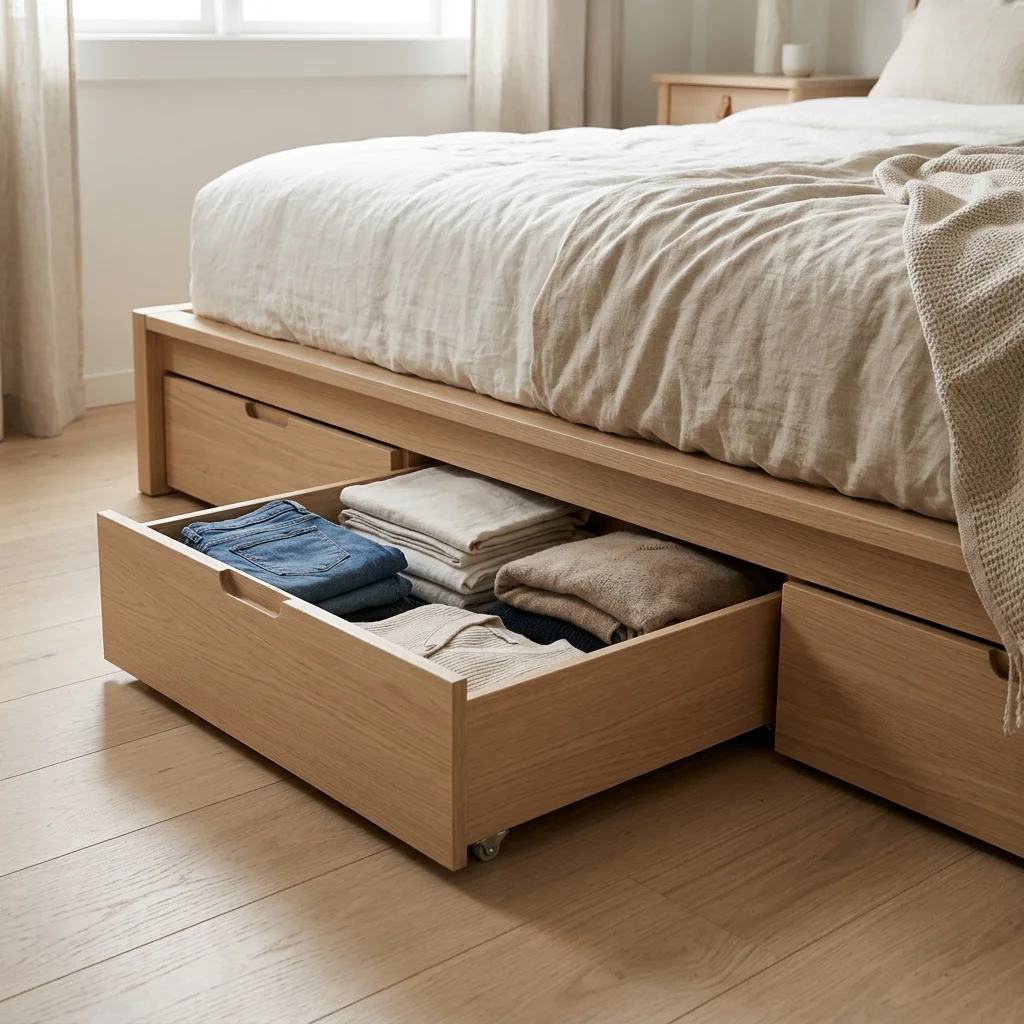
Cost: Low to moderate, depending on materials.
Time: Around 30 to 60 minutes for simple assembly.
Skill Level: Beginner.
Best For: Bedrooms with unused clearance beneath the bed.
Rolling drawers provide easy access to items without requiring you to lift a mattress or move heavy furniture. Measure the height and depth available, including space for handles and wheels. Store heavier clothing toward the center of each drawer and choose smooth rolling casters that will not scratch the floor.
Closet Shelf Dividers
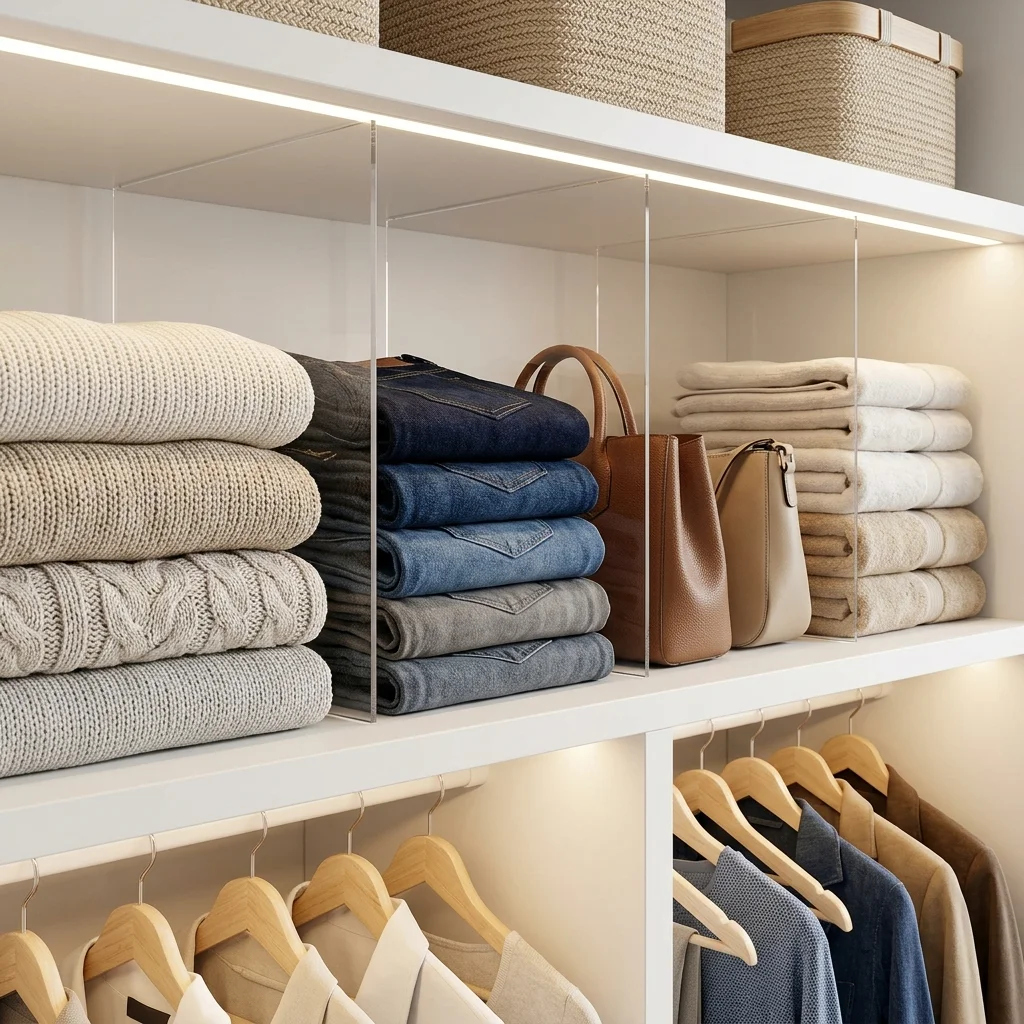
A crowded shelf becomes easier to maintain when every stack has a boundary. Shelf dividers prevent folded clothes from leaning into neighboring piles and make it simpler to remove one item without disturbing everything else.
Choose adjustable dividers that fit your shelf thickness and height. Arrange clothing by type or color, leaving a little room above each stack. This approach works especially well for sweaters, handbags, towels and jeans that tend to spread across a shared shelf.
Headboard Storage Compartments
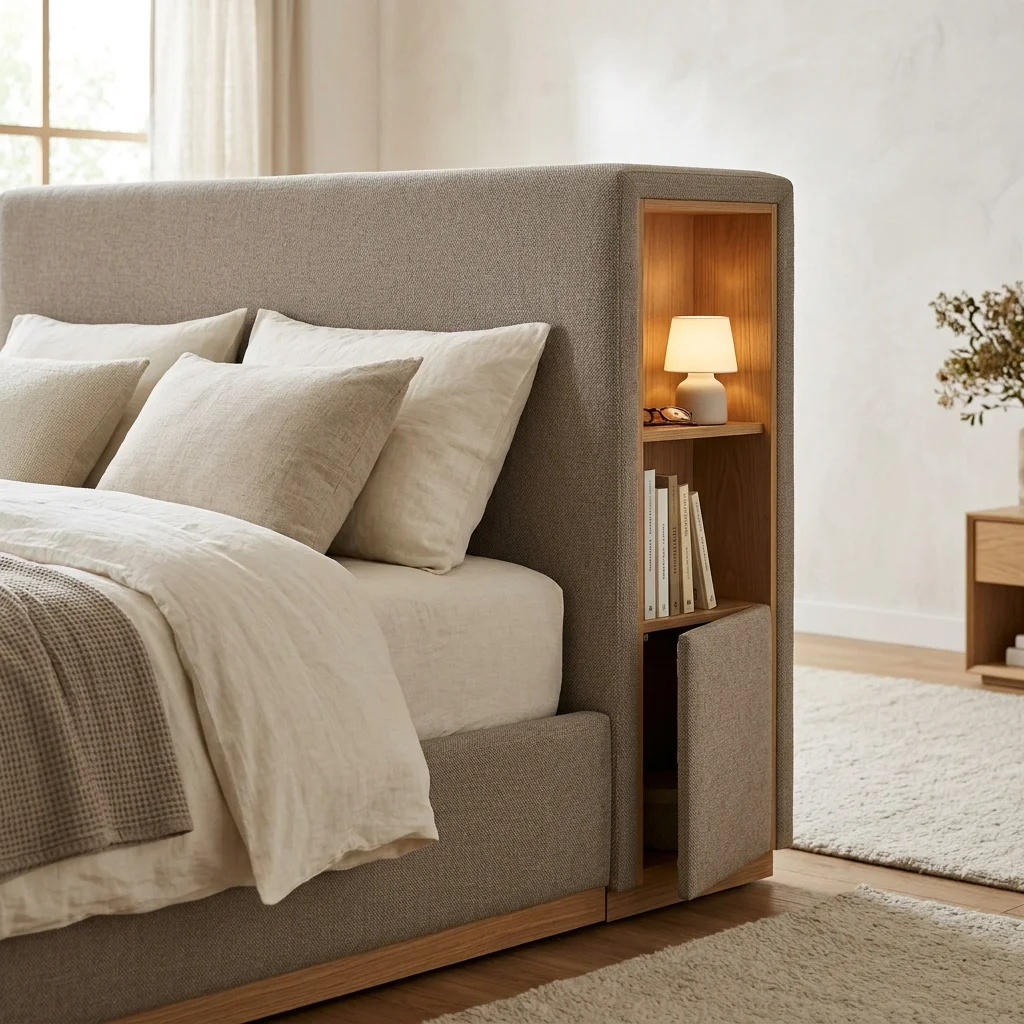
- Select the right design: Look for a headboard with built in shelves or concealed side compartments.
- Keep essentials nearby: Store books, glasses and small nighttime accessories within easy reach.
- Use hidden sections: Choose enclosed compartments for chargers and personal belongings.
- Maintain visual balance: Limit decorative objects to avoid a crowded headboard.
A storage headboard can replace a bulky bedside table and make a compact room more functional. It is especially helpful when both sides of the bed have limited walking space. Check the headboard dimensions, wall clearance and mattress height before purchasing so the compartments remain accessible without interfering with comfortable sleeping.
Decorative Storage Boxes
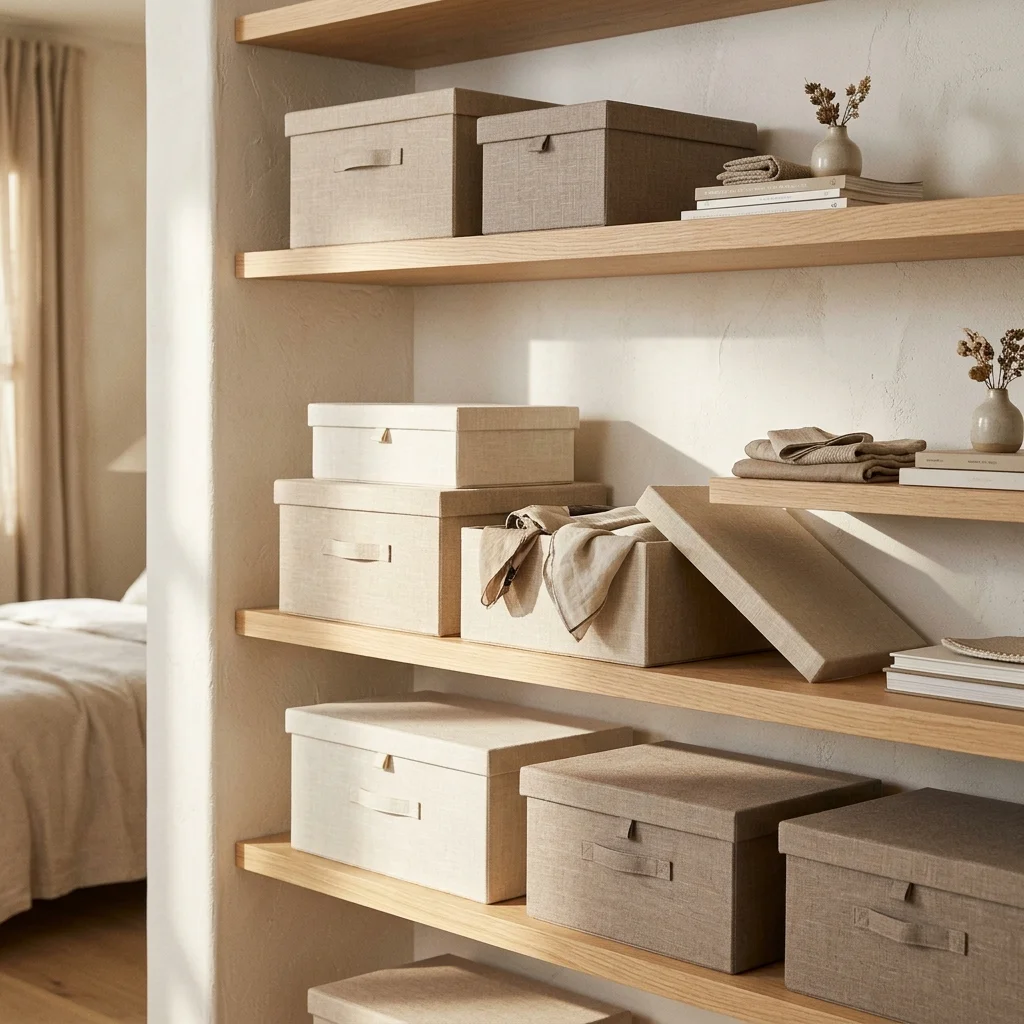
Quick Tip:
Choose boxes in two or three coordinated shades and label the front discreetly. Matching containers create a calmer appearance even when they hold different everyday items.
Decorative boxes are useful for organizing photographs, spare cables, accessories, paperwork and other small belongings that tend to collect on bedroom surfaces. Select sturdy boxes with lids and enough room for their contents without bending or crushing items. Keep frequently used boxes on lower shelves and reserve the highest spaces for belongings you rarely need.
Wall Mounted Cabinets
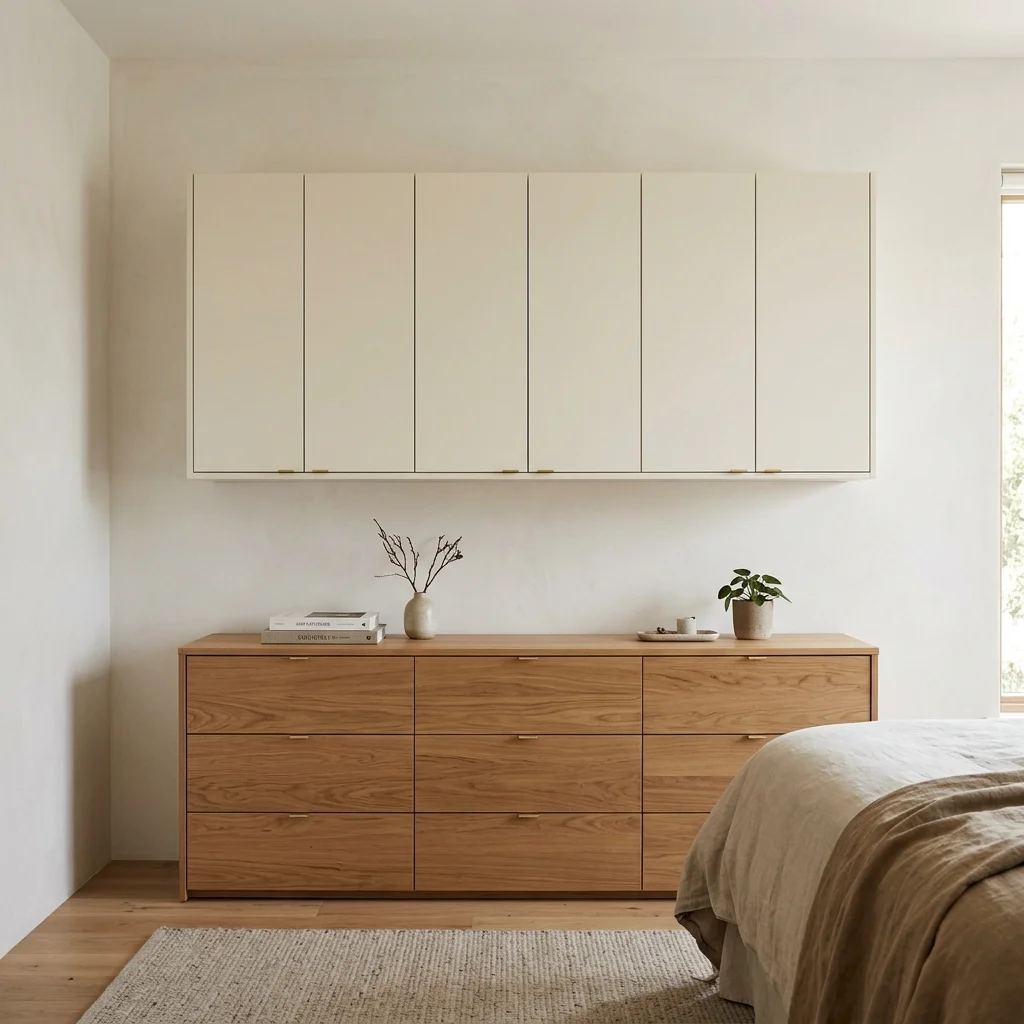
BEFORE
Small accessories occupy the dresser, decorative objects compete for space and useful items remain visible throughout the room.
AFTER
Wall mounted cabinets conceal belongings behind closed doors while keeping the dresser surface available for a lamp, mirror or a few carefully chosen decorations.
Choose cabinets with enough depth for the items you plan to store without making the room feel crowded. Install them securely into suitable wall supports and check their weight limits. In smaller bedrooms, shallow cabinets often work better than deep units because they provide concealed storage without projecting too far into the room.
Hanging Closet Shelves
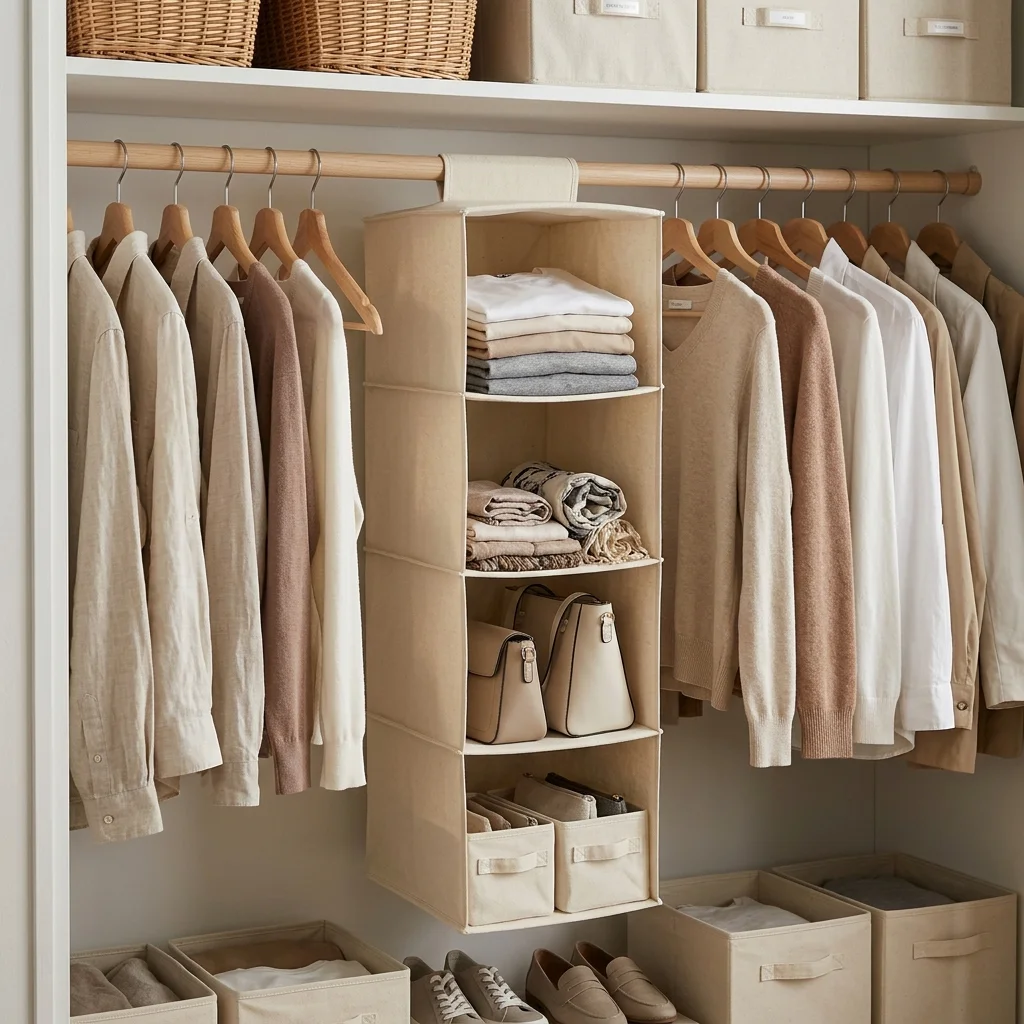
- Clear a section: Remove unnecessary items from the wardrobe rail to create hanging space.
- Measure the height: Choose an organizer that leaves enough room for clothing below or beside it.
- Sort by category: Assign separate shelves to knitwear, bags, accessories or casual clothing.
- Balance the weight: Place heavier items on lower shelves and lightweight items above.
Hanging shelves turn unused vertical wardrobe space into practical storage without requiring carpentry. They are especially useful in rented homes where permanent shelving may not be possible. Avoid placing heavy shoes or dense stacks on fabric shelves unless the organizer is specifically designed to support that weight.
Bedside Storage Caddy
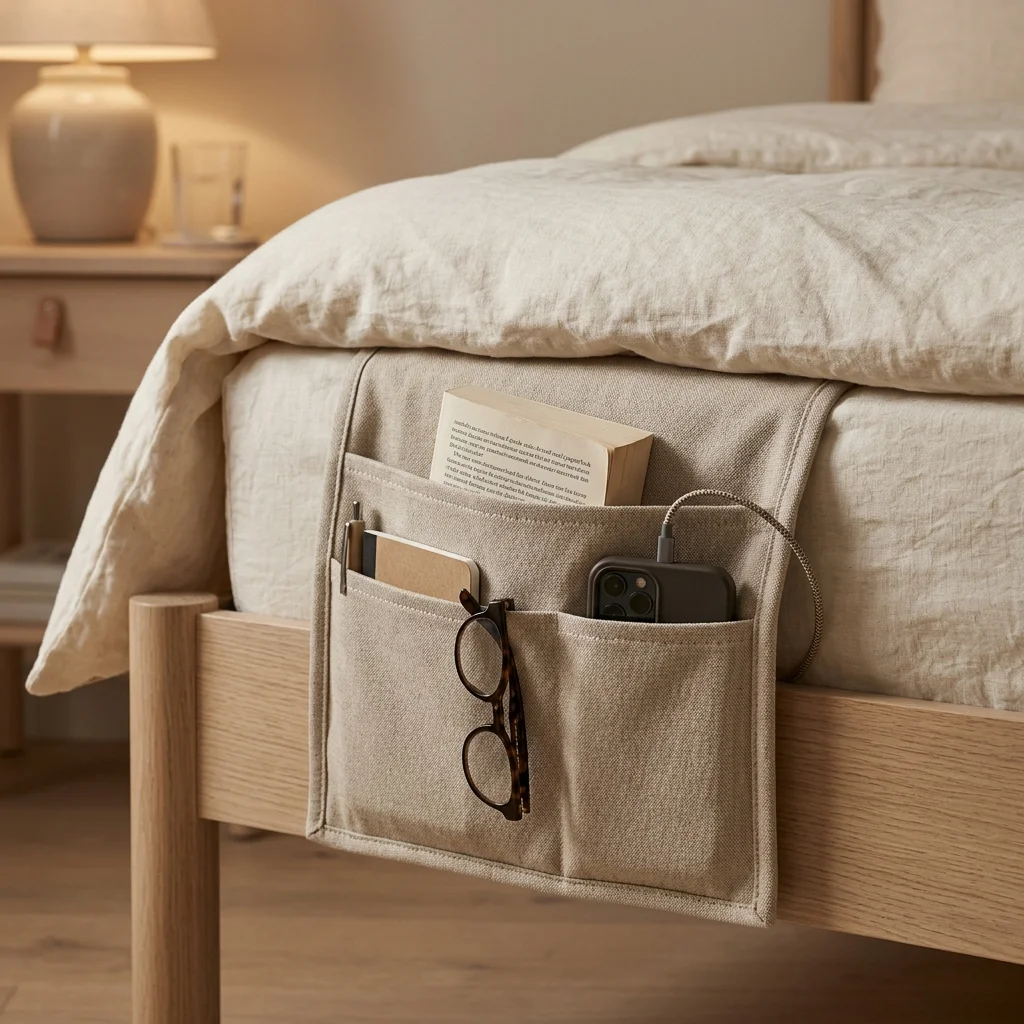
| Feature | Open Caddy | Compartment Caddy |
|---|---|---|
| Accessibility | Quick to reach | Separate pockets for essentials |
| Organization | Basic storage | Better item separation |
| Best Use | Books and small items | Phones, cables, glasses |
| Appearance | Simple and casual | More structured and tidy |
A bedside caddy provides storage without taking up floor space, making it especially helpful for dorm rooms, guest rooms and compact apartments. Attach it firmly to a compatible bed frame and keep only lightweight essentials inside. Before buying, check whether the design fits your frame and whether its pockets remain accessible when you are lying in bed.
Slim Bedroom Dresser
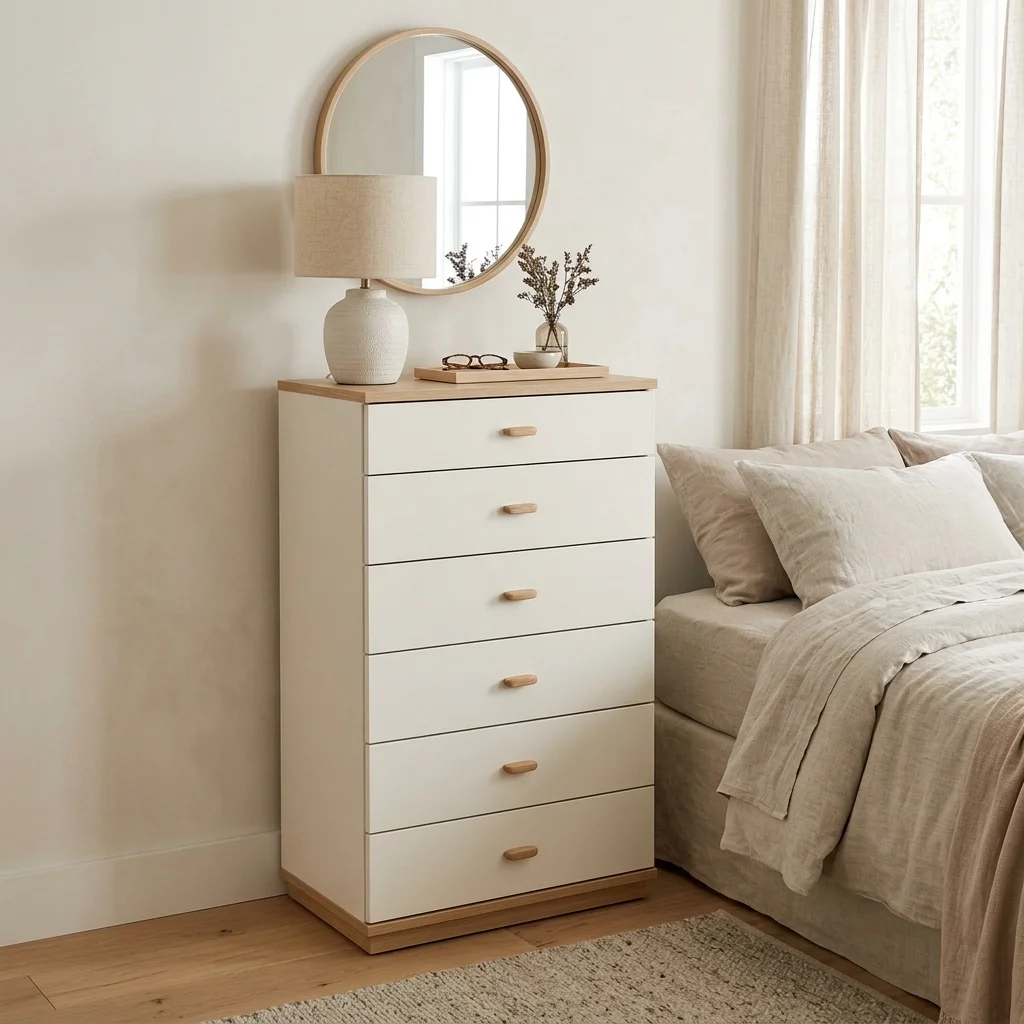
DO
- Measure the available wall width and walking clearance.
- Choose deep enough drawers for the clothing you need to store.
- Use internal dividers for socks, underwear and accessories.
- Keep the top surface mostly clear.
DON’T
- Block wardrobe doors or bedroom pathways.
- Choose drawers that extend into a narrow walkway.
- Overfill drawers until they become difficult to close.
- Leave heavy objects unsecured on top.
A slim dresser adds concealed storage without requiring the footprint of a wide chest. Look for a taller design when floor space is limited, but secure tall furniture to the wall according to the manufacturer’s instructions. Keep frequently worn clothing in the easiest drawers to reach and place occasional items in the lower sections.
Corner Storage Shelves

Cost: Low to moderate.
Time: Around one to three hours, depending on assembly.
Skill Level: Beginner to intermediate.
Best For: Empty corners in small or medium bedrooms.
Corner shelves make use of awkward spaces that are often left empty or filled with random belongings. Choose a narrow unit that does not obstruct windows, doors or walking paths. Use baskets on lower shelves for everyday clutter and reserve upper shelves for lightweight items. Keep the arrangement simple so the corner feels organized rather than crowded.
Hidden Laundry Hamper

A hidden laundry hamper keeps worn clothes from collecting on the floor or draping over a chair. A pull out cabinet design is especially useful when you want laundry storage to blend with the rest of your bedroom furniture.
Choose a removable, washable basket with ventilation to reduce trapped moisture and odors. Position it where you can reach it easily without blocking drawers or wardrobe doors. If a built in hamper is too expensive, a lidded freestanding basket tucked beside the wardrobe can provide a similar visual effect.
Window Seat Storage

A window seat can provide a comfortable reading spot while hiding bulky belongings beneath the cushion. Deep drawers or lift up compartments work well for spare bedding, pillows and seasonal textiles that otherwise occupy valuable wardrobe space.
Measure the window area carefully and make sure the finished seat does not cover heating vents or interfere with window operation. Use washable cushion covers and organize the interior with fabric bins. For rented homes, a freestanding storage bench placed near the window offers a simpler alternative.
Overhead Cabinet Storage
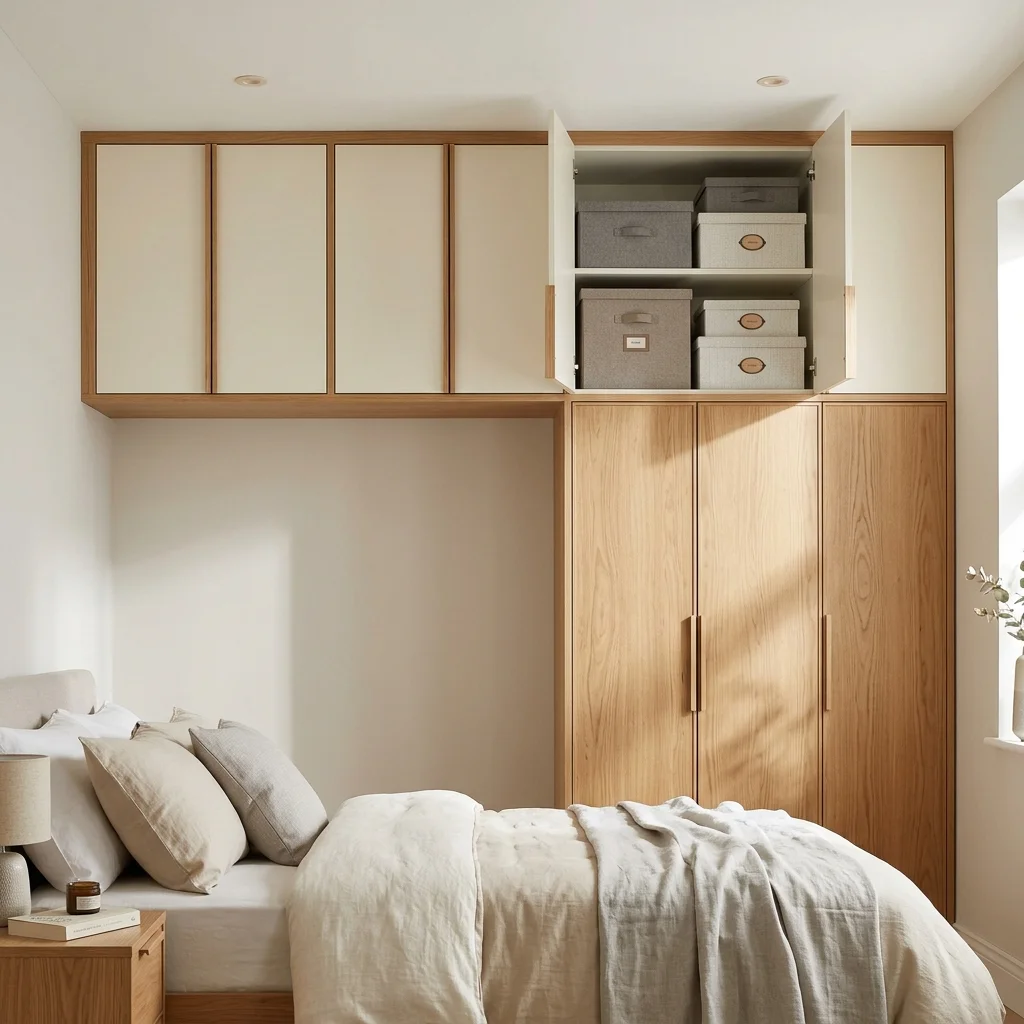
| Storage Choice | Best Advantage |
|---|---|
| Overhead cabinets | Concealed storage behind doors |
| Open upper shelves | Easy access to labeled boxes |
| Matching storage bins | Flexible organization and sorting |
| Closed fabric containers | Lightweight storage for textiles |
Overhead storage makes use of vertical space above wardrobes or along suitable wall sections. Store spare bedding, travel bags and seasonal accessories that you do not need every day. Keep heavy items within safe reach, use secure mounting hardware and avoid placing frequently used belongings so high that retrieving them becomes inconvenient.
Jewelry Drawer Inserts
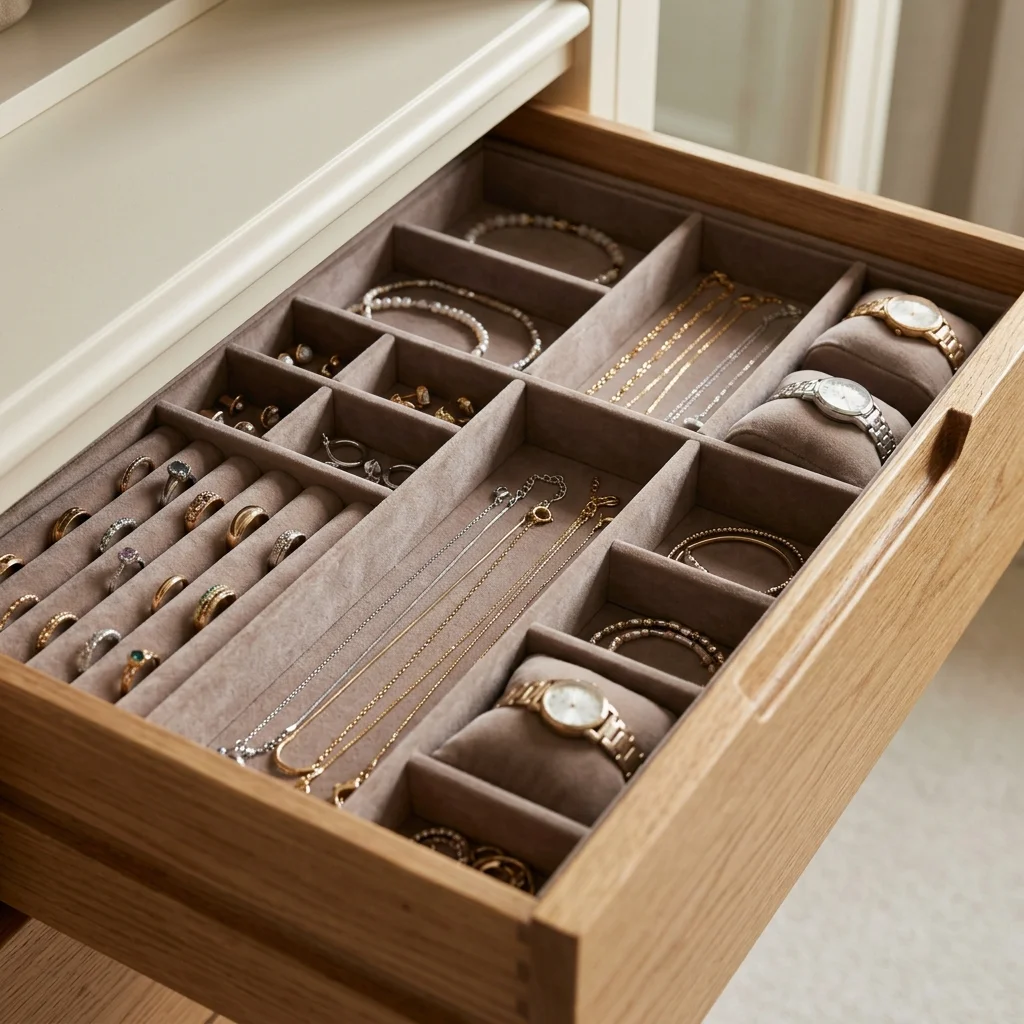
- Separate delicate chains: Use narrow compartments to reduce tangling.
- Group small pieces: Keep rings and earrings in divided sections.
- Protect special items: Choose soft lined inserts for jewelry that scratches easily.
- Measure before buying: Ensure the insert fits the drawer without wasted space.
Jewelry drawer inserts keep small valuables organized and prevent them from spreading across dressers and bedside tables. Adjustable trays work well when your collection changes over time. Store precious pieces securely, avoid overcrowding delicate necklaces and keep jewelry away from damp areas that may damage certain metals or finishes.
Closet Floor Shoe Racks
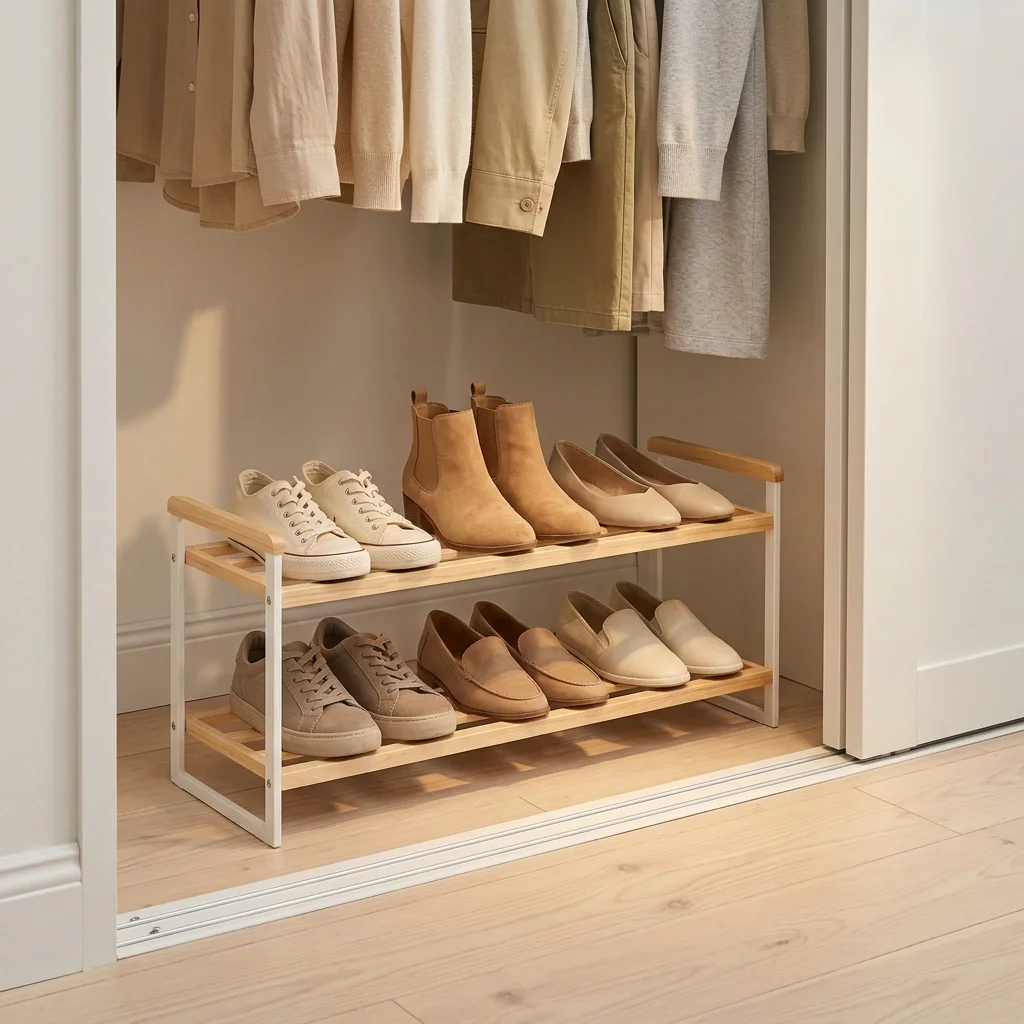
BEFORE
Shoes gather in uneven piles at the bottom of the wardrobe, making it difficult to find matching pairs and clean the floor.
AFTER
A compact shoe rack separates footwear into visible rows, keeps pairs together and makes the closet floor easier to maintain.
Measure the available width and depth before choosing a rack, especially if wardrobe doors open inward. Arrange frequently worn shoes on the easiest level to reach and keep occasional footwear on the upper or lower tier. Clean shoes before storing them and allow damp footwear to dry completely.
Storage Bed Frame

Quick Tip:
Choose between side drawers and a lift up storage base according to your room layout. Side drawers need clearance to open, while lift up designs require enough overhead space to raise the mattress safely.
A storage bed can replace several separate containers while keeping bulky items out of sight. It works particularly well in small bedrooms with limited closet space. Before purchasing, check the internal storage dimensions, mattress compatibility, assembly requirements and weight limits. Keep items in labeled fabric bags so the space remains easy to organize.
Floating Corner Desk
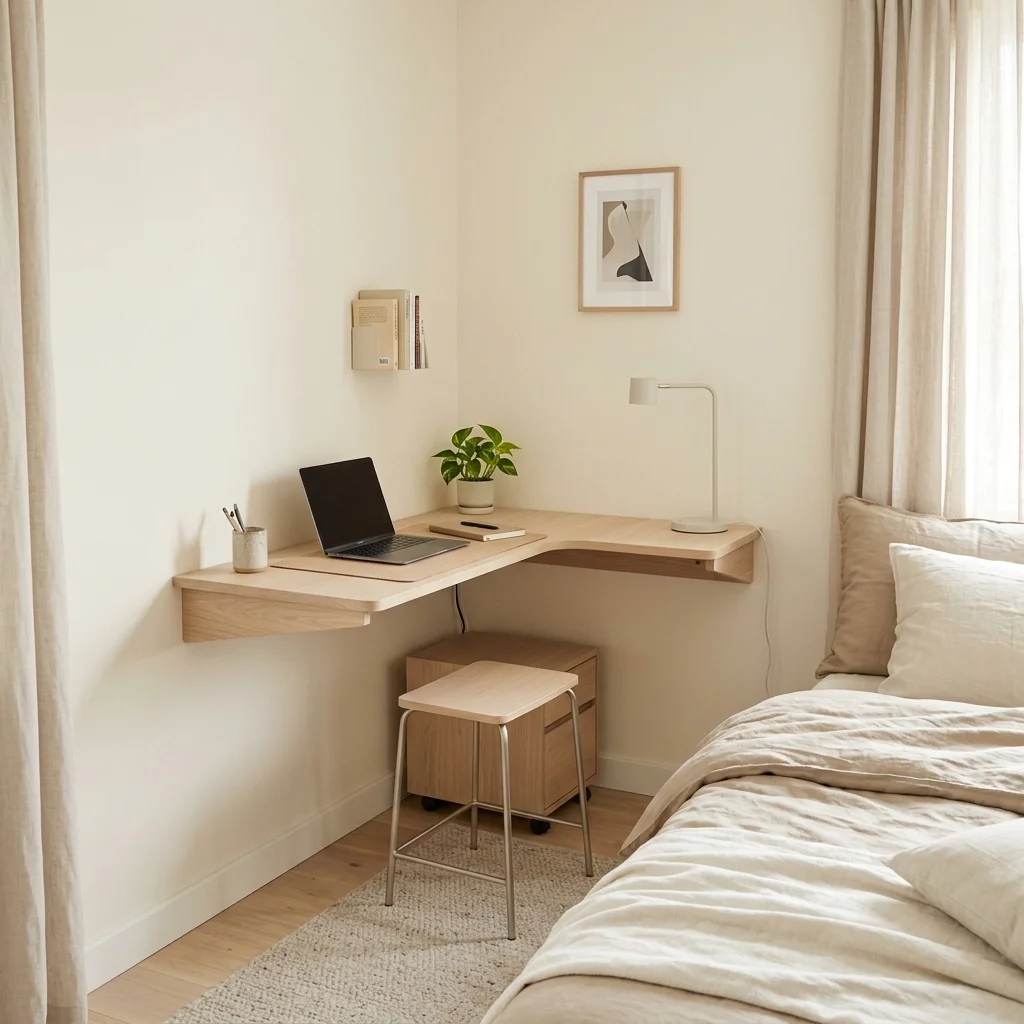
A floating desk can create a useful work area without the bulk of a traditional desk. Choose a design with a shallow drawer or add a small wall mounted cabinet above it to conceal stationery, chargers and paperwork.
Keep cables secured and leave enough room for your chair or stool to move comfortably. If you work in the bedroom, separate work materials from personal belongings using labeled folders or boxes. A tidy desk surface helps the entire room feel calmer when the workday ends.
Fabric Closet Bins

Cost: Low.
Time: Around 20 to 45 minutes to sort and arrange.
Skill Level: Beginner.
Best For: Clothing, accessories, linens and lightweight seasonal items.
Fabric bins keep small belongings grouped together and prevent loose items from spreading across shelves. Choose bins with handles for easier access and collapsible sides for convenient storage when empty. Avoid overfilling them, since heavy or tightly packed containers can become difficult to lift from high shelves. Label each bin according to its contents.
Mirror With Hidden Storage
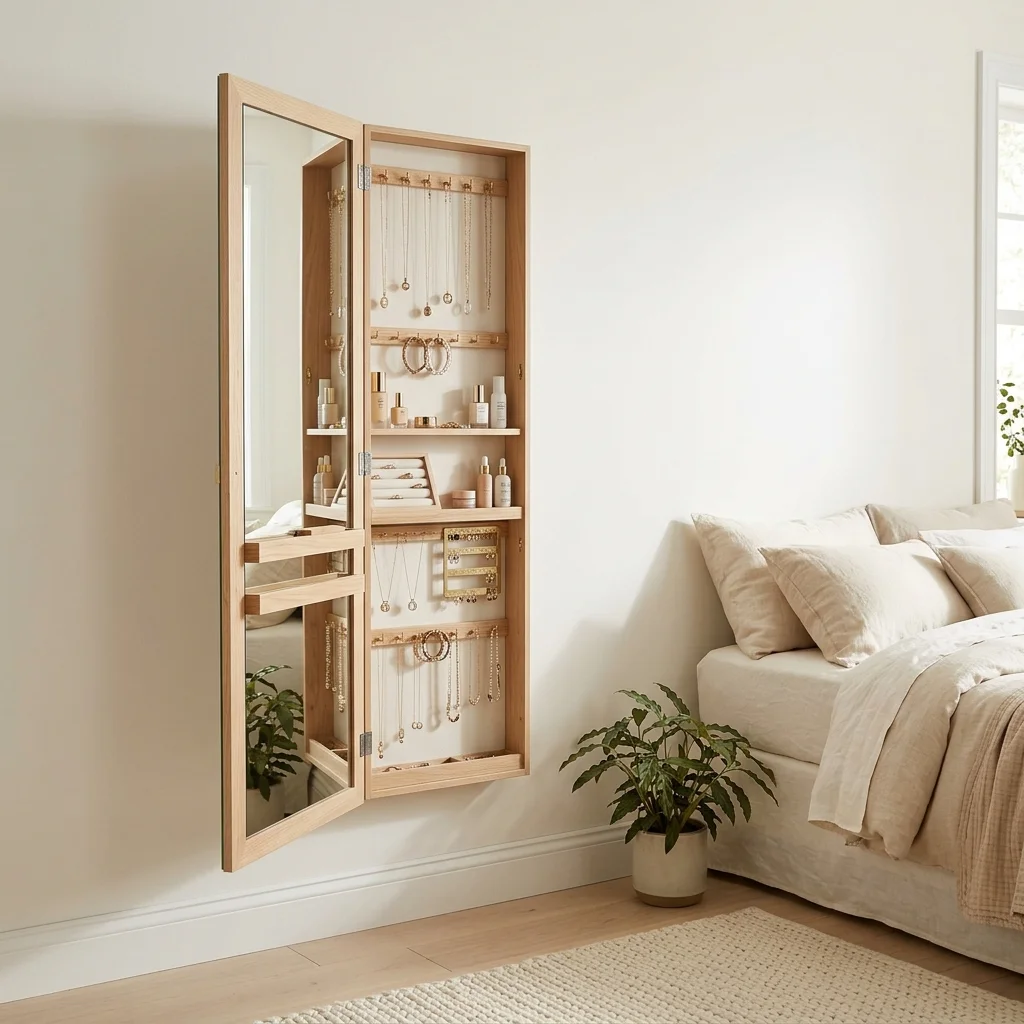
- Choose a practical size: Select a mirror that provides a useful full length reflection.
- Check interior fittings: Look for hooks, narrow shelves or compartments suited to your accessories.
- Secure the cabinet: Follow the mounting instructions and use appropriate wall fixings.
- Keep valuables protected: Store jewelry and small personal items inside the closed cabinet.
A mirror cabinet combines two functions in one footprint, making it useful for bedrooms where a separate jewelry organizer would take up too much space. It works especially well beside a wardrobe or dressing area. Check the cabinet depth before purchasing and ensure the door can open fully without hitting nearby furniture.
Drawer Dividers for Clothes
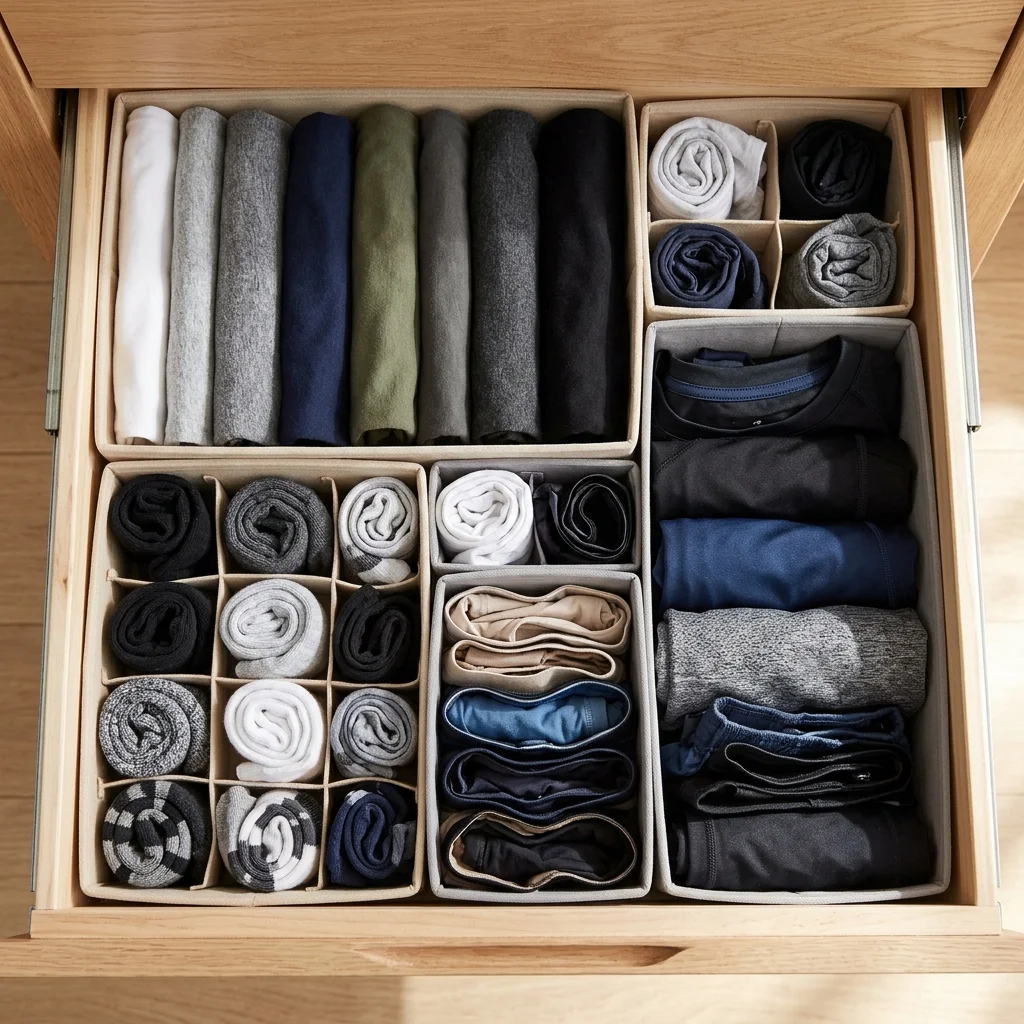
DO
- Sort clothes by category before arranging them.
- Choose adjustable dividers that fit the drawer.
- Keep frequently worn items near the front.
- Fold clothes consistently to make better use of space.
DON’T
- Force too many items into one compartment.
- Use dividers that prevent the drawer from closing.
- Mix unrelated belongings in every section.
- Ignore items that no longer fit or get worn.
Drawer dividers reduce the time spent searching for everyday clothing and help prevent small items from becoming tangled together. Measure the drawer’s interior width and depth, including any rails or uneven edges. Adjustable dividers are particularly useful when clothing sizes and storage needs change throughout the year.
Lidded Blanket Baskets
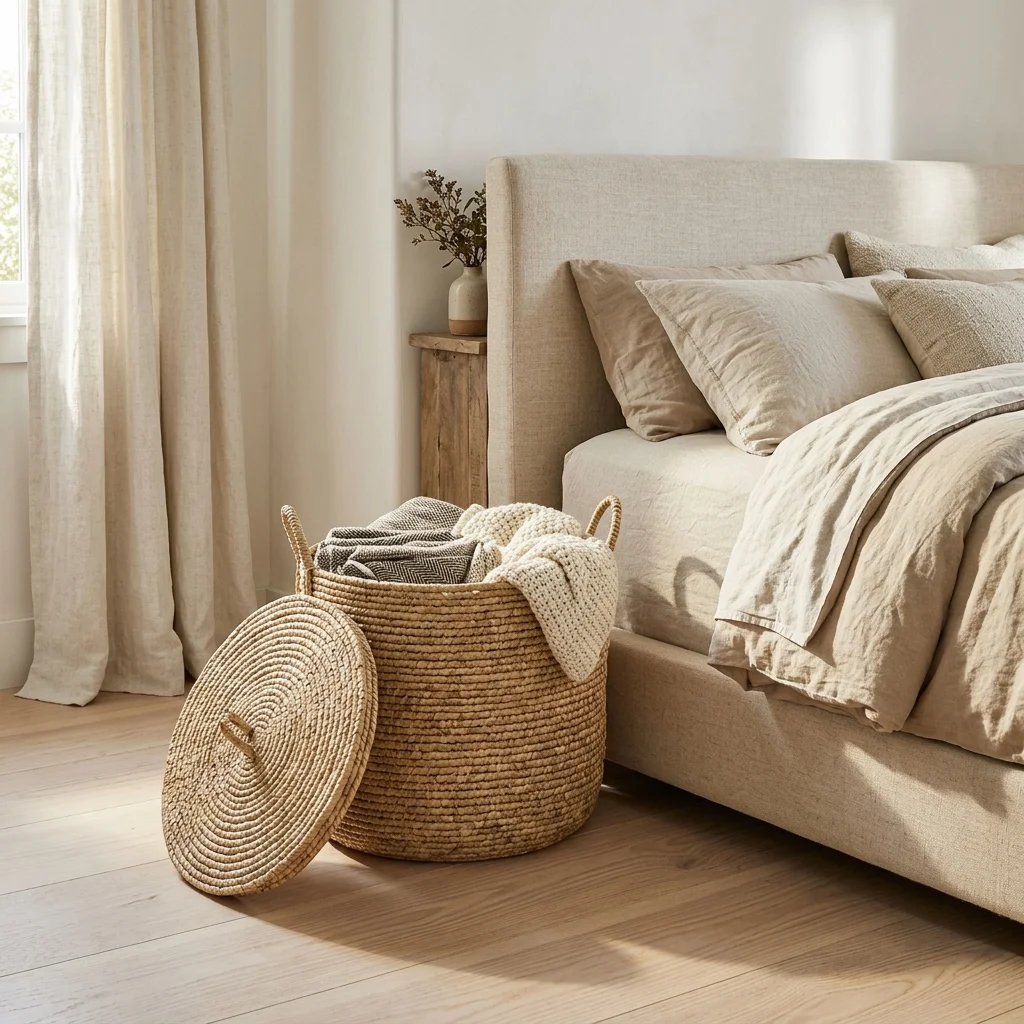
A lidded blanket basket keeps extra throws close at hand without leaving them draped over chairs or piled at the foot of the bed. Natural woven finishes add texture, while fabric baskets suit softer contemporary interiors.
Choose a basket large enough for your blankets but small enough to fit beside the bed without blocking the walkway. Make sure stored textiles are clean and completely dry before putting the lid on. If the basket is used daily, leave it in an accessible location rather than hiding it behind furniture.
Wardrobe Door Hooks

Cost: Low.
Time: Around 15 to 30 minutes, depending on installation.
Skill Level: Beginner.
Best For: Robes, scarves, handbags, belts and lightweight accessories.
Wardrobe door hooks use unused vertical space to keep everyday accessories accessible and off bedroom surfaces. Select adhesive hooks or mounted hardware suitable for the door material and expected weight. Test door clearance before installation and avoid hanging heavy bags on hooks that are not designed to support them.
Matching Storage Furniture

Quick Tip:
Start by identifying the three places where clutter gathers most often, such as the bedside table, wardrobe floor and foot of the bed. Choose storage furniture that addresses those specific problems rather than buying several pieces at once.
Matching storage furniture creates a consistent appearance while giving different belongings a dedicated place. Choose pieces with similar finishes, simple hardware and proportions suited to the room. You do not need a perfectly matching furniture set. Coordinated colors and materials are often enough to make the bedroom feel more organized, practical and visually balanced.
Conclusion
A tidy bedroom doesn’t require expensive furniture or a complete redesign. With the right storage solutions, you can hide clutter organize everyday essentials and make even a small room feel more spacious and comfortable. These Bedroom Storage Ideas offer inspiration for every corner, from unused space beneath your bed to overlooked wardrobe doors and empty wall areas.
Start with one cluttered spot and choose an idea that fits your needs and budget. Save this article on Pinterest so you can revisit your favorite solutions, try them at home and share it with someone who could use a little more bedroom organization inspiration. Small changes can create a more peaceful place to unwind every day.





One Comment