
29 Living Room Shelf Decor Ideas Designers Swear By
Beautiful shelves can make a living room feel polished, welcoming and thoughtfully designed, but knowing how to style them can be surprisingly difficult. The secret is choosing the right mix of colors, textures and decorative pieces.
These Living Room Shelf Decor Ideas will help you turn ordinary shelves into eye catching displays that feel both stylish and practical. Whether you love warm neutrals, natural wood, sculptural ceramics, vintage books or fresh greenery, you’ll find inspiration for creating a look that suits your home.
You don’t need expensive accessories or a professional designer to get started. Small changes, such as layering picture frames, varying object heights, or leaving a little breathing room between decorations, can make a noticeable difference. I’ve noticed that shelves often look more intentional when every object has space to stand out rather than competing for attention.
Layered Neutral Shelves
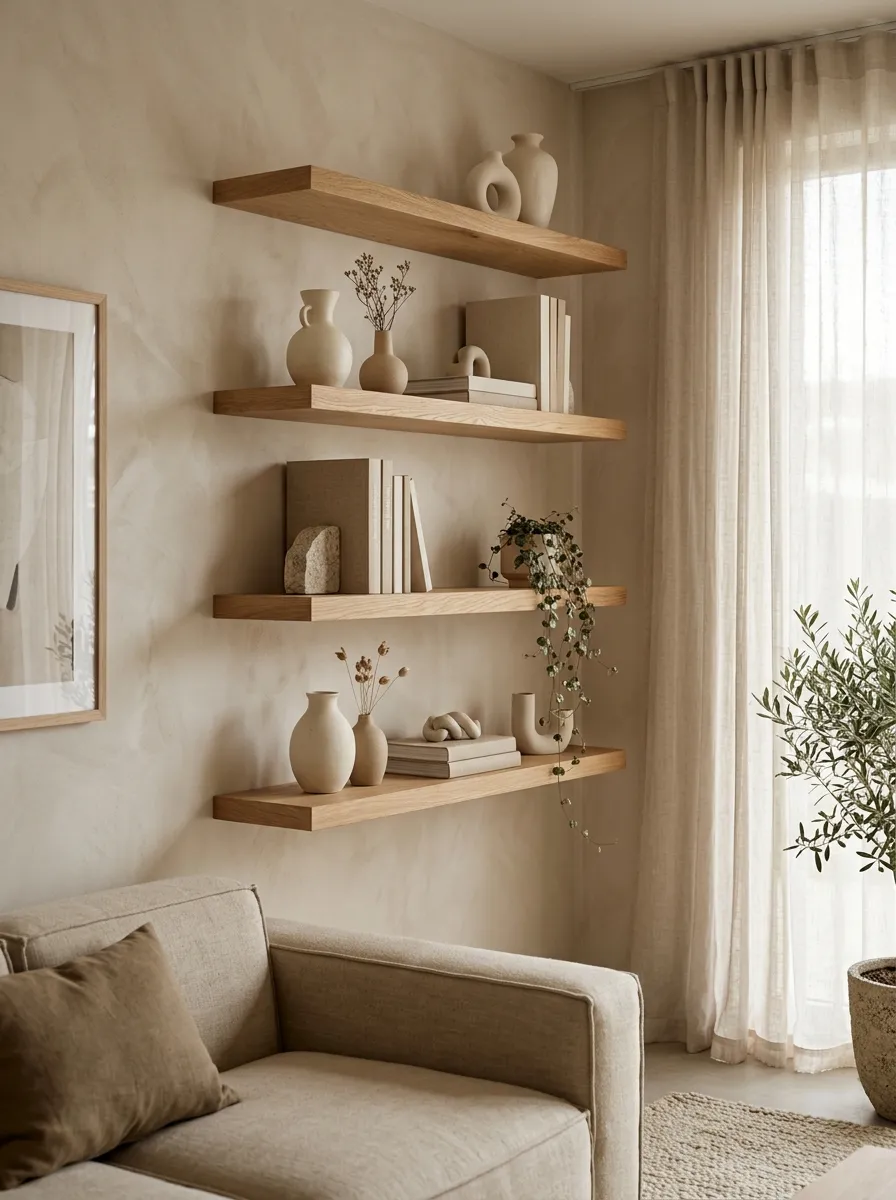
Neutral shelves feel polished when they combine different heights, soft textures and natural materials. Start with a warm wood shelf and arrange cream pottery, sand colored vases and a few books with understated covers. Keep the palette limited to beige, ivory, taupe and light brown so the display feels connected rather than crowded.
The secret is creating layers without hiding every object. Place two books horizontally, position a small vase on top and leave some pieces standing upright nearby. A trailing plant can soften the straight shelf edges. These simple living room shelf decor ideas work especially well in bright rooms with neutral furniture.
Color Coded Book Displays

- Choose a palette: Select three or four complementary book colors, such as sage, cream, rust and brown.
- Arrange by shade: Move gradually from lighter covers to darker ones for a balanced visual flow.
- Mix orientations: Stack some books horizontally and stand others vertically to create varied heights.
- Add small accents: Place a brass candleholder or ceramic bowl beside a book stack.
- Leave breathing room: Keep a few sections open so the shelves do not feel overly busy.
Color coordination makes an ordinary book collection look intentional without requiring expensive accessories. Remove dust jackets when the covers underneath better match your palette, but keep useful labels visible when needed. For a cohesive result, repeat one or two colors elsewhere in the room, such as in cushions, artwork or a throw blanket.
Sculptural Ceramic Accents

Quick Tip:
Choose ceramics with different silhouettes rather than collecting pieces that all look alike. Combine one tall vase, one rounded vessel and one low bowl in related neutral shades. Keep a little space around each piece so its shape remains visible.
Sculptural pottery adds personality even when the color scheme is simple. Matte finishes bring a soft, understated quality, while lightly speckled or ribbed surfaces introduce texture without visual clutter. Place larger pieces toward the ends of a shelf and smaller objects near book stacks. For a more collected look, vary the shapes while keeping the finishes compatible.
Read More: Living Room Ceiling Ideas: 25 Dramatic Upgrades to Try
Oversized Framed Artwork

Large artwork gives living room shelves a clear focal point without requiring lots of accessories. Lean a framed abstract print against the wall, then place a small vase or a short stack of books beside it. Choose artwork that complements your sofa, rug or curtains so the display feels connected to the rest of the room.
For a relaxed designer look, mix one larger frame with smaller decorative pieces instead of lining up several frames of identical size. Keep the artwork slightly behind the objects in front, but make sure the main image remains visible. This arrangement works particularly well on long floating shelves and built in units with generous horizontal space.
Asymmetrical Shelf Styling
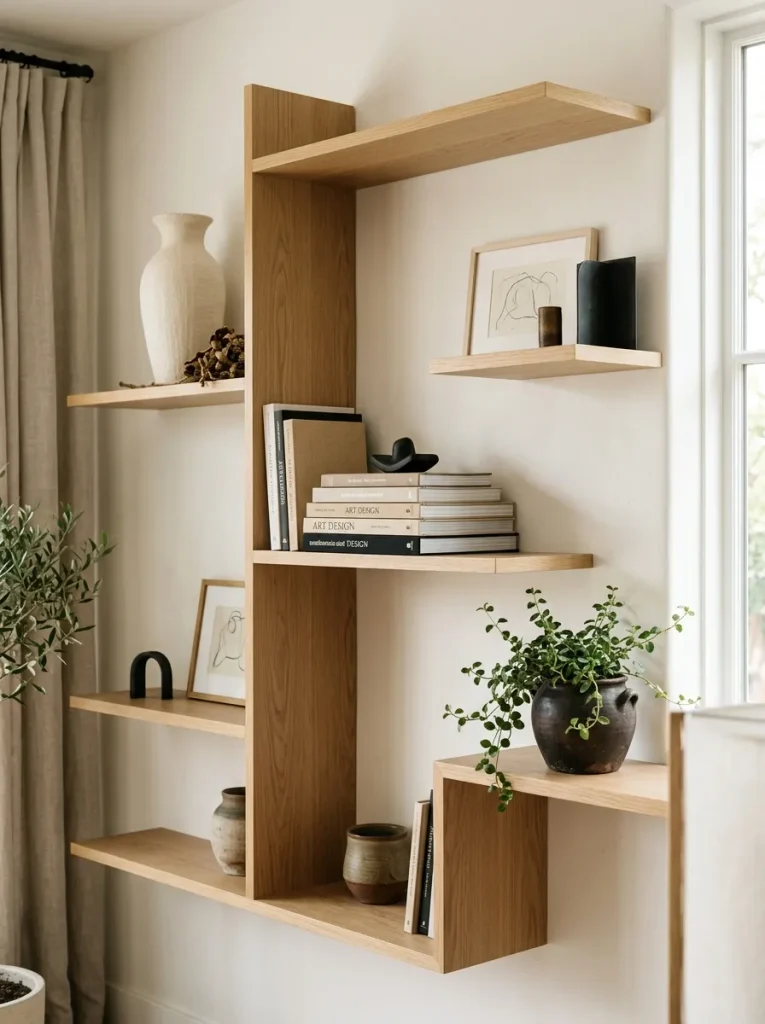
- Start with a focal point: Choose a tall vase, framed print or distinctive sculpture to anchor the arrangement.
- Vary the heights: Place shorter bowls near taller objects to create a natural visual rhythm.
- Balance the weight: Offset a large object on one side with a group of smaller items on the other.
- Mix materials: Combine wood, ceramic, glass and greenery for depth.
- Step back and adjust: Check the entire shelf from across the room before adding anything else.
Perfect symmetry can sometimes make shelves feel stiff. An asymmetrical arrangement creates movement while still looking deliberate. Keep the visual weight balanced rather than matching every object. For example, a substantial vase on the left can be balanced by two books and a small plant on the right, leaving enough open space for each item to stand out.
Warm Wood and Greenery
Do:
- Choose healthy plants that suit the available natural light.
- Use terracotta, stoneware or woven planters to introduce natural texture.
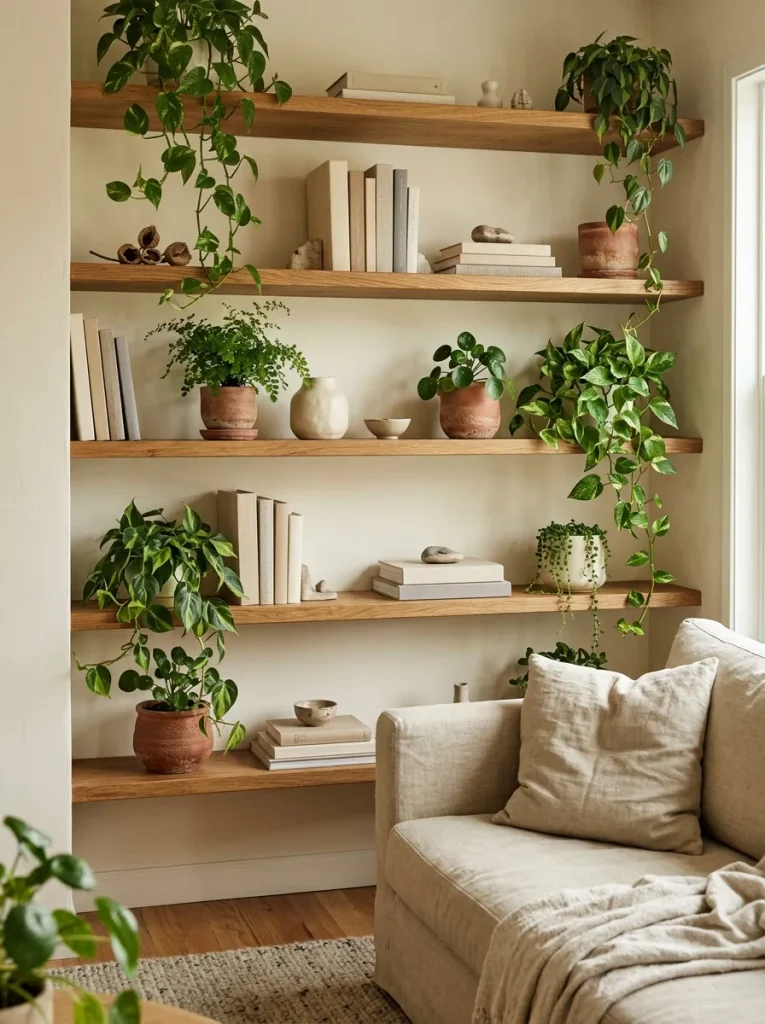
- Let one trailing plant soften the edge of a floating shelf.
- Repeat green accents in a nearby cushion or artwork.
Don’t:
- Overcrowd every shelf with foliage.
- Place water sensitive books directly beneath dripping pots.
- Choose plants without checking their light requirements.
- Let long vines obscure framed artwork or frequently used objects.
Greenery brings freshness to wooden shelving and prevents neutral displays from looking flat. Use a mix of upright and trailing plants to create variety, then balance the leaves with a few books and ceramic accents. If natural light is limited, choose suitable low light plants and monitor their condition rather than relying on greenery that cannot thrive in the space.
Minimalist Black Accents
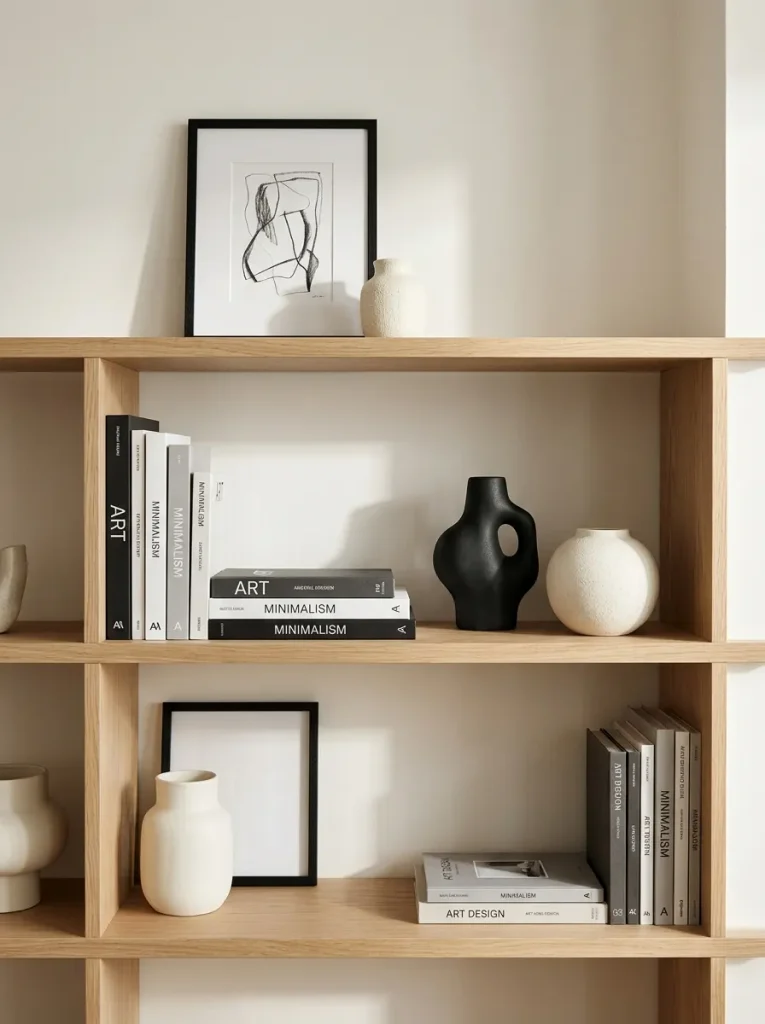
Black accents give pale shelves definition without requiring a dramatic color scheme. Start with one or two matte black objects, such as a small sculpture or a narrow picture frame and surround them with cream pottery and light wood accessories. The contrast makes each item easier to notice while keeping the overall display calm.
Spread dark accents across different shelves instead of gathering them all in one corner. A black frame near the top and a small dark bowl below create visual balance. Keep the remaining objects relatively light, especially in smaller living rooms, where too many dark accessories can make open shelving feel visually heavy.
Vintage Book Stacks

- Look for character: Choose books with attractive spines, cloth covers or gently aged finishes.
- Vary the stacks: Place three or four books horizontally beside a smaller upright collection.
- Introduce vintage accents: Add a brass bookend, small clock or antique style decorative object.
- Mix old and new: Pair aged books with a simple contemporary vase for contrast.
- Check the condition: Avoid books with dampness, mold, or damaged bindings.
Vintage books add color, history and texture to otherwise simple shelving. You do not need a rare collection to achieve the look. Secondhand books in complementary shades can work just as well, particularly when their sizes vary slightly. Keep fragile or valuable editions away from direct sunlight, which can fade covers and weaken materials over time.
Floating Shelves With Hidden Brackets
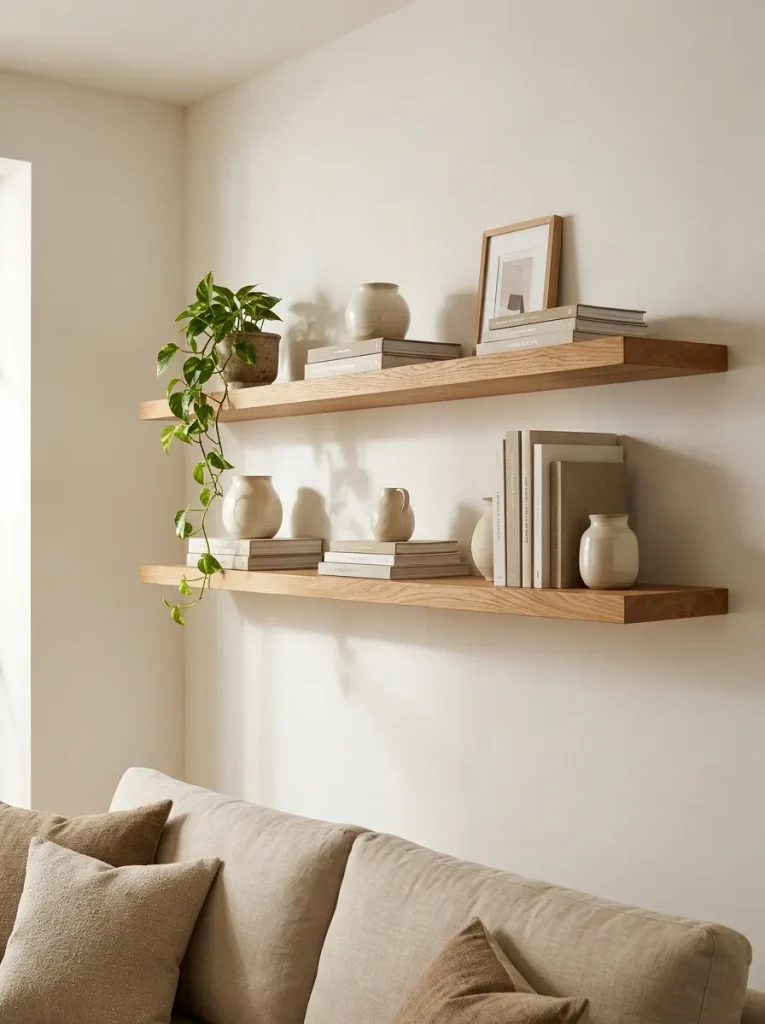
Quick Tip:
Before installing floating shelves, check the wall construction and the manufacturer’s weight limits. Use suitable anchors or attach the brackets to wall studs where required. Measure carefully and level each shelf before adding decorative objects.
Floating shelves create a clean, streamlined look because their supports remain out of sight. They work especially well above a sofa, beside a television or in a small living room where bulky furniture would take up valuable floor space. Keep the arrangement relatively light and leave gaps between objects so the shelves retain their simple architectural appearance.
Natural Woven Textures
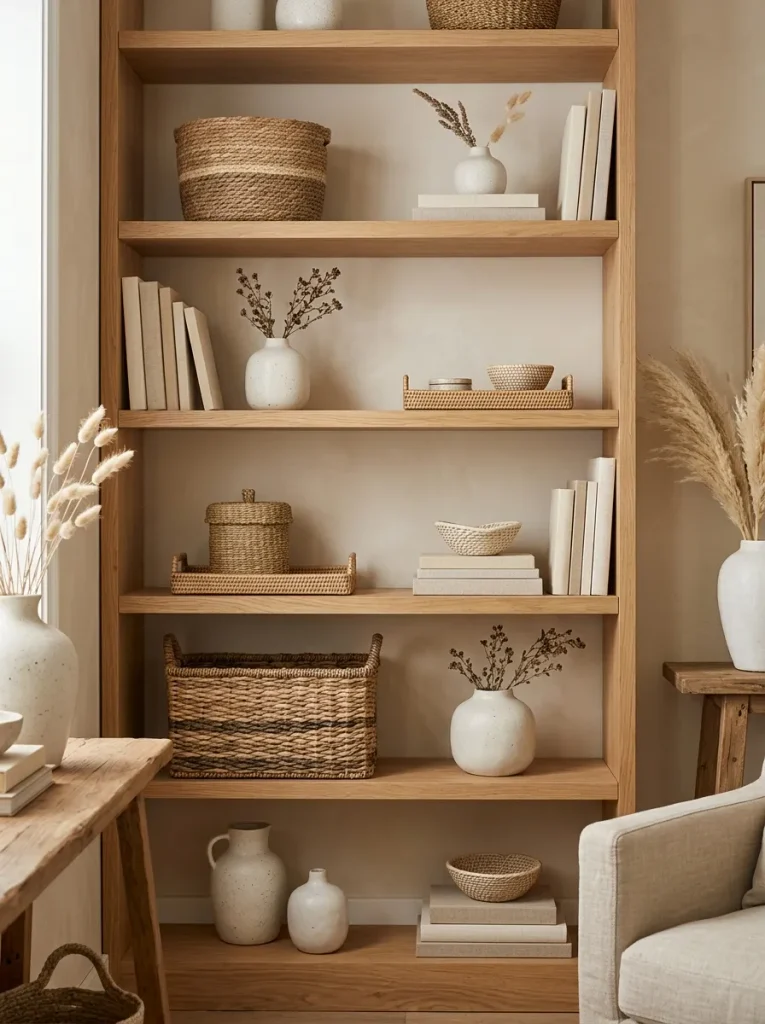
DO:
- Add a small woven basket to hold remotes or everyday accessories.
- Combine rattan, seagrass and smooth ceramic finishes for contrast.
- Use natural beige and honey brown tones to complement wooden shelves.
- Keep woven pieces beside simpler objects so their textures stand out.
DON’T:
- Fill every shelf with baskets and woven accessories.
- Use oversized containers that hide the items behind them.
- Mix too many competing patterns in one small display.
- Place delicate woven materials in persistently damp conditions.
Woven textures make living room shelving feel warmer and more relaxed. Their natural fibers contrast beautifully with smooth pottery, glass and hardcover books. Start with one woven accent on each major shelf rather than repeating the same basket everywhere. This approach adds texture without making the display look rustic or overly themed.
Layered Picture Frames
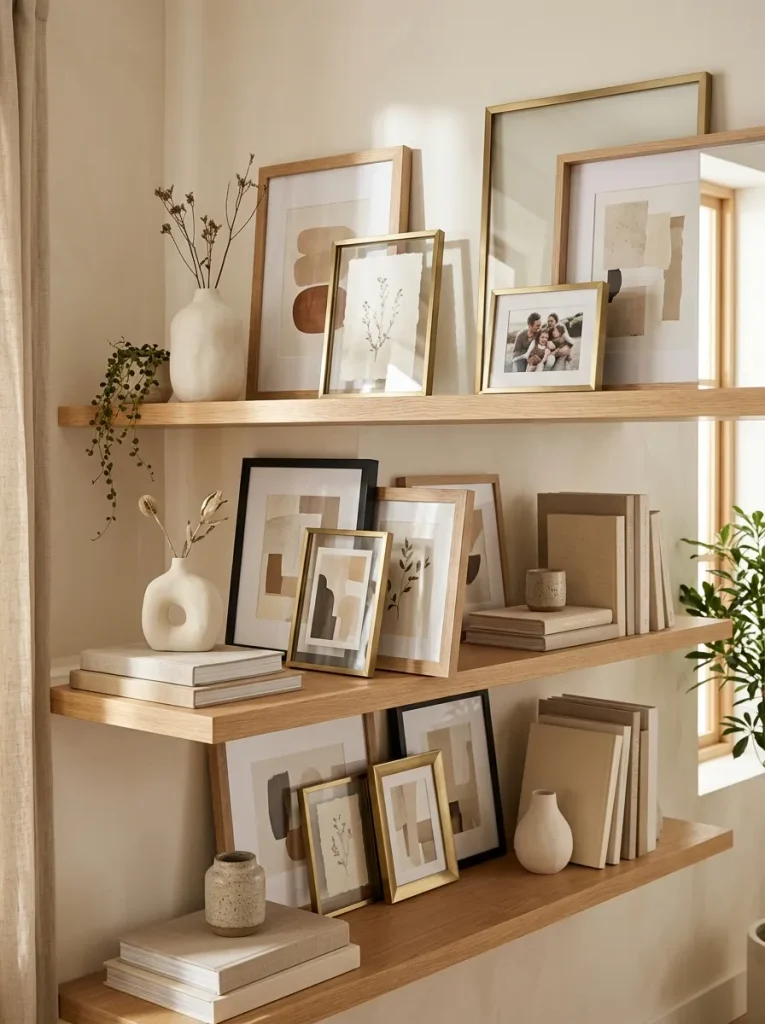
- Choose a common thread: Coordinate frames through color, subject matter or a consistent visual style.
- Vary frame sizes: Pair one medium frame with a smaller print for a natural layered arrangement.
- Place frames at the back: Lean them securely against the wall, with lighter accessories in front.
- Keep important details visible: Avoid covering faces or the main artwork with decorative objects.
- Repeat frame finishes: Use similar wood or metal tones elsewhere in the room for cohesion.
Layered frames help shelves feel personal without requiring a gallery wall. Start with your favorite print or photograph, then position a smaller frame slightly in front to create depth. Keep the arrangement to two or three frames per section, depending on shelf length. For safety, secure large or heavy frames so they cannot slip forward.
Sculptural Wooden Objects
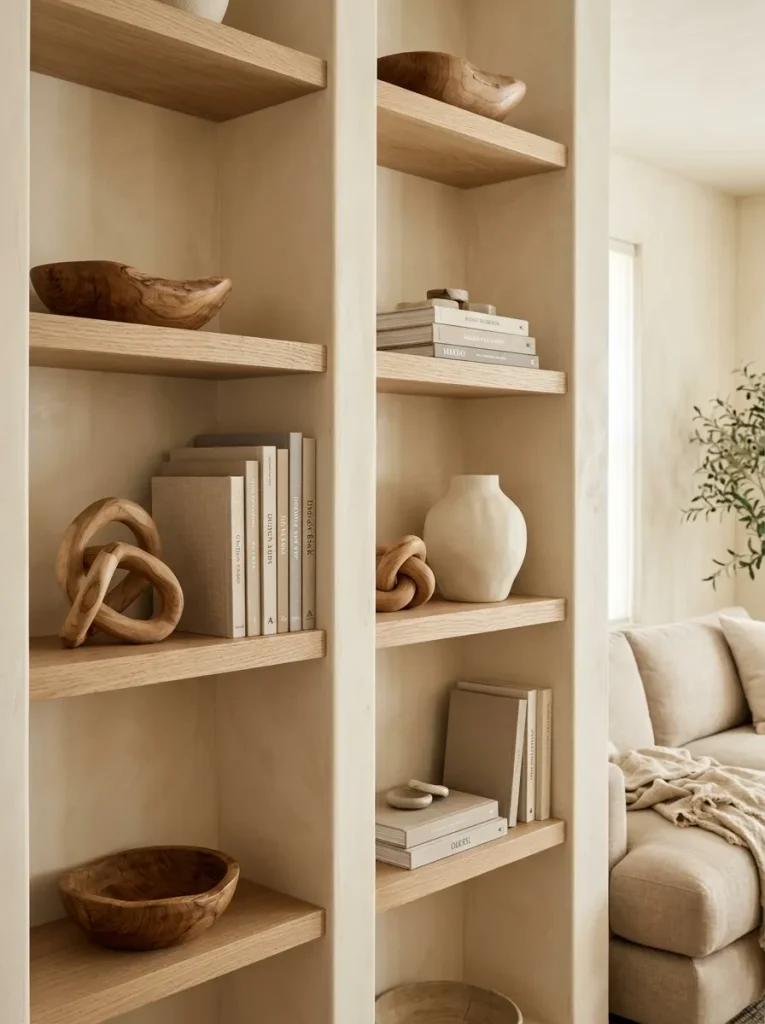
Before:
Shelves filled with similarly sized books and smooth ceramic vases can look flat. Repeating the same materials and shapes leaves little contrast, making the arrangement feel more like storage than a decorative display.
After:
Introduce a carved wooden bowl, a small abstract sculpture, or a distinctive turned wood object. Their irregular shapes and visible grain create texture while complementing existing shelves and furniture.
Wooden accessories bring warmth and craftsmanship to modern interiors. Combine one substantial sculptural piece with smaller, simpler objects so the natural grain remains the focus. Lighter woods suit Scandinavian inspired rooms, while darker walnut tones add depth to cream or white shelving. Avoid filling every gap, because open space helps each distinctive object stand out.
Glass Vase Arrangements

- Choose varied silhouettes: Combine a tall cylindrical vase, a rounded vessel and a smaller bud vase to create visual interest.
- Mix transparent finishes: Pair clear glass with one smoky or lightly tinted piece for subtle contrast.
- Add natural stems: Use a few eucalyptus branches, delicate dried grasses, or simple leafy cuttings.
- Create balanced groupings: Position the tallest vase near a book stack and leave the opposite side relatively open.
Glass accessories add lightness to shelves that already contain heavy books or solid ceramic objects. Their transparent surfaces allow the wall color to remain visible, helping the display feel less crowded. Keep fingerprints and dust under control, especially on clear glass and avoid placing fragile vases where they could be knocked off easily.
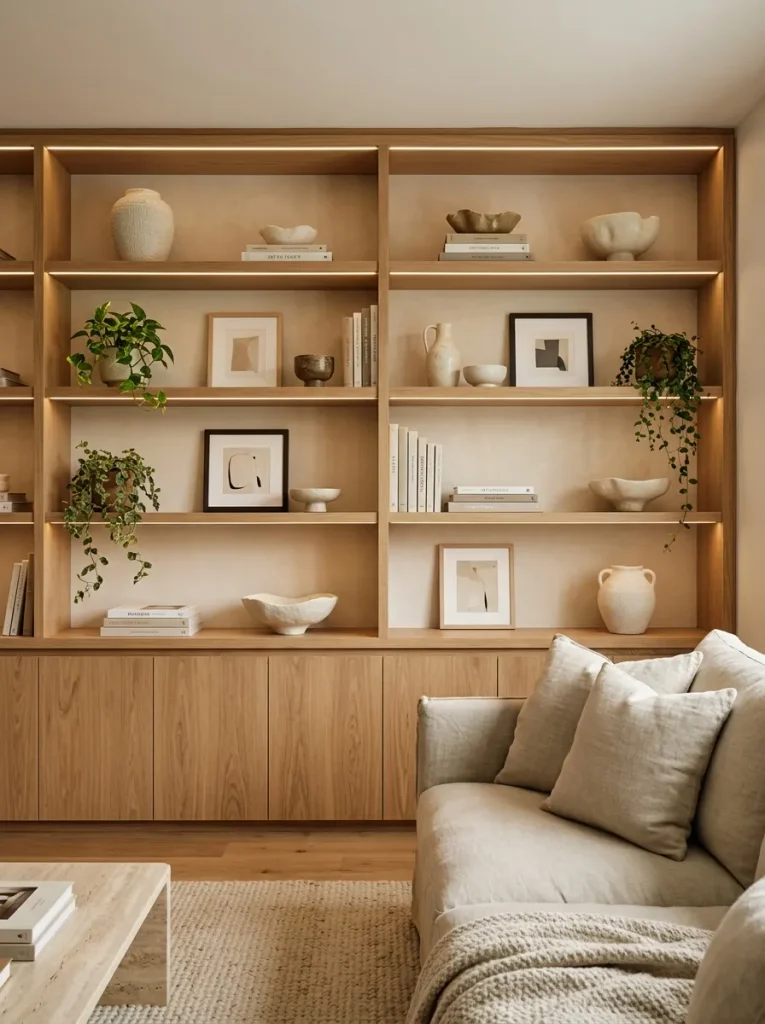
Built-In Shelf Lighting
| Lighting choice | Best use |
|---|---|
| Warm LED strips | Highlighting books and decorative objects |
| Small adjustable spotlights | Drawing attention to artwork or sculptures |
| Rechargeable accent lights | Shelves without nearby electrical outlets |
| Neutral-white lighting | Showing object colors more accurately |
Lighting helps decorative objects stand out after daylight fades. Install concealed LED strips beneath shelves or use compact, appropriately rated lights to illuminate selected sections. Choose a consistent color temperature, and hide visible cables wherever possible. For built-in cabinetry, plan the wiring and ventilation before installation so the finished display looks intentional rather than improvised.
Decorative Bowls and Trays
DO:
- Place a shallow bowl on a short horizontal book stack.
- Choose stone, wood or ceramic finishes that complement the shelves.
- Use a small tray to group several tiny decorative objects.
- Leave space around each grouping for a clean appearance.
DON’T:
- Fill every bowl with unrelated trinkets.
- Use trays that extend beyond the shelf edges.
- Mix too many contrasting finishes in one small area.
- Place heavy stone accessories on shelves that are not rated for their weight.
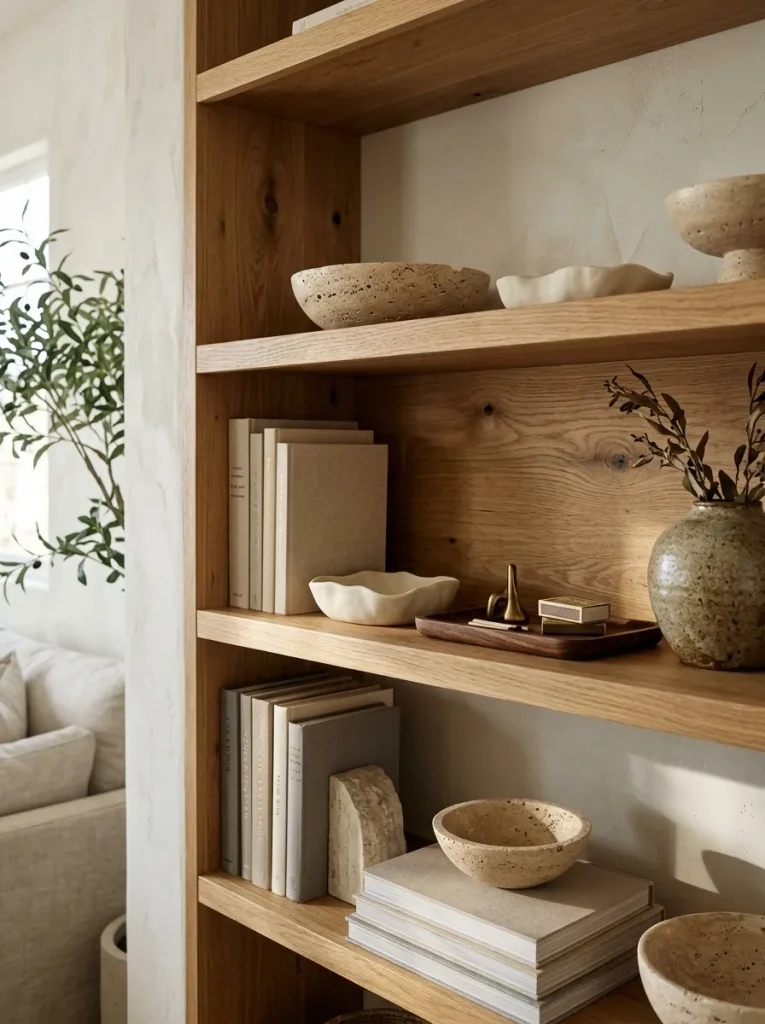
Decorative bowls and trays make small accessories look organized instead of scattered. A single tray can hold a few collected objects, while a sculptural bowl adds shape to an otherwise linear arrangement. Choose shallow pieces for narrow shelves and heavier materials for sturdy surfaces. The result feels considered while remaining practical for everyday living.
Monochrome Shelf Styling

A monochrome display looks cohesive because the colors stay consistent while the shapes and textures provide variety. Combine white ceramic vessels with black frames, charcoal book covers and a few pale wooden accents. The contrast creates a polished appearance without making the shelves feel overly decorated.
For the best result, vary the finishes rather than choosing objects that all look identical. Pair matte pottery with glossy glass, textured book covers or a smooth stone sculpture. Keep black pieces distributed across different shelves so the arrangement feels balanced. This approach works particularly well in contemporary living rooms with simple furniture and uncluttered surfaces.
Decorative Objects by Height
- Select a tall anchor: Start with a vase, framed print or sculptural object that establishes the tallest point.
- Add medium-height pieces: Place a smaller vessel or upright book grouping beside it.
- Finish with low accents: Use a shallow bowl, short book stack or small decorative object near the front.
- Check the overall rhythm: Step back and adjust the spacing until the objects create a balanced sequence.
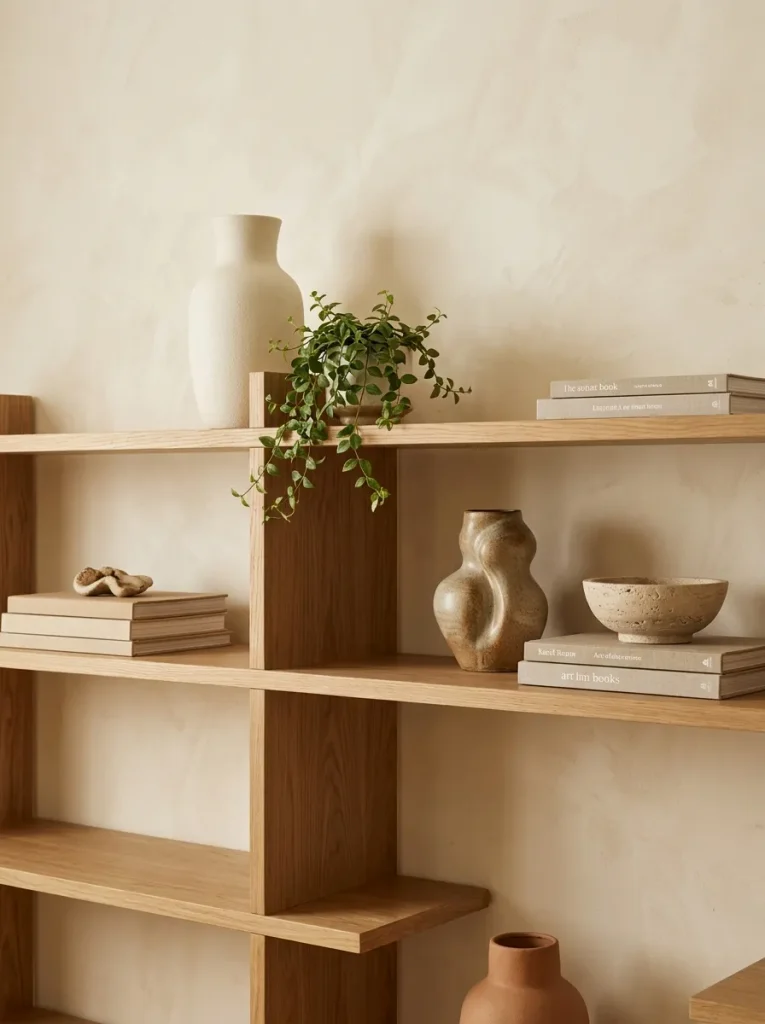
Varying object heights gives shelves a more natural rhythm than arranging everything along the same visual line. The tallest piece draws attention, medium objects connect the composition, and shorter accents fill gaps without overwhelming the display. Repeat this approach across different shelves, but change the arrangement slightly so the entire unit does not look formulaic.
Marble and Stone Accents

Quick Tip:
Combine one or two stone accessories with softer materials such as linen, wood or matte ceramic. Check the shelf’s weight capacity before placing heavy marble or stone pieces, especially on floating shelves.
Natural stone introduces subtle variation through its veining, pores, and irregular finishes. A small travertine bowl can anchor a book stack, while marble bookends provide structure and a polished accent. Choose warm beige stones for an organic interior or cooler white marble for a sharper contemporary look. Keep the surrounding accessories simple so the stone remains noticeable.
Coastal Inspired Shelf Decor
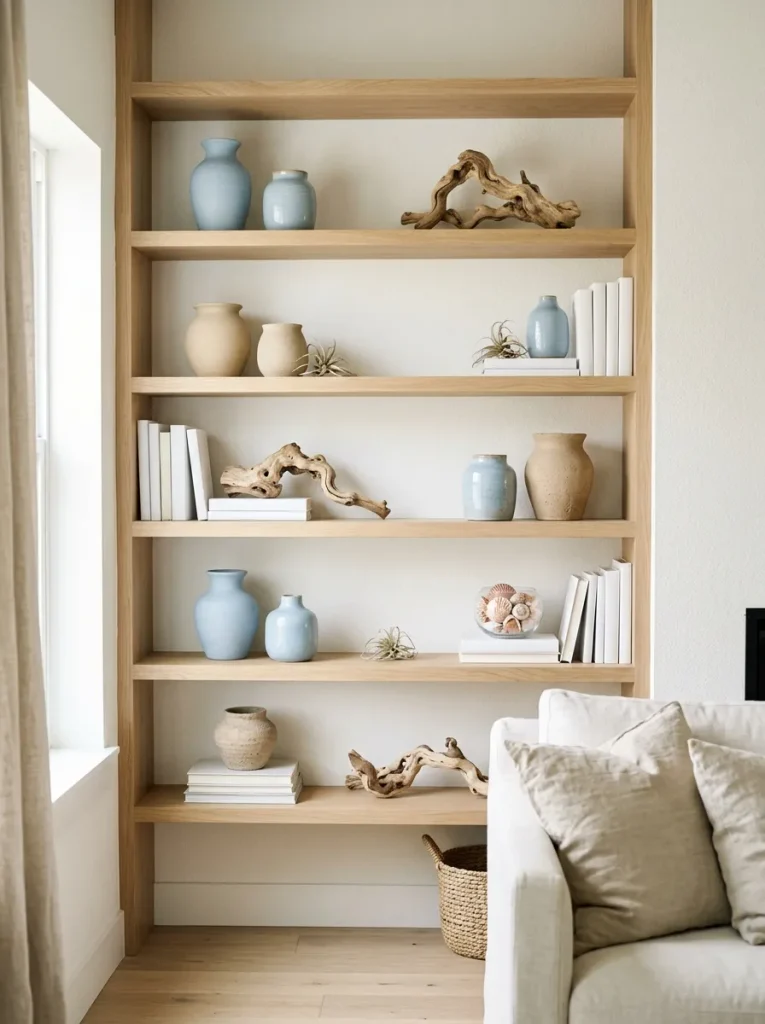
Coastal-inspired shelves bring a relaxed, airy feeling to a living room without relying on obvious beach decorations. Combine soft blue accents with sandy neutrals, white ceramics and light wood. A small piece of driftwood or a shell displayed in a simple bowl adds a natural detail without making the arrangement feel themed.
Keep the palette restrained so the shelves complement the rest of the room. Choose just one or two blue objects and balance them with warm beige textures. This style works particularly well with linen upholstery, woven rugs, pale timber furniture and rooms that receive plenty of natural light.
Brass and Gold Details

- Start small: Choose a brass candleholder, decorative sphere or slim picture frame.
- Mix warm materials: Pair metallic finishes with oak, cream pottery and textured books.
- Repeat the finish: Place a small brass accent on another shelf to create visual continuity.
- Vary the shapes: Combine one rounded metallic object with a taller, more linear accessory.
Brass and gold details introduce a subtle glow without requiring an entirely glamorous display. Brushed or aged finishes tend to blend more naturally with warm wood and neutral colors than highly reflective gold. Use metallic accessories sparingly, allowing them to catch the light without competing with artwork or larger decorative pieces.
Seasonal Shelf Refreshes
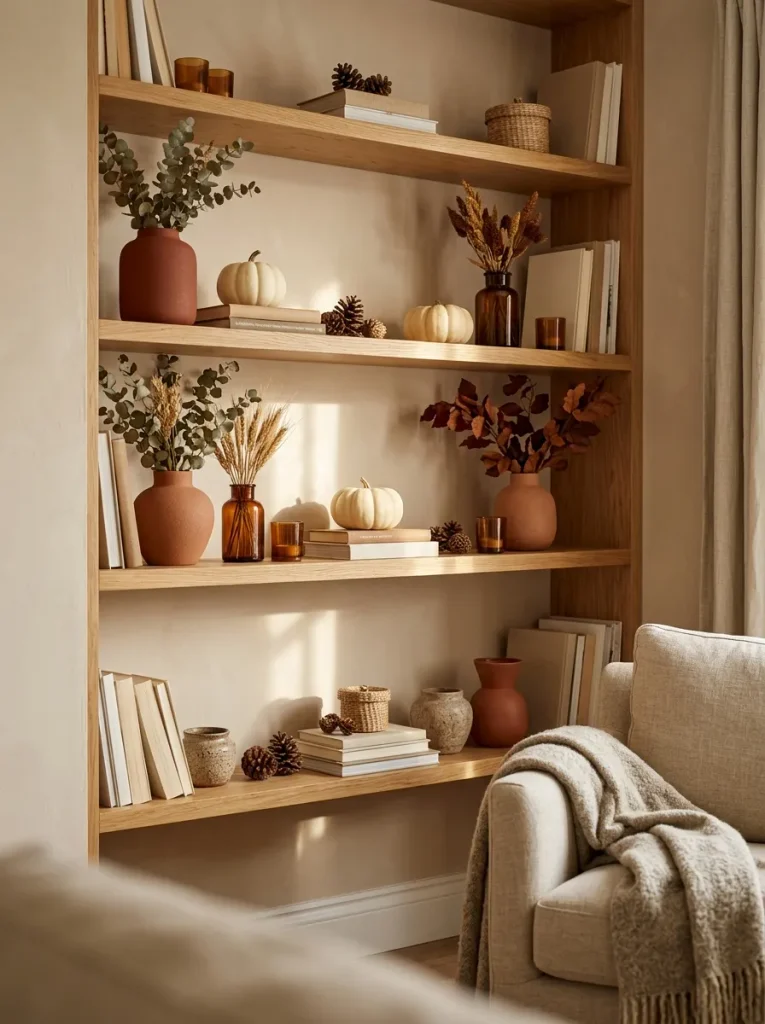
Before:
Shelves filled with the same accessories throughout the year can start to feel repetitive. Adding lots of seasonal decorations at once may also crowd the shelves and make the room feel less cohesive.
After:
Keep the main pieces, such as neutral books, wooden objects, and cream pottery, in place. Swap a few smaller accents to reflect the season, such as fresh greenery in spring, pale blue glass in summer, dried foliage in autumn, or simple metallic details in winter.
A seasonal refresh works best when it builds on the existing decor rather than replacing everything. Store small accessories together so changing the display takes less time and money. Keep the overall color palette connected to your living room, and avoid placing delicate seasonal decorations where children, pets, or everyday activity could knock them over.
Farmhouse Shelf Accents

Farmhouse shelves combine practical pieces with weathered textures and understated decorative accents. Start with reclaimed wood or shelves in a warm natural finish, then introduce cream pitchers, vintage books, and a small woven basket. These materials create contrast while keeping the display comfortable and approachable.
Avoid filling every space with rustic signs or matching accessories. Instead, combine a few farmhouse details with cleaner modern objects, such as a simple ceramic vase or minimal framed artwork. This balance keeps the shelves from feeling dated and helps them complement contemporary sofas, neutral rugs and everyday family living spaces.
Open Shelves With Negative Space
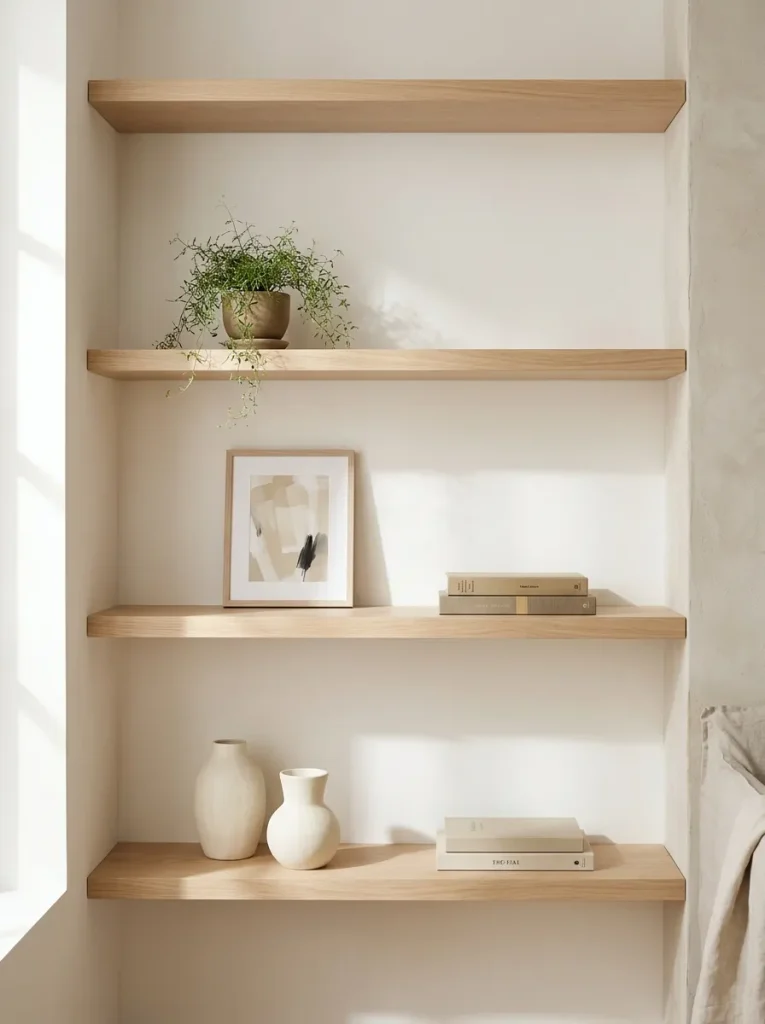
- Remove excess objects: Begin by taking everything off the shelves and grouping similar items together.
- Choose focal pieces: Select a few distinctive objects, such as a sculptural vase, framed print or favorite book collection.
- Create separate groupings: Place objects in small clusters rather than spreading them evenly across every shelf.
- Leave visible gaps: Preserve open sections between groupings to give the display room to breathe.
- Review from a distance: Remove anything that feels repetitive or distracts from the main pieces.
Negative space is an important part of attractive shelf styling. Empty areas help decorative objects stand out and make the entire room feel less cluttered. Start with fewer items than you think you need, then add only what improves the arrangement. This approach is particularly useful for narrow living rooms or shelves positioned above busy furniture.
Statement Sculptural Vases

DO:
- Select one distinctive vase with an interesting silhouette.
- Choose a finish that complements the room’s existing materials.
- Place smaller objects nearby to emphasize the vase’s scale.
- Use a few simple branches if the vase opening suits them.
DON’T:
- Surround the statement piece with too many competing sculptures.
- Choose a vase that is too tall for the available shelf clearance.
- Ignore stability when styling narrow or elevated shelves.
- Mix several bold colors without a clear palette.
A sculptural vase can become the focal point of an entire shelf, even without flowers or decorative stems. Look for rounded, asymmetrical, ribbed or gently curved forms that add shape to straight shelving. Neutral finishes offer versatility, while one muted accent color can create interest. Leave sufficient space around the vase so its outline remains visible.
Decorative Mirrors on Shelves
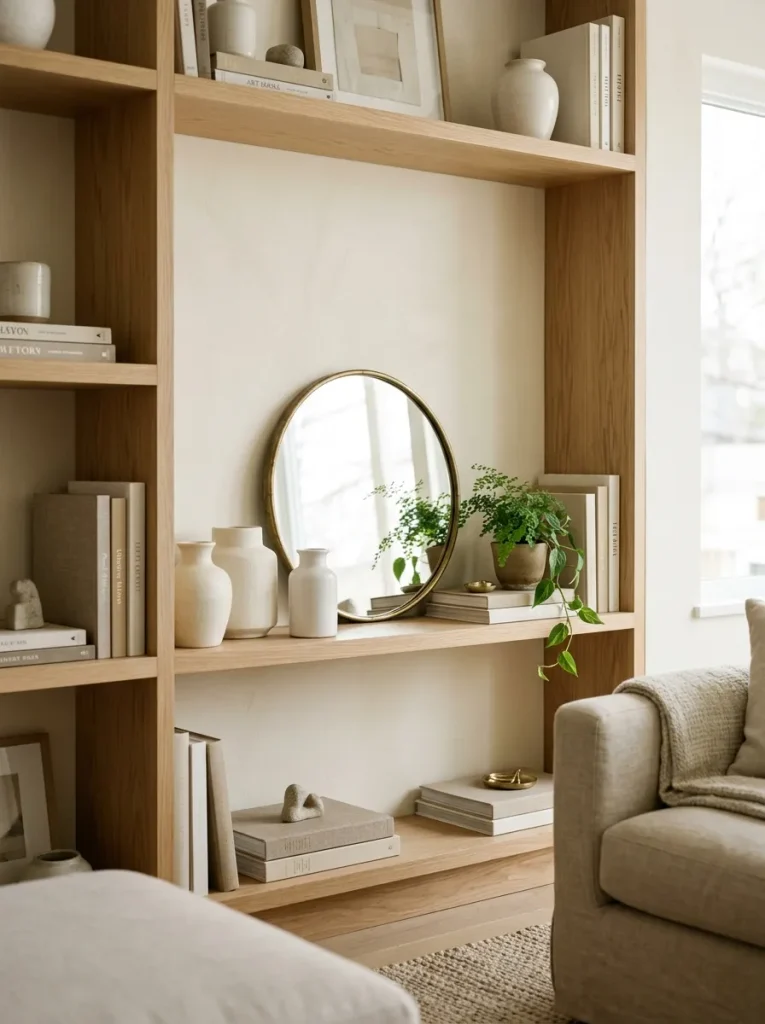
Cost: Moderate, depending on the mirror frame and size.
Time: Around 15 to 30 minutes for styling.
Skill Level: Beginner friendly.
Best For: Small living rooms, narrow shelves, and spaces that need more visual depth.
Decorative mirrors introduce reflective surfaces that help a shelf display feel lighter and more dimensional. Choose a round mirror to soften straight shelf lines or a rectangular design for a more structured look. Lean it securely against the wall, then arrange a few smaller accessories nearby. Avoid positioning fragile mirrors where they could slide or fall.
Personal Collections on Display

Shelves become more distinctive when they include objects that reflect your interests and experiences. A handmade bowl, a small souvenir from a favorite destination, or a treasured photograph can give the arrangement character without relying on generic accessories.
Start by choosing three to five related objects and arrange them in a small grouping. Vary their heights and materials so the display feels balanced rather than like a row of collectibles. Leave space between pieces and rotate smaller items occasionally to keep the arrangement fresh without buying anything new.
Layered Textures and Fabrics
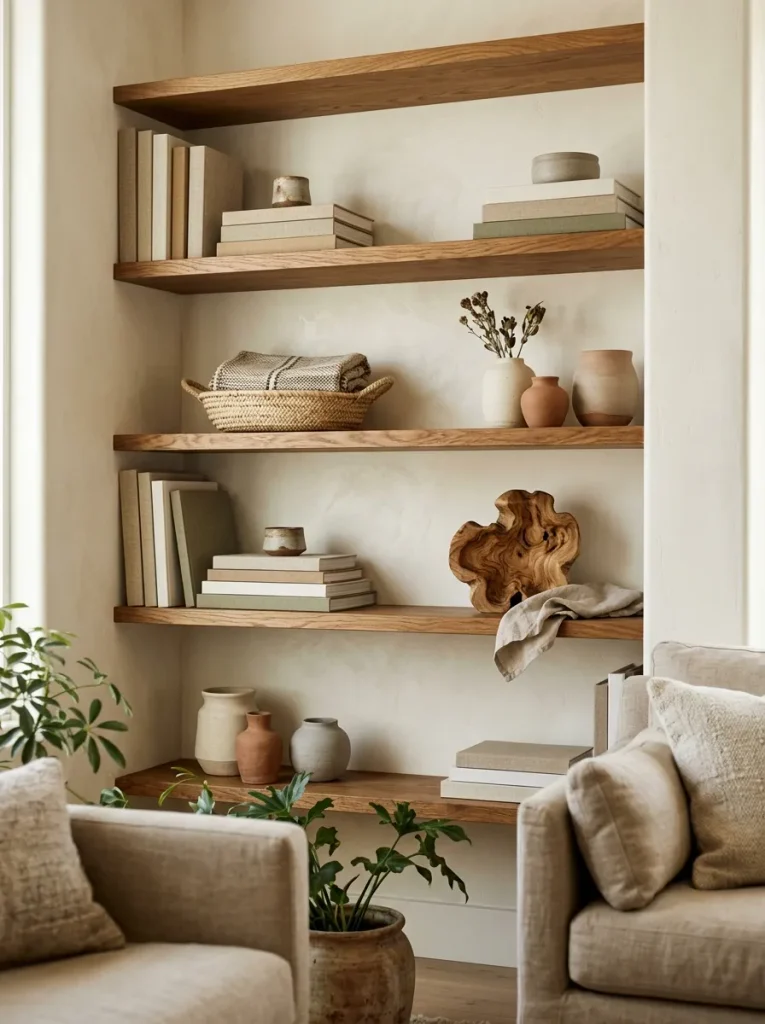
- Start with a soft base: Stack linen-covered books or place a small fabric accent beside a ceramic object.
- Mix contrasting materials: Combine woven fibers, smooth pottery, natural wood, and textured paper.
- Keep fabric compact: Fold small textiles neatly so they do not hang awkwardly over the shelf edge.
- Repeat one texture: Echo a woven or linen detail elsewhere in the room for a connected appearance.
Texture creates visual depth even when every accessory belongs to the same neutral color palette. Pair rough woven materials with smooth ceramics and the natural grain of wood to prevent the display from looking flat. Choose fabrics that can be cleaned easily, and keep loose textiles away from candles, heat sources and unstable objects.
Arched Shelf Styling
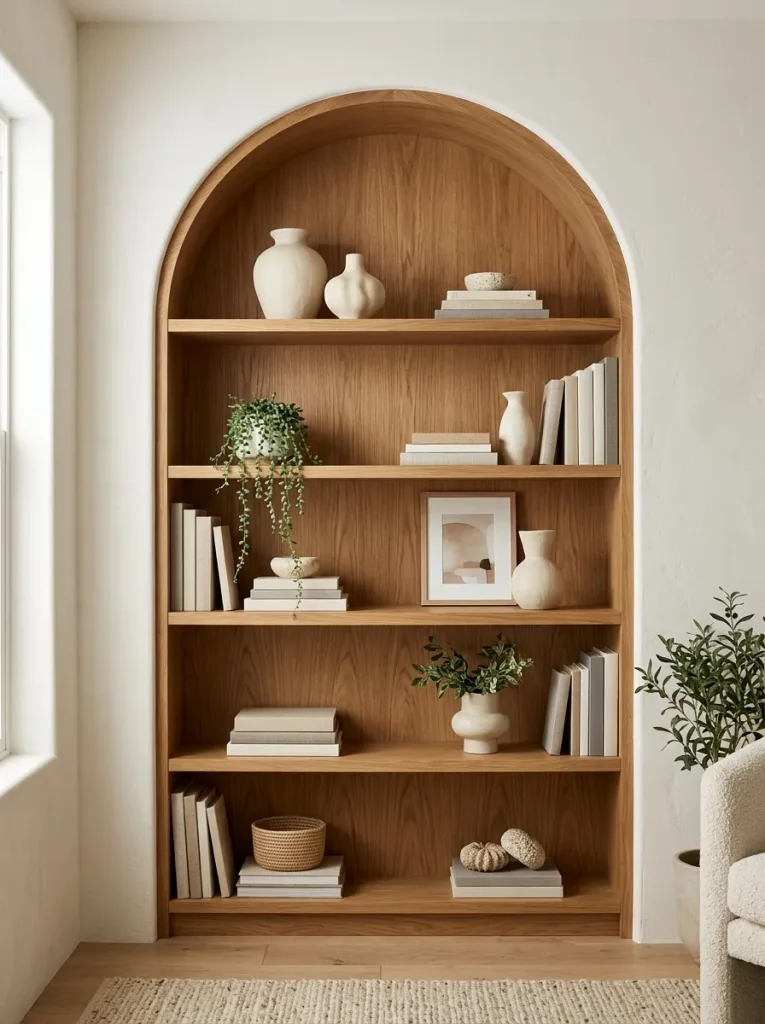
Cost: Moderate to high, depending on the shelving unit.
Time: 30 to 60 minutes for arranging accessories.
Skill Level: Beginner-friendly.
Best For: Living rooms with alcoves, architectural shelving, or a soft contemporary aesthetic.
Arched shelving adds a gentle architectural detail that contrasts beautifully with straight furniture and rectangular picture frames. Let the curved outline remain the main feature by keeping accessories relatively simple. Place a taller vase toward one side, a small book stack on the other, and leave the upper curved section visually open.
For a cohesive result, repeat the shelf’s wood tone in a nearby coffee table or side table. Cream pottery and understated artwork complement the curved silhouette without competing for attention. If you already have rectangular shelves, you can create a similar softer look with rounded accessories and curved frames instead of replacing the entire unit.
Books, Plants, and Ceramics
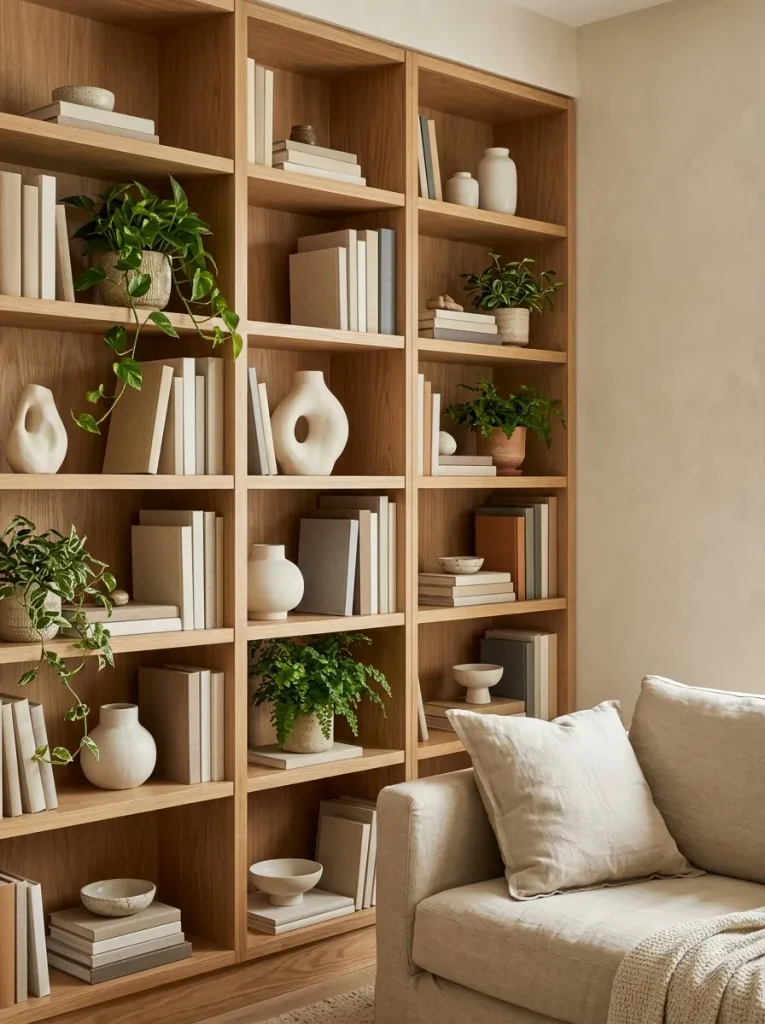
Books, plants, and ceramics create a balanced shelf display because each contributes a different shape, texture, and purpose. Start with a small group of books, add a ceramic vase for sculptural interest, and finish with a leafy plant to soften the arrangement. Keep the colors connected through warm wood, cream, and natural green.
Vary the placement across shelves rather than repeating the same arrangement everywhere. Use upright books to create height, horizontal stacks to support smaller objects, and plants to introduce movement. Leave a few spaces empty so the display remains easy to maintain. For the best long-term result, choose plants suited to the room’s light and avoid overcrowding shelves with objects that collect dust.
CONCLUSION
Styling your shelves doesn’t have to be complicated or expensive. The right combination of books, ceramics, greenery, artwork and natural textures can make your living room feel more organized, personal, and inviting.
Use these Living Room Shelf Decor Ideas as inspiration, then choose the details that complement your furniture, colors and everyday needs. Start with one shelf, experiment with different arrangements and keep the pieces that make your space feel most like home.
Save this article on Pinterest so you can revisit your favorite ideas, try a new look this week, and share it with anyone who loves beautiful home decor. Small, thoughtful changes can make your shelves feel special.




One Comment