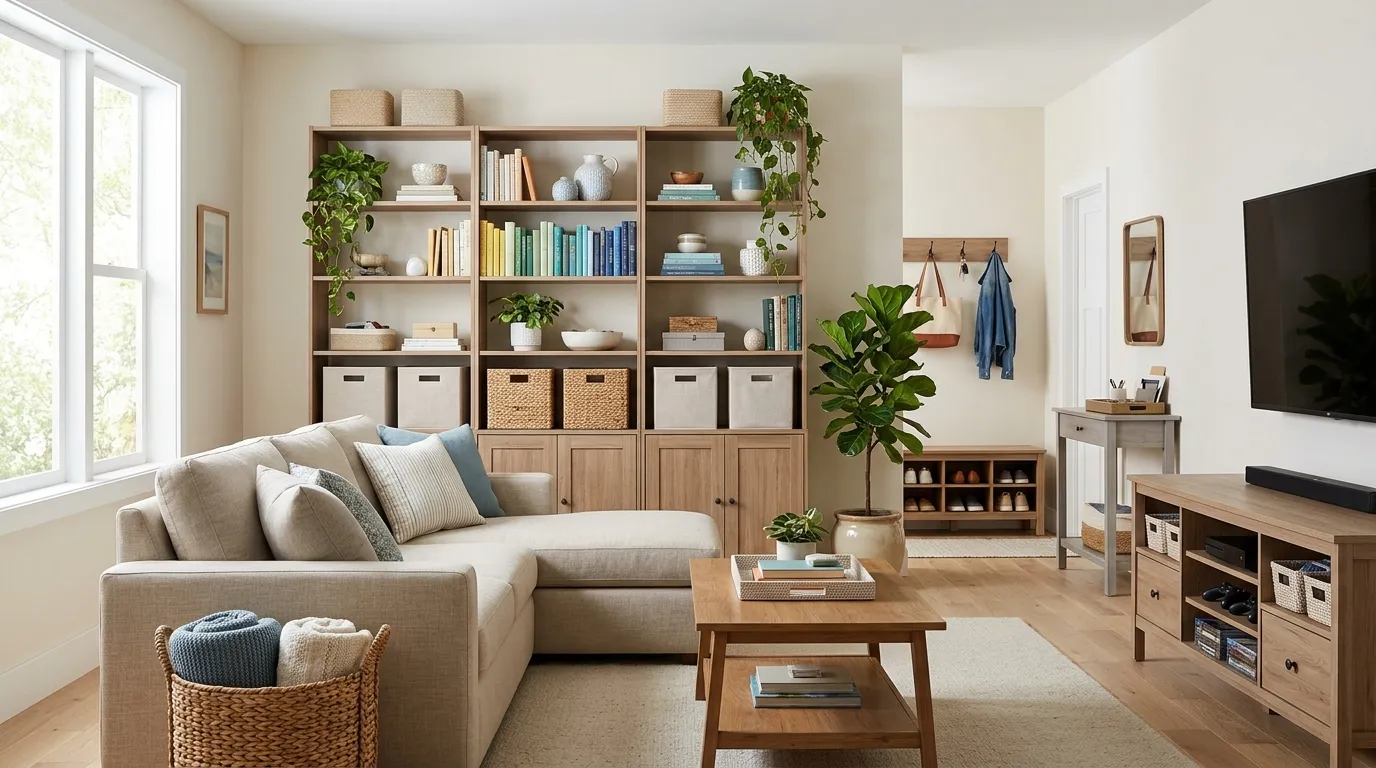
25 Living Room Organization Ideas for a Serene Home
A cluttered living room can make your entire home feel less peaceful, even when everything else is in order. The good news? A few thoughtful changes can help you create a space that feels calm, comfortable and organized.
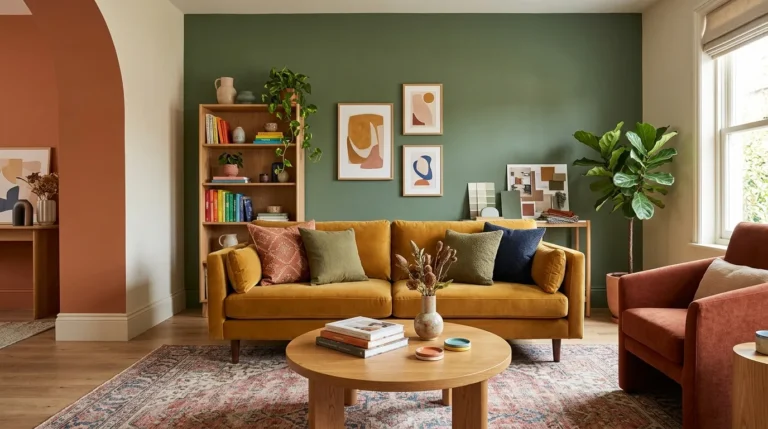
These Living Room Organization Ideas will help you create a serene home with practical storage solutions that fit your everyday routine. From woven baskets and floating shelves to hidden storage and simple daily resets, you’ll discover ways to manage clutter while keeping your living room warm and inviting.
Whether you live in a small apartment or a busy family home, the right organization methods can make daily life easier. Sometimes, a dedicated place for remotes, blankets, toys and magazines is all you need to reduce visual clutter. Start with one area, choose ideas that suit your lifestyle and build a space that feels easier to maintain and more enjoyable to live in.
Woven Storage Baskets

Woven baskets make everyday clutter easier to manage without sacrificing your living room’s style. Place a large basket beside the sofa for throw blankets, a medium one near the television for remotes and accessories, and a smaller basket on a shelf for magazines. Natural textures also add warmth to neutral interiors.
For a cohesive look, choose baskets in similar shades of beige, brown, or cream. Measure your available floor space before buying, especially if the basket will sit beside a walkway. In my experience, giving frequently used items a visible, attractive home makes it easier for everyone to put things away.
Floating Wall Shelves
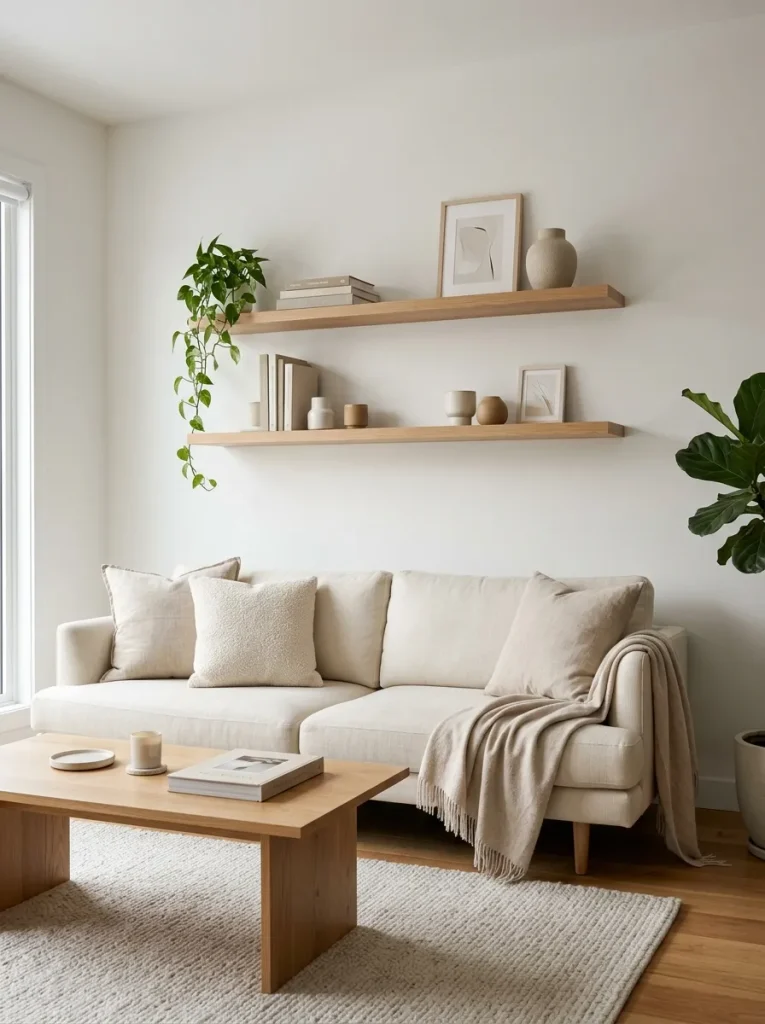
Empty walls can provide valuable storage without taking up precious floor space. Install floating shelves above a sofa, beside a television or in an unused corner to hold books, small plants, framed photographs, and decorative boxes. Keeping frequently used items together makes the room easier to maintain.
- Choose the right height. Leave enough clearance above furniture to prevent the shelves from feeling cramped.
- Mix open and closed storage. Use decorative boxes to conceal small items such as charging cables and remote controls.
- Limit decorative objects. A few carefully chosen pieces create a cleaner appearance than tightly packed shelves.
- Check wall support. Use suitable anchors or locate wall studs, particularly for heavier books.
Floating shelves work especially well in small living rooms where bulky cabinets would make the layout feel crowded. Keep heavier objects on properly supported shelves and leave some empty space so the arrangement remains practical.
A Dedicated Remote Tray
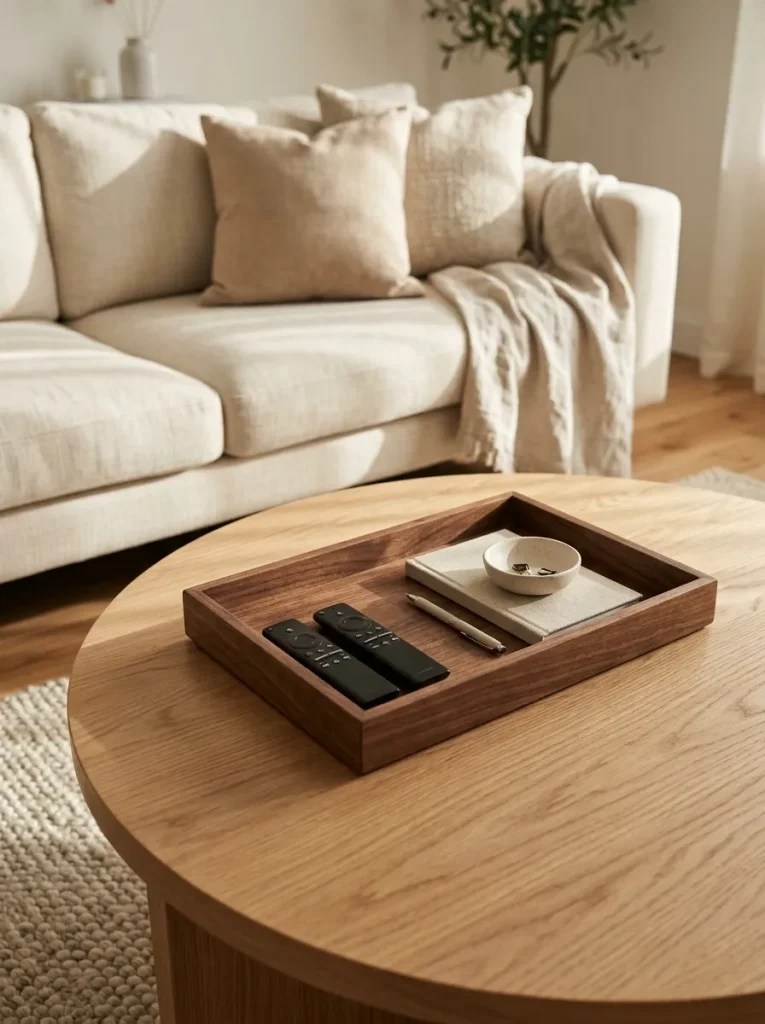
Missing remotes and scattered small accessories can make even a tidy living room feel disorganized. A dedicated tray on your coffee table gives these everyday essentials one predictable location, making them easier to find when you sit down to relax.
Quick Tip: Choose a tray with slightly raised edges to keep remotes from sliding onto the floor. If several people share the room, designate one section for television controls and another for small personal items.
Select a material that complements your furniture, such as walnut for a warm interior or matte black for a modern space. Keep only the items you regularly use inside the tray and return them after each viewing session. A simple boundary prevents small objects from spreading across the entire table.
Read More: Living Room Storage Ideas: 27 Clever Ways to Stash It
Closed Storage Cabinets
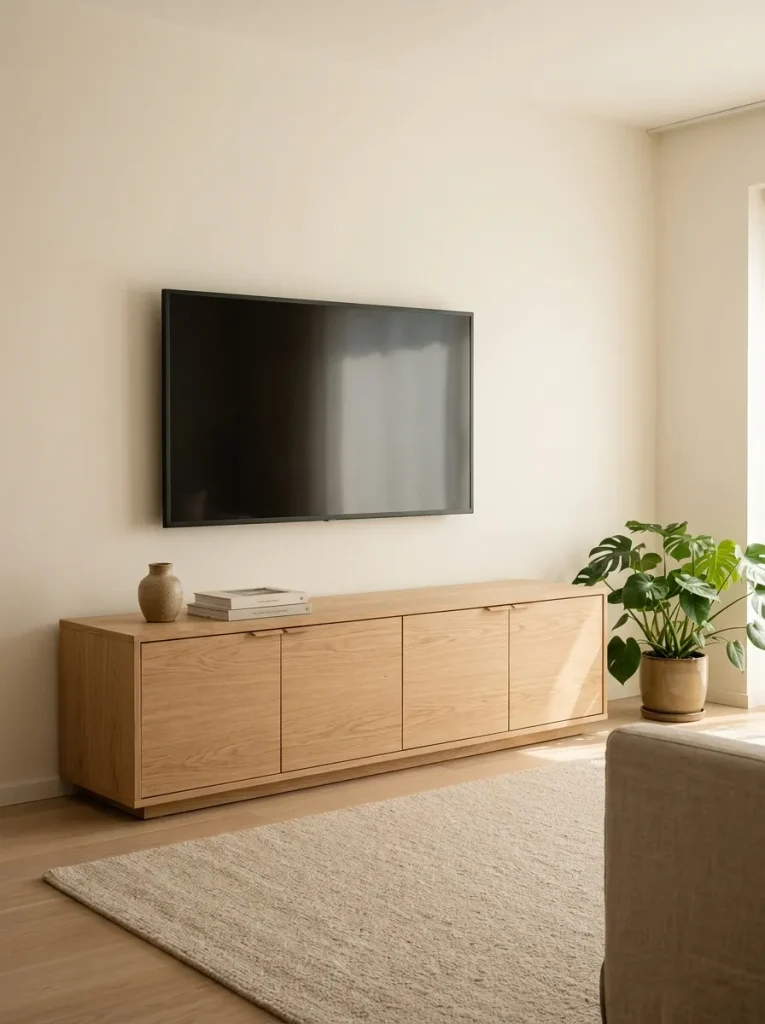
Visible clutter can make a living room feel busier than it actually is. A closed storage cabinet provides a practical place for board games, electronic accessories, paperwork and other belongings that do not need to stay on display. Choose a cabinet that fits beneath your television or along an unused wall.
- Measure the wall and check the cabinet depth before purchasing.
- Sort belongings into categories, such as electronics, games and household supplies.
- Assign each category a separate shelf or container.
- Keep frequently used items near the front for easy access.
Cabinets with simple doors and neutral finishes suit many decorating styles. For a smaller room, choose a raised-leg design that reveals more flooring and creates a lighter visual appearance. Avoid filling every shelf completely, so new belongings have a designated place.
Labeled Storage Bins
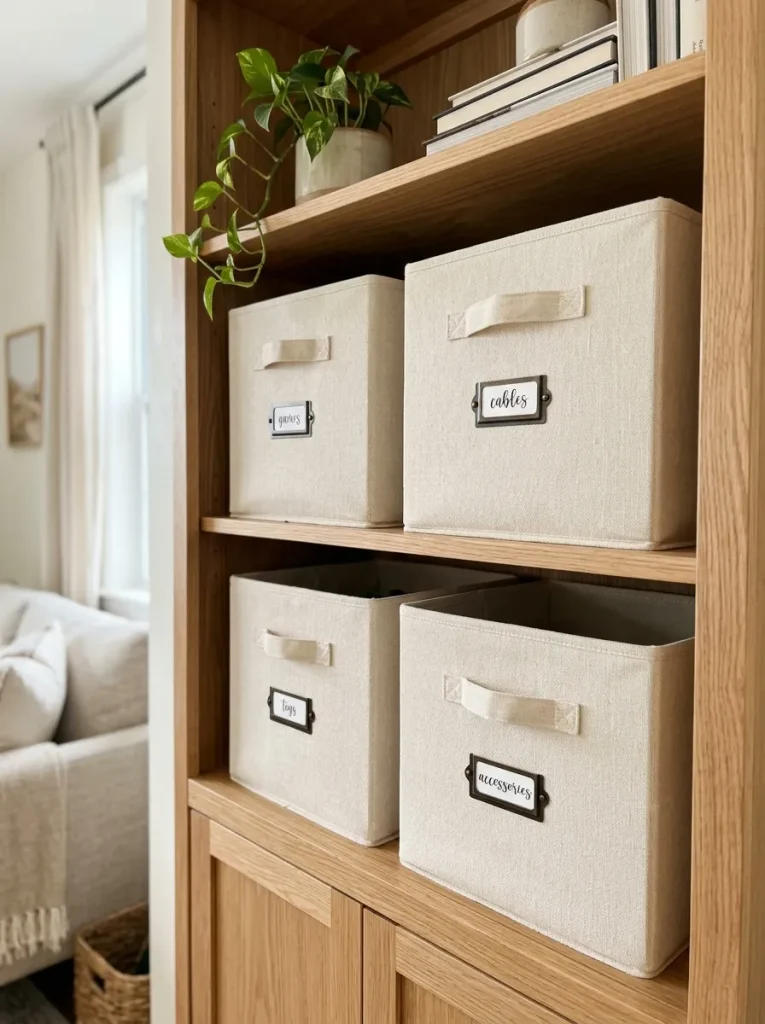
When several household members share a living room, storage becomes much easier when everyone knows where things belong. Labeled bins create clear categories for everyday belongings, helping prevent toys, chargers, craft supplies and miscellaneous accessories from mixing together.
- Group similar items. Keep electronic accessories separate from games, toys and stationery.
- Choose readable labels. Use simple words that everyone in the household understands.
- Match bin sizes to shelves. Measure the interior dimensions to avoid wasted space.
- Store heavy items low. Place lighter accessories on higher shelves for safer access.
- Review the contents regularly. Remove broken, unused or misplaced items before the bins overflow.
Matching bins create a consistent appearance even when their contents differ. Fabric containers work well for lightweight belongings, while sturdy plastic bins can be useful for items that need extra protection. Keep labels facing forward so you can identify contents without pulling every container out.
Hidden Cable Storage

Loose cables around a television or entertainment unit can make an otherwise organized room look messy. Concealing them creates a cleaner appearance and reduces the chance of cords becoming tangled around furniture or underfoot.
Before organizing the cables, unplug equipment when appropriate and identify which cord belongs to each device. Use a cable management box for suitable power strips, adhesive cable clips for lightweight cords and purpose made covers to guide cables along walls or furniture edges.
Keep ventilation openings clear, avoid overloading power strips, and never place electrical connections inside a closed container that traps heat. If you have children or pets, secure accessible cords and use products designed for the specific installation. A tidy media area should be both attractive and safe.
Under-Sofa Storage
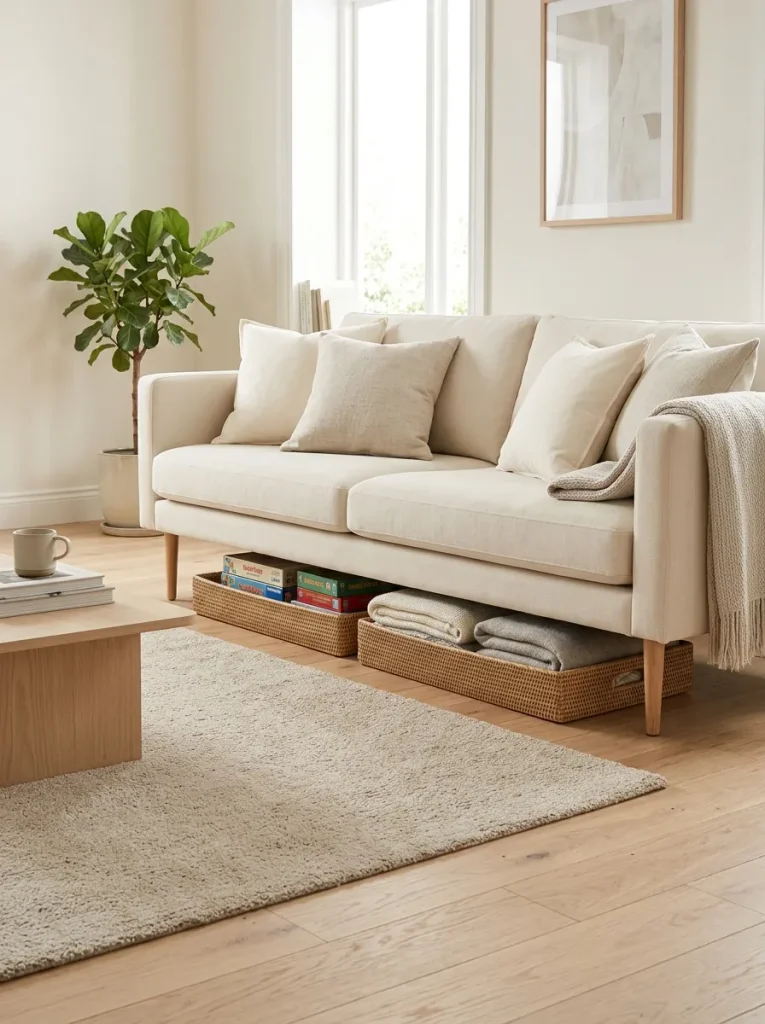
The space beneath a sofa can become useful storage, especially in apartments where every inch matters. Low profile containers can hold extra blankets, seasonal cushion covers, board games or other lightweight belongings that you do not need throughout the day.
- Measure the clearance beneath your sofa, including its legs and any central supports.
- Select shallow containers that slide in and out without scraping the floor.
- Store lightweight items that are safe to keep in that location.
- Add handles or wheels if they make the containers easier to retrieve.
- Leave enough clearance to remove the containers without moving heavy furniture.
Choose containers that complement your interior or remain hidden behind the sofa’s front edge. Avoid storing damp textiles, fragile objects or items that need frequent attention underneath furniture. If the sofa sits directly on the floor, consider another low, accessible storage location instead.
Storage Ottoman Versus Coffee Table
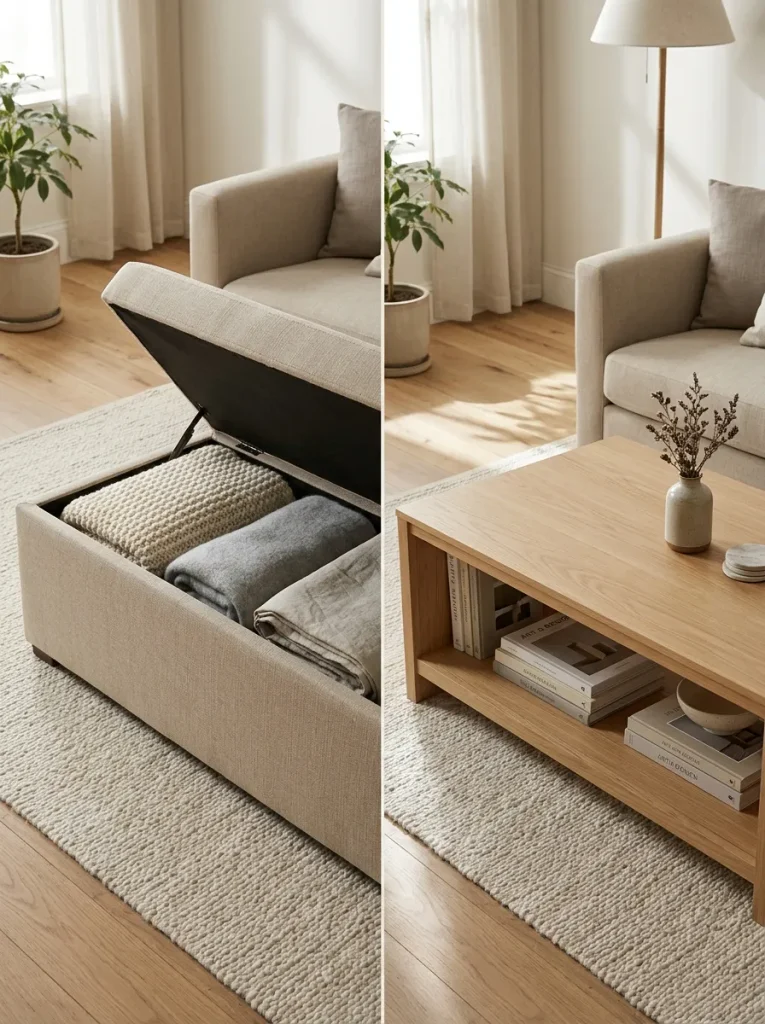
| Feature | Storage Ottoman | Coffee Table |
|---|---|---|
| Hidden storage | Usually available beneath the lid | Depends on the design |
| Surface for drinks | Requires a suitable tray or firm top | Usually convenient |
| Soft seating | Can provide extra seating | Not designed for seating |
| Visual style | Soft and upholstered | Often wood, glass or metal |
| Best use | Blankets, toys and accessories | Books, drinks and decorative items |
The right choice depends on how your household uses the living room. A storage ottoman can reduce the need for an additional cabinet, while a coffee table offers a stable surface for drinks and everyday activities. Some homes benefit from combining a compact coffee table with a small storage ottoman nearby.
Measure the available space before choosing either piece, and leave comfortable walking room around it. If you frequently entertain guests, consider a firm ottoman tray that can be removed when extra seating is needed.
A Daily Clutter Basket

Small belongings often accumulate throughout the day, from books and toys to mail and charging accessories. A daily clutter basket gives these misplaced items one temporary collection point, helping the room look tidier without requiring constant interruptions.
Do:
- Place the basket somewhere convenient and visible.
- Collect misplaced belongings during your evening reset.
- Return each item to its proper storage location.
- Empty the basket daily or on a consistent schedule.
Don’t:
- Treat the basket as permanent storage.
- Mix rubbish with belongings worth keeping.
- Allow food wrappers or dirty items to accumulate.
- Choose a basket so large that it encourages unnecessary clutter.
This approach works particularly well in busy family homes where objects move between rooms throughout the day. Keep the basket small enough to empty quickly. If certain items repeatedly end up inside it, consider creating a more convenient permanent storage spot for them.
A Minimalist Bookshelf
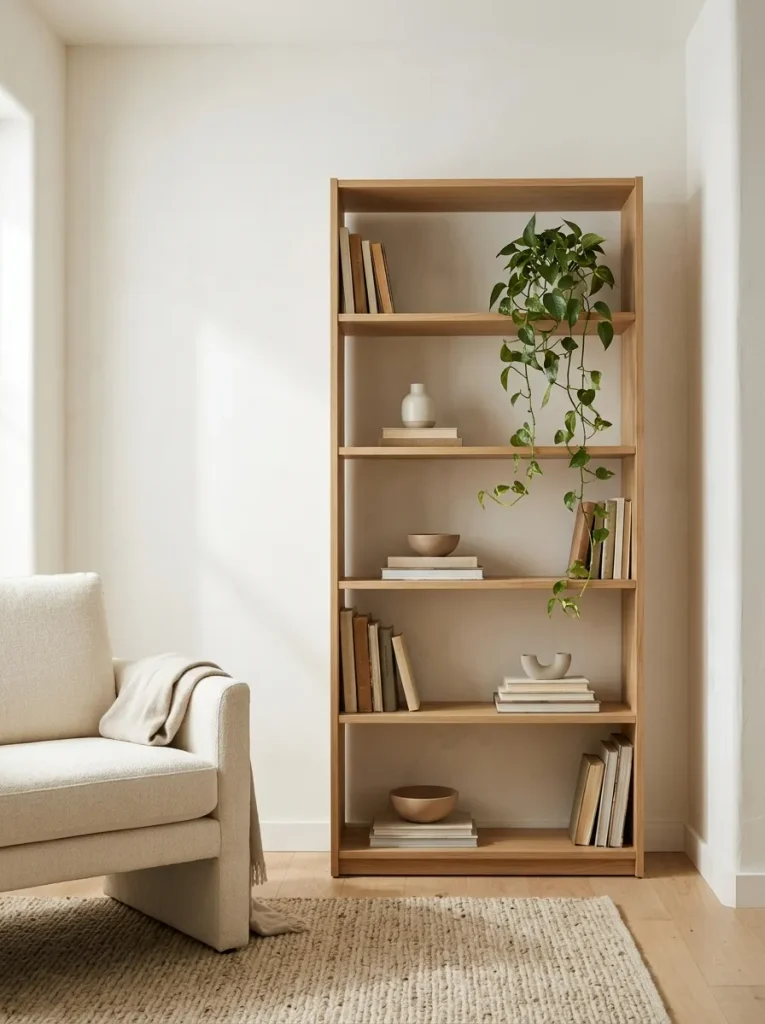
An overcrowded bookshelf can become a visual distraction, even when every book has a place. Simplifying the arrangement makes it easier to find favorite titles while allowing the furniture and decorative objects to complement the rest of the room.
Cost: Low if you use an existing bookshelf.
Time: About 30 to 60 minutes for sorting and arranging.
Skill Level: Beginner.
Best For: Book lovers, small living rooms and open shelving.
Result: Easier access to books and a less crowded appearance.
Start by removing everything from the shelves and sorting books into categories, such as novels, reference books and children’s titles. Return the books you use most often to accessible shelves, and donate unwanted titles in good condition. Place heavier books on lower shelves and secure tall furniture to the wall when necessary.
Leave small gaps between groups rather than filling every available inch. A few decorative objects can break up the rows, but books should remain easy to remove and return.
Streamlined Entryway Storage

Bags, shoes, keys, and jackets can quickly spread into the living room when there is no clear drop-off point near the entrance. A compact entryway setup keeps these everyday essentials organized before they travel farther into the home.
- Install sturdy hooks for frequently used bags and jackets.
- Place a shallow tray on the console for keys and small accessories.
- Use a basket for items that need to be carried upstairs or into another room.
- Keep shoes on a suitable rack or in a designated cabinet.
- Leave the walkway clear, particularly near doors and stairs.
Even a small entrance can support a useful storage station. Choose narrow furniture that does not obstruct the door and avoid displaying too many objects on the console. If your living room opens directly into the entrance, matching the storage finishes can help the two areas feel connected.
A Tidy Media Console

The television area often collects more miscellaneous items than any other part of the living room. A well-organized media console gives devices, controllers, games and accessories a clear place while keeping the main viewing area visually calm.
Begin by removing unused devices and sorting the remaining equipment by purpose. Place frequently used controllers in one drawer, group game accessories in a labeled container, and route compatible cables behind the unit. Keep ventilation space around electronics and make sure remote controls can still communicate with the devices they operate.
If the console has open shelves, display only the equipment you need to access regularly. Use closed compartments for everything else. A consistent arrangement makes cleaning easier and reduces the time spent searching for a missing controller or cable.
Wall-Mounted Television

Bulky television furniture can occupy valuable floor space in a compact living room. Mounting the television on the wall may free up room for a slimmer console and make the surrounding area easier to clean.
- Check the television’s weight and compatible mounting specifications.
- Choose a viewing height that feels comfortable from your main seating position.
- Locate suitable structural support behind the wall.
- Route cables through approved covers or professionally installed in-wall systems.
- Keep connected devices ventilated and accessible for maintenance.
A wall-mounted television works especially well with a low cabinet beneath it, creating a simple visual line across the room. Avoid mounting the screen so high that you must tilt your head upward for extended viewing. If you are unsure about wall construction or concealed wiring, consult a qualified installer.
A Compact Side Table
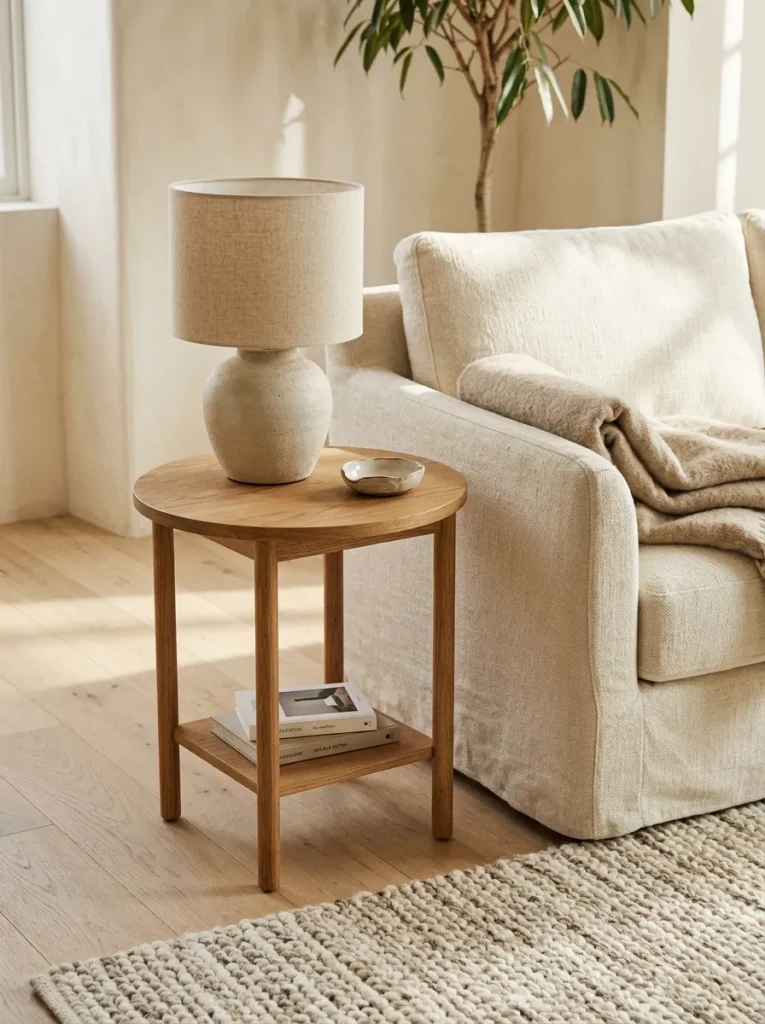
A compact side table provides a convenient place for drinks, reading glasses and other everyday essentials without requiring a large piece of furniture. Choose a design with a lower shelf or small drawer to keep useful items close while leaving the tabletop clear.
Before buying, measure the gap beside your sofa and check that the table will not obstruct a walkway. A round design can be helpful in tight spaces because it has no sharp corners to navigate around.
Keep the top limited to a lamp, a coaster and perhaps one small decorative item. Store reading materials or a small basket underneath if the design allows it. This arrangement creates a practical landing spot without introducing another cluttered surface.
A Blanket Ladder
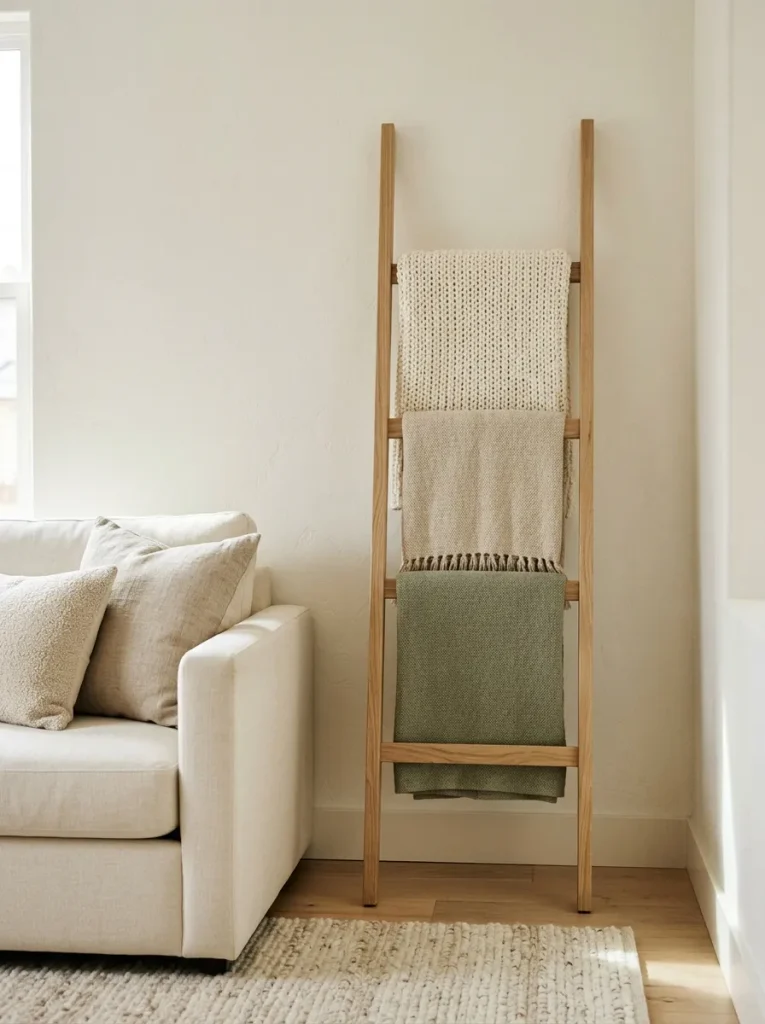
Throw blankets add comfort to a living room, but leaving them draped across several chairs can make the space appear untidy. A blanket ladder creates a dedicated display and storage spot while keeping your favorite throws easy to reach.
- Select a ladder designed for blanket storage rather than an unstable decorative substitute.
- Position it on a suitable surface where it will not block a walkway.
- Fold each blanket into a similar width for a consistent appearance.
- Arrange heavier throws on lower rungs and lighter ones above.
- Wash and return blankets regularly to prevent dust from accumulating.
Choose two or three blankets in complementary colors instead of displaying every throw you own. In smaller rooms, a narrow ladder can provide vertical storage with little floor space. Secure the ladder according to its design and keep it away from areas where children might climb on it.
Organized Board Games
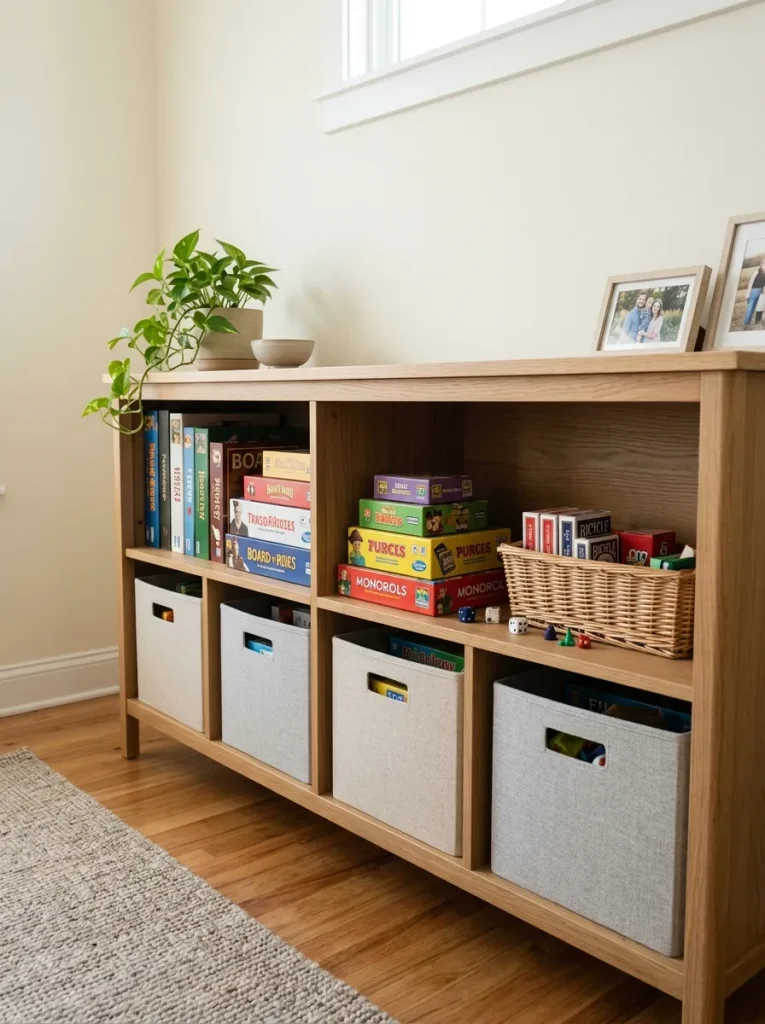
Board games are easier to enjoy when you can find the right box without emptying an entire cabinet. Grouping games by size or type helps prevent scattered pieces, damaged packaging and missing accessories.
Sort your collection into categories such as family games, card games, puzzles and games for younger children. Place small pieces in labeled pouches or containers inside their original boxes and check that each game has its essential components before storing it.
Keep favorite games on an accessible shelf and reserve higher storage for those used less often. If the original boxes are damaged, use appropriately sized containers with clear labels. A simple system encourages everyone to return each game to its correct place after playing.
A Toy Storage Corner

Children’s toys can spread across the living room when there is no convenient place to put them away. A dedicated toy corner keeps playthings accessible while helping the rest of the room retain its organized appearance.
Choose low, stable storage that children can reach without climbing. Use separate bins for building blocks, dolls, vehicles and art supplies and add picture labels if young children cannot yet read. Keep small pieces away from children who may put them in their mouths.
Rotate some toys out of the living room when they are not being used. This reduces the number of objects that need to be stored and makes cleanup quicker. Secure tall furniture to the wall, avoid heavy objects on high shelves and keep the play area away from cords and unstable lamps.
A Hidden Charging Station
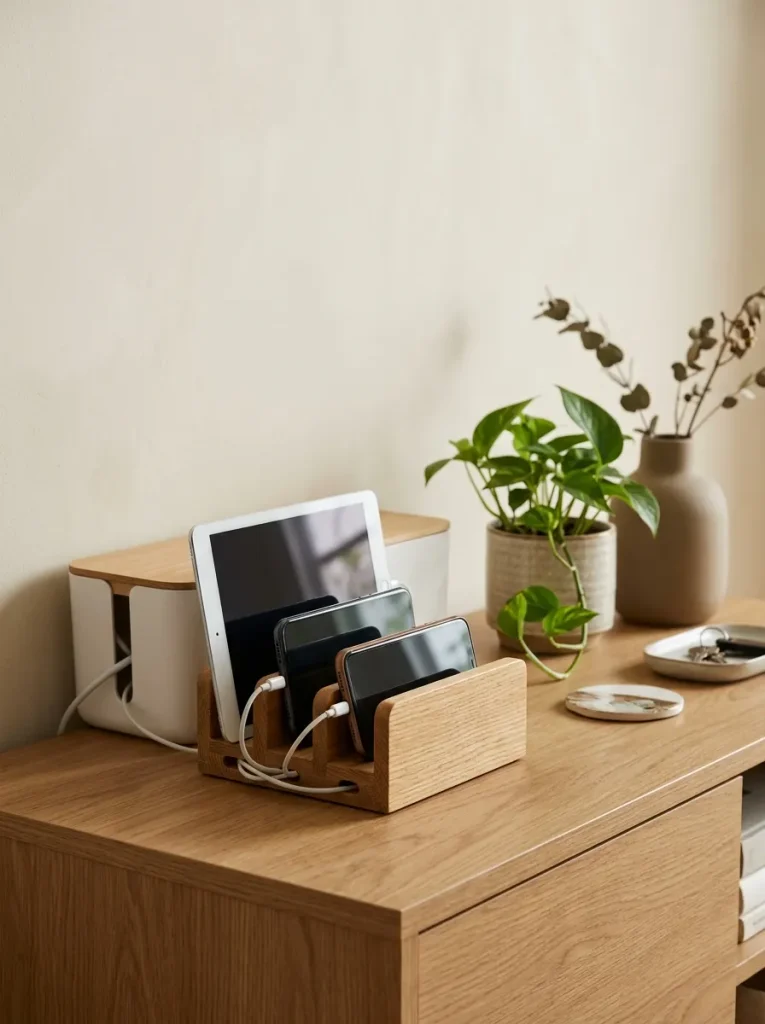
Charging cables often end up scattered across sofas, coffee tables and floor outlets. A dedicated charging station brings devices and compatible chargers together in one predictable location, reducing visual clutter and making it easier to find a charged phone.
Choose a stable surface near a suitable outlet and use a charging organizer with separate spaces for household devices. Keep cords untangled, avoid covering charging equipment and use manufacturer-approved or compatible chargers. Never hide power adapters inside a container that prevents heat from escaping.
If several family members share the station, label the charging spaces or assign each person a section. Keep the setup away from drinks, damp areas and places where cords could become tripping hazards. A simple station works best when everyone returns their devices to it after charging.
A Neat Magazine Holder

Magazines and newspapers can quickly cover coffee tables and side tables when there is no designated place to keep them. A compact magazine holder gathers reading materials in one spot while allowing you to reach your current favorites easily.
Select a holder that fits beside a sofa or under a console without narrowing the walkway. Keep only the magazines, newspapers and books you genuinely intend to read. Recycle outdated papers and pass along reading materials that no longer interest you.
For a consistent appearance, arrange magazines upright with their spines visible or group a few horizontally in a low rack. Avoid using the holder as a general purpose container for mail, receipts and unrelated household items. Clear categories make storage easier to maintain.
A Decluttered Coffee Table

The coffee table is often the first surface to collect cups, papers, toys and small accessories. Keeping it intentionally simple creates a more open appearance and leaves enough room for drinks, snacks and everyday activities.
Start by removing everything from the table and returning each item to its proper location. Choose one small tray to group useful accessories, then select one or two decorative objects that leave most of the surface available. If you regularly eat or work there, prioritize practical space over decoration.
Make a quick evening reset part of your routine. Remove used cups, collect stray papers, and return remotes to their designated tray. The goal is not to keep the table empty at all times, but to prevent temporary clutter from becoming permanent storage.
A Sofa Arm Organizer

Small essentials often disappear between sofa cushions or end up scattered on the floor beside the seating area. A sofa arm organizer keeps frequently used items close at hand without requiring another piece of furniture.
Look for a design that fits your sofa arm securely and has pockets sized for your belongings. Store remotes, reading glasses, a notebook, or other lightweight items in separate compartments. Avoid overfilling the pockets, which can make the organizer sag or interfere with sitting comfortably.
Choose a color that blends with your upholstery for a discreet look. If the sofa has rounded or unusually wide arms, measure carefully and check the organizer’s fit before purchasing. Keep sharp objects and drinks out of fabric pockets to prevent damage and spills.
A Slim Console Table
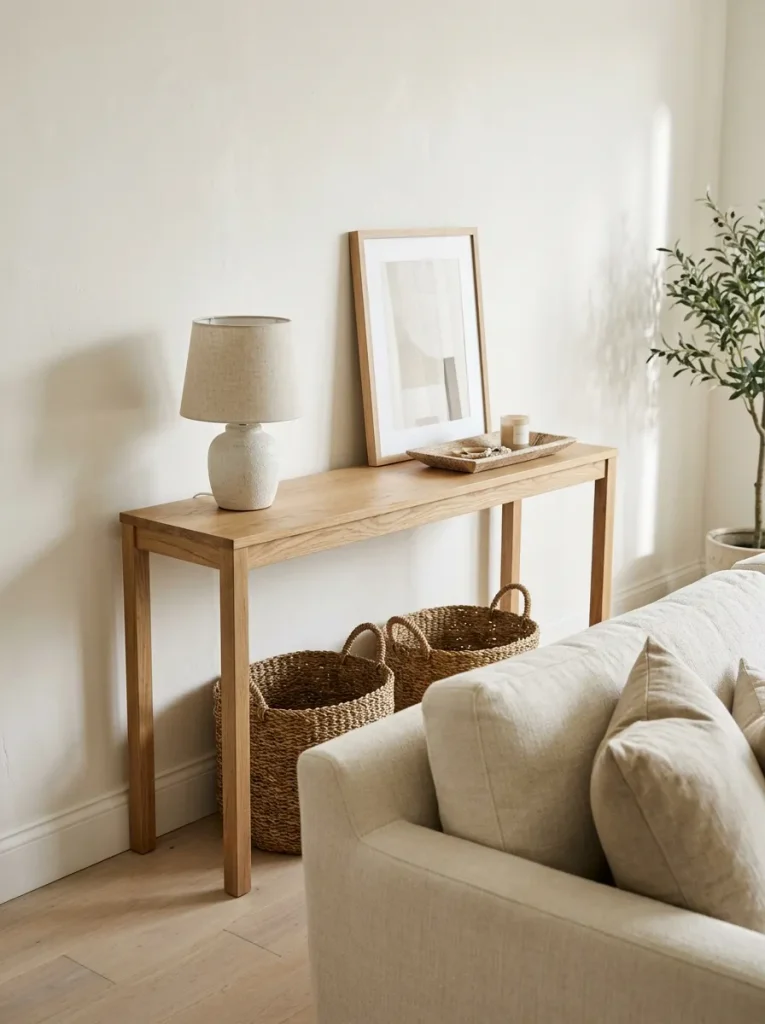
A slim console table can create useful storage along a wall without occupying as much floor space as a deep cabinet. It provides a place for small everyday items while giving baskets or containers room underneath.
Measure the available depth carefully, particularly if the table sits behind a sofa or beside an entrance. Choose a sturdy design that does not wobble, and leave enough room for people to pass comfortably. Use the tabletop for a few practical items, such as a lamp, keys or a small tray.
Place baskets beneath the table to store blankets, magazines, or accessories that otherwise collect on the floor. Keep heavier objects away from the edges, and avoid crowding the tabletop with decorative pieces. A narrow table works best when it supports a specific storage purpose.
A Seasonal Decor Box

Seasonal decorations can take over cupboards and shelves when they remain mixed with everyday belongings. A dedicated seasonal box keeps items together, protects delicate accessories and makes decorating changes easier to manage throughout the year.
- Sort decorations by season or occasion.
- Clean and dry items before packing them away.
- Wrap fragile objects in suitable protective material.
- Label each container clearly on the front and top.
- Store boxes in a dry location that is safe to access.
Use sturdy containers suited to the weight and fragility of their contents. Keep frequently used seasonal items accessible and place less commonly needed boxes in appropriate storage areas rather than crowding the living room. Review the collection before each season so broken or unwanted decorations do not take up valuable space.
A Simple Daily Reset
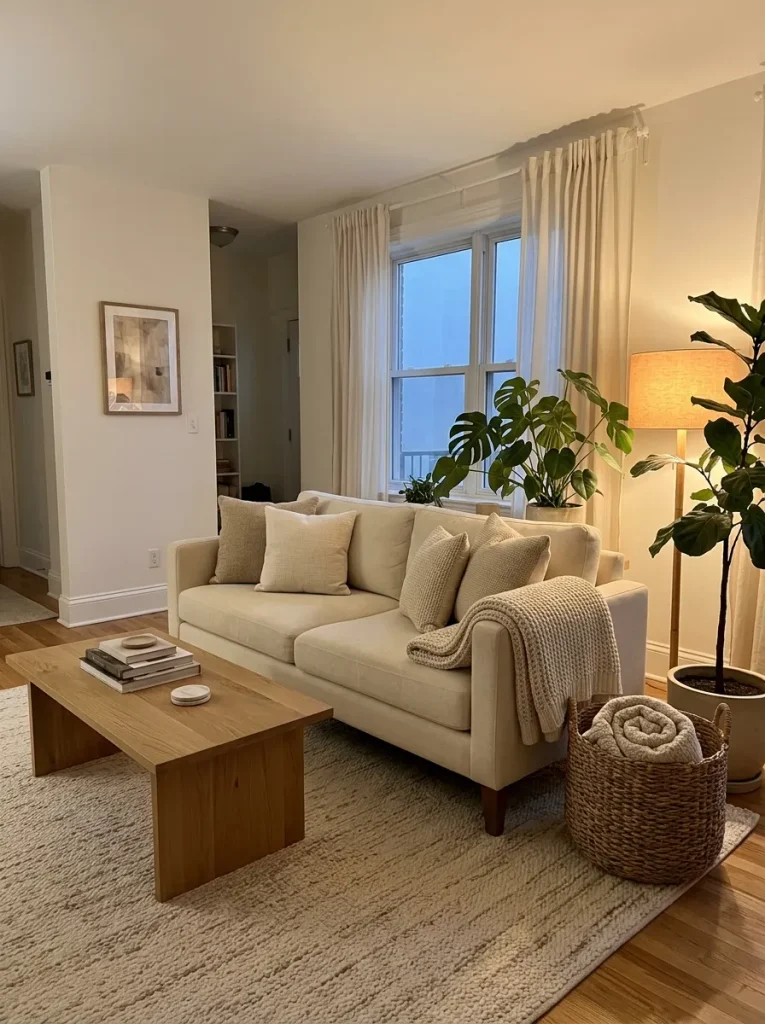
A living room can become cluttered again even after a thorough organizing session. A short daily reset helps maintain the system by returning everyday belongings to their assigned places before mess begins to accumulate.
Time: About 5 to 10 minutes.
Cost: Free.
Skill Level: Beginner.
Best For: Busy households and shared living spaces.
Result: Less visible clutter and simpler daily maintenance.
Start by collecting cups, dishes and rubbish. Return remotes, books, toys and blankets to their designated spots, then straighten the cushions and clear the coffee table. Finish by checking the floor for objects that could cause trips.
Choose a time that naturally fits your routine, such as before bed or after the evening television session. In my experience, small, consistent resets are easier to maintain than waiting until every surface needs a major cleanup. Keep the routine realistic so it remains manageable on busy days.
CONCLUSION
Creating a peaceful living room does not require expensive furniture or a complete makeover. Small changes, such as adding storage baskets, organizing shelves and clearing everyday surfaces, can make your home feel more comfortable and manageable. These Living Room Organization Ideas offer practical ways to reduce clutter while keeping your personal style intact.
Start with one idea that solves your biggest everyday frustration, then build on your progress as time allows. Save this article on Pinterest for inspiration, try your favorite solutions, and share it with someone who wants a calmer home. A more organized living room begins with one simple step.



One Comment