
26 Genius Bedroom Organization Ideas That Save Space
Is your bedroom running out of space, even when you feel like you have too much stuff? A few smart changes can make your room feel more organized without buying lots of new furniture.
These 216 Genius Bedroom Organization Ideas are packed with practical ways to reduce clutter, use forgotten spaces and make everyday essentials easier to find. From under bed storage and floating shelves to clever closet organizers and space saving furniture, there are solutions for bedrooms of every size.
The best part is that you do not need a big budget or professional organizing skills to get started. Small changes, such as adding drawer dividers or creating a dedicated spot for accessories, can make daily routines easier. In my experience, choosing one cluttered area and organizing it first is often the easiest way to build a lasting habit.
Whether you live in a small apartment, share a bedroom or simply want a tidier home, these ideas will help you make better use of your available space. Save your favorite ideas on Pinterest and find the ones that fit your room, budget and lifestyle.
Under Bed Storage Bins

Under bed storage puts forgotten space to work without adding another piece of furniture. Choose shallow rolling bins that slide easily beneath your bed and measure the available height before purchasing them. Clear containers make it easier to identify stored items without opening every lid.
Store seasonal clothes, spare bedding, extra pillows and shoes you rarely wear. Keep everyday essentials somewhere more accessible so you do not need to move several containers each morning. Label each bin on the front and leave enough clearance to pull it out comfortably. A tidy bedroom starts with using the space you already have.
Floating Wall Shelves

Empty walls can provide valuable storage without taking up floor space. Floating shelves work well above a desk, beside a wardrobe or in an unused corner where a bulky cabinet would feel overwhelming.
- Install shelves into wall studs or use hardware suitable for your wall type and the intended load.
- Place frequently used items on the lowest shelf for easy access.
- Use small baskets to group chargers, accessories and other loose belongings.
- Keep heavier objects within comfortable reach instead of placing them overhead.
- Leave some open space so the shelves remain practical rather than crowded.
For a cohesive look, choose finishes that complement your bed frame or existing furniture. A pair of shelves can hold books and everyday essentials while keeping your bedside surface clear.
Drawer Dividers

Quick Tip:
Empty one drawer before buying organizers. Measure its interior width, depth and height, then choose adjustable dividers that fit without wasting space. Group similar belongings together so every item has a designated place.
Drawer dividers prevent small items from becoming one tangled pile every time you get dressed. Separate socks, accessories, sleepwear and everyday essentials into sections that match your routine. Fold clothing consistently so you can see each item at a glance. In my experience organizing one frequently used drawer first makes it easier to maintain the system throughout the dresser.
Read More: Bedroom Storage Ideas: 29 Smart Ways to Hide Clutter
Closet Door Organizers

BEFORE
Scarves, belts and small accessories pile up on shelves or disappear into crowded drawers. Finding one item often means moving several others.
AFTER
A door mounted organizer gives each accessory a visible storage spot. The wardrobe interior stays less crowded and frequently used belongings are easier to reach.
Choose pockets or hooks based on what you need to store. Measure the door thickness and check the clearance around its frame before purchasing an organizer. Make sure the added hardware does not interfere with closing the door or damage the finish. This setup is especially useful in rental bedrooms where permanent shelves may not be practical.
Vertical Shoe Storage
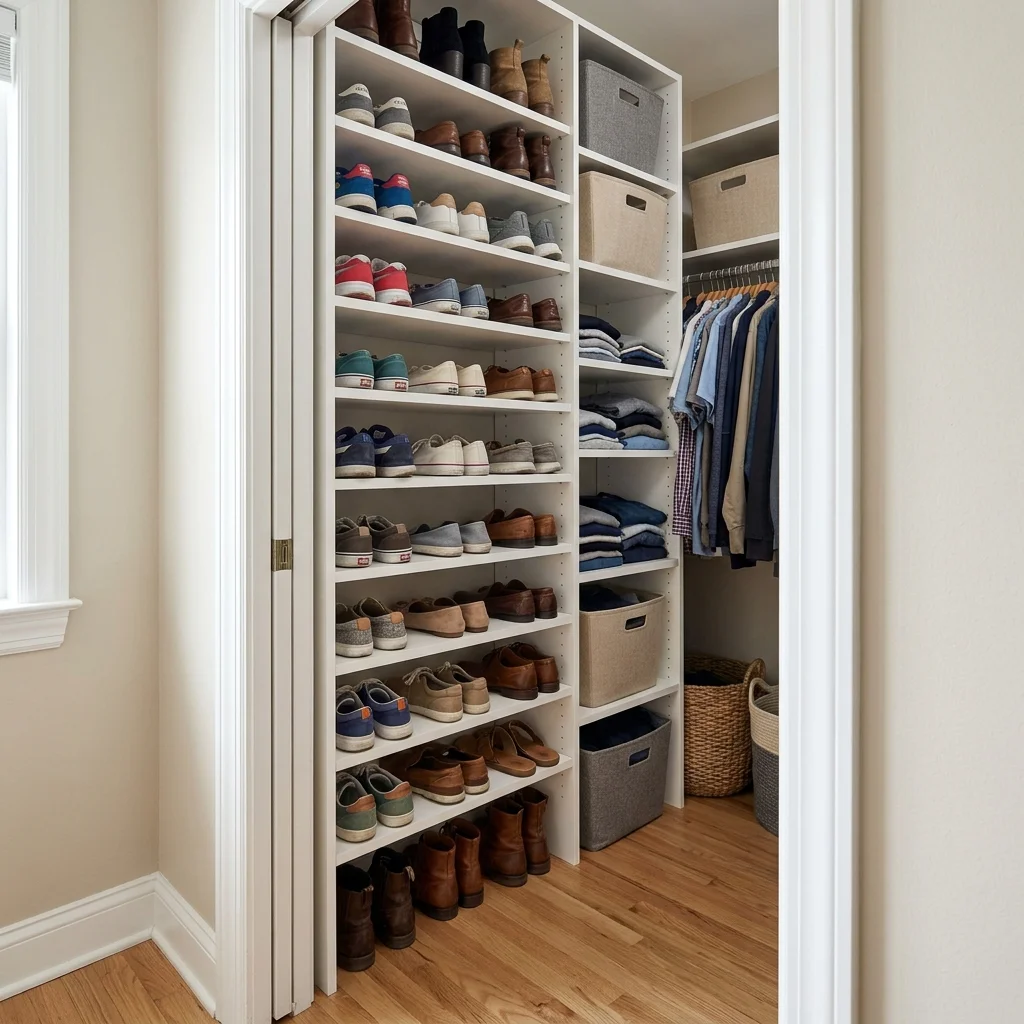
- Sort your shoes. Keep frequently worn pairs together and move occasional footwear to higher shelves.
- Measure the available height. Check the closet dimensions before choosing a tall rack.
- Arrange pairs by frequency. Place everyday shoes at eye level or lower.
- Use matching containers. Store delicate or seasonal footwear in labeled boxes.
Vertical racks take advantage of unused height instead of spreading shoes across the floor. They also make it easier to spot the pair you need before leaving home. For a narrow bedroom, choose a slim design that leaves the wardrobe accessible and preserves a clear walking path.
Bedside Storage Tables

| Storage Choice | Best Use |
|---|---|
| One drawer table | Chargers, glasses and small personal items |
| Open shelf table | Books, baskets and folded blankets |
| Two drawer table | Items that need to stay hidden |
| Narrow side table | Bedrooms with limited walking space |
A well chosen bedside table keeps nightly essentials close without turning the area into a cluttered drop zone. Measure the gap beside your bed before selecting a model and check that drawers can open fully. Keep only a lamp, a small tray and one or two useful items on top. A clear surface makes the whole sleeping area feel calmer.
Hanging Closet Organizers

DO
- Group sweaters, jeans and handbags by category.
- Choose a hanging unit that fits the wardrobe’s height.
- Place heavier folded items in compartments designed to support them.
- Keep frequently used belongings within easy reach.
DON’T
- Overfill shelves until the fabric begins to sag.
- Block the wardrobe rail with an oversized organizer.
- Store damp clothing inside enclosed compartments.
- Buy a unit before measuring the available hanging space.
Hanging organizers create extra compartments without requiring a separate cabinet. They are especially useful for bedrooms with limited drawer space or shared wardrobes. Choose sturdy stitching and a stable hanging attachment, then keep each section dedicated to one category. When everything has a consistent place, putting clothes away becomes much quicker.
Storage Ottoman Benches

Cost: Moderate, depending on size and upholstery.
Time: Around 15 minutes to organize the contents.
Skill Level: Beginner.
Best For: Extra blankets, pillows and seasonal bedding.
A storage ottoman provides a useful place to sit while putting on shoes and hides bulky items that would otherwise occupy a closet shelf. Choose a model that leaves enough room to walk around the bed and open the lid fully. Divide the interior into categories using fabric bags and avoid storing anything damp or delicate without suitable protection.
Slim Rolling Storage Carts
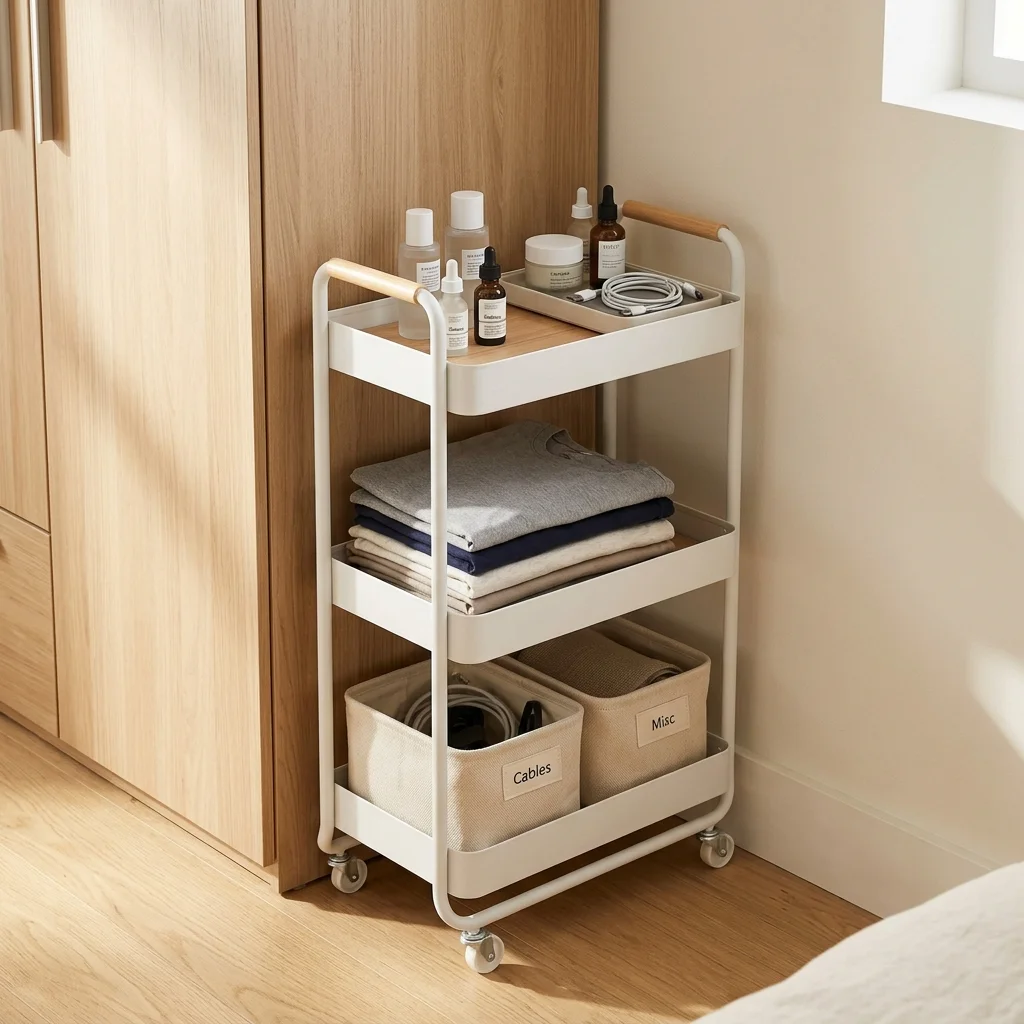
When floor space is tight, a slim rolling cart can fit into a narrow gap that ordinary furniture cannot use. Measure the gap at its narrowest point and allow room for the wheels to turn.
Use one tier for daily accessories, another for folded clothing and the lowest tier for heavier items. Small containers stop loose objects from sliding around when the cart moves. Keep the top surface relatively clear and check that the cart does not obstruct doors, drawers or your walking route. A mobile unit is particularly useful when you need flexible storage in a rented room.
Wall Mounted Bedside Pockets

Quick Tip:
Choose a bedside pocket with separate compartments for your phone, book and glasses. Attach it to a suitable part of the bed frame where it will not interfere with movement or the mattress.
This compact organizer keeps nighttime essentials within reach without requiring a traditional nightstand. It is particularly helpful in shared rooms, narrow bedrooms or spaces where the bed sits close to a wall. Select a washable fabric and avoid placing heavy objects in a pocket that is not designed to support them. Keep charging cables arranged safely away from areas where they could become tangled.
Labeled Storage Boxes

BEFORE
Mixed belongings occupy every available shelf and finding a particular item means opening several containers. Unlabeled boxes also make it easy to forget what is stored away.
AFTER
Matching boxes create a consistent appearance, while clear labels identify each category immediately. Frequently used items can stay on lower shelves, with seasonal belongings stored higher up.
Choose boxes that fit the shelf dimensions without leaving awkward gaps or making containers difficult to remove. Use short labels such as “Winter Wear,” “Extra Sheets,” or “Travel Items.” For opaque boxes, place the label on the front rather than the lid so it remains visible when containers are stacked. Avoid stacking heavy boxes above head height.
Overhead Shelf Storage
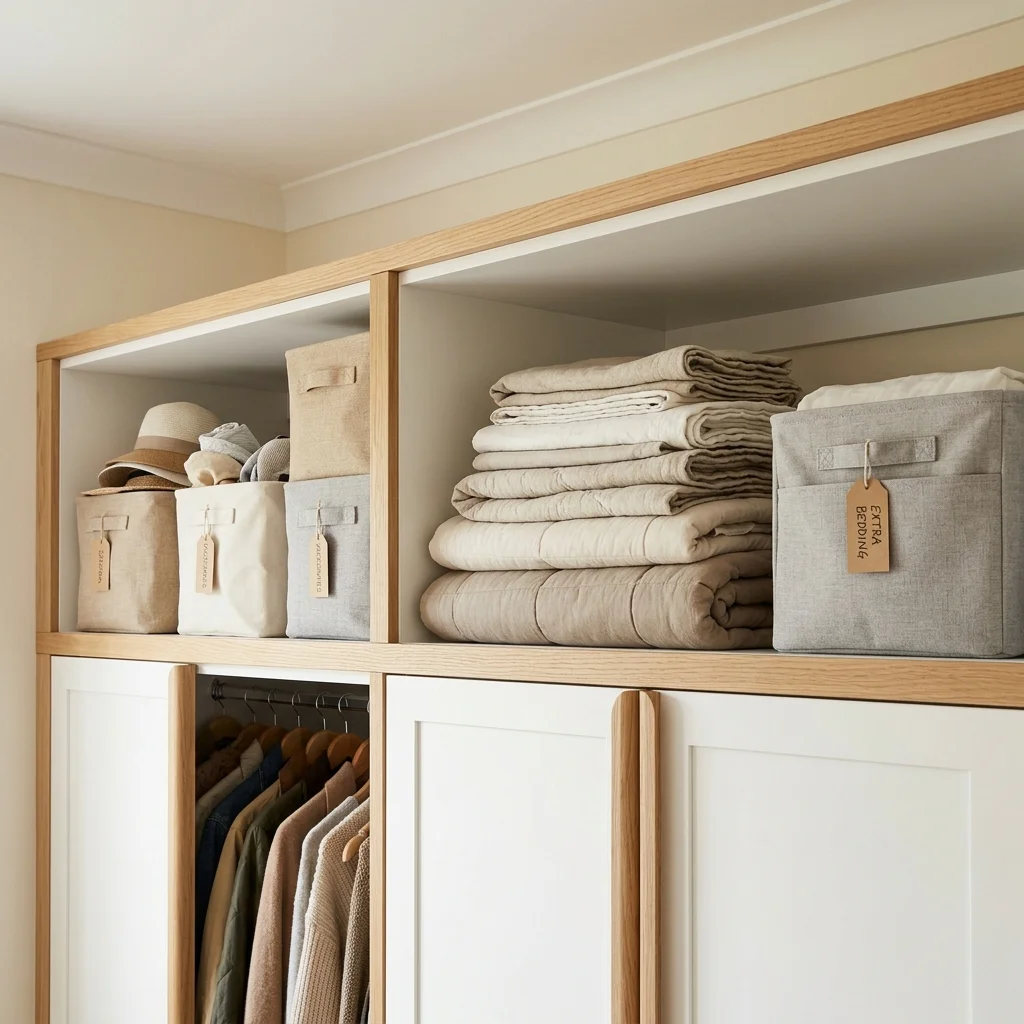
- Check the shelf height. Make sure stored items can be reached safely.
- Group occasional use belongings. Keep holiday accessories and seasonal items together.
- Select lightweight containers. Use sturdy boxes that fit without crowding the shelf.
- Label the front. Make the contents identifiable before taking anything down.
Overhead storage frees lower shelves for clothing and everyday essentials. It works best for items you do not need regularly, such as spare blankets, travel accessories or out of season clothing. Keep heavy belongings in lower storage and never overload a shelf beyond its rated capacity. A small step stool may help with access, but use it on a stable surface.
Under Bed Shoe Drawers

- Measure the clearance. Check the space beneath your bed and account for any frame supports.
- Choose shallow drawers. Make sure they slide out without catching on the bed frame.
- Sort by season. Store everyday footwear separately from occasional pairs.
- Keep shoes clean and dry. Let worn footwear air out before storing it.
Under bed shoe drawers can free up wardrobe shelves and keep footwear away from the bedroom floor. Transparent fronts or simple labels help you find the right pair without opening every drawer. If your bed sits very low, shallow containers may work better than full size drawers. Leave enough clearance for easy access and avoid storing shoes while they are wet.
Multi Tier Hanger Systems
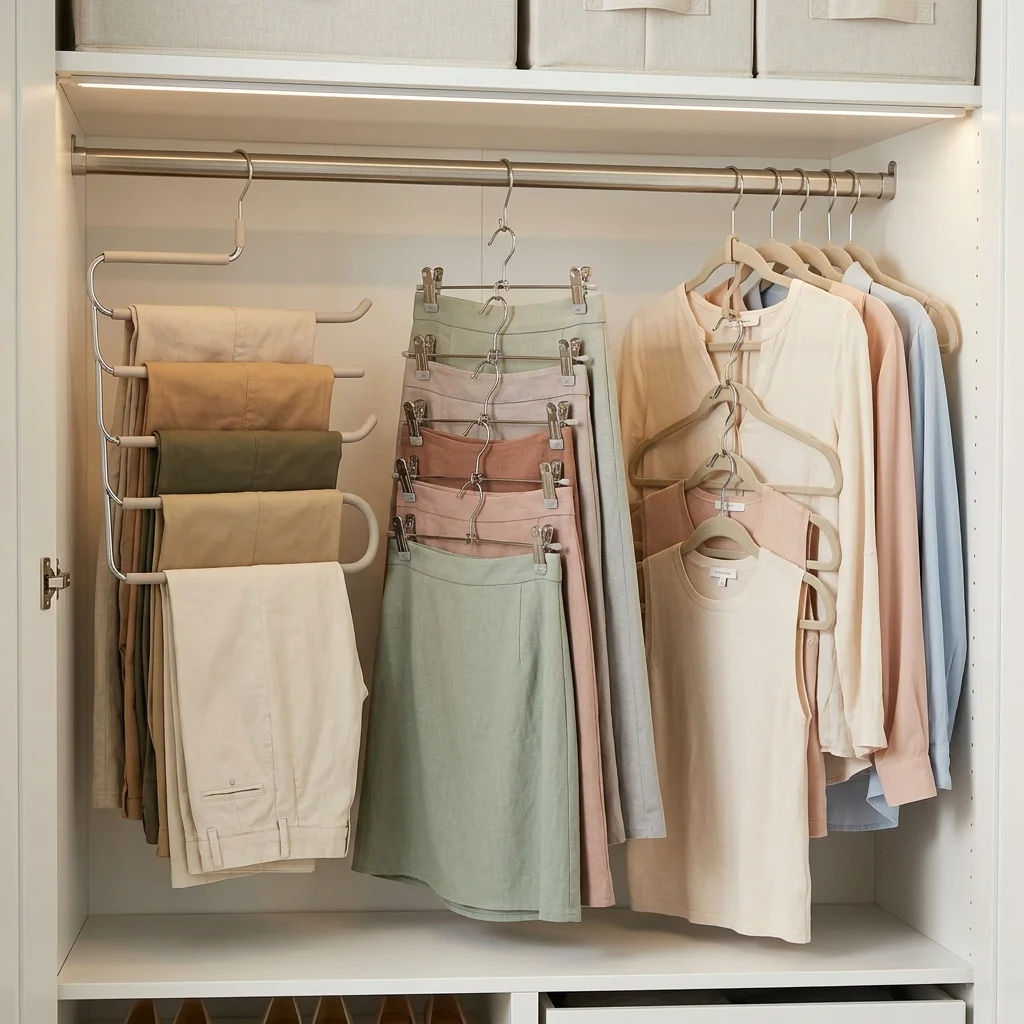
| Storage Method | Advantages | Limitations |
|---|---|---|
| Individual hangers | Easy to remove each garment | Uses more horizontal rail space |
| Cascading hangers | Groups several garments vertically | Some designs are harder to access |
| Clip hangers | Useful for skirts and trousers | Clips may leave marks on delicate fabrics |
| Slim hangers | Reduce wasted rail width | Must be sturdy enough for the garment |
Multi tier hangers can create more room in a crowded wardrobe by arranging selected garments vertically. Use them for lightweight trousers, skirts or similar items that you wear regularly. Avoid loading a single hanger with too many heavy garments, since the combined weight can strain the rail. Leave a little space between groups so clothing stays visible and easy to retrieve.
Corner Floating Shelves
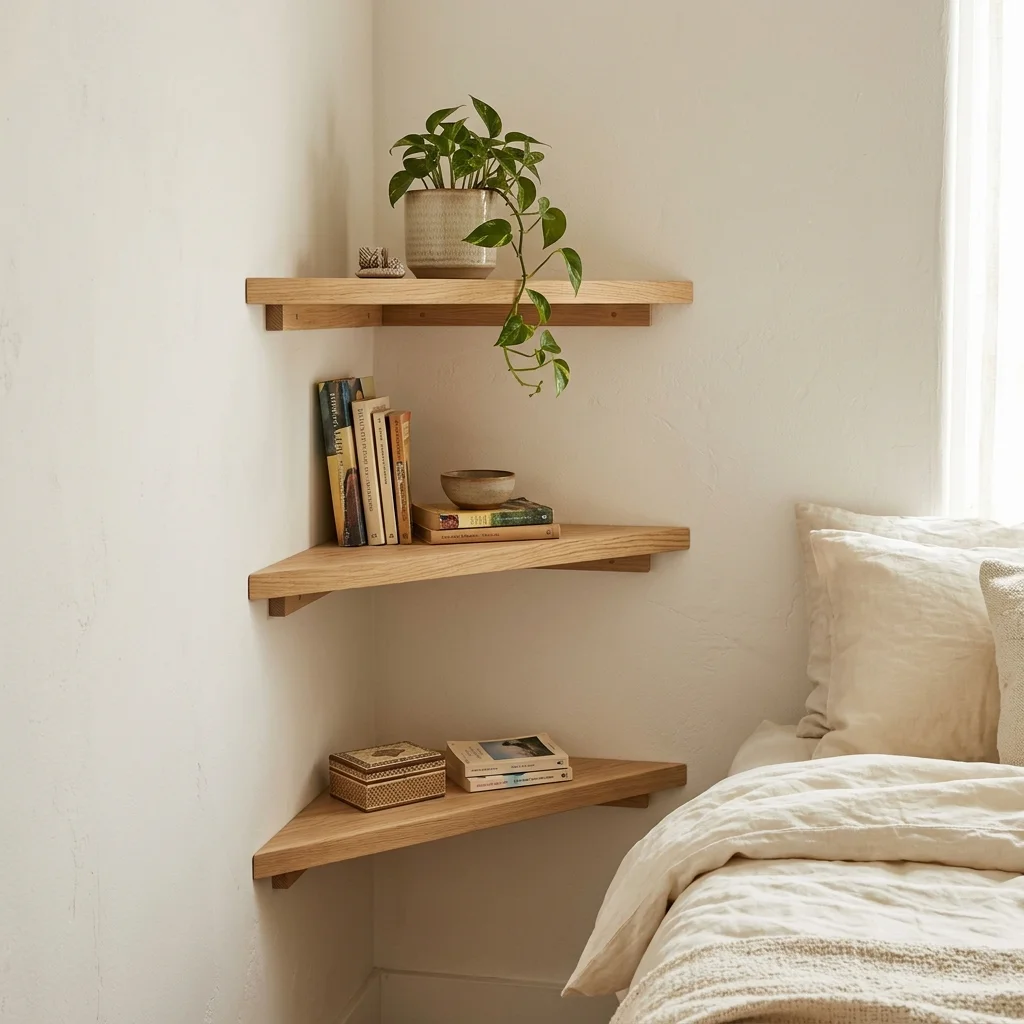
DO
- Measure both walls before selecting shelf dimensions.
- Choose brackets and anchors suitable for the wall construction.
- Store lightweight books and small accessories within safe load limits.
- Keep frequently used items on the easiest shelf to reach.
DON’T
- Install shelves where an open door could hit them.
- Place heavy objects overhead without suitable support.
- Fill every inch with decorative pieces.
- Ignore the manufacturer’s maximum load rating.
Corner shelves make use of an area that often remains empty in compact bedrooms. They can hold small everyday belongings without occupying valuable floor space. Keep the arrangement simple and practical, with useful objects taking priority over decorations. For a balanced appearance, match the shelf finish to existing wood furniture or choose a neutral finish that blends into the wall.
Foldable Laundry Hampers

Cost: Low to moderate.
Time: About 10 minutes to establish a laundry routine.
Skill Level: Beginner.
Best For: Small bedrooms, shared spaces and rental rooms.
A foldable hamper provides a dedicated place for worn clothing without taking up permanent space when not in use. Choose a size that holds a realistic amount of laundry for your household and keep it somewhere convenient enough to use every day. A breathable fabric design is useful for ordinary dry laundry, while damp towels should be allowed to dry rather than left in a closed hamper.
Drawer Top Accessory Trays

Small accessories are easier to manage when they have individual compartments instead of sharing one crowded drawer. Place rings, watches, hair ties and frequently worn jewelry in separate sections so you can find them quickly.
Choose a tray that fits inside a drawer or sits neatly on top of a dresser. Felt or velvet lining can help protect delicate pieces from scratches, while removable dividers make it easier to change the layout later. Keep valuable jewelry in a secure location rather than leaving it exposed overnight. A compact tray can also stop accessories from spreading across your bedside table.
Bed Frame Storage Drawers
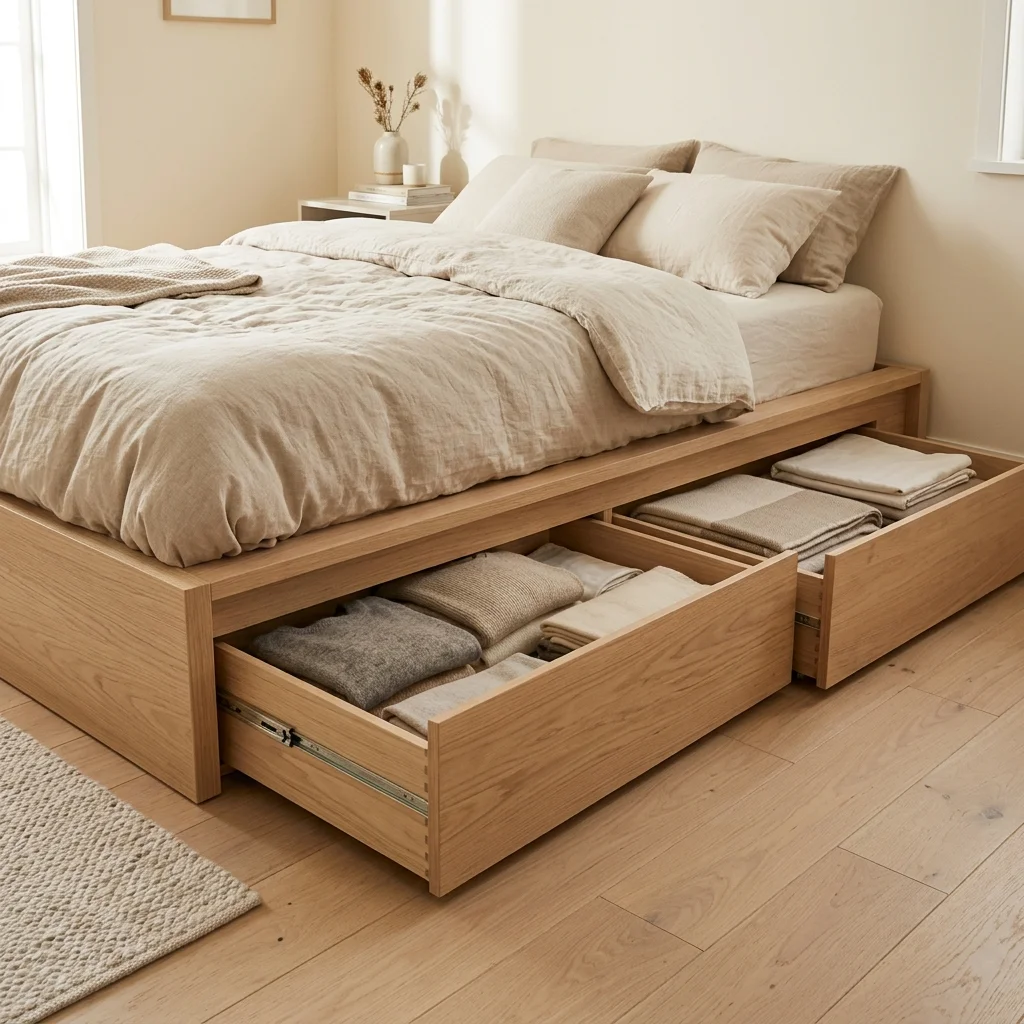
- Check the bed frame. Confirm whether it includes drawers or can accommodate compatible storage units.
- Sort your belongings. Reserve the drawers for linens, clothing or other suitable items.
- Use simple dividers. Keep separate categories from mixing together.
- Test drawer clearance. Make sure the drawers open fully without hitting nearby furniture.
Bed frame drawers provide substantial storage without adding a separate chest of drawers. They are especially useful in bedrooms where wardrobe space is limited. Keep heavier items toward the areas recommended by the manufacturer and avoid packing drawers so tightly that they become difficult to open. Leave enough space beside the bed for the drawers to extend comfortably.
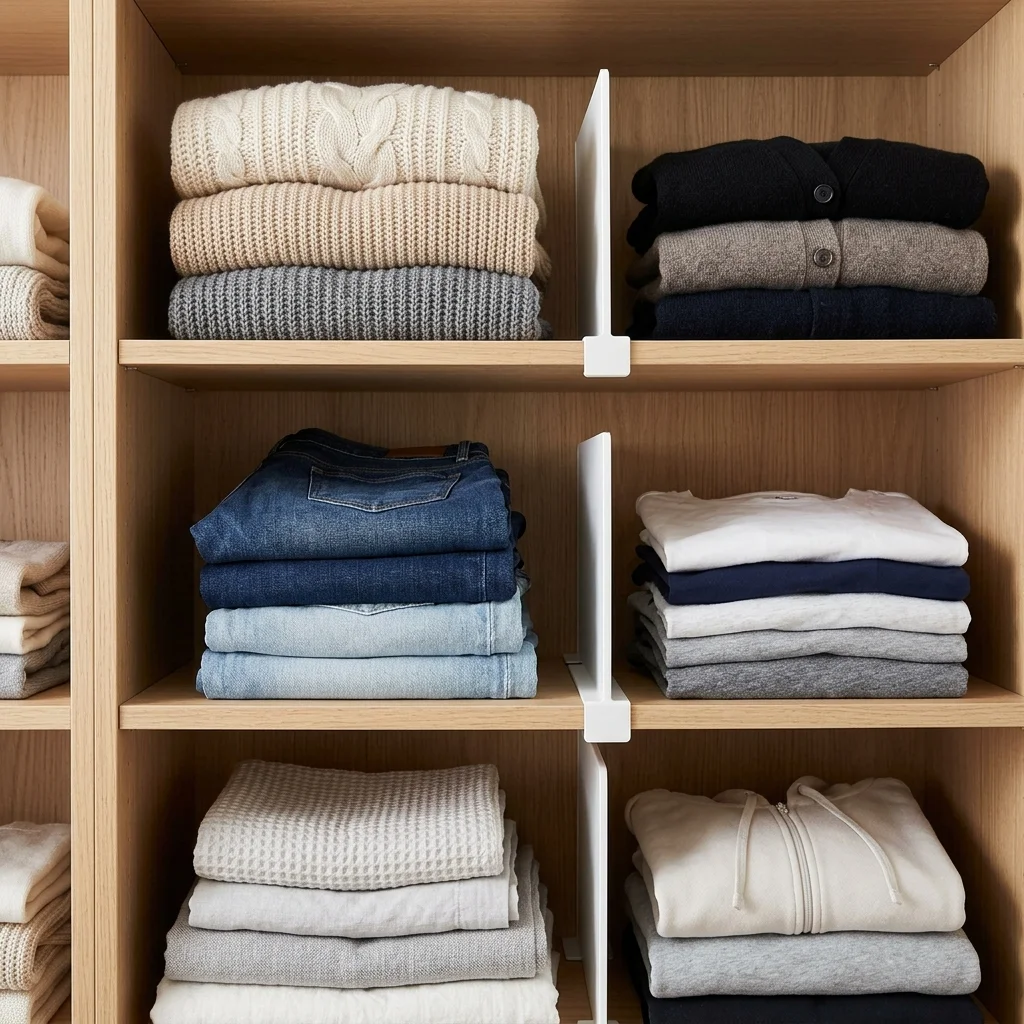
Closet Shelf Dividers
| Organization Method | What It Solves |
|---|---|
| Unstructured stacks | Clothes can topple into neighboring piles |
| Vertical shelf dividers | Separate categories and support tidy stacks |
| Labeled fabric bins | Contain small or loose items |
| Adjustable dividers | Adapt when storage needs change |
Shelf dividers help folded clothes remain in their own sections, particularly on long wardrobe shelves. Place similar garments together and keep stacks at a height you can manage without pulling out the bottom item. Select dividers compatible with your shelf thickness and construction. For small accessories, combine a divider with a shallow basket so tiny items do not slip through gaps.
Wall Mounted Clothing Hooks

Quick Tip:
Install hooks near the place where you naturally change clothes or prepare to leave. Check the wall material, use suitable fixings and confirm the weight rating before hanging bags or heavy jackets.
A short row of hooks keeps frequently used clothing off the bed and floor. It also gives tomorrow’s outfit a clear place without filling a chair with garments. Space the hooks far enough apart to prevent bulky items from overlapping and limit each hook to a manageable number of belongings. For a rental bedroom, consider a suitable removable option after checking its load limits and the wall finish.
Storage Headboard Shelves
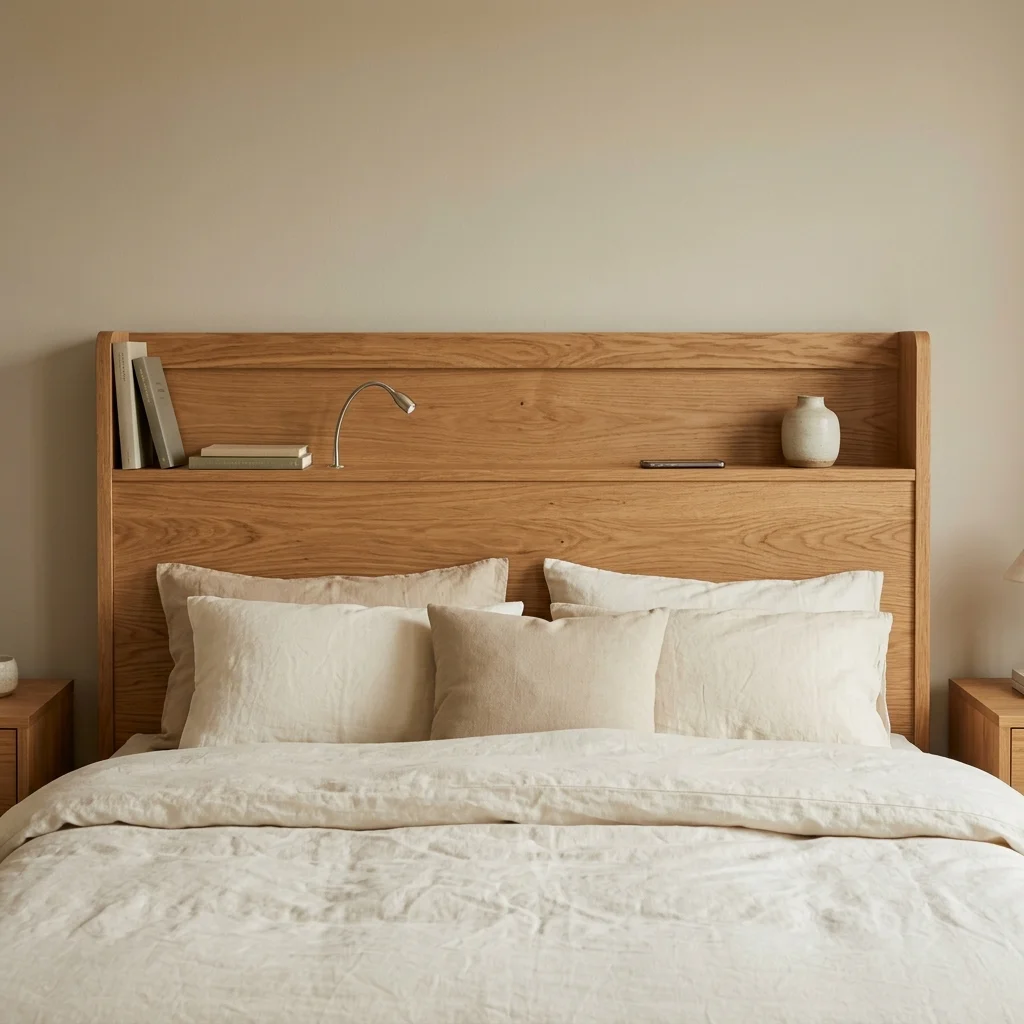
BEFORE
Books, charging cables, glasses and small personal items compete for space on the bedside table. The surface becomes crowded, leaving little room for a lamp or a glass of water.
AFTER
A headboard with integrated shelving provides dedicated storage close to the bed. Everyday essentials remain accessible while the bedside table can stay smaller and less cluttered.
Choose a headboard with shelves deep enough for your actual belongings, not just decorative objects. Check that its design suits your mattress height and leaves adequate room for pillows. Keep liquids away from electronics and store small items in a shallow tray to prevent them from sliding off. This solution is useful when the space beside the bed is especially narrow.
Stackable Closet Bins
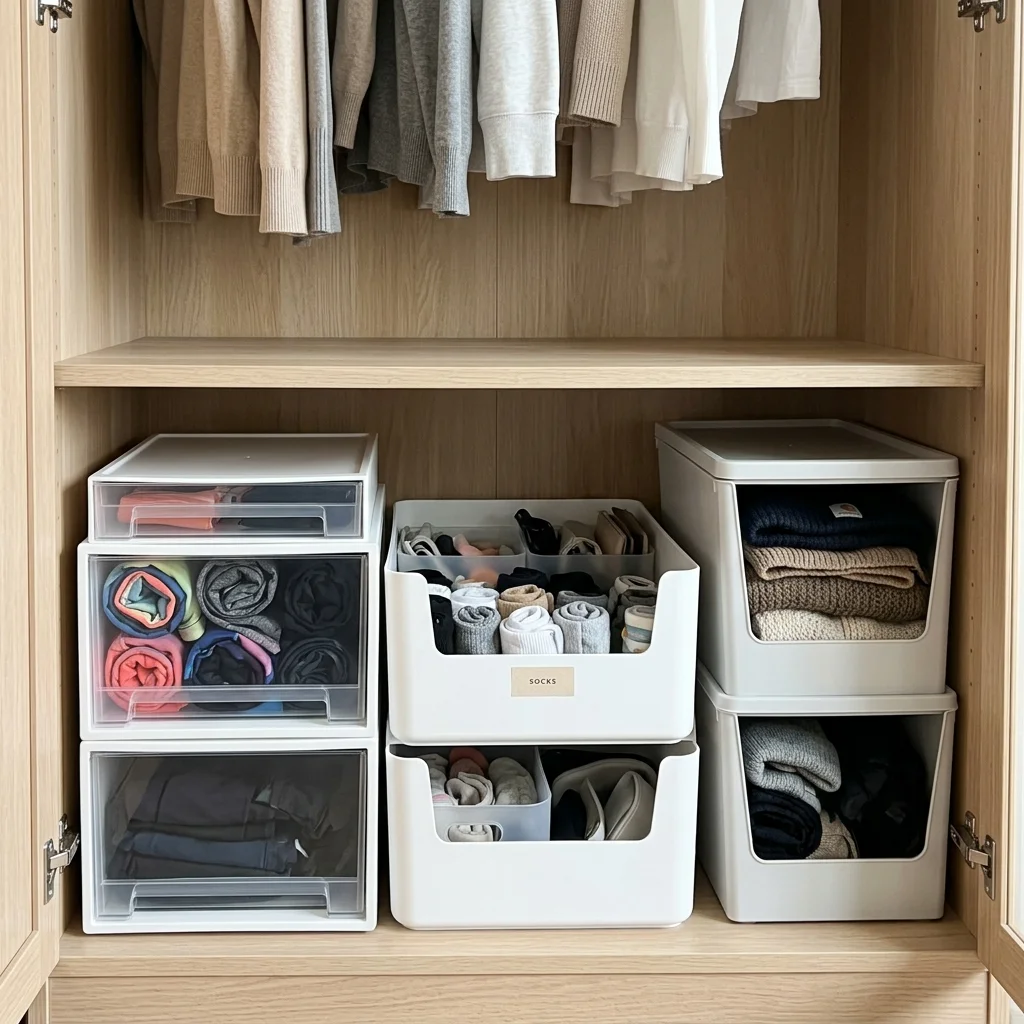
- Measure the shelf. Check its width, depth and height before choosing containers.
- Sort by category. Keep gym clothing, accessories and seasonal items separate.
- Place labels on the front. Make each category easy to identify.
- Stack within the limits. Follow the manufacturer’s guidance and keep heavy bins lower.
Stackable bins turn scattered belongings into organized groups and make better use of vertical closet space. Choose containers that can be lifted or pulled out without disturbing the entire stack. Transparent bins are useful when contents change frequently, while opaque ones create a more uniform look. Avoid storing items you use every morning at the bottom of a tall stack.
Behind Door Towel Storage

DO
- Use a rack designed for the door thickness and available clearance.
- Hang dry towels and lightweight robes.
- Keep the door able to open and close freely.
- Check the rack periodically for secure attachment.
DON’T
- Overload hooks beyond their rated capacity.
- Hang wet towels where air cannot circulate.
- Let the rack scrape painted surfaces.
- Block the handle or nearby light switches.
Behind door storage makes use of a surface that often serves no purpose beyond closing the room. A slim rack can keep towels, robes and light accessories off chairs and bedroom furniture. Check the manufacturer’s guidance before installation, especially on hollow doors. Allow towels to dry fully and choose a layout that keeps frequently used items easy to reach.
Small Bedroom Storage Cabinets

Cost: Moderate, depending on size and materials.
Space: Best for an unused wall section or a wardrobe adjacent corner.
Storage: Useful for folded clothes, books, accessories and spare linens.
Style: Choose a finish that coordinates with the bed and wardrobe.
A compact cabinet can provide more enclosed storage than an open shelf while keeping the room visually tidy. Measure the wall and account for drawer clearance before buying one. Choose adjustable shelves if you expect your storage needs to change. Keep the cabinet proportionate to the bedroom and avoid placing it where it narrows the main walking route or blocks access to a window.
Rolling Under Desk Drawers

A bedroom desk can become a second clutter zone when paperwork, chargers and stationery have nowhere to go. A rolling drawer unit uses the space beneath the desk while keeping work supplies separate from clothing and personal belongings.
Measure the distance between the desk legs and the available height before selecting a unit. Store heavier supplies in the bottom drawer and use small dividers for pens, adapters and loose cables. Leave enough clearance for your chair and legs. When the workday ends, the drawers can close away the visual clutter, helping the bedroom feel more restful.
Seasonal Clothing Rotation
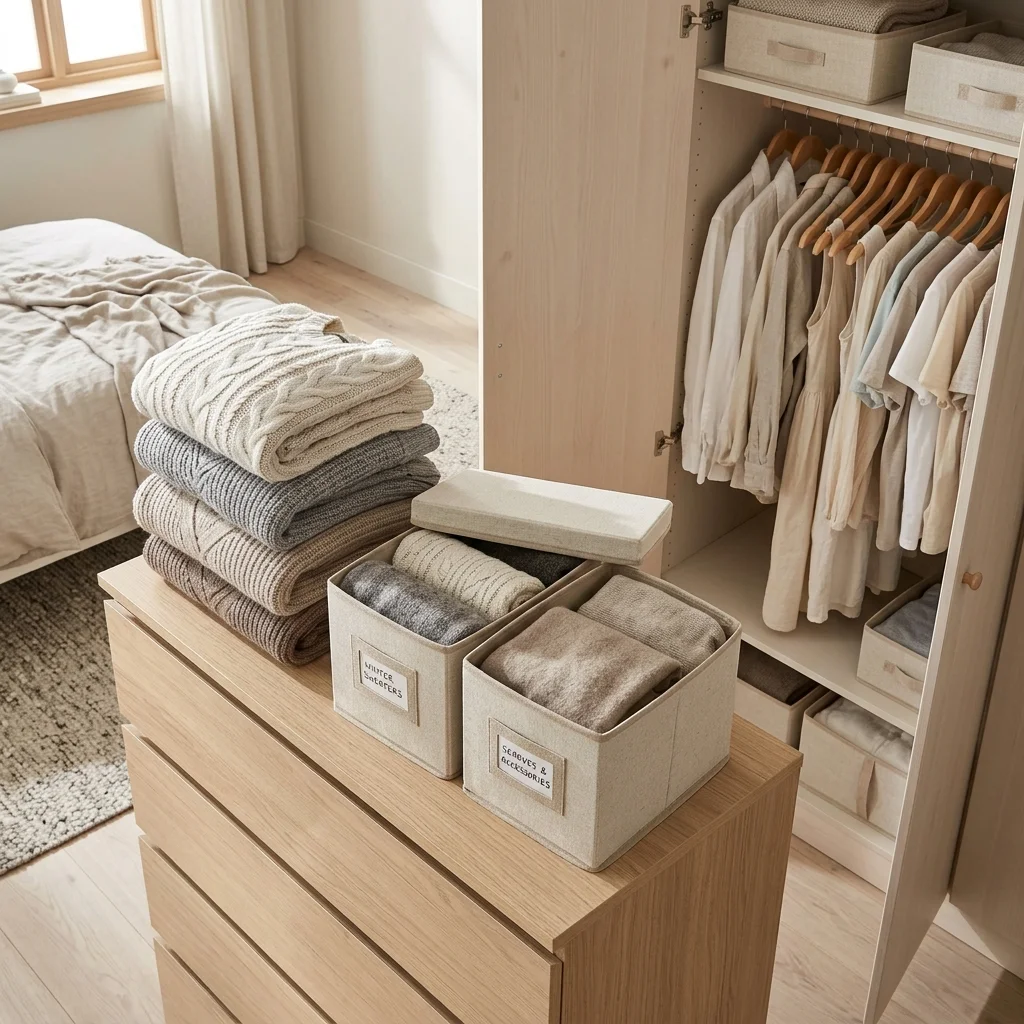
Cost: Low if you reuse existing containers.
Time: Around one to two hours, depending on wardrobe size.
Skill Level: Beginner.
Best For: Wardrobes with limited hanging and shelf space.
Rotating seasonal clothing frees the most accessible storage for what you currently wear. Wash and dry garments according to their care labels before packing them away and use clean containers that protect them from dust. Keep frequently worn layers available for changing weather and label stored boxes clearly. Review the contents before putting everything away so damaged or unwanted clothing does not occupy valuable space for another season.
Conclusion
A well organized bedroom does not require a bigger room or an expensive makeover. With the right Bedroom Organization Ideas, you can make better use of unused corners, keep everyday essentials within reach and create a space that feels calmer and more comfortable.
Start with one simple project, such as organizing a drawer, adding under bed storage or clearing your bedside table. Build on that progress as you discover what works best for your daily routine.
Save this article on Pinterest so you can revisit your favorite ideas whenever you need inspiration. Share it with friends or family who could use more space, too. Your dream of a tidy, functional bedroom can begin with one small change today!





One Comment